Casinos That Accept Mastercard in the UK
 Available in GB
Mastercard debit may be accepted, but availability varies by cashier and credit-card gambling payments are prohibited.

Table of Contents
- Mastercard at UK Casinos: Debit, Not Credit
- How Mastercard Acceptance Varies Between Casino Cashiers
- Finding the Mastercard Deposit Route in 2026
- Mastercard Deposits, Bonuses and Online Slots
- Mastercard Slots Without a Games List
- When a Mastercard Deposit Becomes a Withdrawal
- Alternatives When Mastercard Is Not the Right Route
- Deposits, Limits and the Cost of Moving Money
- Mastercard Payments and GamStop Are Separate Questions
- A Payment Trail Built to Prevent Fraud
Mastercard at UK Casinos: Debit, Not Credit
Mastercard can be used at UK online casinos when it is a debit card. That distinction matters more than the logo: the payment network may be the same, but the card product determines whether the transaction falls within the rules for gambling payments. UK casinos commonly accept debit cards, including Mastercard and Visa, although that general pattern does not mean every card will be available at every cashier.
Credit-card payments for gambling have been prohibited since 14 April 2020. The ban has not been relaxed. It applies to remote gambling operators serving the British market, so a UK-licensed casino cannot take a credit-card payment for a gambling deposit. A Mastercard credit card is not an exception merely because the casino displays Mastercard among its payment methods.
The distinction is easy to miss because “Mastercard” names a payment network, not a single kind of card. Debit cards draw on funds in a bank account; credit cards borrow against a line of credit. A payment page may use the network name as shorthand, while the underlying card remains debit or credit. For gambling, that underlying difference is decisive.
This is why the answer to whether Mastercard works at online casinos in the UK is qualified: a debit Mastercard is commonly accepted, but a credit Mastercard cannot be used for gambling. Nor does changing the route through a money service business make credit-card funds acceptable. The restriction follows the source of the money, not simply the screen on which a deposit is made.
The rule reflects a judgement about the boundary between entertainment and borrowing. Gambling has long been sold through the language of leisure; credit can turn a loss into a debt that remains after the game has ended. The ban places a hard line around that risk. It is not a preference set by an individual casino, and it is not a temporary cashier setting.

For the same reason, a list claiming that casinos “accept Mastercard” can conceal an important qualification. It may mean debit cards only. A statement about the brand does not override the UK restriction on credit-card gambling, and a credit card should not be treated as a viable deposit route at a UK-licensed casino.
The practical starting point is therefore the card type, not the logo. A debit Mastercard fits the payment category commonly accepted by UK casinos; a credit Mastercard does not. That is the firm ground beneath the broader question of which casinos take Mastercard. Debit, yes; credit, no.
How Mastercard Acceptance Varies Between Casino Cashiers
A casino’s general payment list is a starting point, not a promise that every Mastercard transaction will be available. Specialist reviews may list Visa and Mastercard for a site, but the current UK cashier is where availability and card-product eligibility need to be checked. Payment menus can differ between operators, and a method shown in an older description may no longer appear when an account is opened.

The distinction matters because “Mastercard” identifies a payment network, not every detail of the card or the transaction. A cashier may display the brand while the card product presented by a particular account is not eligible. The payment screen, rather than a logo elsewhere on the site, is the practical test of whether that route is offered for the transaction in question.
This applies on mobile as well as desktop. A phone-sized cashier is still the operator’s payment interface, but its layout may make available methods less immediately visible. The absence of a Mastercard tile should not be treated as proof that the site has never accepted Mastercard; equally, a logo on a promotional or information page does not establish that the route is currently available to a UK customer. The cashier provides the relevant, present-tense answer.
What to check in the cashier
Before selecting a payment route, it helps to distinguish three things: whether Mastercard appears as an option, whether the card product is eligible, and whether the transaction can proceed with the account details supplied. These are related, but not interchangeable. A general statement that a casino accepts Mastercard does not settle all three.
Cashier check list
A general statement that a casino accepts Mastercard does not settle whether the Mastercard option appears, whether the specific card product is eligible, and whether the transaction can proceed with the supplied account details.
The cashier may also present payment choices only after sign-in or account setup. That means an external description of a site’s options can be useful for orientation but cannot replace the live payment menu. Where the displayed route and a site’s general payment information seem to disagree, the cashier is the more direct indication of current availability.
Account consistency is another quiet part of acceptance. The casino account and the payment route should belong to the same customer. When names and basic ownership details match, there is less opportunity for a routine transaction to be delayed by a mismatch that needs explanation. It is not a guarantee that a payment will be approved: eligibility and the operator’s checks still apply.
That point is easy to overlook because payment pages make acceptance look like a matter of logos. In practice, the route has to fit the account behind it. A listed brand is not a personal approval, and a visible button is not a promise of success. The cashier shows what the operator offers; the details attached to the account determine whether the option is suitable for that customer.
For anyone comparing online casinos that accept Mastercard in the UK, the useful distinction is therefore between advertised support and live cashier availability. The latter should be checked on the account being used, including on mobile if that is where the transaction will take place. A payment method is only an option when it is both present and eligible. Logos are the easy part.
Finding the Mastercard Deposit Route in 2026
When choosing a casino that accepts Mastercard in the UK, check the payment options available to you and how quickly withdrawals are processed. The details below provide a brief note on each listed operator.
Payout speed: 1-3 business days Revery Play lists a payout speed of 1–3 business days.
Payout speed: 1-3 business days Chanze lists a payout speed of 1–3 business days.
Payout speed: 1-3 business days Amunbet lists a payout speed of 1–3 business days.
Payout speed: 1-3 business days SpinFormula lists a payout speed of 1–3 business days.
Payout speed: 1-3 business days NightLuck lists a payout speed of 1–3 business days.
Payout speed: 1-3 business days Zombillion lists a payout speed of 1–3 business days.
Payout speed: 1-3 business days BeOnBet lists a payout speed of 1–3 business days.
Payout speed: 1-3 business days EvoSpin lists a payout speed of 1–3 business days.
Payout speed: 1-3 business days Jetsetspins lists a payout speed of 1–3 business days.
Payout speed: 1-3 business days NightWin lists a payout speed of 1–3 business days.
A Mastercard deposit begins with details that are less visible than the card logo: the account’s currency, the cashier’s stated minimum and the ceiling attached to that payment route. These terms belong to the individual account and transaction, not to Mastercard as a universal system. A card may be accepted while a proposed deposit still falls outside the cashier’s conditions.
A specialist review reports that GBP is supported, but the account currency needs checking before the first transaction. If an account is set up in another currency, a deposit made from a sterling card may involve conversion. The amount shown at the cashier and the amount eventually reflected by the card issuer need not then tell the whole story. Sterling is the simpler route when both the casino account and the card transaction are denominated in pounds.
The minimum is another method-specific detail. A specialist casino review puts entry deposits at £10–£20, with the selected payment method affecting the threshold. That range is not a promise that every Mastercard deposit will meet a particular casino’s requirement. The cashier’s current figure is the operative one, and a deposit below it may not be accepted even when the card itself is eligible.
Maximums have a different shape. A casino may set a ceiling for one transaction, alongside separate limits for a day or a month. Those ceilings can depend both on the payment method and on account status, so a general Mastercard label cannot establish what applies to a particular deposit. The figure displayed during the transaction is more relevant than a broad description elsewhere.
A Mastercard deposit route is a combination of an enabled card option, a compatible account currency, and transaction terms that permit the chosen amount.
There is a small administrative drama in these checks. The card number attracts attention because it is familiar; currency and limits decide whether the intended amount fits. A Mastercard deposit route is therefore not simply a button marked Mastercard. It is a combination of an enabled card option, an account currency and terms that permit the chosen amount.
Before confirming a payment, the useful details are the account’s denomination, the minimum shown for Mastercard and any applicable transaction, daily or monthly maximum. Those details answer the practical question behind casinos that accept Mastercard deposits in the UK: not merely whether the card name appears, but whether the route can carry the intended payment on the account’s current terms.
The cashier is the final checkpoint. Review terms can describe available arrangements, but transaction conditions may differ by method and account status. A pause over the amount and currency is less theatrical than a failed deposit. It is also more useful.
Mastercard Deposits, Bonuses and Online Slots
A Mastercard deposit connects two things that are often treated as one: the way money enters a casino account and the games available after it arrives. They are separate arrangements. A card can be accepted for a deposit without making a particular bonus available, and a bonus does not change the rules governing online slots in Britain.


UK casinos commonly accept debit cards, including Mastercard. That establishes a broad payment pattern, not a promise about every account or promotion. The cashier and the offer’s terms do different jobs: one shows whether a payment route is available; the other sets the conditions for a bonus. Neither should be read as a substitute for the other.
A deposit does not settle bonus eligibility
A casino may advertise a welcome offer alongside card payments, but the presence of a Mastercard option does not itself show that a deposit made with that card qualifies. Bonus terms can specify which payment routes count, how an offer is claimed and what restrictions apply to play. Those details need to be read as part of the offer, rather than inferred from the cashier’s list of methods.
This distinction matters particularly when a promotion is framed around casino play. A bonus balance may be subject to conditions that differ from those on cash funds, and the relevant terms determine how the two are treated. The payment method alone cannot establish whether a bonus applies to a deposit, which games are eligible, or when bonus funds become withdrawable. A tidy logo beside a cashier button is not a contract.
There is also no useful shortcut in the phrase “Mastercard bonus”. It may refer to an offer available to someone who deposits by card, but that wording does not establish the actual terms. Offers change, and the operator’s current promotion rules are the authority for a specific account. A broad claim that every Mastercard deposit earns a bonus would confuse a possible promotional route with a guaranteed entitlement.
Payment method alone cannot establish whether a bonus applies to a deposit, which games are eligible, or when bonus funds become withdrawable.
For online slots, the distinction is especially important because the game itself sits inside a regulated product, not outside the payment arrangement. Whether a deposit is made by debit card has no bearing on the rules that govern a slot’s operation. Nor does a bonus relax those rules. A promotional balance is still used within the same British regulatory setting as cash play.
Slot play has its own boundaries
Online slots in Britain cannot offer autoplay. Each spin must be initiated rather than set to run continuously, and a spin must last at least 2.5 seconds. These requirements shape the rhythm of play regardless of whether the account was funded by Mastercard or another permitted route. The pause is part of the product’s design under the rules, not an optional setting hidden in the menu.
There are also maximum stake limits per game cycle. For customers aged 25 and over, the limit is £5; for those aged 18 to 24, it is £2. The £5 limit for all adults took effect on 9 April 2025, replacing the lower cap that had applied to younger adults. A casino bonus cannot turn a stake above the applicable limit into an acceptable one.
These restrictions are easy to overlook when payment language dominates a page. “Deposit by card” describes the entrance; it says little about the pace, permitted stakes or bonus treatment of the activity that follows. British slot rules are designed to govern that activity directly, including when play is funded by promotional credit.
Searches for casinos with Mastercard and slots often blend payment, promotion and game choice into one imagined package. In practice, each part needs separate confirmation: the card route in the cashier, the promotion’s terms, and the slot rules that apply in Britain. There is no single Mastercard-specific category of slots that changes those conditions. The card moves funds into an account; it does not confer a different status on the games.


That separation also gives a more sober way to assess a casino bonus. Its headline may be generous in tone, but the operative details are the eligibility rules and conditions attached to it. A card deposit is not evidence that an offer will apply, and an offer is not permission to bypass stake or spin requirements. The mechanics remain less theatrical than the advertising.
The same applies to accounts described as being for casino play with Mastercard. The account is governed by the operator’s rules and the applicable British requirements; the payment brand does not create a separate route around either. Slot play remains subject to the ban on autoplay, the minimum spin duration and the relevant stake cap.
The distinction is plain, if not especially marketable: payment funds the account; regulation shapes the play.
Mastercard Slots Without a Games List
A slot does not become a Mastercard slot when it appears in a casino cashier beside the card logo. The game and the payment route belong to different parts of the service: one is supplied for play, the other is a way to move funds into an account. Their names may sit on the same website, but that does not make them a single product.

That distinction matters when comparing casinos by their games. A Mastercard symbol cannot establish which titles are available, whether a particular game works on a phone, or what its features are. Those details belong to the casino’s games catalogue and can change independently of its payment options. A list of games assembled under a card brand would therefore look precise while answering the wrong question.
There is no useful catalogue of titles that can be identified simply as Mastercard games. Nor does the payment method establish that a casino is new, mobile-friendly or better than another one. Those are separate qualities, and each needs evidence of its own. A tidy category can be attractive; it can also conceal a category error.
The same applies to the word “best”. A ranking of Mastercard casinos cannot be settled by counting game names or attaching a card logo to a catalogue. A casino’s games, the way its site behaves on a mobile device and its available payment routes are distinct things to assess. Bringing them together under one label does not make the label informative.
On a phone, the cashier and the games catalogue may both be accessible through the same account, but that is a matter of interface, not a special class of slot. The device does not alter the payment method’s role, and a Mastercard route does not certify that every game will behave identically across screens. The useful distinction is plain: payment access concerns the account; game access concerns what the casino offers and how its platform presents it.
There is also a legal boundary behind the card name. The UK regulator prohibited credit-card gambling on 14 April 2020, and the rule has not been relaxed. Mastercard gambling payments in this setting therefore cannot be treated as permission to use a credit card. The card logo alone does not tell the whole story about the underlying card product.
This is why a page promising a definitive list of Mastercard slots would be misleading. A payment brand is not a game studio, a catalogue or a guarantee of compatibility. Game titles need to be checked as games, and payment arrangements as payment arrangements. The separation is less glamorous than a branded list, but more useful.
When a Mastercard Deposit Becomes a Withdrawal
A Mastercard deposit can reach a casino account quickly, but that does not mean winnings travel back at the same pace. A specialist casino review describes card deposits as potentially instant while payouts may take several business days. The difference is partly procedural: a withdrawal is not simply a reversed deposit.
UK anti-money-laundering rules generally expect funds to be returned to the original payment source. This closed-loop approach helps connect the money leaving an account with the money coming back. If a Mastercard was used to deposit, the casino may therefore consider it when arranging a payout. The cashier’s withdrawal terms determine whether that particular card can receive withdrawals; a Mastercard logo beside deposits alone does not settle the matter.
Maintaining one account in the customer’s name and using the same payment route consistently for deposits and withdrawals reduces the chance of avoidable friction during transactions.
There is also an approval stage inside the casino. A withdrawal request may need to be reviewed before it is sent on, and a specialist casino review notes that first withdrawals can take longer while verification is completed. KYC checks are part of establishing that the account and payment details belong to the customer. Until those checks and the operator’s review are finished, the payment has not reached the card network.
A delay, then, can have more than one source: casino approval, incomplete verification, or the onward processing of the payment. “Instant deposit” describes money arriving in the account, not the whole journey between deposit and payout. A brisk entrance. A slower exit.
Before relying on Mastercard for both directions, the account’s withdrawal page should be checked for the card’s eligibility and any required verification. If the payment route shown for withdrawals differs from the deposit route, that does not by itself mean the funds have been lost; it means the casino’s stated process needs to be followed and clarified through its support or complaints channel if necessary.
Payment branding is not a licence check, either. Remote gambling licensees serving Great Britain must hold the relevant UK Gambling Commission licence, and the public register is the place to confirm an operator’s status before depositing. A casino operating without that licence is outside the UK regulatory system. A familiar card logo cannot make it otherwise.

Alternatives When Mastercard Is Not the Right Route
A Mastercard debit card is not the only way to fund a gambling account, but alternatives differ in what they can do. Some move money directly from a bank account; others sit between the bank and the casino, or work as prepaid credit. The distinction matters most when a deposit method is treated as deposit-only.
Open banking and bank transfers are bank-based routes. A specialist review describes some services as providing instant deposits and fast withdrawals at many sites, though availability depends on the casino and the payment route offered in its cashier. A bank transfer is not automatically interchangeable with an open-banking payment: the names may sit close together on a payment page, but the process and conditions can differ. The bank account should belong to the same person as the casino account, and the cashier’s terms determine which routes are available.
E-wallets provide another alternative. PayPal is described in a specialist review as popular for speed and convenience, but that review also notes that it may be excluded from bonus eligibility. Skrill and Neteller appear at some sites; a specialist review reports that they are often excluded from promotions. “Often” is not a rule for every offer. Bonus terms may distinguish between payment methods, so a deposit that reaches the balance can still fail to qualify for a promotion.
There is a regulatory boundary around wallets, too. A remote gambling licensee cannot accept a wallet payment where the wallet permits credit-card funds to be used for gambling. A digital wallet is therefore not a way to turn a prohibited credit-card payment into an acceptable one. The funding route matters, not just the name on the cashier button.
Open banking and bank transfers move money directly from a bank account.
Services like PayPal, Skrill, and Neteller create a separate payment layer between the bank and casino.
Paysafecard provides prepaid value but is a deposit-only route.
Paysafecard is a prepaid voucher, but it is deposit-only. It can put funds into an account; it is not a route for receiving a withdrawal. That makes it a narrower alternative than a bank-based method or an e-wallet, particularly for anyone expecting one payment account to serve both directions. Another route may be needed later, with any associated checks handled by the casino.
The practical comparison is not a contest for a universal “best” alternative. Bank-based services connect the transaction to a bank account; e-wallets create a separate payment layer; a voucher supplies prepaid value without becoming a payout channel. Before choosing, the relevant questions are whether the method appears in the casino cashier, whether it accepts deposits for that account, whether its use affects an offer, and whether it can support the intended movement of funds. A payment button is not a promise of every function.
For British customers, the wider boundary is licensing: real-money gambling must take place with an operator holding a current UK Gambling Commission licence. Payment choice changes how funds enter the account, not the regulatory status of the casino. A useful distinction, if not a glamorous one.
Deposits, Limits and the Cost of Moving Money
A Mastercard deposit has two separate financial questions attached to it: how much an account permits, and what it costs to move the money. Neither is settled by the card logo in a cashier. The amount available can depend on the casino’s terms and the payment route, while charges may arise at more than one point in the transaction.
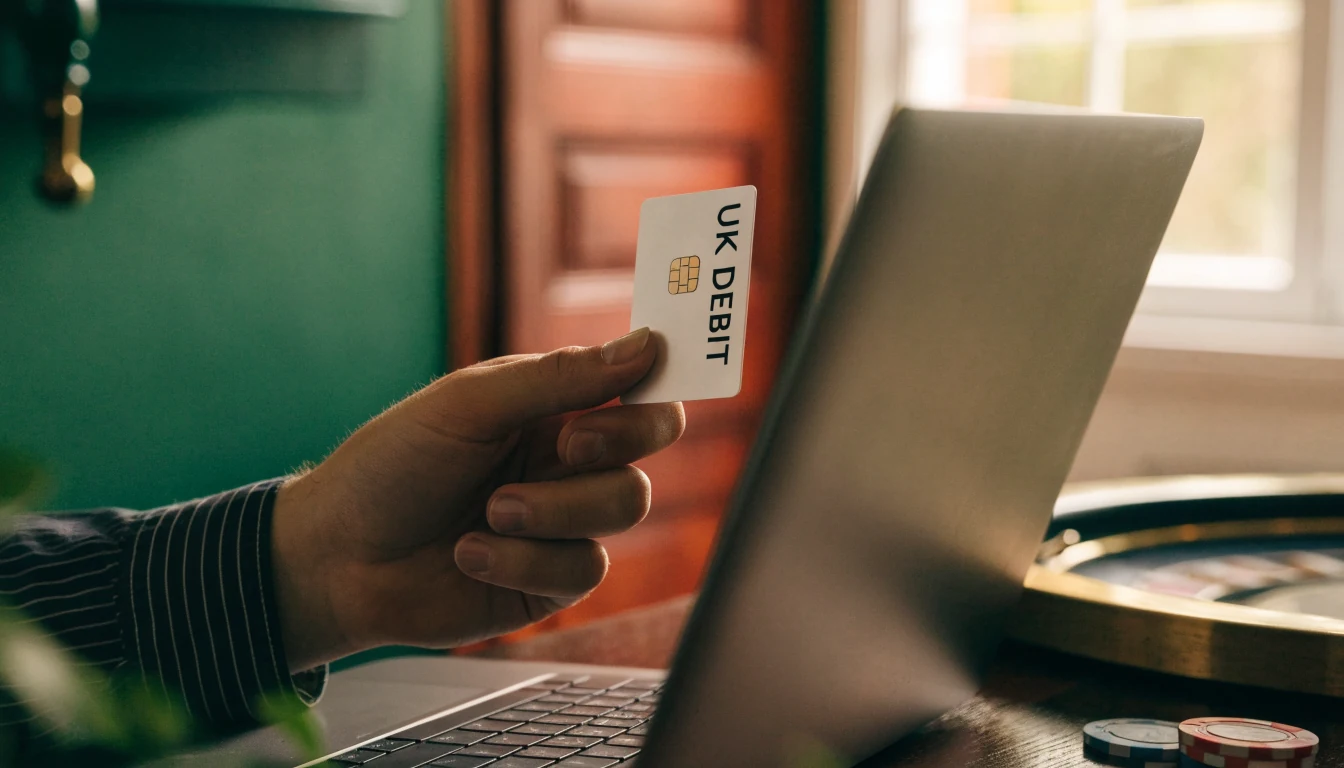
UK Gambling Commission rules put a safeguard before the first deposit: remote gambling licensees must prompt new customers to set a financial limit. Account-level controls must remain accessible afterwards. This is not the same as a cashier’s minimum or maximum. A payment threshold governs a transaction; a financial limit helps govern how much can be spent. The distinction matters, even when both appear among account settings.
A specialist payment review identifies several possible costs: a casino charge, a payment-provider fee, a fee from the card issuer or bank, currency-conversion spread and network costs. Which, if any, apply depends on the actual route and transaction. A visible flat fee is only one part of the arithmetic; exchange-rate spread can also affect the amount ultimately debited. A neat headline figure may not be the whole bill.
There is no single lowest-fee method that holds across casinos and payment amounts. A specialist review of payment costs recommends comparing the casino’s charge, provider and bank fees, any currency spread and network cost for the transaction in question. The cashier’s terms and the card issuer’s own charges can therefore both matter. If an account is held in a currency different from the card account, conversion may add another layer; the rate used should be checked before confirming.
- Compare the casino’s charge, provider and bank fees
- Check the currency spread if accounts differ
- Review the total cost before approval
- Rely on a neat headline figure as the whole bill
- Assume a requested amount is always accepted
- Assume deposit amounts establish bonus eligibility
The same care applies to small-deposit searches. A requested amount is not evidence that every casino will accept it: minimums and transaction ceilings are set by the relevant cashier and payment conditions. Nor does a deposit amount establish eligibility for a bonus. Promotional terms are separate, and the final figure charged can differ from the amount entered if fees or conversion apply.
Money has a habit of acquiring paperwork as it travels. The sensible comparison is not a universal ranking of cards, but the total cost shown for the specific deposit before it is approved.
Mastercard Payments and GamStop Are Separate Questions
A Mastercard logo says something about a payment route. It does not establish whether a casino is connected to GamStop, whether an account is covered by a self-exclusion arrangement, or what regulatory safeguards govern the site. The card network and the account-protection system answer different questions.
That distinction matters when searches combine Mastercard with phrases such as “not on GamStop”. A casino cannot be assessed as safer, or less restricted, because a particular card appears in its cashier. Nor does a successful card payment prove that an operator is outside a self-exclusion scheme. Payment acceptance is not a regulatory status.
For gambling in Great Britain, the more consequential distinction is whether the remote gambling licensee holds a current UK Gambling Commission licence. Online gambling is legal for adults at licensed and regulated sites; operators serving the market must hold the relevant licence. Offshore sites sit outside that system, and a Mastercard option does not bring them within it. The licence number can be checked on the Commission’s public register before a deposit.

Licensed operators also have duties that sit above the choice of card. New customers must be prompted to set a financial limit before making their first deposit, and account-level controls must remain accessible. Those controls belong to the account, not to Mastercard. Changing a payment method cannot turn them off.
The same principle applies to self-exclusion and complaints. UKGC-licensed casinos must provide responsible-gambling tools, including self-exclusion, and an internal complaints process with access to an approved Alternative Dispute Resolution service. These protections are part of the regulated framework, not features inferred from a payment logo.
A search for Mastercard casinos “without GamStop” therefore bundles together a card preference and a question about account safeguards. They should be checked separately: the cashier can show whether Mastercard is available, while the operator’s licence and protection arrangements determine the regulatory context. The logo is not a loophole.
A Payment Trail Built to Prevent Fraud
A Mastercard deposit is not merely a movement of money. It creates a record linking a casino account to a payment source, and that link matters again when funds are returned. The simplest arrangement is often the least troublesome: one account in the customer’s name, with the same payment route used consistently for deposits and withdrawals.
That continuity has a practical purpose. If the casino account belongs to one person while the card or payment account belongs to someone else, basic ownership details no longer align. The mismatch can invite questions that have little to do with the game and everything to do with establishing who supplied the funds and who may receive them. Keeping the names and account details consistent reduces the chance of that avoidable friction.
Credit Card Ban
Credit-card payments for gambling have been prohibited since 14 April 2020; UK-licensed casinos cannot accept credit-card deposits regardless of the network logo.
This is not a promise that every transaction will proceed without review. Casinos have to consider fraud and anti-money-laundering controls, and a payment route can be checked as part of that work. A clean payment trail makes the relationship easier to follow; it does not make checks disappear. Dull, but useful.
Why funds are traced back
Returning funds to the original payment source is a common anti-fraud and AML control. In practice, the deposit route forms part of the account’s financial history: it helps show where money entered the casino and where a return should be directed. A request to send funds by a different route may therefore need additional verification.
The point is not that a different method is inherently suspicious. There may be ordinary reasons for a change, but a new route breaks the straightforward connection between the original payment and the requested return. The casino may need to establish that the alternative belongs to the same customer and is appropriate for the transaction. The additional step is a consequence of the control, not evidence of wrongdoing.
This is why the phrase “Mastercard casino” can sound simpler than the underlying arrangement. A card may be the visible payment method, while the casino account, cardholder details and any later payout route all form part of one record. A payment method is not a cloak of anonymity. It is a traceable route with an owner.
Consistency is not a shortcut around checks
Using one named account for both sides of the transaction can reduce unnecessary complications, but it cannot substitute for the casino’s own review. Account information and payment details still need to correspond, and the casino may seek evidence where the record is incomplete or inconsistent. A payment that appears straightforward at the cashier does not determine every later decision.

That distinction matters to anyone comparing casinos that accept Mastercard deposits in the UK. A long list of available payment logos says little about how a particular account will be handled when money moves out. The important question is not simply whether Mastercard appears among the deposit methods, but whether the account and payment route can be used in a consistent, attributable way.
The same principle applies when an account is funded through another route. An alternative payment method may be accepted, yet still require extra checks when a withdrawal is requested. Changing routes can mean explaining a new connection. Where the account holder and payment source remain aligned, the financial story is easier to read.
A traceable account, not a payment trick
Searches for the best Mastercard casinos or casino sites with instant banking often treat payment choice as a feature to compare in isolation. But the most orderly route is less about finding a clever combination than keeping the record coherent. The name on the casino account, the name attached to the payment source and the route used for a return should not tell conflicting stories.

That does not mean every casino will handle every Mastercard product in the same way, nor that a card deposit guarantees a card payout. The cashier’s listed methods and the account’s circumstances still matter. The broader security principle remains: a casino needs to be able to connect the person using the account with the money entering and leaving it.
In a regulated gambling system, that connection serves more than administrative neatness. It helps make funds traceable and supports controls intended to deter fraud and money laundering. The same safeguards can add a pause when a different route is introduced, especially if ownership needs to be established. A consistent payment trail is therefore not a way around scrutiny. It is the least confusing thing scrutiny can find.
What is the fastest withdrawal method for UK casinos?
PayPal, open banking and debit cards connected to fast-payout systems are generally among the quickest. The casino’s approval process and whether your account is verified also affect timing.
Do UK casino withdrawals require verification?
Verification may be required, particularly before a first withdrawal, and completing it can help avoid delays. UK casinos commonly return withdrawals to the original payment source.
Can I deposit in GBP?
Yes, GBP is supported. Check that your account is set to GBP before depositing to avoid currency conversion.
What is the current minimum deposit?
The minimum deposit usually starts at £10–£20, depending on the payment method.
Which payment methods are accepted in Great Britain?
Common options include Visa and Mastercard debit cards, bank transfers, e-wallets and, at some sites, cryptocurrencies. PayPal, Paysafecard, Skrill, Neteller and Apple Pay are among the options available at some casinos; check the live cashier for availability.
Is Skrill available?
Yes, Skrill is available at some UK-friendly casino sites. It may be excluded from promotions.
Which method has the lowest fees?
There is no universally cheapest method. Compare casino and provider charges, any bank or network fees, and the exchange-rate spread for the amount you plan to deposit or withdraw.
Are Visa and Mastercard deposits definitely debit cards?
No. Visa and Mastercard are payment networks, and the card may be debit or credit. UK-licensed casinos can accept eligible debit cards, but credit-card gambling has been prohibited since 14 April 2020.
Written by the editors at Rainbow Riches Casino 3.