Casinos That Accept E-Cheques in the UK
 Available in GB
E-cheque acceptance depends on the UK account’s live cashier, while payment terms, account-name matching and withdrawal timing also matter.

Table of Contents
- E-cheque availability is a cashier question, not a safe assumption
- A payment option is only useful if the full journey works
- Deposits can be quick; payouts have another clock
- Why a ‘best e-cheque casino’ list cannot be verified
- The payment rules behind a UK casino account
- What to check before making a deposit
- Payment routes and the names on the account
- A financial limit belongs in the payment conversation
- Security is often a matter of keeping the route consistent
- New payment options still need ordinary checks
E-cheque availability is a cashier question, not a safe assumption
An e-cheque can sound like a familiar bridge between a bank account and an online casino: a payment initiated electronically but described in the language of paper cheques. That description, however, does not make it a standard option at UK casino cashiers. A site’s payment page may use different labels, and a method that appears in general information may not be available to a customer in the United Kingdom.
For that reason, the phrase “e-cheque casino” is not enough to establish that a deposit can be made that way. Availability has to be visible in the cashier for the relevant account and location. Until it is, treating the method as accepted risks confusing a general payment description with an actual option.
This distinction is less exciting than a list of sites, but more useful. Payment menus are not permanent fixtures. They can reflect the operator’s current UK offering, the customer’s account, and the particular product being used. A payment logo on an information page does not, by itself, settle what will appear at the point of deposit.
What the cashier can confirm
A cashier is where a listed method becomes a practical choice. It shows the payment options presented to an account at that time, rather than merely naming services the operator may support in some setting. If e-cheque is not displayed as a selectable option, its presence in a general description should not be read as permission to use it.
The wording matters, too. “Electronic cheque” may be used loosely in conversation, while a cashier can identify a specific provider or route. Similar-sounding labels are not necessarily interchangeable. A bank transfer, an open-banking payment and an e-cheque may all involve a bank account, but that does not make them the same method. A payment needs to be identified by the option the casino actually presents, not by a resemblance in how funds move.

That is the modest test for anyone considering an e-cheque online casino in the UK in 2026: the method should appear in the live cashier as an available deposit option. A promotional page or broad payment guide is not a substitute for that check. Nor does a mobile site change the underlying requirement. A mobile cashier can present payment choices, but the device itself does not establish that e-cheques are accepted.
Card logos are not a universal promise
The same caution applies to more familiar payment names. A specialist casino review may list Visa and Mastercard, but a logo is not a guarantee that every UK customer can use every card product. The live cashier is the place to confirm whether a card is currently offered for the UK account and whether the particular card is eligible.
That qualification is important because a card’s brand does not tell the whole story. The relevant product and the operator’s current UK arrangements matter. A payment page can describe a method in broad terms while the cashier applies the conditions that decide whether it is available in a particular case. The label is only the beginning.

A common mistake is to read a list as though it were a fixed promise: if a method is named somewhere, it must be ready for use. In practice, payment options are operational details, not decorative badges. Their presence can change; their availability can depend on the customer’s location and account; and the cashier is the concrete point at which those conditions meet.
There is no need to turn that uncertainty into a claim that e-cheques are accepted, or into the opposite claim that no UK casino could accept one. Neither conclusion follows from the wording of a payment menu elsewhere. The sensible description is narrower: e-cheque availability cannot be assumed from the method’s name or from a general list. It has to be confirmed where the deposit is actually being arranged.
That may seem an unromantic answer to a search for casinos that accept e-cheques. Payments are often marketed as if the method itself were the story. Yet the useful detail is not the label in isolation; it is whether the option appears in the current UK cashier and applies to the payment product in question. A neat list cannot make that determination on behalf of an account.
Attention: A payment logo on an information page does not guarantee the method is available; availability must be confirmed in the live cashier for your specific account and location.
The cashier is not a grand authority. It is simply where a claim becomes usable—or remains a claim.
A payment option is only useful if the full journey works
A payment method can look suitable at the point of deposit and still leave an unfinished transaction later. Money going into a casino account and money coming back out are separate parts of the payment journey. A method should count as a complete option only when the cashier supports both directions for that account.
That distinction matters when assessing claims about online casinos that accept e-cheques in the UK. A deposit button, a reference to a payment service, or a successful first payment does not by itself establish that withdrawals can return through the same route. The cashier’s available options and terms need to be read as a whole, rather than treating the word “accepted” as an answer to every payment question.
Some methods are explicitly limited to deposits. Paysafecard, for instance, is a prepaid voucher for putting money into an account, not a route for receiving a payout. It may still be useful to someone choosing how to fund an account, but it does not complete the journey from deposit to withdrawal. The distinction is practical, not semantic: a payout still needs a supported destination.
For other methods, the position may depend on the operator’s payment arrangements and the customer’s account. A method displayed for deposits should not be assumed to appear among withdrawal choices. Nor should a method’s general reputation for transferring money be mistaken for proof that a particular casino uses it in both directions. The cashier is where those details become specific.


UK anti-money laundering rules generally require winnings and returned balances to go back to the original payment source. This is part of the closed-loop approach: the route used to put funds in is ordinarily the route through which funds are returned. The rule is not an eccentric preference for a particular card or wallet. It helps operators follow the movement of money and reduce opportunities for misuse.
In practice, that means a payment choice can shape the later payout route from the beginning. If a deposit is made through one source, the account may not offer a free choice of destination when a withdrawal is requested. The original source remains the reference point, even when another route seems simpler. A withdrawal is not simply a fresh transfer arranged independently of the deposit.
There can be exceptions where the original source cannot receive the funds or where the operator’s process requires another route. That does not mean an alternative is automatically available, or that it can be selected without further checks. A different destination may require additional verification before the operator can release a payout. The reason is straightforward: changing the route changes what needs to be confirmed about the transaction and its recipient.
This is why the phrase “accepts e-cheques” is too narrow to settle whether a casino’s payment system works for a particular purpose. It might refer only to deposits; it might describe a service that is not available in the account’s cashier; or it might omit the conditions that apply when money is returned. Without confirmation of both deposit and withdrawal support, the method remains only a partial route.
- Confirm the method supports both deposits and withdrawals
- Read the cashier’s terms as a whole
- Verify the return route for payouts
- Assume a deposit button establishes withdrawal support
- Treat the word “accepted” as a complete answer
- Mistake a method’s general reputation for specific casino support
The same test applies to every payment option, not just e-cheques. A deposit method can be convenient at the outset yet unsuitable as the sole route if it is deposit-only. Conversely, an operator may accept a method for deposits but handle withdrawals through the original source or another approved route. The labels matter less than the actual movement of funds through the account.
A useful comparison therefore asks two separate questions: can the method fund the account, and can a payout be returned through it? A third follows if the answer differs between the two: what verification is required for the alternative? These are not administrative footnotes. They determine whether the proposed payment route is complete, and whether an apparently simple deposit may lead to a more involved withdrawal request.
For anyone comparing UK casinos that accept e-cheques, the careful wording is that availability and payout support must both be confirmed in the cashier. A method should not be treated as a full payment option merely because it appears at the deposit stage. The return journey is part of the transaction. Half a route is still half a route.
Deposits can be quick; payouts have another clock
A deposit and a withdrawal may use the same payment route, but they are not mirror images. Money going in can be confirmed at the point of payment; money coming out has to pass through the casino’s own approval process before it reaches the account. The speed of the first movement therefore says little about the duration of the second.


A specialist review describes a card deposit as potentially instant, while a payout to a card may take several business days. The contrast is not a contradiction. It reflects two different stages: authorising a payment into a gambling account and processing a request to release funds from it. The first can feel almost immediate. The second has an interval in which the casino reviews the request, followed by the time taken for the payment to be completed.
That distinction matters when assessing any casino payment route, including one described as an e-cheque. A deposit label can suggest a particular way of sending money, but it does not, by itself, establish how quickly a withdrawal is approved or delivered. The useful measure is not merely how fast the balance rises after a deposit. It is how the whole withdrawal process is described, including the casino’s own handling time.
Internal approval is part of the withdrawal clock. A request is not necessarily sent onward as soon as it is submitted; the casino may need to review it first. A specialist review notes that the overall processing period can include this internal stage. That makes a displayed payment-provider estimate only one part of the picture: it cannot account for time spent waiting for the casino to approve the withdrawal.
The first withdrawal can take longer where verification is still being completed. KYC checks may be part of that process, and the additional review can make an initial payout slower than later ones. This is not a special property of a particular deposit method. It is a feature of the account being checked before funds are released. A quick deposit does not mean that every check relevant to a withdrawal has already been completed.
Internal approval is part of the withdrawal clock; the overall processing period includes the time the casino takes to review a request before it is sent to the payment provider.
The difference is easy to miss because payment screens often foreground the action that has just happened. A successful deposit appears as a change in the account balance; it is visible and immediate. A withdrawal, by contrast, passes through stages that may be less visible: a request is made, the casino considers it, and the payment is then processed. The clock is running even when the account page has little to report.
For an e-cheque deposit, the same distinction should be kept in view. The word “deposit” describes money entering the account, not the timing of a later payout. No speed claim about the incoming payment can safely be carried over to the outgoing one without checking the withdrawal terms for that route. A method may look quick at the cashier and still leave a longer wait after a withdrawal request. Different direction, different clock.
The phrase “several business days” also needs to be read as a payout estimate rather than a promise of a fixed arrival time. The card comparison in a specialist review concerns the possibility of an instant deposit and a payout that takes several business days. It does not mean every card transaction follows precisely the same schedule. Nor does the phrase describe the casino’s internal approval separately from the time after approval; both may contribute to the wait.
This is why a payment method’s headline speed is a poor substitute for its full timing terms. Deposit speed answers one narrow question: how quickly the account can be funded. Withdrawal speed answers another: how long it takes for a casino to approve and process a request to pay out. A route that performs well on the first measure may not perform equally on the second.
The distinction has a quiet effect on how “fast” is understood in online gambling. The quick part is often the arrival of funds at the casino. The slower part is the return journey, where the operator’s review becomes visible in the timetable. A balance can appear in moments; a payout may need patience.
Two clocks.
Why a ‘best e-cheque casino’ list cannot be verified
When looking for a UK casino that accepts e-cheques, check the payment methods available to you before depositing. The details below provide each listed operator’s stated payout speed, but do not confirm e-cheque availability.
Payout speed: 1-3 business days Revery Play has a listed payout speed of 1–3 business days. The available information does not confirm whether it accepts e-cheques.
Payout speed: 1-3 business days Chanze has a listed payout speed of 1–3 business days. The available information does not confirm whether it accepts e-cheques.
Payout speed: 1-3 business days Amunbet has a listed payout speed of 1–3 business days. The available information does not confirm whether it accepts e-cheques.
Payout speed: 1-3 business days SpinFormula has a listed payout speed of 1–3 business days. The available information does not confirm whether it accepts e-cheques.
Payout speed: 1-3 business days NightLuck has a listed payout speed of 1–3 business days. The available information does not confirm whether it accepts e-cheques.
Payout speed: 1-3 business days Zombillion has a listed payout speed of 1–3 business days. The available information does not confirm whether it accepts e-cheques.
Payout speed: 1-3 business days BeOnBet has a listed payout speed of 1–3 business days. The available information does not confirm whether it accepts e-cheques.
Payout speed: 1-3 business days EvoSpin has a listed payout speed of 1–3 business days. The available information does not confirm whether it accepts e-cheques.
Payout speed: 1-3 business days Jetsetspins has a listed payout speed of 1–3 business days. The available information does not confirm whether it accepts e-cheques.
Payout speed: 1-3 business days NightWin has a listed payout speed of 1–3 business days. The available information does not confirm whether it accepts e-cheques.
A “best” list implies that its entries have first passed a basic test: each casino actually accepts e-cheques. Without that, rankings would dress an uncertain payment option in the language of recommendation.
That distinction matters because payment pages can make a casino look more uniform than its cashier really is. A general list of payment brands does not show that every brand is available to every customer, or that a particular service works with an e-cheque. Nor does a payment option mentioned somewhere on a casino website prove that it is currently offered to UK customers. The cashier is where an available method becomes concrete; a category label elsewhere is not the same thing.
The word “best” creates a second problem. Even if a method were confirmed, a ranking would need a relevant basis for comparison. A payment route might be judged by acceptance, ease of use, charges, or compatibility with a customer’s bank. These are different questions, and one casino could not be called better for every purpose without dependable details about each. In the absence of confirmed e-cheque acceptance, ranking operators would be especially misleading: the first question is not which is best, but whether any entry belongs on the list at all.
General UK payment alternatives do exist, but they are not evidence of e-cheque support. A specialist review of casino payment pages describes Visa, Mastercard, bank transfer, e-wallets and several cryptocurrencies among the methods mentioned across the sites it examined. That catalogue belongs to those sites and pages; it does not establish a common cashier menu, nor does it make any of the listed methods an e-cheque. Similar names or overlapping functions should not be treated as interchangeable.

This is where payment terminology can do more harm than good. An electronic payment is not automatically an e-cheque. A bank transfer is not an e-cheque merely because both involve a bank; an e-wallet does not become one because it moves money online. The route used to authorise a transaction matters. A casino’s general references to bank payments or digital services cannot settle whether its cashier offers the specific instrument meant by “e-cheque”.
A reliable comparison would need to be based on a confirmed option at each casino, rather than on a broad payment overview or a remembered list. Availability can change, and a menu seen in one context may not represent the UK cashier at another time. A list assembled without checking the particular route risks turning a loose association into a claim of acceptance. A polished table would not improve that. It would only make the uncertainty easier to scan.
For anyone comparing casinos on this point, the useful distinction is between a named payment method and a verified e-cheque option. The former may appear in descriptions of casino payments; the latter requires clear confirmation that the cashier offers e-cheque deposits to UK customers.
This does not make other payment methods equivalent substitutes, and it does not make them e-cheques by another name. It simply separates two questions that are easily blurred: which payment methods are mentioned across UK-facing casino pages, and which casinos accept e-cheques. The first has a broad answer. The second cannot be turned into a named list without confirmation of the method itself.
A list needs entries. A ranking needs grounds. Neither can be supplied by treating general payment information as proof of e-cheque acceptance. No shortlist. Just the distinction.
The payment rules behind a UK casino account
Payment labels can make a route sound separate from the money behind it. UK rules look through that surface distinction when credit is involved: credit-card payments for gambling are prohibited, including when a money service business sits between the card and the gambling account. A transfer does not become acceptable merely because it has taken an extra stop.
The prohibition took effect on 14 April 2020 and has not been relaxed. It applies to remote gambling operators serving the British market, rather than being a preference that an individual casino can waive. The aim is to prevent gambling deposits from being funded with borrowed card credit, even when the transaction is presented as something else.
Credit Card Ban
Credit-card payments for gambling are prohibited in the UK, including transactions routed through money service businesses or wallets that permit credit-card funding.
Wallet payments have a related restriction. A casino cannot accept a wallet payment where that wallet allows credit-card funds to be used for gambling. This is not the same as saying every wallet is barred: the relevant issue is whether credit-card money can flow through it into gambling. A wallet name on a cashier screen is therefore not, by itself, enough to establish that the route is permitted.
That distinction matters when comparing e-cheques with other payment choices. The word “cheque” does not settle the regulatory question, nor does it establish that a particular service is accepted. The relevant considerations are the actual funding route and the operator’s available payment options. E-cheque terminology cannot create an exception to the credit-card rule.
Debit cards are a different product from credit cards, and UK casinos commonly list debit-card payments. Even then, a card’s eligibility depends on the current cashier offering and the particular card product. A familiar brand mark is not a universal permission slip.
The wider framework is local, too. Remote gambling operators serving Great Britain must hold the relevant Gambling Commission licence; payment rules sit inside that system, rather than replacing it. For a casino account, the practical boundary is plain: credit-card funds cannot be used for gambling directly, routed through a money service business, or passed through a wallet that permits such funding. The route matters. So does what funds it.
What to check before making a deposit
A deposit amount can be governed by two separate thresholds: the smallest payment the cashier will accept and the largest it will allow. Neither is a universal feature of a casino account. The payment route matters, and the upper ceiling may also depend on the account’s status.


A specialist casino review gives a typical starting range of £10–£20 for minimum deposits, with the precise figure depending on the selected method. That range is a guide, not a promise that every option will be available at those amounts. The cashier’s stated minimum is the useful figure at the point of payment; a method with a lower threshold elsewhere may have different terms at a particular site.
The maximum requires a little more attention. Limits can apply to a single transaction, a day or a month, and the permitted amount can vary with the payment method and account status. A low per-transaction ceiling may mean that a larger intended deposit cannot be made in one go, while an account-level restriction may affect what appears possible. The displayed limit is more informative than a general description of a payment service.
For anyone considering an e-cheque deposit, these checks concern the amount, not proof that a casino supports e-cheques. A method’s minimum or maximum only matters once it is actually shown as available in that casino’s cashier. No amount listed in a general review can substitute for the current terms attached to the payment option.
The details are worth reading before confirming a transaction: the minimum, any per-payment ceiling, and whether daily or monthly caps apply. If the available range does not fit the intended amount, another listed method may have different limits. That is a practical comparison, not a reason to split a payment or assume that a higher limit can be requested.
Check Deposit Limits
- Check the minimum deposit amount for the selected method
- Identify any per-transaction ceilings
- Review daily or monthly deposit caps
Small print, large consequence.
Payment routes and the names on the account
A payment route is not just a way of moving money. It also carries a name, and that name needs to make sense beside the one on the casino account. When both belong to the same customer, basic ownership details are less likely to become a source of avoidable friction.
That principle matters whether a deposit is made by card, bank transfer or another method shown in the cashier. An e-cheque, where offered, would be no exception: the label attached to a payment method cannot settle the question of whose account is being used. The relevant details still need to correspond to the customer making the transaction.
A difference in names may be innocent. Accounts can be held under a fuller legal name while another service displays a shortened form; a family member may also be tempted to provide a payment route for convenience. But from the operator’s point of view, those are not interchangeable arrangements. A transaction linked to someone else’s account can make a straightforward ownership picture harder to establish, even when the people involved have no intention of concealing anything.
The point is not that every variation will cause a problem, or that every casino applies identical checks. It is that consistent details leave fewer basic questions to resolve. The account holder and the owner of the payment route should therefore be the same person, with names entered accurately rather than adapted to fit a preferred method.
This is a modest piece of housekeeping, but money systems are built from such details. A casino account records one customer; a payment service records its own account holder. When the two records agree, the transaction has a clearer identity. When they do not, the operator may need to establish how the payment relates to the person named on the gambling account.

For anyone considering an e-cheque casino payment in the UK, that ownership check is separate from whether the cashier offers e-cheques at all. A matching name cannot create an unavailable method, and a method appearing in a list does not make another person’s account suitable. Compatibility starts with the customer’s own details.
Names are small things. In a payment trail, they do considerable work.
A financial limit belongs in the payment conversation
A payment method describes how money enters an account; a financial limit describes how much the account is allowed to take in. In Britain, those questions sit together by design. Remote gambling operators must invite each new customer to choose a financial limit before the first deposit can be made, and the account must retain accessible controls for managing limits.
That requirement changes the character of the cashier. It is not merely a menu of routes for moving funds. Before the first transaction, the account asks for a boundary. The control remains available afterwards, rather than disappearing with the welcome screen or being buried beyond practical reach.
An e-cheque, where offered, would still be only a payment route. Its presence would not replace the account-level limit, and choosing a different deposit method would not remove the operator’s obligation to provide that control. Payment technology can make money move; it cannot decide what level of spending is sustainable.
The distinction matters because a limit is not a prediction of future behaviour. It is a setting attached to the account, available to be reviewed and adjusted through the operator’s controls. Its value lies in being made part of the routine before play begins, when the first deposit is still a choice rather than a habit.

Britain’s approach places that pause inside the regulated account itself. It does not rely solely on a player remembering a separate promise made elsewhere. The cashier and the account controls therefore meet at a useful point: one handles the transaction, the other marks its boundary. The boundary comes first.
Security is often a matter of keeping the route consistent
A payment route has a memory. When a withdrawal is requested, UK anti-money-laundering controls commonly require funds to go back to the source from which they came. This closed-loop approach links the outgoing payment to the earlier transaction rather than treating every destination as interchangeable.
That link is also an anti-fraud measure. A casino can compare the account used to deposit with the destination proposed for a payout. If those details do not line up, the transaction may need further checks before it can proceed. An alternative route is not automatically suspicious, but it can make the explanation and verification process more involved.
The practical advantage lies in keeping the same named account and payment route for both directions, where the casino supports that route for deposits and withdrawals. Consistency gives the operator a clearer transaction trail and reduces the chance that basic ownership details create avoidable friction. It is a modest discipline, not a promise of instant processing.
The same principle matters when considering e-cheques. A method’s name alone says little about how securely or smoothly it fits an account’s payment chain. The relevant question is whether the casino’s cashier supports that method for the required transaction and how it handles any return payment. No list of supposedly top e-cheque casinos can substitute for those account-specific conditions.
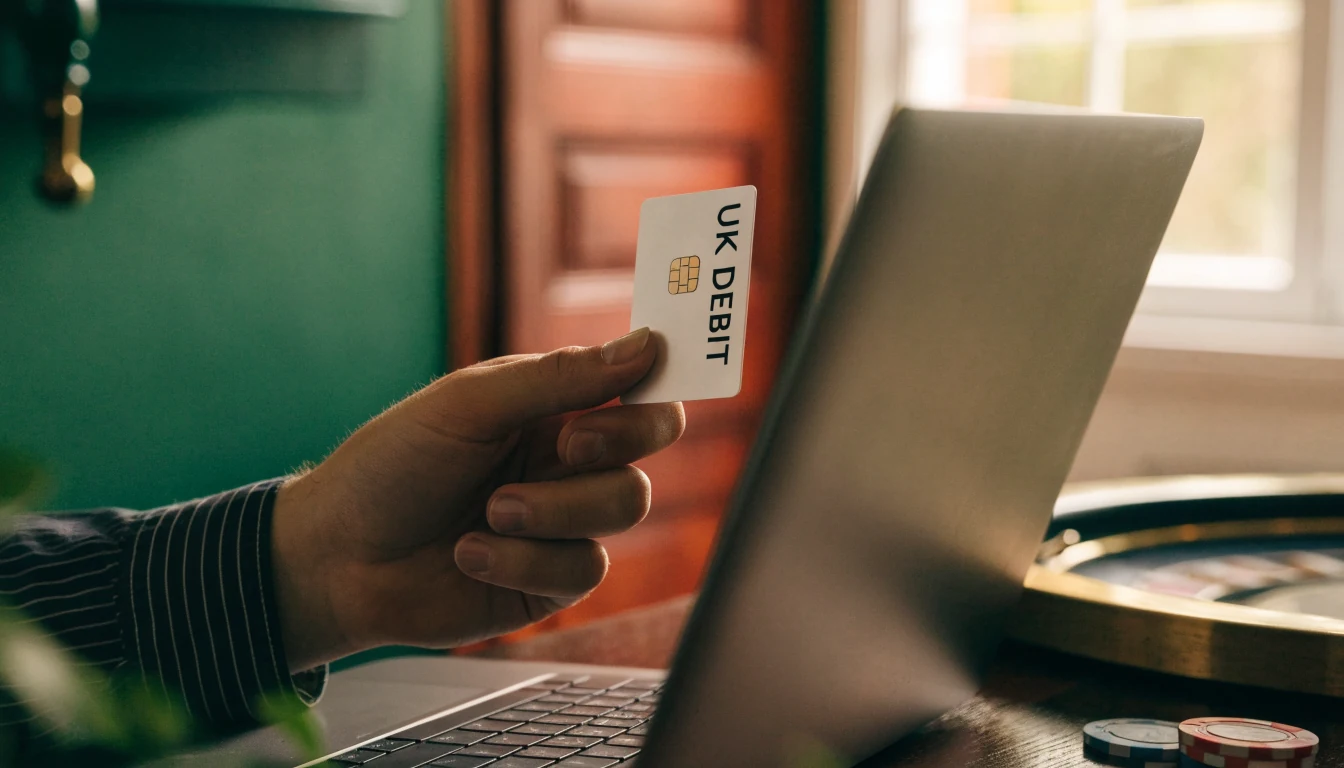
Payment security is often less about adding another layer than preserving a legible route: one customer, one named account, and a destination the operator can match to the original source. Where a different destination is necessary, additional verification may follow. The logic is procedural rather than mysterious. It leaves a trail.
New payment options still need ordinary checks
A payment route described as new can attract attention before its practical terms are clear. That label does not establish that an e-cheque service is available at a UK casino, or that it will work for a particular account. A current cashier listing is more useful than a novelty claim; the name of a method alone says little about how a transaction will travel.
Bank transfers show why the less glamorous details matter. A specialist payment review notes that delivery can be affected by the bank’s cut-off time, weekends and currency conversion. A transfer initiated late in the day may therefore sit until the next processing window, while a weekend can interrupt the working-day sequence. If the account and transfer use different currencies, conversion may also affect the amount received. These are features of the route, not evidence that an e-cheque option is new or reliable.
The same distinction applies when a payment method appears in a newly updated cashier. Availability is only one part of the arrangement; the displayed terms should make clear what currency the account uses and whether the selected route introduces conversion. Timing language also deserves close reading: a casino may describe its own handling separately from the time a bank takes to complete delivery. Neither should be mistaken for a guaranteed arrival time.
A new label can date quickly. A cut-off time, a weekend and a currency mismatch are older than any cashier redesign, yet they still shape the transaction. Ordinary checks, then.
Why can a fast payout casino still delay my withdrawal?
A casino’s internal approval process takes time, and a first withdrawal may take longer while your account is verified. Even after approval, delivery times can vary by payment method.
Do UK casino withdrawals require verification?
Verification may be needed, particularly before a first withdrawal, and completing it can affect how quickly a payout is approved.
What is the fastest withdrawal method for UK casinos?
PayPal, open banking services and debit cards linked to fast payout systems are generally among the quickest options. The casino’s approval process and your verification status also affect the overall time.
What is the current minimum deposit?
Minimum deposits usually start at £10–£20, depending on the payment method.
Are fast casino withdrawals guaranteed?
No. Payout speed depends on the casino’s approval process and whether your account is fully verified.
Which payment methods are accepted in Great Britain?
UK casinos commonly accept debit cards, including Visa and Mastercard; other options at some sites include PayPal, open banking, bank transfers, Paysafecard, Skrill, Neteller and Apple Pay. Check the live cashier, since availability varies by site and account.
Are Visa and Mastercard deposits definitely debit cards?
No. A Visa or Mastercard logo does not confirm that every card product is eligible; check the cashier for the available card options. Credit card gambling is banned in the UK.
Prepared by the Rainbow Riches Casino 3 editorial staff.