UK Casino Sites That Accept Debit Cards: What to Check
 Available in GB
Card acceptance depends on the payment options shown for the account and transaction, not just the logo on a casino’s payment page.

Table of Contents
- Debit Cards in the UK Casino Cashier
- Debit Is Not Credit
- What Makes a Debit-Card Casino Suitable
- A Card Is Only One Part of the Payment Route
- Can a Debit Card Be Used for Casino Gambling?
- Deposits, Minimums and Account Limits
- Why Card Deposits Can Be Instant but Withdrawals Take Longer
- Non-GamStop Claims and the Limits of Payment Information
- Visa Debit: Check the Card and the Cashier
- Joining With a Debit Card: Keep the Payment Trail Consistent
Debit Cards in the UK Casino Cashier
Debit cards remain a familiar way to fund casino accounts in the UK. Visa and Mastercard are widely recognised brands, and UK casinos commonly accept debit cards carrying either logo. That broad availability is useful, but it is not a promise that every card will work at every site. The practical answer sits in the cashier, where a general payment label meets a particular account and card.
A payment-method page can make acceptance look simple: a logo appears beside a sentence saying that cards are supported. Yet such summaries flatten several separate questions into one. Does the casino currently offer card deposits to customers in the UK? Is the selected card product eligible? Is the method available for this account at the point of payment? A logo answers none of those with certainty. The cashier is the place where the operator presents the methods currently available for the transaction.
This distinction matters because payment information has a short shelf life. A specialist review may report Visa and Mastercard among a site’s listed methods, but that report is not a live view of the cashier. The operator’s own payment page may also describe the general range rather than confirm a particular card product. Neither is a substitute for checking the options displayed during the account’s deposit process. A list is a description; the cashier is the working doorway.
When choosing a UK casino site that accepts debit cards in 2026, it is useful to check how quickly withdrawals are processed. The details below focus on the payout-speed information available for each listed operator.
Payout speed: 1-3 business days Revery Play lists a payout speed of 1–3 business days.
Payout speed: 1-3 business days Chanze lists a payout speed of 1–3 business days.
Payout speed: 1-3 business days Amunbet lists a payout speed of 1–3 business days.
Payout speed: 1-3 business days SpinFormula lists a payout speed of 1–3 business days.
Payout speed: 1-3 business days NightLuck lists a payout speed of 1–3 business days.
Payout speed: 1-3 business days Zombillion lists a payout speed of 1–3 business days.
Payout speed: 1-3 business days BeOnBet lists a payout speed of 1–3 business days.
Payout speed: 1-3 business days EvoSpin lists a payout speed of 1–3 business days.
Payout speed: 1-3 business days Jetsetspins lists a payout speed of 1–3 business days.
Payout speed: 1-3 business days NightWin lists a payout speed of 1–3 business days.
The same brand can cover different card products, and the visible logo is not the whole story. A Visa or Mastercard mark identifies a payment network, not a universal guarantee of acceptance across all products that carry it. The casino’s current eligibility rules and the card’s own characteristics have to meet. That is why “Visa accepted” or “Mastercard accepted” should be read as an indication of broad support, not as a binding answer about every individual card.
There is also a difference between a method being advertised and being selectable. A page may mention debit cards in general while the cashier presents only the methods available at that particular moment. If the card option is absent, the general statement has not made it available. If it appears, that is more useful evidence of current support, though the payment still has to be completed successfully. Small distinctions; real consequences.
For people comparing online debit card casinos in the UK, this makes the cashier a better starting point than a copied payment list. The relevant check is not merely whether a casino has ever accepted cards, or whether a brand appears in a review. It is whether the casino currently offers card deposits to the account in question and whether the exact card product can be used. A site’s payment page can narrow the search; the cashier settles the immediate question.
That does not make a failed transaction proof that debit cards are generally unavailable. A card can be listed as a supported category while a specific product is not eligible, or the payment may not be offered in the account’s current circumstances. The cashier may show a more limited set of methods than a site’s broad payment description. For the same reason, a successful experience with one card does not establish that every card from the same network will be accepted elsewhere.


Nor should the payment logos be treated as a ranking. A top online casino that accepts debit cards is not identified by the presence of a Visa or Mastercard symbol alone. The symbol says something about a payment route, not the quality of the casino or the suitability of its other terms. Here, the narrow point is availability: debit cards are common, but individual acceptance remains a matter for the current cashier.
The habit of checking there reflects a wider change in how payments are presented. Older lists offered a static menu: a set of names intended to stand for what a service could do. Digital cashiers are more conditional. They show what the operator is prepared to offer in a particular transaction, rather than merely displaying a catalogue of familiar brands. Less elegant than a tidy list. More useful.
For UK players looking for an online casino with debit card deposits, the sensible reading is therefore both broad and cautious. Visa and Mastercard are common options at UK casinos, so card acceptance is not unusual. But a network logo cannot confirm the eligibility of a specific product, and a third-party summary cannot show what is presently available in an individual cashier. The current payment screen is the final check for that card at that site.
Debit Is Not Credit
The distinction between debit and credit is not a matter of how a card looks or whether it carries a familiar payment logo. It is about where the money comes from. A debit-card payment draws on funds held in the account linked to the card; a credit-card payment borrows against a credit facility. UK rules permit gambling payments by debit card, but prohibit credit-card payments for gambling at remote gambling licensees.


That boundary is easy to lose in the language of a cashier. A payment page may group cards together, or a bank may issue several kinds of card under one brand. The logo alone does not settle whether a particular card is a debit product or a credit product. The relevant distinction is the underlying funding arrangement, not the plastic, the app, or the neat little symbol on the front.
For a casino site that accepts debit cards in the UK, debit means payment from the cardholder’s own bank funds. Credit is different even when the transaction travels through an otherwise ordinary-looking payment route. The rule is not an objection to borrowing in general, nor a judgement on the individual holding the card. It is a restriction on using credit-card payments to fund gambling.
The prohibition took effect on 14 April 2020. It has not been relaxed. That date matters because the rule is not a temporary response that quietly expired when public attention moved elsewhere. It remains part of the payment boundary for remote gambling in Britain. A UK-licensed casino cannot accept a credit-card payment for gambling, even if the customer is willing to make it and the issuer would approve it.
There is a reason the boundary reaches beyond a direct card transaction. Without that extension, a credit card could be routed through a money service business and then used to fund gambling indirectly. The payment would acquire an extra stop, but its source would still be credit. Remote gambling licensees must not accept credit-card payments for gambling through that route either. A detour does not change the nature of the money.
The same principle applies to digital wallets where credit-card funds could be used for gambling. A wallet is not a permission slip that turns a prohibited source into an acceptable one. If the wallet allows credit-card funds to reach gambling, the payment route falls on the wrong side of the restriction. The relevant question is not simply whether a casino cashier displays a wallet name, but whether credit-card money can be used through it for gambling.
Credit Card Ban
UK-licensed remote gambling casinos are prohibited from accepting credit-card payments for gambling, including those routed through wallets or money service businesses.
This can make payment labels look simpler than the system they describe. “Card” is a broad category; debit and credit are not interchangeable subtypes for gambling purposes. Nor does a successful payment authorisation by itself prove that the route complies with the rule. A payment provider, issuer and casino may each be involved, but the restriction follows the source of funds through the chain.
The practical result is a permitted route for debit and a prohibited one for credit. This is why an online casino that accepts debit cards can still reject a card that is not a debit product, or a wallet transaction funded by a credit card. The cashier’s list is about the methods and products currently enabled there; it cannot override the underlying rule.
There is a small but telling piece of public policy in this distinction. The state does not treat all electronic money as the same thing. It draws a line between spending money already in a bank account and borrowing through a credit facility, then requires gambling businesses to keep that line intact even when payment systems make the source less visible. The border is administrative, but not merely decorative.
For players, the distinction is more consequential than the familiar card brand. Two cards bearing the same network name may be different products, with different funding arrangements. A wallet may also be connected to more than one source. In each case, the name on the front of the payment method is less decisive than how the funds are supplied.

This is not a loophole puzzle. The credit-card ban covers indirect funding through a money service business and wallet payments that allow credit-card funds to be used for gambling. Adding an intermediary does not make the payment acceptable. Debit remains a separate, permitted category; credit remains excluded.
So the answer to whether debit-card gambling is allowed is yes, within the rules applying to UK-licensed remote gambling. Credit-card payments for gambling are not. The rule has stood since 2020, and changing the route does not change the answer.
A card is not just a card.
What Makes a Debit-Card Casino Suitable
“Best” is a slippery label for a casino that accepts debit cards. A payment logo can make a site look compatible, but it does not settle whether a particular card will work, what the transaction will cost, or how neatly a deposit connects to a later withdrawal. Suitability is less a podium than a set of practical tests.
The first is compatibility in the actual cashier. A general list of payment methods can be a useful starting point, but availability may depend on the site’s current arrangements and the card product in question. The cashier is where the available options for an account become concrete. A site that advertises debit-card support but does not present the relevant option when a payment is being made is not, for that transaction, a suitable card choice. The distinction is modest, but important: a method’s name on a page is not the same as an available payment route.
- Check the actual cashier for available methods
- Read payment terms for charges and withdrawals
- Confirm the account currency before funding
- Rely solely on a site’s general payment list
- Assume a network logo guarantees card acceptance
- Ignore the potential for currency conversion spreads
The next test is cost. A payment may have no obvious casino fee and still carry a price elsewhere in the chain. A specialist payment review describes possible costs across the casino, payment provider, card issuer or bank, currency conversion and payment network. These charges do not necessarily appear together, or in the same place. The displayed amount at the casino may therefore be only part of the calculation.
Currency deserves particular attention. If an account and a card transaction use different currencies, the exchange rate can include a spread: a margin between the rate applied and a reference rate. A specialist payment review cautions that this margin can outweigh a visible flat charge. That does not make every conversion expensive, but it does make a single fee label an unreliable measure of total cost. The comparison has to reflect the actual amount and route, not an abstract claim that one method is free.
There is no universally cheapest payment method. A specialist payment review recommends comparing casino charges, provider fees, currency spread and network costs for the amount being considered. The relevant question is not simply whether a fee exists, but what leaves the account and what reaches the casino balance. A small visible charge may be less consequential than an unfavourable conversion rate; a route with no casino fee may still involve a bank or provider cost. Quiet arithmetic beats a bright badge.
The route from deposit to withdrawal is another measure of suitability. A card can be convenient for putting money into an account, yet the later return of funds may follow rules that make the original route relevant. A coherent payment path matters more than a collection of payment logos. If a casino’s terms set out how withdrawals are handled, that information belongs in the comparison before a deposit is made, not after a balance is waiting to leave.

This is not a promise that every deposit will return by precisely the same visible mechanism. Payment arrangements can be subject to verification and the casino’s procedures. The practical point is narrower: a suitable site should make its payment conditions understandable enough for the funding route and the withdrawal route to be assessed together. A deposit method should not be judged in isolation from the cash-out arrangements attached to it.
The account currency also affects the comparison. A site displaying prices or balances in a currency different from the one used by the card can introduce conversion costs into the transaction. Confirming the account currency before funding helps reveal whether the apparent cost of a payment method tells the whole story. A sterling balance and a sterling card transaction may avoid one possible conversion step; a different setup may not. The details, not the slogan, decide.
A useful comparison can therefore be made without ranking casinos. Check whether the cashier offers the intended debit-card route; read the payment terms for charges and withdrawal conditions; establish whether currency conversion is involved; and compare the full cost for the amount being considered. These checks do not turn a changing cashier into a permanent promise. They do make a headline claim about acceptance less likely to be mistaken for a complete account of the transaction.
The most suitable debit-card casino is not necessarily the one with the longest payment list or the most reassuring adjective beside its card logo. It is the one whose current payment options fit the card, whose charges can be understood across the whole transaction, and whose withdrawal conditions do not come as a surprise. “Best” is a conclusion reached from those particulars, not a property printed on a banner.
A Card Is Only One Part of the Payment Route
A debit card is one possible entrance to a casino account, not a complete description of how money moves through it. The cashier may also show bank transfer or open-banking options, alongside e-wallets and other payment services. Which routes appear can differ from site to site, and the methods displayed for an account are more useful than a general list assembled elsewhere.
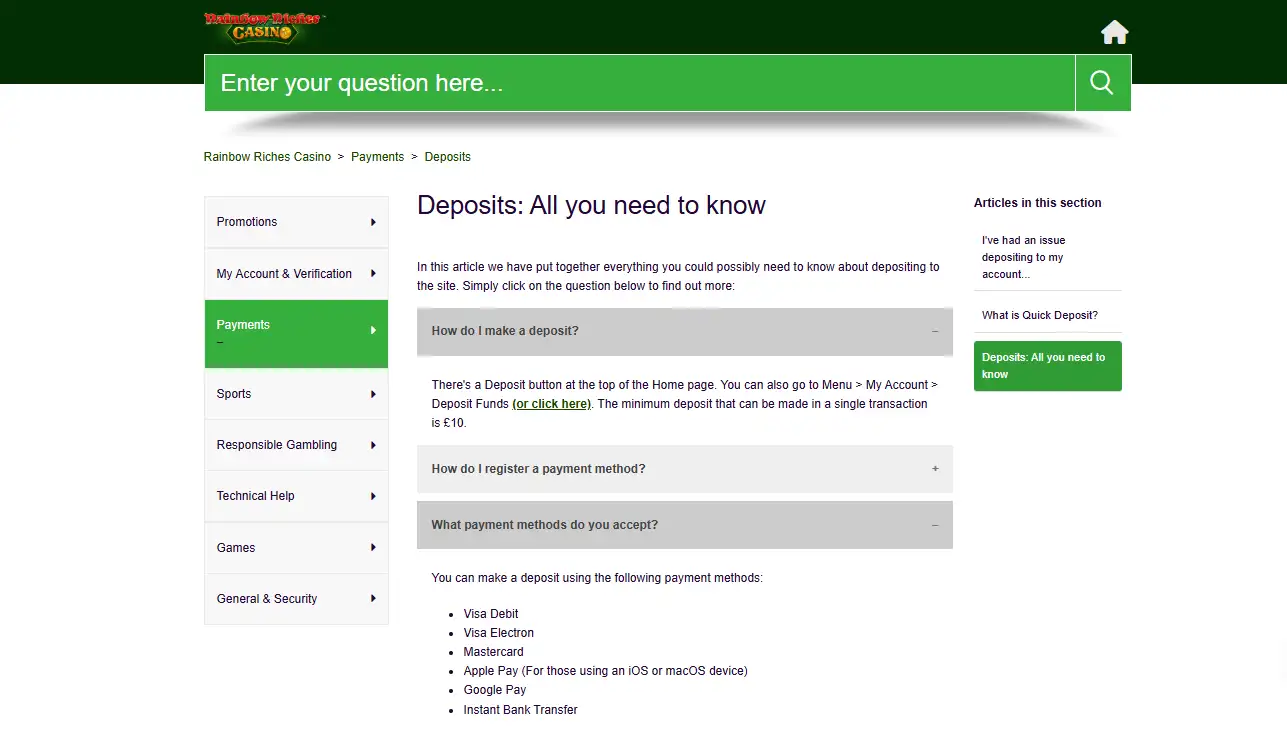
That distinction matters because payment methods do different jobs. A card can be familiar and direct, while a bank transfer connects the account to a bank through a different process. Open banking is another route between a customer’s bank and a payment service. These labels may sit beside one another in a cashier, but they do not promise identical availability or timing. The route is part of the transaction, not merely a choice of logo.
A specialist review has reported that open banking and bank transfers can support instant deposits and fast withdrawals at many sites. That is a description of potential, not a guarantee attached to every casino or account. The service offered, the customer’s circumstances and the operator’s current arrangements all matter. A payment label alone cannot settle whether a particular route is available for both directions of travel.
The wider menu can include digital wallets. Skrill and Neteller are offered at some sites, according to a specialist review, which also notes that promotions may exclude them. That detail belongs to the terms of a particular offer rather than to the wallet as a technology. A payment method can be accepted for funding without being treated the same way under promotional conditions; the two questions should not be collapsed.
PayPal is another familiar name in online payments, while Apple Pay is accepted for deposits at some UKGC-licensed casinos. Paysafecard has a narrower role: it is a prepaid voucher for deposits, not a route for receiving withdrawals. These differences are easy to miss when payment methods are gathered into one long list. A list says what may be present. It says little about what each option can actually do.

The cashier is therefore less like a shop window and more like a small map of the operator’s payment arrangements. Some routes may be absent altogether; others may be shown only when relevant to the account or transaction. A method listed in a general guide is not thereby confirmed for every casino. Nor does a familiar brand name tell the whole story: eligibility can depend on the specific service and the operator’s current setup.
This is why comparing payment routes means looking beyond the first deposit button. A deposit method that is available at the outset may not describe the full path later, while a service presented for withdrawals may have conditions of its own. Payment systems have their own boundaries, and casino cashiers translate those boundaries into a menu. Not every menu is the same.
The distinction between bank transfer and open banking also deserves care. They may be discussed together because both involve a bank account, but the terms do not necessarily describe the same process. A cashier may present a bank transfer as one method and an open-banking service as another. Their shared connection to banking does not establish that they use identical steps, or that either will be offered to every customer.
Electronic wallets introduce another layer: an account held with a payment provider sits between the bank and the casino. That can make the route feel separate from a card payment, but availability and offer conditions remain operator-specific. A wallet being named in a promotion page, cashier or review should not be taken as a standing promise that it will suit every transaction.
The practical point is modest. A debit card may be the starting route, while bank-based services and wallets form alternatives around it. Their presence varies, and their functions are not interchangeable. Checking the actual cashier keeps the decision anchored to the route being offered, rather than to a payment list that may describe a different site, account or moment. The menu is the evidence.

Can a Debit Card Be Used for Casino Gambling?
Yes. UK casinos commonly accept debit cards, including Visa and Mastercard, for deposits. A debit card draws on money held in a bank account; it is not the same as a credit card. The distinction matters at the cashier: credit-card payments for gambling are prohibited at UK-licensed casinos, while debit-card deposits remain an available option.
That answers the basic question, but a successful deposit is not a promise that every later payment will follow the same route or arrive at the same speed. A card is used to move money into the gambling account; withdrawing a balance is a separate transaction, subject to the casino’s payment process and applicable checks. The cashier’s deposit options alone do not establish how a withdrawal will be handled.
A specialist review describes card deposits as potentially instant, while a payout may take several business days. That is a reported comparison, not a fixed timetable for every casino or transaction. The payment appearing quickly on the way in says little about how long money takes to come back out. An account check or the operator’s processing stage can stand between the withdrawal request and receipt of funds.
The practical test is therefore not simply whether a casino accepts debit cards. It is whether the named card appears in that casino’s cashier for the account in question, and what the payment information says about withdrawals. Card brands are familiar, but acceptance can depend on the particular card and the operator’s current arrangements. A generic list of payment methods cannot settle that.
While deposits are often instant, withdrawals are separate transactions subject to operator approval and identity verification, which may take several business days.
For anyone asking whether a debit card can fund online gambling in the UK, the short answer is yes, where the casino offers that option and the card payment is accepted. The word “debit” does real work here: a credit-card payment, including one routed through a money service business, is not an alternative way to make the same deposit. A wallet also cannot be used to route credit-card funds into gambling.
The useful distinction is between paying in and receiving money out. Debit cards can serve the first purpose at UK casinos that accept them; they do not make the second automatic or equally quick. The cashier shows what is available before a deposit. The withdrawal terms describe the other half of the journey. Two different speeds.
Deposits, Minimums and Account Limits
The amount needed to open a casino balance is not a property of the debit card alone. It is set by the operator and can differ according to the payment method selected. A specialist review gives a starting-deposit range of £10–£20, while the cashier’s displayed minimum is the relevant figure for a particular transaction. A method with a higher threshold may make a small first deposit impossible, even when the card itself is accepted.
The same variation applies at the other end. A casino may set maximum deposits per transaction, day or month, and those ceilings can depend both on the payment route and on account status. The cashier may therefore show different conditions for different methods or change what is available as checks on an account progress. A headline minimum says little about how much can be deposited later, or whether a chosen method suits the intended amount.

Limits have a second purpose beyond payment processing. UK Gambling Commission rules require remote operators to ask new customers to set a financial limit before the first deposit. Account-level limit controls must also be accessible, so that a customer can manage the amount available for gambling rather than relying only on a transaction ceiling imposed by the cashier.
These controls are distinct. A payment limit governs what a particular route will accept; a financial limit is an account safeguard. Neither should be mistaken for the other, and a low deposit threshold is not evidence that a site has no meaningful controls. The rules put a pause before the first payment: an unusual point of friction in a business designed to make payment easy.
For someone comparing debit-card deposits, the practical check is therefore the amount shown for that card in the cashier, alongside the operator’s account-limit settings. Conditions may differ between payment options, and between accounts. No universal figure settles the matter.
Why Card Deposits Can Be Instant but Withdrawals Take Longer
A debit-card deposit and a casino payout are different transactions, even when they involve the same account. A specialist review reports that a card deposit can appear instantly while a withdrawal takes several business days. The difference is not necessarily a fault in the card: money entering a casino account may be credited before the casino has completed the checks needed to release money back out.

A withdrawal has an approval stage inside the casino. The operator may need to confirm the account holder’s identity and review payment details before authorising it. A specialist review notes that first withdrawals can take longer while verification is completed; payout speed also depends on whether the account is fully verified and how the casino handles approval. The clock, in other words, does not begin and end at the bank.
That distinction matters to anyone who plays slots with a debit card. A swift deposit says little about how soon winnings will reach a bank account. The cashier’s advertised payment method describes a route, not a promise that every stage will move at the same pace.
There is also a reason payouts are commonly sent back to the source used for funding. UK anti-money laundering rules generally require funds to return to the original payment source. This helps keep the movement of money traceable and reduces the scope for a gambling account to become a detour between unrelated accounts. Where the original route cannot receive a payout, an operator may need to arrange an alternative and carry out further checks.
The practical result is that a card can be quick on the way in and slower on the way out. The casino’s approval process, completed KYC and the return route all matter. A request marked as submitted may still be waiting for internal review before the payment provider or bank has anything to process.
For a fast withdrawal, the useful question is not simply whether debit cards appear in the cashier. It is how the casino handles approval, what verification remains, and whether payouts can return to the payment source used. Deposits travel light. Withdrawals carry paperwork.
Non-GamStop Claims and the Limits of Payment Information
A casino’s willingness to take a debit card and its relationship with GamStop are separate matters. The cashier describes a payment option; it does not establish whether a site is part of a self-exclusion scheme, whether it holds a UK Gambling Commission licence, or whether it is suitable for someone who has chosen to stop gambling.
That distinction matters because “not on GamStop” can be presented as though it were a payment feature, or a harmless alternative for anyone who has self-excluded. It is neither. Self-exclusion is a safeguard, not a technical obstacle to route around. A debit-card logo cannot tell anyone what protections apply to an account, and a polished cashier cannot turn an unlicensed operation into a legal one.
In the UK, online gambling is legal only through sites holding the relevant UKGC licence. Remote gambling operators serving Great Britain must hold that licence, wherever they are based. Offshore casinos may be accessible from the UK, but they operate outside the UKGC system. A claim that such a site accepts Visa or Mastercard does not change its regulatory position. The licence number can be checked on the Commission’s public register before any deposit.
Attention: A casino’s acceptance of debit cards does not confirm its licensing status or its relationship with self-exclusion schemes like GamStop.
For licensed remote operators, safeguards also sit inside the account, not just at the payment screen. New customers must be prompted to set a financial limit before making a first deposit, and account-level controls must remain accessible. UKGC-licensed casinos must also provide responsible-gambling tools, including self-exclusion.
These protections are not proof that gambling is harmless. They are part of the framework governing legal operators, while a payment method is simply one part of the transaction. Where a site markets itself as outside that framework, its card acceptance should not be mistaken for equivalent oversight or a way around an existing self-exclusion decision.
Payment compatibility answers a narrow question: whether a transaction may be offered. It cannot answer the more consequential questions about licensing, safeguards or the effect of gambling on a person who has chosen to stop. A card is not a credential.
Visa Debit: Check the Card and the Cashier
A Visa logo on a bank card does not, by itself, establish that the card will work at a particular casino. Payment pages and reviews can name Visa as an accepted method, but the decisive check is the casino’s own cashier: the payment options shown there reflect what is currently available for that site and account.
A specialist review lists Visa and Mastercard among the methods offered by the sites it covers. That gives a useful indication, not a universal promise. Eligibility can depend on the card product and the operator’s current payment arrangements, so a general Visa listing should not be read as confirmation that every Visa debit card is supported in the UK.
The cashier is where the distinction becomes practical. It may display Visa as an option, or it may not; the card issuer may also affect whether a transaction can be completed. A failed payment does not necessarily mean that Visa debit is unavailable everywhere, just as a logo elsewhere on the site does not guarantee acceptance for a particular card.

The useful check is therefore specific: confirm that Visa debit appears among the available methods in the cashier, then follow the operator’s instructions for that payment. Treat older review pages and broad payment badges as pointers rather than final evidence. Card schemes are familiar; their acceptance is not automatic.
Joining With a Debit Card: Keep the Payment Trail Consistent
A casino account and a debit card work best as parts of the same identity. The account details should belong to the person whose card is used; a mismatch can turn a straightforward transaction into a request for clarification or supporting documents. That is avoidable friction, not a payment feature.
When joining, the cashier is only one part of the setup. The account name, cardholder details and selected payment route should agree. Using another person’s card, or mixing accounts with different ownership details, can complicate checks even when the card itself appears to be accepted. KYC is not a decorative step: remote gambling licensees need to establish who holds the account.

The same logic applies when money leaves the casino account. Closed-loop rules and anti-fraud controls can mean that funds are directed back towards the source used to deposit. The cleanest arrangement is often one named account used consistently for both deposit and withdrawal. A different route may be possible, but it can bring extra checks.
This is why “which casino can I join using a debit card?” has no reliable answer based on the card brand alone. Availability depends on the casino’s cashier and the specific card, while a smooth setup also depends on ownership matching across the account and payment method. A payment logo cannot settle that question.
Before making a first deposit, the casino’s UK Gambling Commission licence can be checked on the public register. Then the account and payment details can be entered carefully, without treating someone else’s card as a convenient shortcut. The plain route is usually the least troublesome.
Are Visa and Mastercard deposits definitely debit cards?
No. Visa and Mastercard identify payment networks, not whether a particular card is debit or credit. Debit payments use funds in the linked bank account; check the card product and the casino cashier.
Why must withdrawals return to the deposit method?
Returning funds to the original payment source is a common anti-fraud and anti-money-laundering control. Using a different route may require additional verification.
Which payment methods are accepted in Great Britain?
UK casino cashiers may offer Visa and Mastercard debit cards, bank transfers, open banking, PayPal, Skrill, Neteller, Paysafecard, Apple Pay, Payz and Jeton. Availability varies by site and account, so check the cashier.
Which method has the lowest fees?
There is no universally cheapest method. Compare casino and provider charges, bank or issuer fees, currency conversion spreads and any network costs for the transaction.
Is Skrill available?
Yes, Skrill is available at some UK-friendly casino sites and is a common deposit option. It may be excluded from promotions.
What is the fastest withdrawal method for UK casinos?
PayPal, open banking services and debit cards linked to fast payout systems are generally among the quickest. The casino’s approval process and whether your account is verified also affect the time.
Do UK casino withdrawals require verification?
Verification can affect withdrawals, especially first payouts, which may take longer while checks are completed. Keeping account and payment details in the same customer’s name can reduce avoidable delays.
Published by the Rainbow Riches Casino 3 team.