Casinos That Accept Entropay in the UK: Payment Checks
 Available in GB
Payment availability can vary, while deposit costs, limits and withdrawal rules may shape whether a route fits a transaction.

Table of Contents
- The Entropay Question Starts in the Cashier
- What Casino Payment Rules Allow
- Comparing Payment Options Without a Rankings List
- Deposit Costs, Limits and the Small Print
- A Payment Route That Can Be Traced
- The Wider UK Casino Payment Landscape
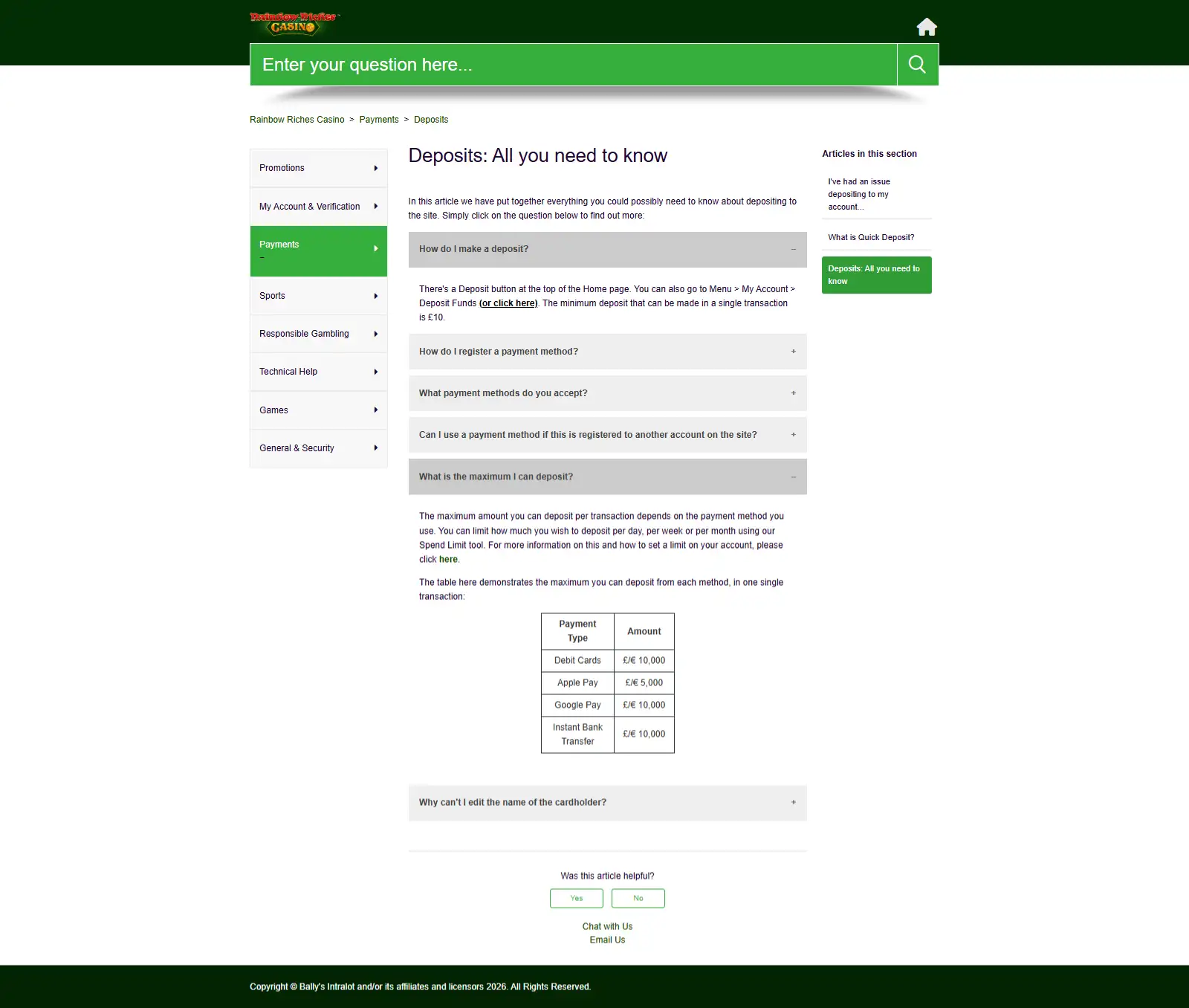
- A Payment Method Is Only Useful If It Fits the Transaction
- Deposits: Fast at the Start, Not Always at the End
- Why Withdrawals Often Return to the Original Source
- Withdrawal Timing Depends on More Than the Payment Method
The Entropay Question Starts in the Cashier
A casino payment page can look definitive until it is time to make a deposit. A logo on a review, a list copied across several sites or an old help page may describe what was available when that material was written. None establishes that a particular payment route is available to a particular customer now. The cashier is where the casino’s current options become visible.
That matters for anyone looking for an Entropay online casino in the UK. A page describing online casinos that take Entropay may be useful as a starting point, but its wording is not confirmation that Entropay appears in the casino’s own payment menu. Payment arrangements change; descriptions do not always keep pace. A named method should therefore be treated as a claim to verify, not as a promise carried forward by repetition.
The cashier check is practical and narrow. It asks whether Entropay is actually offered at that site, for the account being used, at the time of the intended transaction. If the method is absent, a broad page about online casino sites that accept Entropay cannot make it present. If it is shown, that establishes only what the cashier displays at that stage. It does not answer every other question about using the route.
Entropay availability can change, so check each casino’s current payment options before signing up. The details below provide one practical point of reference: the stated payout speed.
Payout speed: 1-3 business days Revery Play lists a payout speed of 1–3 business days. Check directly whether Entropay is currently available for your account.
Payout speed: 1-3 business days Chanze lists a payout speed of 1–3 business days. Check directly whether Entropay is currently available for your account.
Payout speed: 1-3 business days Amunbet lists a payout speed of 1–3 business days. Check directly whether Entropay is currently available for your account.
Payout speed: 1-3 business days SpinFormula lists a payout speed of 1–3 business days. Check directly whether Entropay is currently available for your account.
Payout speed: 1-3 business days NightLuck lists a payout speed of 1–3 business days. Check directly whether Entropay is currently available for your account.
Payout speed: 1-3 business days Zombillion lists a payout speed of 1–3 business days. Check directly whether Entropay is currently available for your account.
Payout speed: 1-3 business days BeOnBet lists a payout speed of 1–3 business days. Check directly whether Entropay is currently available for your account.
Payout speed: 1-3 business days EvoSpin lists a payout speed of 1–3 business days. Check directly whether Entropay is currently available for your account.
Payout speed: 1-3 business days Jetsetspins lists a payout speed of 1–3 business days. Check directly whether Entropay is currently available for your account.
Payout speed: 1-3 business days NightWin lists a payout speed of 1–3 business days. Check directly whether Entropay is currently available for your account.
This is a small distinction with a large effect. Payment names tend to acquire an aura of permanence. They are printed beside familiar card brands, arranged into tidy menus and reproduced in reviews whose layout suggests a settled catalogue. But a payment method is not a fixture of a casino in the way a game title might be. Availability can depend on the operator’s current setup and on what the individual account is allowed to use. A menu, not a memory, is the useful evidence.
A specialist review lists Visa and Mastercard among payment methods and says that GBP is supported. Those statements still leave two details for the cashier and account settings to settle: whether either card product is currently eligible for a UK customer, and which currency the account will use. The fact that a brand is familiar does not settle the first point. The presence of pounds in a general description does not settle the second. The visible settings at the point of use matter more than a broad label.
Entropay searches often bundle several expectations into one phrase: a casino that accepts the method, a site that is available in the UK, and perhaps a recommendation of the “best” place to play. Those are separate matters. A payment symbol cannot establish the standing or suitability of a casino, and a ranking cannot prove that the method is still active. The cashier answers the payment-availability question; it does not confer a wider endorsement.


There is also a difference between seeing a name somewhere on a site and seeing it in the relevant part of the cashier. A general payment-information page may explain the operator’s options in broad terms, while the deposit screen presents the methods currently available to that account. The second is the more direct check for a proposed deposit. If information conflicts, the contradiction itself is a reason not to assume that the route will work.
The same care applies when an old name appears in a current-looking article. Online payment language can outlast the arrangements it once described. A reader may encounter “Entropay” in a heading or list, then find a different set of options when opening a casino account. The discrepancy need not reveal anything dramatic; it may simply mean that the description and the cashier are no longer aligned. Still, the practical answer is the cashier.
That answer should not be stretched beyond its purpose. A method appearing in the deposit menu does not, by itself, establish its charges, deposit thresholds, withdrawal compatibility or the time it takes for funds to arrive. Those belong to separate checks along the transaction. At this first stage, the question is only whether the route is offered at all. No imagined fee or payout timetable can make an unavailable method usable.
Attention: A payment method appearing in the deposit menu does not establish its charges, withdrawal compatibility, or payout speed; these require separate checks.
For a search about Entropay online casinos in the UK, the sensible starting point is therefore not a confident list but a live check inside each casino’s cashier. The name may be mentioned elsewhere; the current menu is what can confirm present availability. And if it is not there, the search result has not changed the answer.
The menu is the evidence.
What Casino Payment Rules Allow
The UK rulebook draws a firm line around credit-card payments for gambling. The ban took effect on 14 April 2020 and has not since been relaxed. A casino cashier may display several ways to move money, but the presence of a familiar payment brand does not make every funding route acceptable. The decisive issue is whether the transaction uses credit-card funds for gambling.
That distinction matters when a payment passes through an intermediary. Routing a credit-card payment through a money service business does not turn it into an eligible gambling payment. Nor can a remote gambling licensee accept a wallet payment where that wallet permits credit-card funds to be used for gambling. Changing the label on the route does not change the source of the money.
The rule is deliberately concerned with the path funds take, not merely the name printed beside a button. A payment wallet can look separate from a card, and a prepaid product can look separate from a bank account, but those appearances do not settle the regulatory question. The relevant boundary is whether credit-card funding can be used to support the gambling transaction. Where it can, the operator cannot accept that wallet route for gambling.


This is why a search for casinos accepting Entropay in the UK cannot be answered safely by matching a product name against an old list. A name alone does not establish what kind of payment route is offered, how it is funded, or whether a particular cashier permits it under the rules that apply to the operator. The regulatory test concerns the actual payment arrangement, not the familiarity of its branding. Old labels have a habit of outliving the products and rules they once described.
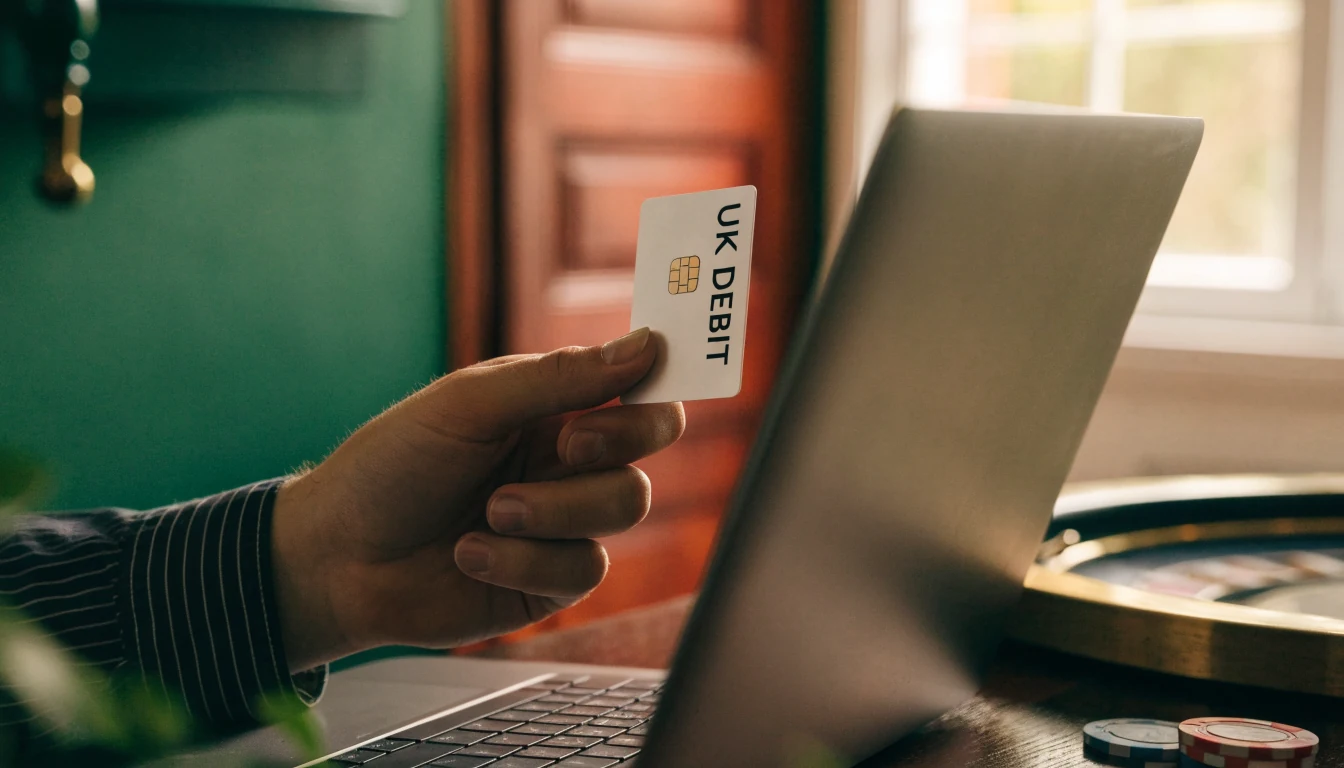
The prohibition reflects a judgement about credit and gambling: borrowing should not be made into a convenient part of the wager. It is not a general ban on digital payments, nor does it mean every card-branded transaction is treated as credit. UK casinos commonly accept debit cards, including Visa and Mastercard, but the current cashier and the eligibility of the particular card product still matter. A card network’s logo does not, by itself, identify whether a transaction draws on debit or credit.
For wallets, the boundary is similarly specific. A wallet is not automatically acceptable merely because it is not itself a bank card. If its terms allow credit-card funds to be used for gambling, UK remote gambling licensees cannot accept that wallet payment for gambling. The restriction follows the funds into the wallet; it does not stop at the moment money first leaves the card. That makes the wallet’s funding rules relevant alongside the casino’s own cashier options.
Credit Card Ban
UK gambling licensees cannot accept wallet payments if those wallets permit the use of credit-card funds for gambling transactions.
The UK’s approach is less interested in the technological costume than in the financial substance. A card, an intermediary service and a wallet can form one chain, even if the customer sees separate screens and separate account names. The compliance boundary is meant to prevent credit-card gambling from reappearing through a different interface. A digital detour is still a route.
These payment restrictions sit within a locally regulated market. Remote gambling licensees offering real-money gambling to customers in Great Britain must hold the relevant UK Gambling Commission licence, wherever the operator is based. Online gambling is legal in the UK at licensed and regulated sites; an offshore casino outside the UKGC system is not made part of that system simply by offering a payment method familiar to British customers. The Gambling Act 2005 governs gambling in England, Wales and Scotland, while Northern Ireland is outside that Act’s scope.
For a payment question, the practical consequence is that the cashier belongs to a particular operator working under particular rules. A payment method described on an old page, or associated with a previous product arrangement, cannot establish that a present-day UK transaction is permitted. The operator’s current cashier must show the route, and the route must comply with the credit-card restrictions. Before a deposit, the licence number can also be checked on the UK Gambling Commission’s public register.
This is the boundary, not a verdict on every payment bearing a particular name. Entropay in a search phrase does not answer whether the underlying payment is available or compliant at a UK casino. A route funded by credit-card borrowing remains barred; a permitted route must stand on its actual funding structure and the operator’s current arrangements. The distinction is plain, even when the cashier makes it look otherwise.

Comparing Payment Options Without a Rankings List
A payment menu can look like a measure of a casino’s quality: more logos, more choice, perhaps a better fit for more players. But a long menu is not a ranking. It records what a site says it supports, not whether every route is available to every customer, or whether a particular method is suitable for the transaction in question.
A specialist casino review’s comparison of UK-facing sites mentions Visa, Mastercard, bank transfers, e-wallets and several cryptocurrencies. That is a catalogue of categories, not proof that each option appears at every casino or remains available in every account. Menus change, and a method named in a review may not be offered by the site at the point when a deposit is being made. The distinction is plain, if easily overlooked: an inventory is not a recommendation.
The same caution applies to searches for Entropay casino sites in the UK. A page that discusses Entropay, or places its name beside a casino, does not by itself establish that the casino currently accepts it. Nor does a collection of payment logos tell how the route is presented to a particular customer. A meaningful comparison needs to be tied to the casino’s own available options, rather than to the appearance of a familiar name in a list.
That matters because payment methods are not interchangeable merely because they share a menu. A debit card, an e-wallet, a bank transfer and a cryptocurrency route belong to different systems, with different account arrangements and different practical constraints. Their presence side by side can make them look like equivalent choices. They are not. The menu is a doorway, not a verdict.
- Verify the current cashier menu
- Check the operator’s license
- Compare available payment categories
- Rely on old review lists
- Assume a logo equals availability
- Treat a long menu as a ranking
What a payment list can—and cannot—show
A site’s payment information can help establish the kinds of routes it presents: card payments, transfers, wallets or digital currencies. It may also reveal whether a particular method is mentioned at all. That is useful as a first comparison, especially where the question is whether an Entropay route is named. It is not enough to decide that one casino is better than another.
The word “best” usually smuggles several judgements into one neat label. Best for which purpose? A player comparing available payment types may value a familiar card route; someone else may be looking for a wallet or a bank-based option. Without a stated criterion, a ranked list can disguise the writer’s selection as an objective order. A payment menu, however extensive, cannot settle the question on its own.
This is especially true when the comparison concerns an older or less familiar payment name. A search result can preserve information long after the operator’s own arrangements have changed. That does not make every mention wrong; it makes the date and status of the information important. For Entropay deposits, the useful distinction is between a name appearing in general casino material and an actual option offered by the casino. Treating those as the same thing creates a list with a polished surface and uncertain contents.
Nor should a casino be rated higher simply because it names more payment brands. A broad catalogue may include methods that are irrelevant to a particular customer, while a shorter menu may contain the route that fits the intended transaction. Quantity is easy to count. Suitability is not.
There is also a difference between a payment method being discussed and a casino accepting it. A comparison article may describe common categories across several sites without confirming each category at every operator. The careful reading is therefore modest: note which types of payment are reported, then assess any specific method against the casino’s own current information. This avoids turning a general overview into a claim about every site.
Compare like with like
A sound comparison starts with the same question for each casino. Is the method named by the operator? Is it presented as an available payment route, rather than mentioned in an older review or in a general list? Does the information apply to the UK-facing service? These checks do not create a league table, but they prevent unlike claims from being treated as equal evidence.
Then comes the purpose of the comparison. If the aim is simply to find a casino that names Entropay, the relevant point is its current availability, not how many other methods appear beside it. If the aim is to compare payment choice more broadly, the categories matter—but so does the distinction between a card, a bank transfer, an e-wallet and a cryptocurrency. A list that bundles them together without explanation looks comprehensive while saying very little.
Total transaction costs can be influenced by casino charges, provider fees, card issuer fees, currency conversion spreads, and network costs.
Cost is another reason not to declare a universal winner from the menu alone. A specialist review notes that the total cost can depend on casino charges, provider fees, currency conversion spread and network costs for the amount involved. That makes a blanket claim about the cheapest payment method unreliable: the answer depends on the actual route and transaction, not the number of logos or a general ranking. The arithmetic belongs to the transaction. The menu cannot do it in advance.
So a shortlist of casinos that mention Entropay should be treated as a starting point, not a result. Names can be compared; their current payment information still needs to support the comparison. A crowded menu may look reassuring, but it does not make an unverified method available. More logos, less certainty.
Deposit Costs, Limits and the Small Print
A deposit has a price beyond the figure entered in a cashier. A specialist review of casino payment costs identifies several possible contributors: a charge from the casino, a payment-provider fee, a fee from the card issuer or bank, a currency-conversion spread, and, where relevant, a network charge. Not every transaction attracts every cost. The important distinction is between what the cashier displays and what may be deducted elsewhere along the route.
A flat fee is easy to notice because it appears as a separate amount. Currency conversion is less obliging. If an account or payment route handles money in a currency other than pounds, the exchange rate may include a spread: the difference between the rate used for the transaction and a reference rate. A specialist review notes that this spread can outweigh a visible flat charge. The comparison is not simply “fee” against “no fee”; it is the total cost of moving the amount in question, including any conversion.


That calculation depends on the account currency as well as the payment method. A cashier may present a deposit amount in pounds while the underlying account or provider applies a different currency basis. The displayed figure alone does not establish the final amount leaving a bank account or wallet. Fee schedules and conversion terms belong to different parties, and the casino’s own payment page may not describe every charge imposed by an issuer or provider. Small print has a talent for dividing responsibility.
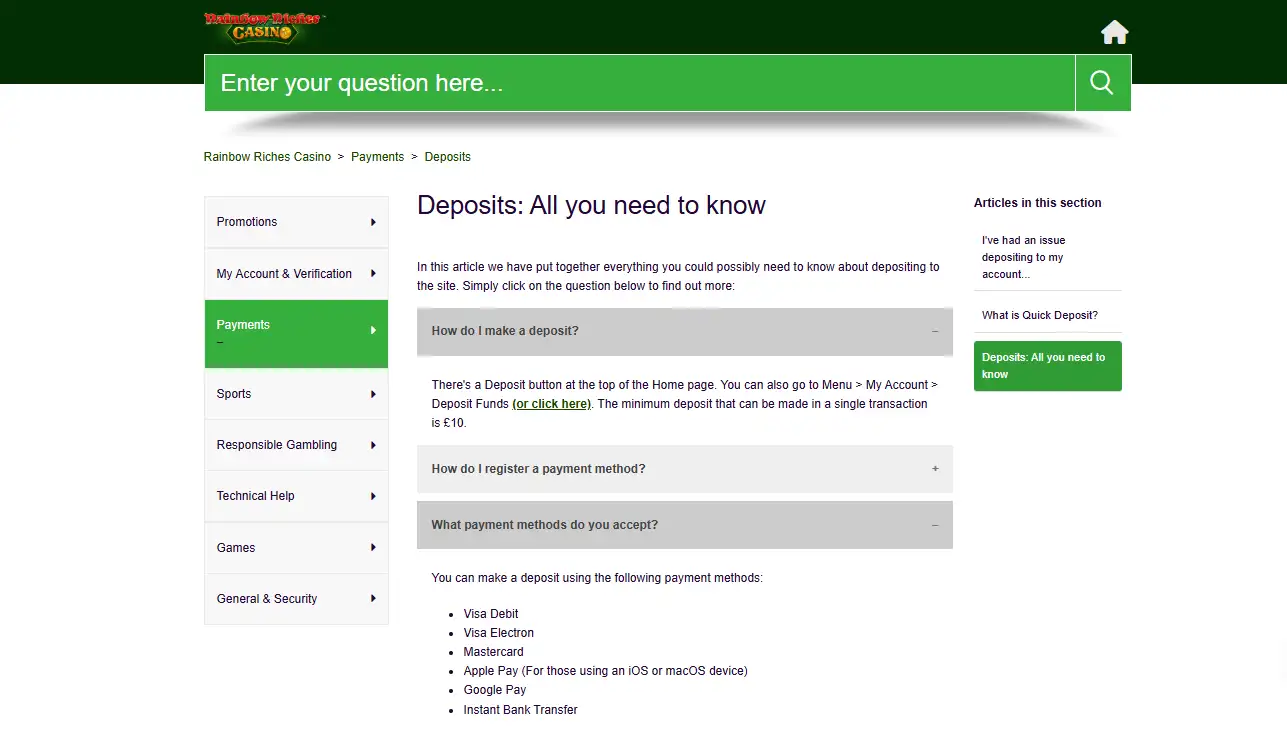
Minimums create another practical boundary. A specialist review places the minimum deposit in the £10–£20 range, with the selected payment method affecting where it falls. That is a reported range, not a promise that every cashier will accept the same smallest amount. The minimum can determine whether a modest deposit is possible at all, while a separate fee may make that deposit disproportionately costly. A payment that technically works can still be an awkward fit.
Maximums are less tidy. A casino may set one ceiling for an individual transaction and different ceilings for daily or monthly activity; the applicable amount can also depend on the payment route and account status. A cashier’s displayed maximum therefore matters more than a general figure found elsewhere. Limits may change across methods and accounts, so a number presented without those conditions is only half an answer.
Deposit Limits
Minimum deposits typically fall in the £10–£20 range, though the specific method used can affect the actual minimum. Maximum limits may vary by transaction, daily or monthly activity, and account status.
There is also a separate spending control before the first deposit. UKGC rules require remote gambling operators to ask a new customer to set a financial limit before allowing that initial payment. Account-level controls must remain accessible afterwards, so the limit is not merely a form completed at registration and then forgotten. This places a deliberate pause before money enters the account: a modest piece of friction in a system otherwise designed to make transactions feel routine.
The useful comparison is therefore not just which casino appears to accept a requested payment route. It is whether the cashier’s minimum and maximum suit the intended transaction, whether any casino or provider charge applies, and whether currency conversion changes the cost. Those details should be read together, before the deposit is made. A low visible fee can be the least interesting number on the page.
A Payment Route That Can Be Traced
A casino transaction is easier to account for when the name on the gambling account and the name attached to the payment route belong to the same person. A mismatch may be innocent: a shared household device, an old account detail or a payment account registered under a different name can all create discrepancies. But a system designed to establish who is moving money cannot safely treat every discrepancy as harmless.
That is why consistency matters more than an attractive label in a cashier. An Entropay payment route, if it is offered for a particular account, would still need to be associated with the customer who holds that casino account. The method’s appearance in a list does not answer whether its ownership details match, or whether the operator can connect the transaction to the person named on the account.

The same principle applies to the account details themselves. A name entered differently across services, outdated personal information or a payment account belonging to somebody else can turn a routine transaction into one that needs attention. Keeping the basic details aligned reduces the chance that ownership, rather than the payment itself, becomes a point of uncertainty.
There is an unglamorous reason for this emphasis. Remote gambling is a business conducted at a distance, with money moving between organisations that do not share a kitchen table or a common understanding of who is who. Records stand in for presence. A transaction needs a trail that can be connected to an account and its holder; where the trail breaks, checks become harder to avoid.
For an Entropay casino payment in the UK, therefore, the useful question is not merely whether the name appears somewhere in a payment menu. It is whether the route belongs to the same customer as the casino account and can be used consistently. The cleanest arrangement is often one named account used for both depositing and withdrawing, rather than a succession of accounts with different ownership details. Consistency is not a guarantee against checks, but it removes one avoidable source of friction.
This is an ownership question, not a contest between payment brands. A familiar method can still be a poor fit if its account belongs to someone else; a less familiar one may be straightforward when the details correspond. When considering Entropay casinos for UK players, the method’s name alone cannot establish that connection. The relevant details are the identity attached to the casino account and the ownership of the payment route.
Using a single named account for both depositing and withdrawing provides the cleanest record and reduces avoidable friction during checks.
In practical terms, the clearest record is also the least theatrical: one customer, one matching set of account details, and a payment route in that customer’s name. It gives the transaction a coherent shape. That is the point.
The Wider UK Casino Payment Landscape
Entropay may still appear in searches for UK casino payments, but a familiar name is not evidence that a casino currently supports it. Payment menus reflect each operator’s arrangements, and the wider picture is a mixture of established card payments, bank-based routes and digital wallets rather than one standard set of options.
Debit cards remain a common fixture at UK casinos, including Visa and Mastercard. Their familiarity is part of their appeal: the payment route is connected to a bank account, not a separate casino-specific product. That does not make every card or account eligible at every site, and a payment logo on a general information page is not a promise of availability in an individual cashier.
Bank transfers and open banking services add another strand. A specialist casino review has described these routes as capable of supporting instant deposits and fast withdrawals at many sites. That is a report about the services it covered, not a timetable that can be assumed across the market. The bank, the casino and the particular route all matter.
Digital wallets occupy a more varied position. Skrill and Neteller appear at some casinos, but a specialist casino review also notes that promotions may exclude payments made through them. That detail can change the practical value of a method: the payment route may be available while a particular offer is not. The cashier’s terms, rather than a wallet’s general popularity, determine the result.

The broader menu can also include prepaid products and newer payment technologies, though their presence is not uniform. A payment method that appears on one UK-facing casino’s page may be absent from another, or listed under conditions that make it unsuitable for a particular account. Entropay belongs in that same landscape of names whose status should not be inferred from old mentions or from availability elsewhere.
This variety says something about the ordinary work of online commerce. Casinos inherit the habits of banking, retail and digital services, then arrange them around their own systems. The result is not a national standard but a patchwork. Familiar names, different rules.
A Payment Method Is Only Useful If It Fits the Transaction
A payment logo can look like a promise when it is only a partial description. In a casino cashier, a method may appear under deposits without being available for withdrawals. The distinction matters: a route that moves money into an account does not, by that fact alone, provide a route back out.
The labels need to be read as separate claims. “Deposit” describes one direction; “withdrawal” describes another. Treating them as interchangeable turns a menu into an assumption, and assumptions are poor companions to a transaction. The useful question is not simply whether a method is named, but whether it is supported for the particular stage of the payment journey.
Some options, such as Paysafecard, are designed solely for moving funds into an account and cannot be used for payouts.
Methods like Apple Pay may be accepted for deposits at some UKGC casinos but not necessarily for withdrawals.
“Deposit” and “withdrawal” are separate claims; availability in one direction does not guarantee the other.
Paysafecard makes the distinction plain. It is a prepaid voucher used for deposits only, so its presence in a cashier does not make it a payout route. That is not a defect in the voucher; it is a limit on what the method is for. A deposit-only option can still serve a purpose, but it cannot complete both ends of the journey.
Apple Pay offers a different reminder. Some UKGC-licensed casinos accept it for deposits. That fact does not establish that Apple Pay is available for withdrawals at those casinos, or at any particular one. Each direction has to be considered on its own terms. A familiar name on the deposit screen is not evidence of a matching exit.
This is why payment-method comparisons can mislead when they flatten everything into a single list. A method shown beside a deposit button and one shown in withdrawal instructions may look like equivalent entries, yet they answer different questions. The relevant information is the cashier’s treatment of the method for each transaction type, not its general familiarity or its appearance elsewhere on the site.
For anyone looking for an Entropay casino in the UK, the same distinction applies. A name associated with payments is not enough to establish that it can be used for a deposit, still less that it can support a withdrawal. Compatibility belongs to the whole route, not to a logo in isolation.
A payment method is useful only within the boundaries the casino sets for it. Deposit access, withdrawal access and the account’s own available options should not be collapsed into one claim. Small labels; large consequences.

Deposits: Fast at the Start, Not Always at the End
A payment can arrive at the casino quickly without setting the pace for money leaving it. A card deposit may appear instantly in the account, while a later payout can take several business days. A specialist review reports that contrast; it should be read as an example of how the two stages can differ, not as a timetable promised by every casino.
The distinction is easy to miss because the cashier presents a deposit as a single action. Funds are sent, the balance changes, and the transaction looks complete. A withdrawal is a separate movement, with its own route and handling. The speed of the first does not establish the speed of the second.
That matters when judging a payment method associated with Entropay or any other card-linked route. Seeing a deposit option does not establish that the same route is available for a payout, or that a payout would arrive at the same pace. Even a prompt balance update says little about when funds might reach an account outside the casino.
The familiar language of “instant” belongs to the visible end of the transaction: the moment the casino balance reflects a deposit. It can make the whole payment journey sound immediate, though only one part has been described. A delay at the payout stage is not necessarily a contradiction; the two movements need not share a timetable.
Deposit Speed
Prompt balance updates during deposit do not guarantee the same speed for withdrawals, which follow a separate clock.
This is why deposit speed is a narrow measure. It tells how quickly funds may show up for play, not how quickly they may return. The difference is small in wording, substantial in expectation. A fast beginning. A separate clock.
Why Withdrawals Often Return to the Original Source
A casino payout is not simply a matter of choosing a convenient destination. UK anti-money laundering rules generally expect funds to go back through the payment source used to put them in. This closed-loop approach helps connect a withdrawal to the account that supplied the deposit, rather than allowing casino funds to move through unrelated routes.
That is also an anti-fraud measure. A payment method registered to someone else, or a request to send funds somewhere different, can make it harder to establish who owns the money. Returning it to the original source gives the transaction a traceable path. Not glamorous, but deliberate.

The rule matters when an older payment service is no longer available, an account has been closed, or the casino’s cashier shows a route that is not the one used for the deposit. A different destination may still be considered, but it can prompt additional checks. The operator may need to confirm the account holder’s identity and establish why the original route cannot be used. A change of destination is therefore not just a preference; it changes the evidence attached to the transaction.
For anyone looking at casinos that accept Entropay deposits in the UK, the important distinction is between getting money into an account and being able to receive a later payout through the same source. A payment option’s presence in a deposit menu does not settle the withdrawal route. Closed-loop rules can shape what happens after a deposit, even when the cashier appears to offer alternatives.
Keeping account details and payment ownership aligned reduces avoidable questions. Where that is not possible, the casino may ask for further verification before approving a different route. This is about tracing funds, not a promise that every payment service will accept withdrawals.
Withdrawal Timing Depends on More Than the Payment Method
A withdrawal has a journey inside the casino before it has one through the banking system. The request may wait for internal approval, and a first payout can take longer if KYC checks are still being completed. A payment option’s advertised speed therefore describes only part of the process; it does not tell how quickly the casino will authorise a particular request.
A specialist review places PayPal, open banking services and debit cards connected to fast payout systems among the quicker routes, but that is a comparison reported by one review, not a timetable that applies to every casino. The operator’s processing queue and the status of the account remain part of the clock. A method that moves money rapidly after approval cannot remove time spent waiting for approval.
Bank transfers have their own practical rhythms. A request made after a bank’s cut-off may not begin moving until its next processing window. Weekends can interrupt that timetable, while currency conversion can add another stage between the casino’s payment and the amount appearing in an account. The date a withdrawal is marked as sent is not necessarily the date it becomes usable.
For an Entropay-related withdrawal, the central timing question is not answered by the method’s name alone. The casino must first process the request, and any verification still outstanding can affect when that happens. The relevant payment route then has to complete its own steps. These are separate clocks, though a cashier or status page may compress them into a single reassuring label such as “pending” or “processed”.
That distinction is easy to miss when a deposit appeared promptly. A withdrawal is not the deposit running in reverse; it is a new transaction, subject to review and the receiving route’s timetable. Banks keep their own hours.
Why must withdrawals return to the deposit method?
Returning funds to the original payment source is a common anti-fraud and anti-money-laundering control. An alternative may require additional verification.
What is the fastest withdrawal method for UK casinos?
PayPal, open banking services and debit cards linked to fast payout systems are generally among the quickest. The casino’s approval process and account verification also affect how soon funds arrive.
Which payment methods are accepted in Great Britain?
UK casinos commonly accept debit cards, and many also offer PayPal, bank transfer or open banking. Paysafecard is for deposits only, while Skrill and Neteller are available at some sites; check the casino’s cashier for current options.
Can I deposit in GBP?
Yes, GBP is supported, but check the account currency before depositing to avoid conversion.
What is the current minimum deposit?
The minimum deposit usually starts at £10–£20, depending on the payment method.
Which method has the lowest fees?
There is no universal lowest-fee method. Compare the casino’s charges, provider or bank fees, currency-conversion spread and any network costs for your transaction.
Are Visa and Mastercard deposits definitely debit cards?
No. The brand alone does not confirm which card product is eligible; check the cashier and your card details. UK casinos cannot accept credit-card funds for gambling.
Is Skrill available?
Yes, Skrill is available at some UK-friendly casino sites, though it may be excluded from promotions. Check the cashier for current availability.
Published by the Rainbow Riches Casino 3 team.