Casinos That Accept Bank Transfers in the UK
 Available in GB
Boku payments are charged through the mobile network, while bank transfers draw on a bank account; the options are not interchangeable.

Table of Contents
- Bank transfers and pay-by-phone are different things
- Why the evidence for casino payment options is changing
- What a Boku deposit actually involves
- Where the phone-bill charge appears
- The limits on pay-by-phone deposits
- As operators move away from Boku
- Deposits and withdrawals do not follow the same route
- Pay-by-phone deposits and bonus conditions
- Checking the terms before using a phone payment
- Small deposits, fixed amounts and monthly caps
Bank transfers and pay-by-phone are different things
A bank transfer and Pay by Phone can both move money towards a gambling account, but they do so through different systems. A bank transfer sends funds from a bank account. Pay by Phone places a payment through a mobile service; with Boku, the charge is added to the customer’s mobile phone bill. The phone may be the device used to make the payment, but that does not turn the transaction into a bank transfer.
That distinction matters when looking for an online casino that accepts bank transfers in the UK. Information about Boku or another Pay by Phone service describes a mobile payment option, not a bank-account transfer facility. The methods are not interchangeable labels, and one cannot establish the availability of the other. A casino cashier may offer several ways to pay, but the presence of a phone-payment option says nothing by itself about whether bank transfers are accepted.
The difference is practical as well as technical. A bank transfer draws on a bank account; a Boku deposit is charged through the mobile network. Someone comparing online casinos with bank-transfer payments therefore needs information that specifically identifies a bank transfer in the casino’s cashier or payment terms. A general reference to “mobile payments” is not enough. Nor is a casino’s use of a UK-facing service evidence that its customers can send money directly from a bank.
When considering a UK casino that accepts bank transfers, payout timing is one practical detail to check. This list provides a concise reference for the available payout-speed information.
Payout speed: 1-3 business days Revery Play has a stated payout speed of 1–3 business days.
Payout speed: 1-3 business days Chanze has a stated payout speed of 1–3 business days.
Payout speed: 1-3 business days Amunbet has a stated payout speed of 1–3 business days.
Payout speed: 1-3 business days SpinFormula has a stated payout speed of 1–3 business days.
Payout speed: 1-3 business days NightLuck has a stated payout speed of 1–3 business days.
Payout speed: 1-3 business days Zombillion has a stated payout speed of 1–3 business days.
Payout speed: 1-3 business days BeOnBet has a stated payout speed of 1–3 business days.
Payout speed: 1-3 business days EvoSpin has a stated payout speed of 1–3 business days.
Payout speed: 1-3 business days Jetsetspins has a stated payout speed of 1–3 business days.
Payout speed: 1-3 business days NightWin has a stated payout speed of 1–3 business days.
This is a modest distinction, but payment names are often made to carry more meaning than they can bear. A method that uses a phone is not automatically a bank method; a method that funds a casino account is not necessarily available at every casino. The wording should identify the actual route the money takes.
The wider regulatory setting concerns gambling operators, not the availability of any particular payment method. In Great Britain, the UK Gambling Commission is the regulator for commercial gambling. It oversees remote gambling offered to consumers there even when the operator’s key equipment is located elsewhere. Its remit includes online casinos, and it issues operating licences to businesses and personal licences to individuals working in the regulated gambling sector.
That regulatory framework sets conditions for offering gambling to the British public. It does not certify a casino’s cashier as supporting bank transfers, Boku, or any other named payment service. A licence and a payment option answer different questions: the first concerns whether a business may offer gambling under the relevant rules; the second concerns how that business lets customers deposit. Treating one as proof of the other confuses oversight of gambling with the mechanics of payment.

The legal geography also deserves care. The Gambling Act 2005 governs gambling in England, Wales and Scotland, while Northern Ireland has a different legal framework. The UK Gambling Commission’s role in regulating remote gambling offered to consumers in Great Britain should not be stretched into a claim that every part of the United Kingdom has precisely the same arrangements. “UK casino” is common shorthand, but the underlying regulatory description may be narrower.
For a payment comparison, the useful question is therefore not merely whether a site is licensed or whether it accepts a phone payment. It is whether the specific cashier lists bank transfer as an available method for the account in question. Payment menus can differ between operators and can change, so an old description or a broad category label may not settle the matter. The distinction is plain. The details are not.
A page about casinos that accept bank transfers should not use Boku information as a substitute for bank-transfer evidence. Boku belongs to the Pay by Phone category: the charge is routed through the mobile service rather than sent as a transfer from a bank account. Other Pay by Phone names likewise describe mobile-payment routes, not a general promise that a casino accepts bank transfers.
The regulatory context remains useful, but only in its proper place. The Commission’s licensing system governs commercial gambling in Great Britain; it does not determine which payment rails a particular operator chooses to support. Conversely, seeing a bank-transfer option would identify a payment route, not by itself establish the operator’s regulatory status. Those are separate checks, and neither should be inferred from the other.
Attention: The presence of a mobile payment option like Boku does not prove that a casino accepts bank transfers, as these are different payment systems.
So the terms need to stay exact. Pay by Phone means a mobile-billed payment method such as Boku. Bank transfer means money sent from a bank account. The UK’s gambling regulator oversees licensed remote operators serving Great Britain, while payment acceptance is a separate operational choice made by each casino. Keeping those categories apart prevents a description of one method from being mistaken for evidence about another.
Why the evidence for casino payment options is changing
Payment information has a short shelf life. A casino’s page, a comparison table and the cashier itself may not all describe the same moment in a market where operators have been withdrawing Boku. Since 2023, the number of UK Gambling Commission-licensed casinos accepting it has been falling. A reference to Boku can therefore be accurate as a record of an earlier position and still fail to describe what a casino currently offers.
That matters when the search is for a casino that accepts a particular way to pay. A list is not a permanent catalogue: each entry depends on an operator continuing to make that method available. As the number of remaining casinos becomes small, even an apparently substantial collection of old references can give a misleading impression of breadth. Repetition is not confirmation.
The change has not been the result of a UK Gambling Commission rule naming Boku for prohibition. The Commission did not introduce a specific ban on the method. Individual operators removed it because of compliance risk. That distinction matters. A regulator-wide ban would suggest a single change applying across the market; operator decisions instead leave availability uneven, with some licensed casinos retaining Boku while others have dropped it.

There is a dry lesson in that unevenness. Regulation sets the boundaries within which gambling businesses operate, but it does not require every operator to offer every payment method. A method can disappear from one cashier without disappearing from the whole market. Nor does its continued appearance at a small number of casinos show that other operators are likely to restore it. It shows only that decisions have differed.
The UK Gambling Commission is the regulator for commercial gambling in Great Britain. Remote operators serving customers there must hold the relevant licence, wherever their key equipment is located. That regulatory framework is important when considering the status of a casino, but it does not establish which payment choices its cashier currently supports. A licence and a payment option answer different questions.
This is why older descriptions of casino payment options deserve careful reading. A page may continue to circulate after an operator has changed its arrangements; a list may preserve a name without making clear when its payment information was checked. Neither circumstance proves deliberate misrepresentation. It does mean that the mere presence of a casino in a Boku list cannot settle whether the option remains available now.
The shrinking pool also changes what a list can reasonably promise. When many operators once shared a payment method, a broad directory might have seemed a useful map of the market. With only a small number of licensed casinos still accepting Boku, the same format can exaggerate how widely the method is supported. The list may look comprehensive because it is long, while its entries are old, repeated or out of step with current operator decisions.
Individual operators have removed Boku due to compliance risk, rather than as a result of a specific UK Gambling Commission ban on the method.
Searches for bank-transfer casinos belong to a different payment question. A page about Boku cannot establish which casinos accept bank transfers, and a casino’s general payment information does not prove that every listed method remains available. These categories should not be collapsed merely because both concern moving money into a gambling account. The relevant point here is narrower: Boku’s declining presence makes broad claims about casino payment availability less reliable unless the operator’s current position is clear.
The reasons for the decline should not be embellished. Compliance risk is the stated explanation for operators’ decisions, but that does not reveal the private reasoning behind each individual change. It would be easy to turn a general explanation into a story about particular procedures or events.
For the same reason, a trend should not be mistaken for a universal rule. Some licensed casinos still accept Boku; others do not. The regulator has not prohibited it by name, and the market has not preserved it everywhere. The result is neither a straightforward national ban nor a stable, widely available option, but a smaller and less dependable presence across casino payment pages.
Payment information is not an archive, though many pages behave like one. The practical significance of the change is simple: older references can explain why Boku appears in discussions of casino payments, but they cannot, on their own, establish its present availability at a particular operator. The market has moved. The paperwork often trails behind.
What a Boku deposit actually involves
A Boku deposit begins in the casino cashier, among the payment methods available to the account. The player selects Boku, enters the amount to deposit and supplies a mobile phone number. The payment then moves out of the cashier and onto the phone: Boku sends an SMS verification code, which must be entered to confirm the transaction.

That is the practical sequence. It does not require entering card details in the payment form; the identifying detail at this stage is the phone number, followed by the code sent to it. The code links the attempted deposit to access to that mobile number. Without the confirmation step, the requested payment has not been authorised through this process.
The cashier is therefore more than a place to choose a sum. It is the point where the casino account and the phone-based payment meet. The account records the intended deposit, while the verification message provides a separate check before the payment goes ahead. The arrangement is compact, but it depends on the details being entered correctly: the amount, the number and the code all have a part in completing the same transaction.
The sequence can be read as a small piece of administrative theatre. A player makes a choice on one screen, receives a message on another device, then returns to confirm. The extra movement is the price of using a phone number as the payment channel. No card number is typed into the cashier; the mobile number becomes the route through which the payment is identified and confirmed.
The code is not a bonus message or an account password. In this context, it is the SMS verification step attached to the Boku deposit. Entering it confirms the transaction. That distinction matters because a text arriving on a handset does not, by itself, mean that a deposit has been completed. The confirmation action in the cashier is part of the process.
Boku Deposit Process
Choose Boku in the casino cashier and specify the deposit amount.
Enter the mobile phone number associated with the account.
Retrieve the SMS verification code sent to the phone and submit it in the cashier to confirm the transaction.
For a casino account, the sequence is straightforward to describe: choose Boku, specify the deposit amount, enter the mobile number, retrieve the verification code and submit it to confirm. The order is important. The cashier first needs to know what payment is being requested and which phone number is involved; the SMS step follows as confirmation. Boku deposits are charged to the player’s mobile phone bill, so the phone is not merely a screen on which to read a message. It is integral to the payment method.
That last point gives the method its particular character. A bank transfer begins with a movement between bank accounts; a Boku deposit is initiated through the casino cashier and confirmed by text, with the charge attached to the mobile service. The mechanics are not interchangeable just because both can be described broadly as ways of putting money into an account. Their interfaces, identifying details and routes of payment are different.

The process also puts a boundary around what can be inferred from the SMS. The message verifies a Boku payment request; it does not establish that every cashier offers Boku, or that the same option appears for every account. Availability is determined at the cashier itself. Where Boku is presented, the steps above explain how that option is used; where it is absent, the same sequence cannot be assumed to apply.
In a crowded cashier, payment names can look like simple buttons, each promising an equally simple route. Boku’s route is more specific: a selection, an amount, a mobile number, then an SMS code. The player’s part is not complete at the moment the amount is typed. It concludes with verification. A few deliberate steps.
The method’s appeal is plain enough without dressing it up. It lets a deposit be made through a mobile phone rather than by entering card details in the cashier. But that convenience rests on access to the number supplied and the ability to receive and enter the verification code. A mistyped number or an uncompleted confirmation interrupts the stated sequence; it is not a substitute for the confirmation itself.
In short, a Boku deposit is initiated inside the casino account, verified through a text message and charged through the mobile phone service. The cashier starts the request; the code confirms it. That is the whole mechanism at the point of deposit, before the separate question of how a phone-bill charge is collected.
Where the phone-bill charge appears
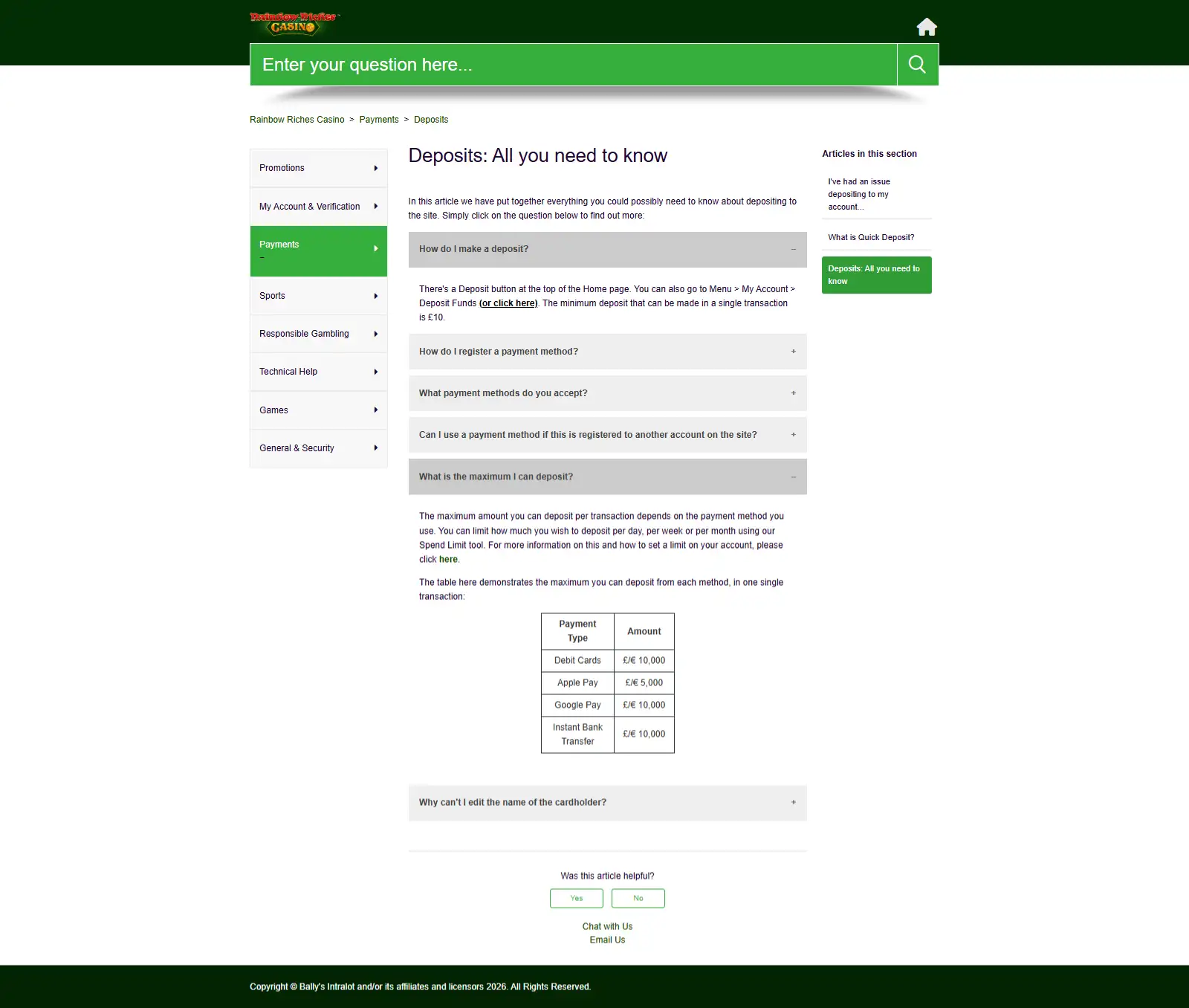
A Boku deposit does not arrive as a separate bank payment. Its charge is attached to the mobile service used to make it: for a customer on a monthly plan, it goes onto the phone bill; for a Pay As You Go (PAYG) customer, it is taken from the available phone credit. The casino account receives the deposit, while the cost is collected through the mobile account.
That arrangement places the phone operator in the middle of a gambling transaction. A handset is not merely a way to confirm a payment; the associated mobile account is also where the charge is collected. The same screen can connect a person to a casino cashier and, through the operator, to a bill or a shrinking balance of prepaid credit. A small piece of household infrastructure becomes part of the payment chain.

For monthly-bill customers, the Boku charge is added to the account they already use for mobile service. It is therefore distinct from paying the casino directly through a bank account: the immediate charge follows the mobile subscription instead. The practical question is not just whether a casino cashier offers Boku, but which mobile account will carry the cost and who is responsible for that account.
PAYG works differently because there is no later monthly bill to collect against. The deposit is deducted from the phone credit already available. A specialist review describes the constraint plainly: a PAYG user cannot deposit more through Boku than the remaining credit on the phone. If the balance cannot cover the intended charge, that route cannot supply it. The phone’s prepaid balance is the boundary.
The distinction matters because “paid by phone” can sound like a single process when it describes two collection routes. One leaves a charge on a monthly account; the other reduces prepaid credit. In both cases, the payment is tied to the mobile service, not to a separate pool of casino funds or a bank transfer. The billing arrangement does not change what Boku is for; it changes where the cost lands.

Mobile billing also makes the payer’s account status relevant. A monthly customer may see the gambling charge as part of a broader mobile bill, while a PAYG customer sees less credit remaining. Those are different household consequences, even when the casino cashier presents the same payment label. There is no need to treat the phone as a neutral pipe. It belongs to a service account, and that account determines how the charge is collected.
That is the whole distinction: bill or balance. The route is simple; the accounting is not quite invisible.
The limits on pay-by-phone deposits
A Boku limit is not a single figure that can safely be applied to every casino account. Published descriptions differ: one specialist review gives a £30 transaction limit as the standard, with some casinos or mobile networks allowing £40 or £50. Other accounts describe a much lower per-transaction ceiling of about £10 alongside a £30 daily limit. A further version gives the daily limit as £30 but specifies no separate transaction cap.
Those accounts cannot be combined into a universal rule. The disagreement concerns both the amount allowed in one payment and whether a transaction ceiling is specified at all. A figure found in a general description may therefore fail to match the limit presented by a particular casino or imposed by the phone network. The cashier’s available amount is the practical point of reference for that deposit, not a promise that the same ceiling applies across other sites.
The distinction between a casino limit and a network limit matters. A specialist review attributes Boku’s daily deposit ceiling to the mobile operator rather than the casino. On that account, the casino may display the payment option, while the network controls whether further charges can be accepted during the day. The casino’s own cashier and the operator’s payment controls are not necessarily describing the same layer of the transaction.
A mobile operator’s role also helps explain why two players may encounter different limits even when using the same payment method. The amount accepted can depend on controls outside the casino’s own account settings. That does not establish a fixed rule for every network or customer; it means the casino’s stated limit should not be mistaken for the whole payment system.
- Check the cashier for the current transaction limit
- Verify the network-level daily control
- Treat reported limits as variable
- Assume a universal UK-wide tariff
- Apply Boku limits to bank transfers
- Rely on a single published figure as permanent
The figures should be treated as reported limits, not as a stable UK-wide tariff. The reviews that describe them do not agree on the per-payment ceiling, and the higher figures are expressly presented as possible allowances at some casinos or networks, rather than a general entitlement. No tidy answer. A limit can be set at more than one point, and the strictest applicable control determines whether a payment proceeds.
For anyone comparing an instant bank transfer casino deposit with Pay by Phone, the methods should not be judged by the same limit figures. The Boku amounts above concern phone-bill or mobile-network payments; they do not establish what a casino permits for a bank transfer. A payment option appearing in a cashier is not evidence that another method has the same ceiling.
The useful distinction is therefore between the casino’s displayed transaction limit and the network-level daily control described in some specialist coverage. Neither should be assumed to override the other. These limits can change, and the reported figures conflict; the amount shown for the intended payment is more reliable than treating any one published figure as permanent.
As operators move away from Boku
A specialist review describes a change in the Pay by Phone landscape since 2023: some operators have replaced Boku with another provider, while others have removed phone payments altogether. The shift is not a single industry-wide switch. It leaves a patchwork of cashiers, where the available option depends on the operator and can change over time.
Fonix and Siru Mobile are among the alternatives named in that review. It identifies MrQ and Duelz as accepting Fonix, and Mr Vegas and Videoslots as accepting Siru Mobile. These examples show that moving away from Boku does not always mean abandoning Pay by Phone. In some cases, the method remains, but the company processing it has changed.
That distinction matters because a familiar label can conceal a different payment route. A cashier may still offer a phone-based deposit, yet no longer handle it through Boku. Conversely, an operator may have removed Pay by Phone rather than replacing one provider with another. The practical picture is therefore less a tidy migration than a set of separate decisions made by individual businesses.
The names and arrangements in a specialist review are a snapshot, not a promise that a cashier will still show the same option later. Payment menus can be revised, and a method described elsewhere may not appear for every account or at every point in time. The cashier itself is the decisive record of what is available when a deposit is being considered.
This also explains why lists of casinos accepting Boku can become dated quickly. A site once associated with Boku may have moved to Fonix or Siru Mobile, or may have stopped offering phone payments. The provider name matters: it is not safe to treat every Pay by Phone option as interchangeable simply because the money is linked to a mobile service.
For anyone comparing payment routes, the useful distinction is between a direct Boku deposit and a broader phone-payment option. They are related, but not identical. A changing cashier can make yesterday’s shorthand misleading.
A quiet reshuffling.
Deposits and withdrawals do not follow the same route
Boku has a one-way role in a casino account: it can carry a deposit in, but it cannot carry winnings back out. That distinction matters because a payment method displayed in the cashier is not necessarily available for every stage of a transaction. A phone bill can fund play; it cannot serve as the destination for a withdrawal.
One-way payment
Boku can only be used for deposits; winnings cannot be withdrawn back to a phone bill or mobile account.
A separate withdrawal method is therefore needed when depositing with Boku. A debit card, e-wallet or bank transfer may be used, depending on the casino’s available options and the account’s payment arrangements. The route out should be considered before money goes in. Otherwise, a deposit can be straightforward while the later question of how to receive a balance remains unresolved. A small administrative detail, until it is not.
This is where searches for bank transfer casino sites in the UK can meet a different practical concern from the one they appear to describe. A bank transfer may be relevant as a way to receive casino funds, but that does not make Boku a bank-transfer deposit method. Nor does it establish that a particular casino supports bank transfers in either direction. The cashier and the operator’s terms determine which routes are available.
A specialist review has described a workaround in which Boku funds a Neteller account, which can then be used to deposit at casinos that accept Neteller. This is a separate chain of payments, not a withdrawal through Boku, and its availability should not be assumed across operators. It also does not change the basic limitation: casino funds cannot be sent back to the phone payment method.
The distinction is less about the speed or convenience of a particular method than about the architecture of the account. Depositing and withdrawing are separate permissions, often attached to separate rails. A casino’s payment page may show several ways to put money in, but only some ways to take it out. For anyone comparing bank-transfer slots sites, the useful question is not simply whether a transfer appears in a list; it is whether the method is permitted for the intended direction of payment.

Pay-by-phone deposits and bonus conditions
A welcome offer is governed by the casino’s terms, not simply by the payment button used at the cashier. Pay-by-phone deposits may qualify at one operator and be excluded at another, so a bonus advertised alongside a deposit offer cannot be assumed to apply to every funding route.
A specialist review reports that MrQ, Duelz, Mr Vegas and Videoslots accept pay-by-phone deposits for bonus eligibility. That is a useful indication of how some operators treat the method, not a guarantee that every promotion at those casinos includes it. Offers can have separate qualifying-payment rules, and the terms attached to the particular promotion decide the matter.
The size of a match is only one part of its value. A specialist review describes a common UK welcome-offer structure as a 100% deposit match up to £100, paired with a 35x wagering requirement. In practice, the requirement determines how much qualifying play is needed before bonus funds or winnings can be withdrawn. A headline match can therefore look generous while carrying conditions that make it less useful than its first line suggests.
Expiry rules deserve the same attention. The review gives a 30-day period for bonus funds and 72 hours for bonus spins. Those deadlines are not universal rules for every casino; they are terms reported for offers in that review. If a promotion expires before its requirements are met, its advertised value may never be realised.
The distinction between a deposit route and a promotion matters more than the label attached to the offer. A bonus described as available to new customers may still exclude a particular payment method, while another promotion may expressly include it. The terms should identify eligible deposits, wagering requirements, contribution rules and expiry dates before an offer is activated. Small print, large consequences.

Checking the terms before using a phone payment
A payment option appearing in a casino cashier does not settle every question about its use. The relevant terms may distinguish between depositing with Boku and depositing through another Pay by Phone provider, and they may treat payment methods differently for promotions, account limits or other conditions. The cashier label is only the start; the operator’s rules govern the transaction.
A specialist review reported that Boku deposits did not have a dedicated bonus and that the platforms it assessed imposed no Boku-specific deposit restrictions. That is a snapshot of particular operators, not a standing promise across UK casinos. Payment arrangements and terms can change, while a casino’s general conditions may still apply even where no rule singles out Boku.
The distinction matters most when a promotion is involved. A bonus may have its own eligibility rules, and the payment section of the terms may define which deposit methods count. A statement that Boku has no special restriction does not by itself establish that every promotion accepts it, nor does the absence of a Boku-specific clause cancel conditions that apply to deposits more broadly. Different questions, easily blurred.
The same care applies to the name shown in the cashier. Pay by Phone and Fonix are supported by EE, O2, Vodafone and Three, but that does not mean every casino offers each service to every account. The available choice depends on the operator’s cashier and the terms attached to that method. A network supporting a payment service is not the same thing as a casino accepting it.
For a casino payment by bank transfer, the relevant bank-transfer terms must be checked separately; Boku’s conditions say nothing about that route. A casino can offer several ways to pay, each with different rules. Checking the exact method and the applicable terms keeps one payment label from being mistaken for another.

Small deposits, fixed amounts and monthly caps
A specialist review describes Boku deposits as restricted to amounts divisible by ten: £10, £20 or £30. That would rule out a custom amount such as £15, even if it fitted within the cashier’s displayed limit. The denomination rule is a reported feature of Boku, not a general condition of bank transfer casinos; the available payment methods and their terms are set by each operator.
The reported figures do not form one consistent schedule. One specialist review gives a minimum Boku deposit of €10, a maximum of €30 and a monthly ceiling of €240. UK payment guidance, by contrast, describes a £30 standard transaction limit, with some operators allowing £40 or £50. The currencies differ, and the stated transaction ceilings do not match. These accounts cannot be combined into a single dependable limit for every UK casino.
That matters because a monthly cap and a per-deposit ceiling answer different questions. A player may be able to make an individual deposit within a stated transaction limit yet still encounter a separate monthly restriction. Conversely, a monthly figure does not establish what the cashier will permit for one payment. The operator’s own payment terms and the options actually shown in its cashier are therefore the relevant checks before a Boku deposit is attempted.
The comparison also explains why a UK bank transfer casino should not be assumed to follow Boku’s payment rules. A bank transfer and a phone-bill deposit are separate methods, with their own limits and conditions. Where Boku is offered, the precise amount accepted may depend on the operator and the payment route available to that account; the figures reported for Boku should not be treated as universal.
A neat table would be comforting. The payment landscape is less obliging.
Can I deposit by phone bill without Boku?
Yes. Some casinos offer other pay-by-mobile options, including Fonix and Siru Mobile, but availability depends on the casino’s cashier.
What are the deposit limits at pay-by-mobile casinos?
Boku deposits are usually capped at £30 per transaction, though some casinos or mobile networks may allow £40 or £50. Network limits are typically about £10 per transaction and £30 per day, and PAYG users are also limited by their remaining phone credit.
Can a casino deny issuing a promotion if I deposit with Boku?
Bonus eligibility varies by operator. Some casinos accept pay-by-phone deposits for bonus eligibility, while Boku deposits generally do not come with specific bonuses.
How does Boku work?
Choose Boku in the casino cashier, enter the deposit amount and your mobile number, then confirm the payment with the SMS verification code. The charge is added to your monthly phone bill or deducted from your PAYG credit.
Prepared by the Rainbow Riches Casino 3 editorial staff.