Giropay and UK Casinos: What Payment Searches Confirm
 Available in GB
A Giropay mention does not confirm current account access, game eligibility, bonus terms or whether deposits can also be withdrawn.

Table of Contents
- Giropay and UK Slots: The Limits of a Payment Search
- Deposit and Withdrawal Compatibility Comes Before the Casino Choice
- What the Available Payment Evidence Can—and Cannot—Confirm
- Card Payments, Eligibility and the Credit-Card Ban
- Slots, Bonuses and Payment-Method Conditions
- Alternatives When Giropay Is Not an Available Route
- Checking a Payment Route Before the First Transaction
- Why a Deposit Method May Not Be a Withdrawal Method
- Deposit Amounts, Limits and the Cost of Funding an Account
- Payment Choice Does Not Determine GamStop Status
Giropay and UK Slots: The Limits of a Payment Search
A phrase linking Giropay with UK slots can point to several different things: a way to fund an account, a casino’s payment options, a bonus, or games available after signing in. Those are related parts of the same gambling experience, but they are not interchangeable. Finding Giropay mentioned beside a casino or slot does not establish that the casino currently offers it, that it can be used for every account, or that it applies to a particular game.
The distinction matters because payment information and game information answer different questions. A casino cashier describes the routes it makes available for transactions. A game catalogue describes the titles offered under that account. Neither, by itself, proves that a named payment method is accepted for a named game or that a deposit unlocks a particular promotion. The combination in a search phrase may reflect a hoped-for convenience, not a confirmed connection.
The same applies to searches for an account that accepts Giropay. Account access, payment availability and the right to play are separate matters. An account may be created under the terms of a remote gambling licensee, while the payment options shown can depend on the operator’s current arrangements and the customer’s circumstances. A payment name in a general description should therefore not be read as a promise that it will appear in every cashier.
Use this list as a starting point when researching casinos associated with Giropay in the UK. Check each casino’s current payment options before choosing, as the information provided here does not confirm Giropay availability.
Payout speed: 1-3 business days Revery Play has a stated payout speed of 1–3 business days. The available information does not confirm whether it accepts Giropay.
Payout speed: 1-3 business days Chanze has a stated payout speed of 1–3 business days. The available information does not confirm whether it accepts Giropay.
Payout speed: 1-3 business days Amunbet has a stated payout speed of 1–3 business days. The available information does not confirm whether it accepts Giropay.
Payout speed: 1-3 business days SpinFormula has a stated payout speed of 1–3 business days. The available information does not confirm whether it accepts Giropay.
Payout speed: 1-3 business days NightLuck has a stated payout speed of 1–3 business days. The available information does not confirm whether it accepts Giropay.
Payout speed: 1-3 business days Zombillion has a stated payout speed of 1–3 business days. The available information does not confirm whether it accepts Giropay.
Payout speed: 1-3 business days BeOnBet has a stated payout speed of 1–3 business days. The available information does not confirm whether it accepts Giropay.
Payout speed: 1-3 business days EvoSpin has a stated payout speed of 1–3 business days. The available information does not confirm whether it accepts Giropay.
Payout speed: 1-3 business days Jetsetspins has a stated payout speed of 1–3 business days. The available information does not confirm whether it accepts Giropay.
Payout speed: 1-3 business days NightWin has a stated payout speed of 1–3 business days. The available information does not confirm whether it accepts Giropay.
There is a broader boundary behind UK slot searches. In Great Britain, online gambling is legal for adults aged 18 and over when it is offered by an operator holding the relevant UK Gambling Commission licence. The Gambling Act 2005 governs gambling in England, Wales and Scotland; Northern Ireland is outside that Act’s scope. Remote gambling licensees selling into the British market must hold the applicable UK licence, wherever they are based. These rules establish the legal framework for the service, not the availability of any particular payment method.
Slot play itself has specific limits. Since 9 April 2025, the maximum stake for an online slot game cycle has been £5 for customers aged 25 and over; for those aged 18 to 24, it is £2. Online slot autoplay is banned in Britain, and each spin must last at least 2.5 seconds. These provisions govern how slots may be played. They do not tell a player whether Giropay is available at a casino, any more than a cashier listing would alter the rules for a spin.
That separation can be easy to miss when payment, promotion and play are presented together on a single site. A deposit route may be discussed in an account guide; a bonus may appear on a promotions page; slot titles may be listed elsewhere. Each item has its own terms and scope. A specialist casino review has reported that PayPal may be excluded from bonus eligibility, but that is a report about a particular payment-and-promotion issue, not a general rule that can be transferred to Giropay or every operator. A method’s name alone cannot settle a bonus question.

Nor does a reference to “Giropay slots” identify a special category of game. It may simply mean that someone is looking for a casino where a particular payment route and slot play coexist. Without a current cashier confirmation, the phrase cannot establish that the route is offered. Without game-specific information, it cannot identify a slot title or prove that the title is available to an account. The wording compresses several checks into one.
The safer reading is narrower: the subject is whether a UK-facing casino offers Giropay for an eligible customer who wants to play slots, and what separate terms govern the account, any promotion and the games. That framing avoids treating a payment label as a catalogue, a bonus condition or a guarantee of access. It also keeps the British slot rules where they belong: as restrictions on play, independent of the payment route.
A list of casinos or games would need current, specific confirmation rather than a shared phrase connecting them. Names appearing in general casino material cannot establish that they accept Giropay, and a game’s presence cannot establish which payment methods fund the account. The search may begin with one desired method, but the answer is not contained in the wording alone.
Separate questions, separate evidence.
Attention: A payment method’s name in a general description is not a guarantee that it will be available in every cashier or applicable to every account.
Deposit and Withdrawal Compatibility Comes Before the Casino Choice
A payment logo in a casino cashier answers only a narrow question: whether that route is being presented for a particular transaction at that point in the account journey. It does not, on its own, establish that the same method can handle both money going in and money coming back out. Those are separate capabilities, and a casino’s payment arrangements can treat them separately.
That distinction matters when a search for Giropay is really a search for a workable way to fund a casino account. A deposit option may appear alongside other methods without any indication that it is available for withdrawals. Even where a cashier displays a method prominently, its presence should not be read as a promise about the full movement of funds. The practical question is not simply whether Giropay is named, but what the casino permits that route to do.
Payment information also has a shelf life. A specialist review may list Visa and Mastercard among a site’s options, but such a list is not a substitute for checking current UK availability and whether the particular card product is eligible. Cashiers can change, and access can depend on details that a general payment page does not show. A method’s name may be familiar while its actual availability in a particular account remains unsettled.
That is not an argument for treating every published payment page as useless. It is a matter of reading it at the right level. A general list can indicate what an operator has described, while the cashier presents the options available for the transaction being made. Neither should be stretched into a claim about every stage of the account’s payment cycle. A deposit route is not automatically a withdrawal route. A list is not a guarantee.

The same caution applies to labels such as “instant banking”. A phrase describing how a payment is initiated does not settle whether it can receive a payout, nor does it establish that the service is available to every customer. The route may be designed chiefly for funding an account. That may be enough for someone concerned only with depositing, but it is not enough for someone who expects winnings to return by the same path.
In the background sits a familiar anti-fraud control: funds are commonly returned to the original payment source. This closed-loop approach helps connect the person who funded the account with the destination of a payout. It also explains why a casino may not treat a deposit method as a freely interchangeable wallet for every later transaction. Payment systems are built around ownership and traceability, not merely the convenience of moving money between boxes on a screen.
Where a return to the original route is not possible, an alternative can involve further verification. That is not necessarily a sign that something has gone wrong. The casino may need to establish that the account and the proposed destination belong to the same customer, or to satisfy its anti-money-laundering checks. The extra step can be inconvenient, but it follows from a system in which payment history is part of the account’s identity.
This is why compatibility belongs before casino preference. A site may have the games or interface someone wants, yet its payment setup may not meet the more basic requirement of supporting a coherent route from deposit to payout. Conversely, a method appearing in the deposit menu does not settle the question of how a later withdrawal would be handled. The two sides need to be considered together, without assuming that one proves the other.
Funds are commonly returned to the original payment source to help connect the person who funded the account with the destination of a payout.
The cleanest arrangement is generally one named account used consistently for both ends of a transaction, where the casino and payment provider permit it. Matching ownership details can reduce avoidable friction; mismatched names or an account belonging to someone else can create questions that a payment logo cannot resolve. The point is not to make a particular method sound more reliable than it is, but to distinguish a route that can fund play from a route that supports the whole payment relationship.
For a Giropay-focused search, that distinction is decisive. A mention of the method might describe deposit availability, a historic listing, or an option limited by account circumstances. Without a clear statement of what the cashier permits for deposits and what it permits for withdrawals, the label cannot bear more weight than it contains. Compatibility is not a decorative detail beside the casino choice. It is part of the choice itself.
The cashier is the evidence.
What the Available Payment Evidence Can—and Cannot—Confirm
A list of payment methods is a record of what its publisher chose to mention, not a universal map of casino cashiers. In a specialist review of casino payment options, the methods named included Visa, Mastercard, bank transfer, e-wallets and several cryptocurrencies. That is useful as a description of the sites the review examined. It does not establish that every UK-facing casino offers those methods, or that a method absent from the list is unavailable everywhere.

Giropay needs the same distinction. A page describing payment options may refer to a particular operator, a particular market or information gathered at a particular time. Its wording can therefore support a limited statement about that description; it cannot, by itself, settle whether UK online casinos as a whole accept Giropay. A broad label such as “bank payment” is not enough to identify a specific service, either. Familiarity is not verification.
Nor does a casino’s general reputation for supporting online payments answer the narrower question. Payment arrangements belong to the operator and the account context, not to the category of “online casino” as a whole. A method named in an overview might be available only in some circumstances, while another page may describe a different set of options. Neither difference proves a universal rule. The cashier is the relevant place for an operator-specific answer, but even a named option there should be read as evidence about the function it is offered for, not as a claim about every transaction.

That is the boundary between an observed detail and an assumption. “A review lists these methods” is a report about a review. “UK casinos accept Giropay” is a market-wide claim, and the former does not justify the latter. Equally, a review that does not mention Giropay cannot demonstrate that no casino accepts it. Silence in a list is silence, not a census.
The distinction matters because payment language often compresses several separate ideas into one reassuring phrase. A method may be discussed as a way to fund an account, or simply appear among the payment brands a site has considered. Those descriptions should not be stretched into a claim about universal availability. A polished comparison table can look conclusive while still reflecting only its own selection and scope.
The careful answer, then, is narrower than the question’s broad wording invites. Published payment information can show which methods a particular source associates with the sites it discusses. It cannot, without operator-specific confirmation, establish that Giropay is accepted across UK casinos, nor can it rule out every instance of acceptance. No league table can turn a limited set of observations into a market-wide guarantee.
That is not an elegant answer. It is the accurate one.
Card Payments, Eligibility and the Credit-Card Ban
A payment search can blur two different things: a named payment service and a card carrying a familiar network logo. Giropay in a casino’s payment menu would not, by itself, mean that a Visa or Mastercard is involved; nor would a casino’s acceptance of those cards establish that Giropay is available. The routes have to be treated separately.
Debit cards are a familiar way to fund UK casino accounts. UK casinos commonly accept debit cards, including Visa and Mastercard, but that broad pattern is not a promise about every operator, card or account. A card can display a recognised logo and still fail to qualify for a particular transaction. The issuing bank, the product type and the casino’s current cashier settings all matter.
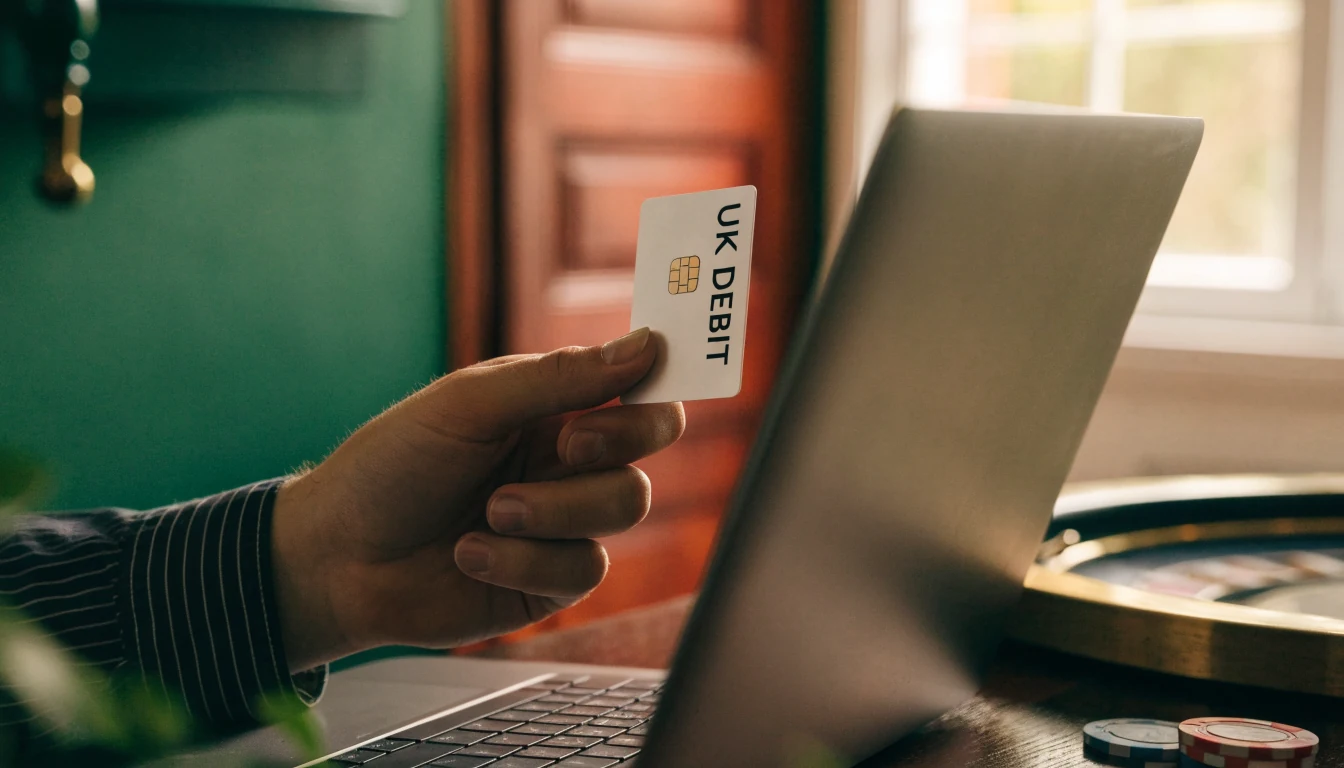
Specialist casino reviews may list Visa and Mastercard among a site’s payment options, but those listings are not a substitute for the live cashier. Availability can change, and the logo alone does not settle whether a particular card product is eligible. A debit card is not interchangeable with a credit card simply because both belong to the same network. Payment menus are less tidy than their icons suggest.
The boundary for credit-card payments for gambling is firmer. The regulator introduced the ban on 14 April 2020, and it has not been relaxed. UK-licensed casinos cannot accept credit cards for gambling deposits. The restriction also covers credit-card funds routed through a money service business, so inserting an intermediary does not turn prohibited funding into an acceptable casino payment.
That distinction matters when a search mentions “Giropay cards” or asks whether a casino takes Giropay debit cards. Such wording may combine a payment brand with a card category, but it does not prove that the service works through a debit card, or that any casino’s cashier offers it. A debit-card route and a Giropay route should not be collapsed into one merely because both concern money moving from a customer’s bank.

Nor does the credit-card ban imply that every card transaction is barred. The UK rule draws a line around credit-card payments for gambling, while debit-card payments remain a commonly accepted category. The practical question is therefore not whether a card bears a familiar name, but whether it is a debit product and whether the operator’s current payment screen accepts it for that account.
This also explains why claims about casinos accepting Giropay cannot be inferred from a card list. Visa and Mastercard entries tell something about card acceptance, subject to current availability and eligibility; they do not confirm Giropay acceptance. Conversely, a Giropay label would not confirm that a customer’s bank card is eligible. Two routes, two checks.
The distinction is regulatory as well as technical. Britain has permitted ordinary debit-card casino payments while drawing a strict line against credit-card gambling. The arrangement reflects a policy choice about borrowing to gamble, not a general endorsement of every payment channel that might reach a casino. A logo is not a permission slip.
Credit Card Ban
UK-licensed casinos cannot accept credit cards for gambling deposits, including funds routed through a money service business.
Slots, Bonuses and Payment-Method Conditions
A deposit method and a promotion are separate parts of a casino account. A payment option appearing in a cashier does not, by itself, establish that a deposit made with it qualifies for a bonus. That distinction matters to anyone comparing Giropay casinos for slots, games or welcome offers: the method’s availability and the promotion’s rules need to be considered independently.
No particular Giropay casino, slot or bonus can be treated as confirmed simply because the names appear together in a search result. A site may describe a promotion without making every payment route eligible, and a payment page may list a method without explaining how it interacts with an offer. The relevant terms are the ones attached to the specific promotion and account, not an assumption built from the casino’s general payment menu.
Payment-related exclusions are not limited to one method. A specialist casino review has reported that PayPal may be excluded from bonus eligibility. The same kind of review has reported that Skrill and Neteller, where available, are often excluded from promotions. These are reports about conditions that can vary, not a guarantee that every operator applies the same rule. The cashier and promotion terms remain decisive.
This can make a bonus headline less informative than it appears. The offer may be visible to all visitors while its eligibility depends on the selected payment route. Conversely, the presence of a payment method does not establish that a player must use it to claim an offer. The terms should clarify whether a promotion applies to deposits made through that method, whether any payment routes are excluded, and whether the offer requires activation. None of those points should be inferred from a Giropay label alone.

The same care applies to games. A bonus may carry conditions about which games contribute to its requirements, but a general claim that a casino accepts Giropay says nothing about the games attached to a particular promotion. Nor does it confirm that a named slot is available. Without a specific, current promotion and game catalogue, a “best” list of Giropay slots or casino games would be more decorative than useful.
Mobile access does not change that logic. A payment route shown on a mobile site or app does not prove that a promotion is eligible there, or that the same terms apply across every account view. The method, offer and game conditions belong to their own terms.
The useful comparison, then, is not simply which casino advertises Giropay or which bonus looks largest. It is whether the chosen payment route is eligible for the stated offer and whether the offer’s game conditions suit the intended play. Small print does the sorting.

Alternatives When Giropay Is Not an Available Route
A payment route can disappear from a cashier without making the rest of the payment menu any more predictable. Alternatives to Giropay at UK online casinos are not a fixed package: a method’s presence depends on the site, and the label alone does not say whether it can be used for every kind of transaction. The useful distinction is between ways to fund an account and routes that may also serve later payments.
Debit cards are a familiar option. UK casinos commonly accept Visa and Mastercard debit cards, although the cashier remains the place to confirm that a particular card product is eligible. That is a practical substitute for a bank-linked payment, but not an assurance that every card will work at every site. Credit-card payments for gambling are prohibited at UK-licensed casinos; a debit card is not interchangeable with a credit card merely because both carry a card-network logo.
Commonly accepted Visa and Mastercard debit cards, though eligibility depends on the issuing bank and product type.
Open banking and bank transfers supporting deposits and sometimes withdrawals, with varying processes and timing.
Options like PayPal, Skrill, and Neteller, though they are frequently excluded from bonus eligibility.
Paysafecard allows for deposits only and cannot be used as a withdrawal route.
Bank-based methods offer another route. Open banking services and bank transfers can support instant deposits and fast withdrawals at many sites, according to a specialist review; this is not a promise about every operator or transaction. The distinction between open banking and a conventional transfer matters: both involve a bank account, but the available process and timing can differ. A bank transfer may be useful where a cashier does not show Giropay, but its appearance should not be taken as confirmation that it is available for both directions.
E-wallets widen the menu, though their availability is uneven. PayPal is valued for speed and convenience, but a specialist review reports that it may be excluded from bonus eligibility. Skrill and Neteller are offered at some sites, and a specialist review notes that they may also be excluded from promotions. Those conditions belong to the particular casino’s terms, not to the definition of an e-wallet. Apple Pay is another possibility: some UKGC-licensed casinos accept it for deposits. None of these names guarantees a match with a specific account or cashier.
Paysafecard works differently. It is a prepaid voucher for deposits only, so it can put money into an account but should not be treated as a withdrawal route. That limitation makes it a narrower substitute than a bank-based method or card. A payment instrument can solve the immediate problem while leaving the eventual payout to another method.
There is no universal “best” Giropay alternative. A debit card, bank service, e-wallet or voucher serves a different purpose, and each casino defines its own available routes. The most useful comparison is therefore not a contest of labels, but a check of what the cashier actually offers and what the relevant payment terms permit. A method is only an alternative when it fits the intended transaction.
Checking a Payment Route Before the First Transaction
A payment logo on a page is not the same thing as an active option in an account. For anyone checking whether a casino accepts Giropay in the UK in 2026, the useful point of reference is the cashier after registration, where the available routes can be inspected before money is sent. A method may be mentioned in general information yet not appear for a particular account or at the time of the transaction.
The cashier should be checked for Giropay itself, not just for a broadly similar label such as bank payment. Payment names can describe different systems, and resemblance is not compatibility. If Giropay is absent from the live list, there is no basis for treating it as an available deposit route. That is a practical distinction, not a verdict on the casino: payment menus can be specific to an operator, an account or a point in time.
Currency and account details
Currency is another small line with a large practical effect. A specialist review reports that GBP is supported, but the account currency still needs confirming before the first transaction. If the account is held in another currency, a conversion may enter the process and change the amount credited. The cashier or account settings are more relevant than a general statement on a payment page.
Pre-Transaction Check
- Confirm Giropay is displayed in the current live cashier
- Verify that the account currency is suitable
- Ensure the payment account is in the same name as the casino account
- Confirm the selected route is specifically Giropay and not a general bank transfer
Ownership details matter just as much. The casino account and the payment route should belong to the same customer. Matching names and account details reduce the chance that a basic ownership mismatch creates avoidable friction. This is ordinary administration, though financial systems have a talent for making ordinary administration feel like a test of character.
The clearest arrangement is often one named account used consistently for deposits and withdrawals. That does not establish that Giropay is available, or that it can serve every transaction purpose; it simply keeps the identity trail coherent. Names, account details and currency should be checked before proceeding, rather than after a payment is questioned.
A short pre-transaction check
Before starting, confirm that Giropay is displayed in the current cashier, that the account currency is suitable, and that the payment account is held in the same customer’s name as the casino account. The payment screen should also make clear which route is being selected; a general reference to bank transfers does not answer whether Giropay is supported.
Searches for Giropay casinos, instant Giropay deposits or Giropay debit payments often compress these separate checks into one phrase. In practice, the answer rests on the actual cashier and account particulars, not on a label elsewhere. A route that cannot be selected there is not made available by a matching logo, a search result or a similar-sounding payment option. Check the live details first. No guesswork.
Why a Deposit Method May Not Be a Withdrawal Method
A payment route can be convenient for putting money into an account without being available for cashing out. That distinction matters when considering whether a Giropay deposit could be returned through Giropay. The presence of a method in the deposit cashier does not establish that it can receive withdrawals; the operator’s payout rules and the payment provider’s capabilities both matter.

UK anti-money laundering rules generally direct casinos to return funds to the original payment source. This closed-loop approach helps connect a payout to the account that funded play and limits opportunities for misuse. But “original source” does not mean that every deposit method can process an outgoing payment. If a route is deposit-only, or cannot accept a casino payout, the operator may need to use another permitted route and carry out further checks.
A change of route is not necessarily a choice of convenience. The casino may ask for proof that the alternative account belongs to the same customer, or request information needed to complete KYC. Consistent ownership details across the gambling account and payment method can reduce avoidable questions, but do not remove the operator’s verification obligations. A withdrawal to someone else’s account is not a straightforward substitute.
Timing also has more than one clock. A payment provider’s transfer time is only part of the process: the casino must first review and approve the withdrawal. A specialist review describes first withdrawals as potentially taking longer while identity and account checks are completed. Processing speed therefore depends in part on the casino’s internal approval and whether verification is complete. An “instant” label on a deposit says little about the route or timing of a payout.
The practical point is to check the withdrawal policy separately from the deposit options. Where a casino lists Giropay for funding, that alone does not confirm direct withdrawals to Giropay, a Giropay card or a linked bank account. The cashier or payment terms should state how withdrawals are handled, whether another method may be required and what verification applies. If the route is unclear, a payout should not be planned around an assumption.
Payment and Withdrawal Facts
- Deposit methods are not automatically available for withdrawals
- UK rules generally require funds to return to the original payment source
- Withdrawal timing depends on both the provider and the casino’s internal approval
- Verification and KYC checks may be required when changing payment routes
Money has a paper trail. Payment rules insist.
Deposit Amounts, Limits and the Cost of Funding an Account
A minimum deposit is not a fixed property of a casino account. It can depend on the payment route selected, so a figure shown beside one option may not apply to another. A specialist casino review places common minimums in the £10–£20 range, while stressing that the amount varies by method. That range is not a Giropay-specific promise: a cashier would need to show Giropay as an available route and state its own minimum before the amount could be relied on.
The same distinction matters for a small intended deposit. A sum below the cashier’s stated minimum will not become acceptable because it is affordable or because another payment method permits it. Nor does a search for a low minimum establish that Giropay can be used at a particular UK casino. Availability and the minimum attached to it are separate details.

Limits can also apply above the minimum. Maximum deposits may be set per transaction, day or month, and can vary with the payment method and account status. The amount displayed at the point of payment is therefore more useful than a general figure copied from an old review. A limit can shape the practical cost of funding an account, especially if a planned deposit must be divided or reduced.
Fees are another part of the arithmetic. A specialist payment guide identifies possible charges from the casino, payment provider, card issuer or bank, alongside currency-conversion spreads and network costs. Not every route carries every charge, and a visible flat fee is not the whole calculation: an exchange-rate spread can also affect the amount received. There is no universally cheapest method; the comparison depends on the actual deposit and the charges attached to it.
For a Giropay deposit, then, the relevant questions are modest but decisive: is the route offered in the cashier, what minimum and maximum does it display, and what will the transaction cost in the account’s currency? A payment label alone answers none of them. Short arithmetic, long consequences.

Payment Choice Does Not Determine GamStop Status
A payment button tells little about a casino’s relationship to self-exclusion. Giropay appearing in a cashier, where it is offered, would describe a way to fund an account; it would not establish whether the casino is connected to GamStop, outside its coverage or able to bypass an exclusion. The payment rail and the self-exclusion arrangement are separate questions.
That distinction matters because searches for Giropay casinos “not on GamStop” can make a method sound like a marker of regulatory status. It is not. A casino cannot be classified by the logo beside its deposit options, and a payment method does not change the effect of a person’s self-exclusion. Nor does a cashier’s list establish that a site is suitable or lawful for customers in Britain.
In Britain, remote gambling licensees must hold the relevant UK Gambling Commission licence. UK-licensed casinos must provide responsible-gambling tools, including self-exclusion. Those protections belong to the operator’s regulatory obligations, not to a particular way of paying. Giropay, a card or an e-wallet cannot tell the whole story.

There is another control at the point where gambling begins. UKGC rules require remote operators to ask new customers to set a financial limit before their first deposit and to make account-level limit controls accessible. This is a separate safeguard from self-exclusion: one concerns limits on funds, the other the ability to exclude oneself. Neither is determined by which payment method is selected.
A payment search can therefore answer only a narrow practical question: whether a route is shown as available. It cannot verify GamStop status, establish that an exclusion can be circumvented, or replace checking a casino’s regulatory position. Treating payment availability as a shortcut around self-exclusion confuses a transaction with a protection.
The distinction is plain. The cashier is not the safeguard.
Why must withdrawals return to the deposit method?
Returning funds to the original payment source is a common anti-fraud and anti-money-laundering control. An alternative may require extra verification.
What is the fastest withdrawal method for UK casinos?
PayPal, open banking services and debit cards linked to fast payout systems are generally among the quickest. The casino’s approval process and your verification status also affect how soon funds arrive.
Which payment methods are accepted in Great Britain?
Common options include debit cards such as Visa and Mastercard, PayPal, bank transfers, open banking, Paysafecard, and e-wallets such as Skrill and Neteller. Availability varies by casino and account.
Are Visa and Mastercard deposits definitely debit cards?
UK casinos commonly accept Visa and Mastercard debit cards, while credit-card gambling has been banned since 14 April 2020. Check the cashier to confirm that your particular card product is eligible.
Is Skrill available?
Yes, Skrill is available at some UK-friendly casino sites and remains a common deposit option. It may be excluded from promotions.
Can I deposit in GBP?
Yes, GBP is supported. Check your account currency before your first transaction to avoid conversion costs.
What is the current minimum deposit?
The minimum deposit usually starts at £10–£20, depending on the payment method.
Which method has the lowest fees?
There is no single method that is always cheapest. Compare casino and provider charges, bank or issuer fees, currency-conversion spreads and any network costs for the amount you plan to transfer.
Written by the editors at Rainbow Riches Casino 3.