UK Casino Sites That Accept Skrill: Deposits and Limits
 Available in GB
Skrill availability can vary by account, while deposit limits and promotional terms depend on the casino and payment route.

Table of Contents
- Skrill Deposits: Availability, Limits and the Promotion Trade-off
- Slots, New Sites and the Limits of a Payment Method
- Casino Accounts, Apps and Bonuses: Where Skrill Fits
- Depositing and Cashing Out Through Skrill
- What Skrill Acceptance Means in 2026
- Skrill Wallets, Skrill Cards and UK Gambling Rules
- When Skrill Is Not the Only Route
- Skrill Withdrawals: The Route Back Matters
- Skrill and GamStop: What Payment Acceptance Cannot Tell Us
- Can a Skrill Deposit Go Through? Check the Cashier First
Skrill Deposits: Availability, Limits and the Promotion Trade-off
Skrill remains a familiar deposit option at UK-facing casino sites. A specialist review describes it as one of the more common methods in this market in 2026, but that does not make it universal: a casino may support Skrill for some customers and not others, or may change which routes appear in its cashier. The payment logo on a landing page is a starting point, not confirmation that a deposit can be made from a particular account.
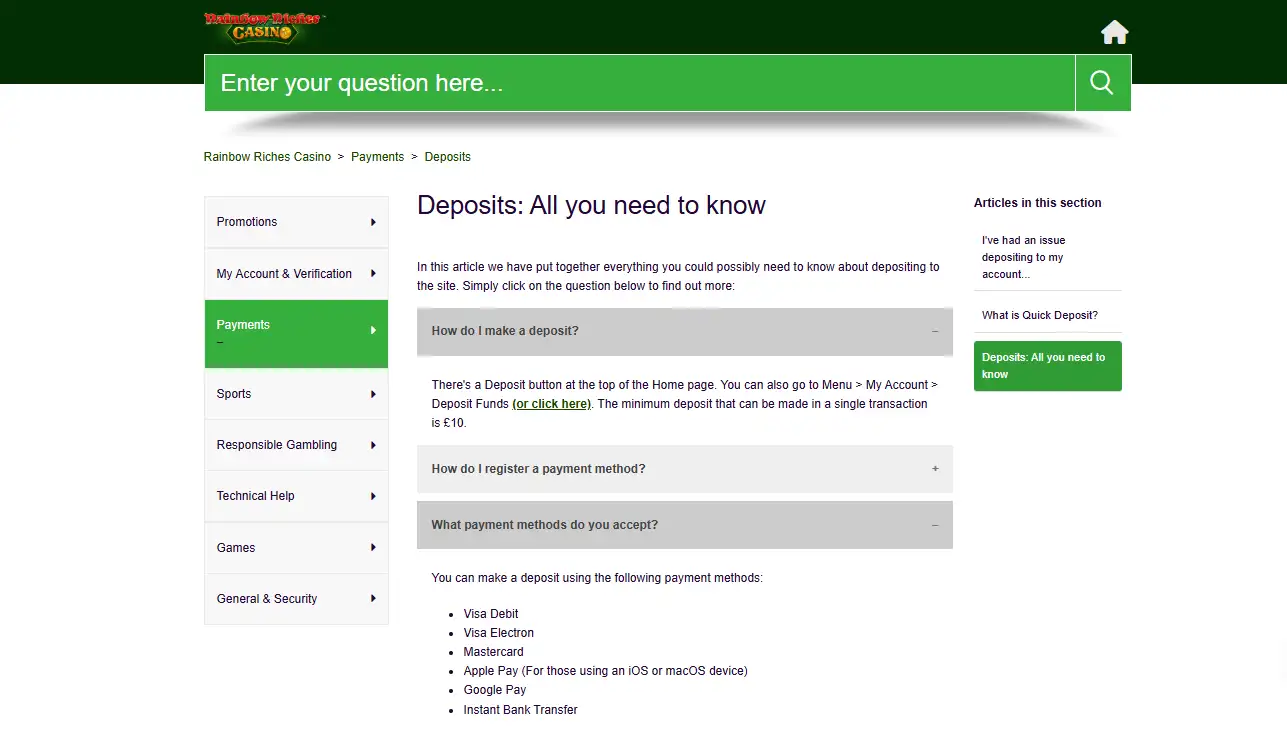
The cashier is the useful place to establish the terms. Before starting a transaction, the listed Skrill option should be checked alongside its minimum deposit, any maximum for a single payment, and any broader limits applying over a day or month. Those ceilings can depend both on payment method and account status. A figure shown in a general help page may not match the limit available to an individual account, so the amount presented in the live cashier is more relevant than a broad claim about what the site accepts.
When choosing a UK casino that accepts Skrill, payment details matter as well as the payment method itself. This list gives the stated payout-speed information for each operator; check the current cashier for Skrill availability.
Payout speed: 1-3 business days Revery Play has a stated payout speed of 1–3 business days.
Payout speed: 1-3 business days Chanze lists a payout speed of 1–3 business days.
Payout speed: 1-3 business days Amunbet’s stated payout speed is 1–3 business days.
Payout speed: 1-3 business days SpinFormula has a stated payout speed of 1–3 business days.
Payout speed: 1-3 business days NightLuck lists a payout speed of 1–3 business days.
Payout speed: 1-3 business days Zombillion’s stated payout speed is 1–3 business days.
Payout speed: 1-3 business days BeOnBet has a stated payout speed of 1–3 business days.
Payout speed: 1-3 business days EvoSpin lists a payout speed of 1–3 business days.
Payout speed: 1-3 business days Jetsetspins’ stated payout speed is 1–3 business days.
Payout speed: 1-3 business days NightWin has a stated payout speed of 1–3 business days.
The minimum deposit at casino sites commonly falls in the £10–£20 range, with the exact threshold depending on the payment method. Skrill’s own minimum may therefore differ from the minimum for another route at the same casino. A deposit below the displayed threshold can be rejected even when the wallet is active and funded. This is an unglamorous detail, but it is where payment promises meet arithmetic.
Limits are not solely a feature of the payment provider. A casino may apply different maximums according to the chosen method or the customer’s account status, and it may also offer account-level controls that restrict deposits. UK rules require remote gambling operators to ask new customers to set a financial limit before their first deposit and to make account-level limit controls accessible. These controls sit alongside payment limits: one concerns what the cashier will process, the other what the customer has chosen to allow.
That distinction matters because a displayed maximum is not a suggested spending target. Nor does a payment method override a limit set within the account. In Britain, the first deposit is framed by a protection measure as well as a transaction screen. The design is deliberate: depositing money should not be treated as an invisible administrative step.
Skrill and Neteller are reported as available at some casinos, with their use often excluded from promotions. A specialist review may describe that restriction, but promotional terms vary by operator and can change. The important detail is the specific offer’s wording: it should state whether a Skrill-funded deposit qualifies, whether the payment method affects eligibility, and what other conditions apply. A bonus banner alone cannot settle those questions.

This is the trade-off behind choosing a wallet for a deposit. Skrill may be listed as a convenient route, while a promotion may be limited to deposits made through other methods. The deposit can still be accepted even if it does not qualify for the offer; these are separate decisions made under separate terms. Where the offer is not compatible, the deposit should not be assumed to activate it. The account’s promotion page and the offer’s rules are more useful than a general statement that a casino has bonuses.
The word “best” adds little to this comparison unless it means something concrete. A casino with Skrill in its cashier may have a lower minimum for another route, a different Skrill ceiling, or different promotion conditions. The method alone cannot establish which site is better for a particular purpose. A more grounded comparison is between the live minimum, the account’s applicable limits, and the terms of any promotion being considered.
Currency deserves a place in the same check. The account currency should be confirmed before the first transaction, since a mismatch can bring conversion into the process. A cashier that shows Skrill does not, by itself, establish that the account is set up in pounds sterling or that a deposit will be converted without cost. The currency displayed for the casino balance and the amount requested from the wallet should be understood before approval.
There is also a regulatory boundary around the word “UK-friendly”. For real-money gambling offered to customers in Great Britain, the operator must hold the relevant UK Gambling Commission licence; payment acceptance is not evidence of that status. The public register provides a way to check a licence before depositing. The cashier handles the transaction. It does not confer legitimacy.
Deposit Verification
- Confirm Skrill appears as an available route in the live cashier
- Check that the deposit amount meets the minimum threshold
- Ensure the transaction is within applicable daily or monthly limits
- Verify the account currency is set to pounds sterling
- Check the promotion terms to see if Skrill deposits qualify for bonuses
- Confirm the operator holds a valid UK Gambling Commission licence
Taken together, the practical conditions are modest but decisive: Skrill must appear as an available deposit route for the account, the deposit must meet its minimum and remain within the applicable limits, the account currency must be clear, and any promotion must explicitly allow that payment method. A payment logo can suggest possibility. The cashier supplies the terms.
Slots, New Sites and the Limits of a Payment Method
A casino that accepts Skrill may offer online slots, but the payment option says nothing about which titles are available. It does not identify a particular game, its mechanics or whether it can be played for real money. A wallet is a way to fund an account, not a catalogue. The distinction is simple, though commercial pages often blur it.
The same applies to newer casinos. A site’s recent arrival does not establish that Skrill is accepted there, and Skrill’s presence does not establish that the site is new. Payment availability belongs to the individual casino and account; the games belong to its wider offering. Neither can safely be inferred from the other. A list promising the best new Skrill casinos or the best slots payable through Skrill would need current, specific evidence for every entry. The method alone cannot supply it.
There is a more consequential question beneath the appeal of a fresh site or a familiar slot: what rules govern real-money play in Britain? Remote gambling licensees serving Great Britain must hold the relevant UK Gambling Commission licence, wherever the business itself is based. A casino’s age, design or payment options do not replace that requirement. The licence is the legal threshold, not a decorative mark beside a cashier button.

This framework reflects a deliberate choice about who carries responsibility. The Gambling Act 2005 governs gambling in England, Wales and Scotland, while Northern Ireland has a separate legal position. In Great Britain, the state does not treat a digital casino as a borderless entertainment service merely because its servers or owners may be elsewhere. Selling gambling to local customers brings the operator within the local licensing system. Online play is legal for adults aged eighteen and over when the operator holds the required UKGC licence.
Newness can make a site feel like an exception: a fresh name, a polished interface, perhaps a new route into familiar games. Regulation makes it less exceptional. A newly launched casino serving British customers is still subject to the same licensing framework as an established one. The point is not that every new site offers the same experience; it is that novelty cannot confer permission. Check the operator’s licence number on the Commission’s public register before depositing.

Slots themselves are regulated in ways that reach beyond the payment screen. Online slot autoplay is banned in Britain, and each spin must last at least two and a half seconds. The rules also cap the stake per game cycle: the maximum is five pounds for customers aged twenty-five and over, and two pounds for those aged eighteen to twenty-four. The five-pound limit for all adults came into force on 9 April 2025; the lower cap remains for younger adults.
These limits shape the pace and scale of play, not the route by which money enters an account. Skrill cannot make a prohibited feature permissible or change the stake ceiling. Nor does the word “free” settle what a game involves: a payment method cannot establish whether a particular title is offered in a free-play mode, or what conditions attach to it. Those details belong to the game and the operator, and must be read as such.
Licensing Requirement
Remote gambling operators serving Great Britain must hold a relevant UK Gambling Commission licence regardless of where the business is based.
The British approach is revealing in its small insistence on friction. A spin cannot be made instantaneous by automation; a stake cannot be increased without regard to age. The rules interrupt the fantasy of frictionless play at precisely the point where speed and repetition matter. Not glamorous. Deliberate.
So searches for Skrill slots, real-money games or newer casinos lead to separate checks, not one combined answer. A site’s licence concerns its authority to offer gambling; its game catalogue concerns what it offers; its cashier concerns how an account may be funded. Skrill acceptance establishes only the last of those things. It does not certify the casino, select a slot or alter the rules that govern play in Britain.
Casino Accounts, Apps and Bonuses: Where Skrill Fits
A Skrill option in a casino cashier is only one part of the account arrangement. The casino account holds the player’s registration details, balance, settings and promotion history; the wallet is a payment route attached to that account. Keeping the account information and payment details under the same customer’s name can reduce avoidable questions about ownership. A mismatch may turn a straightforward transaction into an administrative one.
The same distinction applies when a casino has a mobile app. An app is an interface to the operator’s account system, not a separate gambling account with its own rules. Skrill may appear in the website cashier but not be available through every version of an app, or the cashier may present different options after sign-in. Availability should therefore be confirmed in the account being used, rather than inferred from an app listing or a general payment page. The screen is not the policy.

Registration also has a protective purpose. Remote gambling operators must establish a customer’s age before allowing a deposit. In Great Britain, new customers must be invited to set a financial limit before their first deposit, with account-level controls available afterwards. These steps sit at the account level; choosing Skrill does not remove them. The regulated account is built to carry both money and restrictions.
Bonuses are where payment choice can have a less obvious effect. A specialist review has reported that Skrill and Neteller can be excluded from promotions at some casinos. That is not a rule applying to every operator or every offer: the terms for the specific promotion determine whether a Skrill deposit qualifies. The exclusion may concern a particular bonus rather than the customer’s ability to open an account, use the cashier or play eligible games without that offer.
The details worth reading are often tucked into the promotion’s payment-method conditions. They may specify which deposit routes qualify, whether opting into an offer is necessary, and what happens if a payment is made with an excluded method. A bonus shown in an account is not proof that every deposit route activates it. Nor does a successful Skrill payment, by itself, establish that a promotion has been attached correctly.
Apps can make this distinction easy to miss. A banner may appear in the app while the full terms sit elsewhere in the account, and a payment option displayed in one place may not be available in another. The account’s promotion status and the cashier’s selected method need to agree. If they do not, the terms—not the banner—define the offer.
- Match the name on the casino account with the Skrill account
- Check the specific promotion’s payment-method conditions
- Verify availability within the active account cashier
- Assume a bonus banner applies to all payment methods
- Infer account rules from a general app listing
- Rely on a payment logo as evidence of licensing
“Casinos with Skrill accounts” can also suggest that an account is unnecessary. It is not: a legal UK casino requires a registered customer account, and Skrill does not turn a casino into an anonymous or account-free service. Payment acceptance says nothing about whether a site is connected to GamStop either; that is a separate matter of operator status and player-protection arrangements.
A casino account is the framework; an app is one doorway into it, and Skrill is one possible payment connection. Bonuses add their own conditions. Three separate things, easily blurred by a single button.
Depositing and Cashing Out Through Skrill
Skrill can appear in a casino cashier as a way to put money into an account, and some sites also make it available for withdrawals. The two functions should not be assumed to come as a pair: a payment logo at deposit does not, by itself, establish that the same route is offered for cashing out. The cashier’s withdrawal options and the operator’s terms set out what is available on that account.
Where Skrill is used for both directions, the payment method is only one part of the process. A casino must first decide whether a withdrawal can be approved. It may need to complete KYC checks, confirm account information and establish that the funds can be returned through the permitted route. Skrill then handles the payment after the casino has released it. Those are separate stages, with separate causes for delay.


UK anti-money-laundering controls commonly require winnings to go back to the original payment source. This closed-loop approach helps operators trace the movement of funds and reduce opportunities for misuse. If a deposit came from Skrill, the casino may therefore direct an eligible payout to that wallet rather than treating every available method as interchangeable. Where the original route cannot be used, the operator may need to explain the alternative and carry out further checks.
The practical distinction is between “pending with the casino” and “sent by the casino”. A withdrawal awaiting approval has not yet reached Skrill, so checking the wallet will not reveal what is holding it up. Once released, delivery depends on the payment stage, but the casino’s review comes first. A specialist review describes processing as dependent on internal approval and account verification, with first withdrawals potentially taking longer while checks are completed. That is a timing consideration, not a promise of a fixed turnaround.
The payment route also needs to match the account holder. Using a Skrill account and casino account belonging to the same customer reduces the chance that basic ownership details will create avoidable friction. A mismatch can prompt questions before a transaction proceeds; it does not become a Skrill technical fault simply because Skrill is involved.
For that reason, “accepts Skrill” is not quite the same as “pays out to Skrill”. The first describes a deposit option; the second depends on the casino’s withdrawal policy, its checks and the closed-loop route applied to the transaction. A site may accept the wallet for deposits while requiring a different process for a particular withdrawal. The cashier and withdrawal terms are the relevant record, rather than a payment badge elsewhere on the site.
Closed-Loop Payouts
UK anti-money-laundering controls often require winnings to be returned to the original payment source, meaning a Skrill deposit may require a Skrill withdrawal.
This distinction matters because a deposit and a cash-out travel through different decision points. Deposits are checked as they enter the casino account; withdrawals trigger approval and verification before funds are dispatched. Skrill does not decide whether a casino authorises the payout, and casino approval does not make the wallet’s part of the transfer instantaneous. Two systems, one balance.
What Skrill Acceptance Means in 2026
Skrill remains one of the more familiar deposit routes at UK-facing casino sites in 2026. Specialist casino reviews describe it as a common option, but that broad picture is not a guarantee that every casino offers it, or that it will appear for every account. Payment menus are practical arrangements, not permanent promises.
“Accepts Skrill” is therefore a narrower claim than it can sound. It means the casino has made Skrill available as a payment route under the conditions shown for that particular site and account. A mention in an old review, a general payment-method page or a list assembled elsewhere may not reflect what is currently available. The cashier is the useful reference point: it shows the options presented for the account at the time of the transaction.
Nor does the presence of Skrill say anything decisive about a casino’s wider status. A payment logo is not a licence. In Great Britain, remote gambling licensees serving customers must hold the relevant UK Gambling Commission licence; the operator’s status can be checked on the Commission’s public register. Northern Ireland has a separate legal framework, so the rules governing Great Britain should not be casually treated as a complete account of the whole UK.

That distinction matters because payment brands travel easily across borders, while regulatory responsibilities do not. A casino may advertise the same wallet symbol as another site, yet the two businesses may operate under different legal arrangements. For a UK customer, Skrill acceptance alone cannot establish that a site is authorised to serve the market. The licence and the payment option answer different questions.
The same care applies to broad claims about availability. A casino might support Skrill but not display it in a particular account’s cashier; another might show it clearly while setting conditions for its use. The word “accepted” can describe a general site feature without resolving what is available in an individual case. A familiar logo is only the beginning of the check.
This is why lists of casinos said to take Skrill age quickly. Their value depends on whether the information has been checked against the operator’s current terms and cashier, not on how confidently the list is titled. A payment method can be common across the market and still be absent from a particular site. Common is not universal.
The sensible reading of the phrase “Skrill casino” is consequently modest: it points to a possible payment connection, not a guarantee about access, licensing or every account. The distinction is unglamorous, but useful. A wallet brand can make a site easier to recognise; it cannot certify the site on its own.
Skrill Wallets, Skrill Cards and UK Gambling Rules
A Skrill wallet payment and a payment made with a Skrill-branded card are not the same transaction. The first is routed from an electronic-money account; the second is presented as a card payment and assessed through the card route. A familiar logo does not settle the question. What matters is the product behind the payment and how the casino’s cashier classifies it.
Credit Card Ban
Credit-card payments for gambling are prohibited for UK-licensed casinos; wallets cannot be used to circumvent this restriction if they allow credit-card funds for gambling.
That distinction matters in Britain because credit-card payments for gambling have been prohibited since 14 April 2020. The ban remains in force for UK-licensed casinos. A card that carries a well-known payment brand is not automatically a debit card, nor does the brand alone establish whether a particular card product can be used for gambling. Eligibility has to be determined from the actual card and the cashier’s available options.
The same principle applies to digital wallets. Remote gambling licensees cannot accept a wallet payment where the wallet allows credit-card funds to be used for gambling. A wallet balance is therefore not a way around the restriction. The funding route matters, even when the casino sees a wallet transaction rather than the original card behind it. The rules follow the money more closely than the logo.
This is why a site described as accepting Skrill may still need to distinguish between Skrill payments and card payments associated with Skrill. A wallet option in the cashier does not prove that a Skrill card will work there, and a card option does not prove that a wallet transfer is available. Those are separate payment routes, with separate eligibility checks. The word “Skrill” alone is too broad to answer either question.
Ownership details provide another practical dividing line. When the casino account and the payment route belong to the same customer, basic checks are less likely to be interrupted by mismatched names or account details. A payment made through someone else’s account can create avoidable friction because the casino must establish who is funding the gambling activity. Consistency is not a guarantee of approval, but it keeps a simple ownership question from becoming a more complicated one.

A search for casinos accepting Skrill cards in the UK can therefore lead to several different meanings: a casino that accepts the Skrill wallet, one that accepts a particular card product, or one that supports both routes. The distinction is especially important on mobile, where a compact cashier may display payment brands without explaining every eligibility condition. The brand is a clue, not a ruling.
The useful test is not whether Skrill appears somewhere on a payment page, but whether the chosen route is available for that account and complies with the UK rules on credit-card funding. Wallet and card are not interchangeable. Nor should a card’s appearance be mistaken for permission.
When Skrill Is Not the Only Route
Skrill is one way to fund a casino account, not a requirement. UK casino sites may offer several routes, each with a different practical shape: a debit card uses an existing bank account, a bank transfer moves funds through banking services, a prepaid voucher separates the deposit from a bank-card transaction, and another e-wallet adds a separate wallet account to the chain. Availability is set by the individual site, so a familiar method elsewhere does not guarantee it will appear in a particular cashier.
Debit cards are a common alternative at UK casinos, including cards on the Visa and Mastercard networks. They draw on the customer’s bank account rather than providing credit for gambling, which matters in a market where credit-card payments for gambling are prohibited. A card can be a straightforward route where it is accepted, but its presence on a site’s payment page does not by itself establish that every card product or transaction will work.
Commonly used via Visa and Mastercard networks, drawing directly from a bank account.
Includes open-banking options that may provide instant deposits and fast withdrawals.
Methods like Paysafecard that are used for deposits only.
Alternative digital wallets, such as Payz (formerly EcoPayz), depending on site availability.
Bank transfer and open-banking options offer a different relationship with the player’s bank. A specialist review describes some sites as providing instant deposits and fast withdrawals through these routes; that is an account of particular services, not a promise about every casino or bank. Transfer handling can depend on the provider and the site’s available process. The category is useful to consider when an e-wallet is not wanted, but the cashier’s terms determine what is actually offered.
Prepaid vouchers are more limited in one important respect. Paysafecard is used for deposits only, so it is not a complete alternative where the same payment route is expected to handle both directions. That distinction can be easy to miss when methods are displayed together in a cashier. A deposit option and a route for receiving funds are not necessarily the same thing.
Other e-wallets may also appear, though availability varies between casino accounts. A name change can complicate older payment information: EcoPayz was rebranded as Payz in 2022. The broader point is not that one wallet replaces another neatly, but that the listed brand and the current option in the cashier need to match.
Choosing among alternatives is therefore less about finding a universal “best” method than about matching the route to its purpose. Card users may value directness; bank-based services may connect transactions to familiar banking access; prepaid vouchers can suit deposit-only use; and an e-wallet can keep casino payments within a separate account. None of those categories guarantees identical limits, fees, acceptance or payout handling across sites.
A payment method is a route, not a recommendation. The cashier supplies the current particulars.

Skrill Withdrawals: The Route Back Matters
A deposit and a withdrawal are not mirror images. Money can leave a Skrill wallet and appear in a casino balance quickly, while a payout has to pass through the casino’s own approval process before it is sent back. The route matters as much as the payment label: a casino displaying Skrill in its cashier does not, by that fact alone, promise that every account can withdraw through it.
The least complicated arrangement is often to use the same named Skrill account for both directions. That gives the casino a consistent payment trail and makes it easier to match the account holder with the source of funds. Using payment details that belong to someone else can create avoidable questions; changing to a different destination may prompt further checks.
This is not merely administrative fuss. Returning funds to the original payment source is a common anti-fraud and anti-money-laundering control. If the original route cannot receive a payout, a casino may offer an alternative, but that change can involve additional verification. A requested method, an approved withdrawal and money delivered to a wallet are distinct stages.
The delay is often inside the casino rather than in Skrill itself. The operator must review the withdrawal, and KYC may be outstanding or require attention. A specialist review reports that first withdrawals can take longer while verification is completed; that is a reported possibility, not a timetable that applies to every casino. Approval and delivery are separate clocks.
Payment comparisons need the same caution. A specialist review describes a card deposit as potentially instant while its payout takes several business days. That illustrates why a fast deposit says little about withdrawal speed; it should not be read as a fixed promise for Skrill or for every operator. Bank transfers have their own timing variables: cut-off times, weekends and currency conversion can all affect when funds arrive.
Withdrawal Realities
- Payouts must pass casino approval and KYC checks before being sent to Skrill
- First withdrawals may take longer due to initial verification processes
- Returning funds to the original payment source is a standard anti-fraud measure
- Approval by the casino and delivery by the payment provider are separate stages
For Skrill, the useful distinction is between the casino authorising a payment and the payment route completing it. Once a withdrawal is marked as approved, the status may still need to move through the provider’s side of the transaction. If it remains pending, the casino’s stated processing stage is more informative than the speed of the original deposit.
A sensible expectation is therefore conditional, not instant: the casino must approve the request, account checks must be complete, and the destination must fit its closed-loop rules. Where those pieces align, Skrill can be a return route; where they do not, a change of method may slow matters rather than rescue them. The cashier’s withdrawal terms and the account’s payment history tell the practical story. Speed is not symmetry.
Skrill and GamStop: What Payment Acceptance Cannot Tell Us
Skrill acceptance says something about a casino’s payment arrangements. It says nothing, by itself, about whether the casino is covered by GamStop, holds a UK Gambling Commission licence or provides the protections required of a licensed operator. A wallet is not a regulatory badge.

That distinction matters when a site is described as a Skrill casino outside GamStop. The phrase may refer to a site that does not participate in the self-exclusion scheme, but it does not establish the site’s legal status or explain what safeguards it offers. Remote gambling licensees selling into Great Britain must hold the relevant UKGC licence, wherever the business is based. A payment logo cannot substitute for checking the licence on the Commission’s public register.
Licensed casinos must provide responsible gambling tools, including self-exclusion, alongside accessible account-level controls. Those arrangements belong to the operator, not to Skrill. Depositing through a wallet neither cancels a self-exclusion nor changes an operator’s obligations. The separation is deliberate: payment infrastructure moves money; regulation governs the service receiving it.
For someone who has self-excluded, looking for a payment route that might reach a different site is not a meaningful safety measure. A casino that accepts Skrill may still be licensed and offer the required tools, or it may sit outside the UKGC system. The cashier alone cannot settle that question. Nor does a site being accessible from Britain make it a UK-licensed casino.
The UK’s framework places responsibility on remote gambling licensees to provide protections, while the payment method remains a separate practical detail. Before treating “not on GamStop” as a reassuring distinction, the operator’s licence and its own safeguards need to be considered independently of Skrill acceptance. The wallet does not decide.
Can a Skrill Deposit Go Through? Check the Cashier First
A Skrill deposit can go through only when the casino offers Skrill for that account and the selected route is available in its cashier. A payment logo on a general information page is not enough: the options shown after signing in are the practical test. Availability can differ between sites and accounts.
Before confirming, check the account currency. A specialist review reports that GBP is supported on the sites it covers, but the currency set for a particular account still needs checking before the first transaction. If the wallet and casino account use different currencies, conversion may affect the amount received.

The cashier should also state the minimum and maximum for the proposed deposit. Maximums can apply per transaction, per day or per month, and can vary with the payment method and account status. A limit shown for one route should not be assumed to apply to another. If an attempted payment is declined, the displayed limit and the casino’s payment instructions are more useful than repeatedly resubmitting it.
The sequence is straightforward: sign in to the casino, open deposits, select Skrill if it appears, enter an amount within the displayed range, then review the currency and confirmation details before authorising payment. The name and account details should belong to the same customer; mismatches can create avoidable checks.
A Skrill payment does not establish that a casino is lawful for British players. Remote gambling licensees serving Great Britain require a UK Gambling Commission licence, and the licence number can be checked on the Commission’s public register before depositing. The cashier answers whether this transaction is offered. The register answers a different question.
What is the fastest withdrawal method for UK casinos?
PayPal, open banking services and debit cards linked to fast payout systems are generally among the quickest options. The casino’s approval process and your verification status also affect how soon funds arrive.
Why must withdrawals return to the deposit method?
Returning funds to the original payment source is a common anti-fraud and anti-money-laundering control. An alternative route may require extra verification.
Why can a fast payout casino still delay my withdrawal?
Withdrawals include the casino’s internal approval, and first payouts may take longer while verification is completed. An account that is not fully verified can also slow the process.
Is Skrill available?
Yes, Skrill is available at some UK-facing casinos, but it may not appear for every customer or account. Check the cashier for the available deposit options.
Can I deposit in GBP?
Yes, GBP is supported, but confirm that your account is set to pounds before depositing to avoid currency conversion.
What is the current minimum deposit?
Minimum deposits commonly start at £10–£20, depending on the payment method. Check the live cashier for the minimum that applies to Skrill.
Which method has the lowest fees?
There is no universally cheapest method. Compare casino and provider fees, any currency-conversion spread, and network costs for the amount you plan to deposit.
Prepared by the Rainbow Riches Casino 3 editorial staff.