French Roulette Online Casinos in the UK: Rules and Play
 Available in GB
French roulette uses a single-zero wheel, while La Partage and En Prison can soften zero outcomes on even-money bets.

Table of Contents
- French Roulette’s Zero—and the Rule That Softens It
- What Makes a French Roulette Casino Suitable for the UK
- The Live Table: A Wheel, a Dealer and a Slower Rhythm
- From Small Stakes to Higher Table Limits
- French Roulette on a Screen: RNG and Live Formats
- Roulette Bonuses Have Their Own Arithmetic
- Premium Play and the Limits of a Bigger Balance
- Roulette Bets: Straight-Up Numbers, Splits and Outside Chances
- Starting a French Roulette Session Online
- Betting Systems Cannot Outrun Chance
French Roulette’s Zero—and the Rule That Softens It
The green zero is a small pocket with an outsized role. It is the point at which roulette’s apparent balance between opposing choices—red and black, odd and even, high and low—breaks down. French roulette retains that single zero, but its rules can soften the consequence for certain wagers. The difference is not a more cooperative wheel. It is a different settlement when the ball finds green.
A European roulette wheel has 37 pockets: numbers 1 to 36 and one zero. An American wheel adds a double zero, making 38 pockets. That extra green pocket matters because it gives the casino another outcome on which ordinary bets do not win. The house edge is 2.70% on European roulette and 5.26% on American roulette. The wheel’s design is arithmetic disguised as decoration.
French roulette shares the European wheel’s single zero. On that basis alone, its underlying odds match the European version. Its distinction comes from rules such as La Partage and En Prison, which apply to even-money bets when the ball lands on zero. These rules do not remove the zero or make every wager equally favourable. They change what happens to a particular class of bet at the moment that the wheel produces its least convenient result.
When looking for French roulette online in the UK in 2026, check that the game is available and review the relevant terms before playing. The verdicts below are limited to the confirmed payout-speed information.
Payout speed: 1-3 business days Revery Play has a stated payout speed of 1–3 business days.
Payout speed: 1-3 business days Chanze has a stated payout speed of 1–3 business days.
Payout speed: 1-3 business days Amunbet has a stated payout speed of 1–3 business days.
Payout speed: 1-3 business days SpinFormula has a stated payout speed of 1–3 business days.
Payout speed: 1-3 business days NightLuck has a stated payout speed of 1–3 business days.
Payout speed: 1-3 business days Zombillion has a stated payout speed of 1–3 business days.
Payout speed: 1-3 business days BeOnBet has a stated payout speed of 1–3 business days.
Payout speed: 1-3 business days EvoSpin has a stated payout speed of 1–3 business days.
Payout speed: 1-3 business days Jetsetspins has a stated payout speed of 1–3 business days.
Payout speed: 1-3 business days NightWin has a stated payout speed of 1–3 business days.
La Partage is the more direct of the two. If the ball lands on zero, half of an even-money stake is returned rather than the whole stake being lost. For those bets, this reduces the house edge to 1.35%. The rule does not turn a loss into a win; it makes that loss smaller. The distinction is modest in appearance and substantial in calculation, because the zero no longer takes the full stake from the player on that outcome.
En Prison handles the same awkward moment differently. Rather than settling an even-money wager immediately when zero appears, the stake can be held for a subsequent spin. The player’s money is neither returned at once nor simply treated as a complete loss; the later result determines what happens to it, according to the table’s terms. The rule gives the wager another turn in the calculation. The zero still interrupts the ordinary expectation of an even-money bet, but it need not end the matter there.
In both cases, the protection concerns even-money bets, not every possible choice on the layout. That boundary is important. Roulette is often presented as a field of coloured options, but the same green pocket does not affect every wager in the same way once a special rule is introduced. La Partage’s stated reduction to 1.35% belongs to the even-money bets it covers; it should not be mistaken for a universal edge applying across the table.
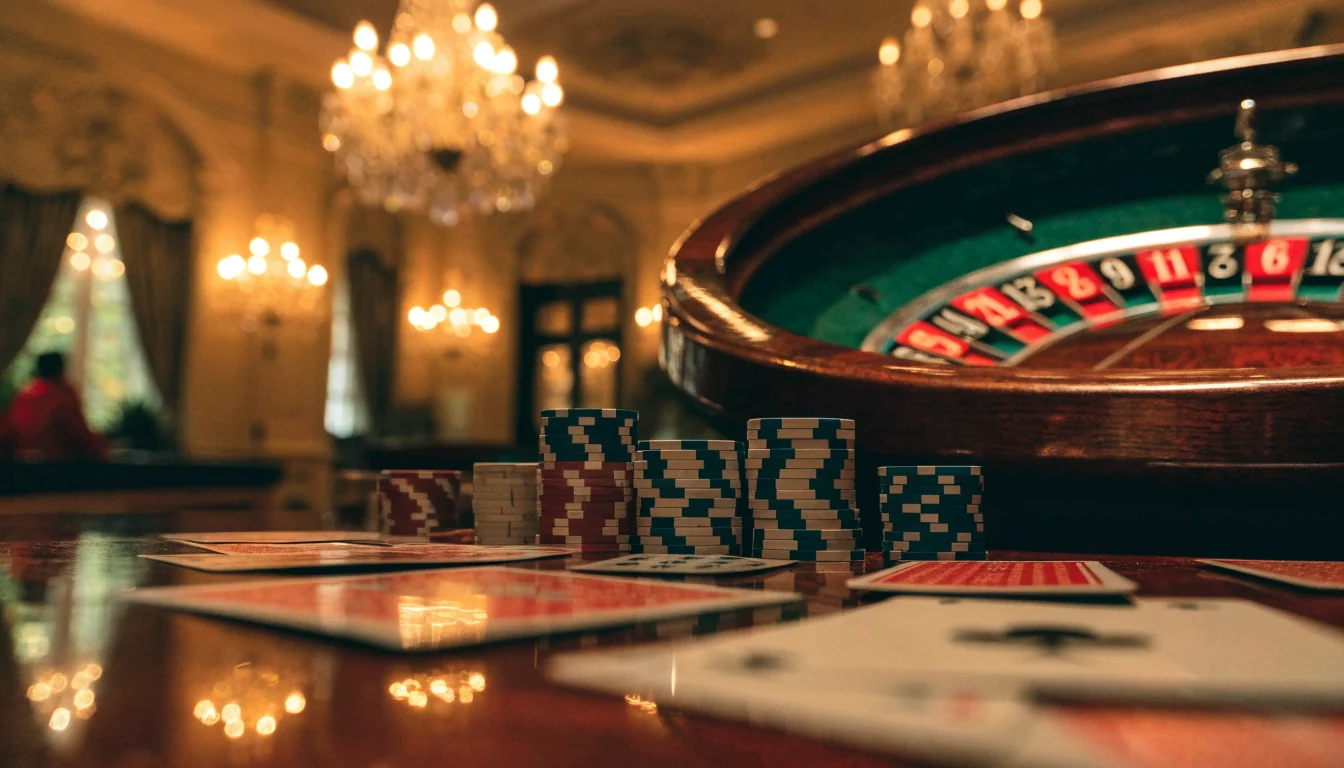

The house edge is a long-run measure of the casino’s mathematical advantage, not a forecast for an individual session. A lower edge does not say what the next spin will produce, and it does not make a particular result due. It describes how the rules distribute outcomes over repeated play. In that sense, La Partage changes the cost built into the game without changing the wheel’s independence: the ball still lands where chance takes it.
French roulette has the lowest house edge among standard roulette variants because of La Partage and En Prison. That comparison is about the structure of the rules, not a promise of better results. The American wheel’s double zero raises its edge relative to European roulette, while French rules can reduce the disadvantage on the covered wagers. The green pocket remains; the terms around it shift.
There is a history of civic sensibility in such a rule. A casino could have treated zero as an entirely ordinary winning outcome for the house, and the wheel would still have been mathematically coherent. La Partage instead leaves part of the loss with the player and returns the rest. It is a narrow concession, not a gift: the casino keeps an advantage, but the rule recognises that an even-money wager has met an outcome outside its two apparent sides.
House Edge Comparison
European roulette has a house edge of 2.70%, while American roulette is 5.26%. Under the La Partage rule in French roulette, the edge for even-money bets is reduced to 1.35%.
That is the mathematical foundation behind French roulette online. The single-zero wheel places it alongside European roulette, while La Partage and En Prison distinguish the handling of zero on covered bets. When comparing a French table with another roulette version, the useful question is not simply how many pockets the wheel has. It is also what the rules do when the ball stops at the one pocket that belongs to neither side.
What Makes a French Roulette Casino Suitable for the UK
A French roulette table can look much the same from one casino to another. The more consequential difference is the framework around it: who is permitted to offer the game, what checks happen before play, and whether the account comes with controls that are usable rather than merely listed in small print. A suitable casino for British players is not simply one with the right wheel on its games page.

For real-money online gambling in Great Britain, the starting point is the UK Gambling Commission (UKGC). It is the sole regulator of online casino activity there. Operators selling gambling to customers in England, Scotland and Wales must hold the relevant UKGC licence, wherever the company itself is based. A foreign address or familiar-looking website does not replace that authorisation. Platforms without a valid UKGC licence cannot legally offer real-money live roulette to British residents.
The distinction matters because a site may be technically reachable without being entitled to serve the market. Offshore casinos sit outside the UKGC system; their presence online is not evidence of local oversight. Before depositing, the operator’s licence number should be checked against the Commission’s public register. The name and status should match the business actually providing the gambling service, not simply a related company or a logo on a footer. Paperwork first. The wheel can wait.


Checks before the first deposit
Legal online gambling in the UK is for adults aged 18 and over, and operators must verify a customer’s age before allowing a deposit. Identity checks are part of the same account-opening process: they establish who is using the service and help the operator meet its obligations. A request for documents can feel like an interruption to an otherwise frictionless screen, but the friction has a purpose. A service that invites deposits before completing age verification is not following the required order.
New customers must also be prompted to set a financial limit before making their first deposit. Account-level limit controls must remain accessible, rather than disappearing once registration is complete. Those controls matter for roulette as much as for any other casino game: they let a player put a boundary around money entering the account and keep that boundary visible during later use. The question is not whether a casino advertises “responsible play” in general terms, but whether its controls can actually be found and used.
UKGC-licensed operators must offer deposit limits, loss limits, session time reminders, reality checks and cool-off periods, alongside GamStop self-exclusion. These measures serve different purposes. A deposit limit governs money paid in; a loss limit concerns losses; reminders and reality checks interrupt the easy slide from one spin to the next. A cool-off period provides a temporary break, while GamStop allows self-exclusion across participating gambling businesses. Their presence does not make gambling harmless. It does mean the protections are built into the regulated service.
UK Casino Safety Check
- Verify the operator holds a valid UK Gambling Commission (UKGC) licence
- Complete age and identity verification
- Set a financial limit before the first deposit
- Confirm accessibility of account-level limit controls
- Ensure the payment method does not use credit cards
Payment options also reveal whether a casino is operating within the British rules. UKGC licensees cannot accept credit cards for gambling, including where a credit-card payment is routed through a money service business. They also cannot accept wallet payments if that wallet allows credit-card funds to be used for gambling. A payment method’s convenience is beside the point if it circumvents the restriction.
Information and recourse
A clear game page should make the roulette rules and return-to-player information accessible before play. That information helps distinguish one game from another and makes the stated terms easier to assess; it is not a promise about what any individual session will return. For French roulette in particular, the rules shown for the selected table should be explicit. Similar names do not guarantee identical conditions.
The quality of a regulated service is also tested when something goes wrong. UKGC licensees must provide an internal complaints process and access to an approved Alternative Dispute Resolution service. The route for raising a complaint should be identifiable in the site’s terms or help pages, not hidden behind an informal chat that offers no clear next step. Operators are also required to contribute to the Research, Education and Treatment levy, part of the wider public framework around gambling harms.
These checks do not produce a defensible league table of casinos. They establish a baseline: a current UKGC licence, age and identity verification before money is deposited, accessible account controls, transparent game information and a real complaints route. A French roulette offering that lacks the surrounding protections is not made suitable by the elegance of its layout.


The Live Table: A Wheel, a Dealer and a Slower Rhythm
A live French roulette table is not an animation dressed up as a room. A camera carries a view of a real wheel from a studio: a dealer sets the game in motion, the ball travels around the rim, and its physical drop determines the result. The screen is a window onto a small, carefully staged event. The wheel remains stubbornly material.
That changes the feel of play. In a simulated game, the spin can arrive with little ceremony; at a live table, the dealer’s actions give each round a visible beginning and end. There is a pause while bets are placed, a call to close them, then the spin itself. Even without conversation, the dealer supplies a human presence and a shared point of attention. The table has a rhythm rather than merely a sequence.
The studio is designed for clarity. The wheel and layout need to remain visible, while the dealer’s movements make the process legible on screen. The camera angle, lighting and pace are not decoration alone: they help make a physical game understandable through a digital interface. It is an unusual arrangement, part gambling table and part broadcast. The audience may be dispersed, but the wheel is in one place.
Features a human dealer and a physical wheel with a slower rhythm, typically 80–100 spins per hour.
A faster-paced live format that can exceed 150 spins per hour, compressing the waiting time.
A software-led simulation using a random number generator for immediate results and faster sequences.
This does not make the experience identical to sitting beside a table. A screen mediates the view, and the dealer’s presence is part of a production rather than a private encounter. Still, the physical ball drop gives live French roulette a particular quality: the outcome is shown unfolding, not simply presented as a number after the fact. For players drawn to the rituals of roulette, that visible interval is part of the attraction.
The interval also affects how quickly rounds pass. A specialist review has reported standard roulette tables at around 80–100 spins per hour, while speed roulette can exceed 150. Those figures describe a marked difference in pace, not a promise about every table: presentation, pauses and the way a game is run all matter. A faster stream compresses the waiting; a standard live table leaves more room for the dealer’s procedure and for the eye to follow the wheel.
That slower cadence can be welcome to some and tedious to others. It makes each round feel more distinct, but it also means that a session is shaped by repeated pauses as much as by spins. The dealer does not remove chance from the game; the human presence simply gives chance a ceremony. A ball is released, circles the wheel, and settles. Then the table begins again.


The distinction matters in Britain for another reason. Live roulette for real money is not legally offered to British residents by a platform without a valid UK Gambling Commission licence. The licensed setting also carries obligations beyond the broadcast: UKGC-licensed live casino operators must provide deposit and loss limits, session time reminders, reality checks, cool-off periods and GamStop self-exclusion. These controls belong to the regulated service around the table, not to the dealer’s performance.
A live wheel can therefore feel both old-fashioned and thoroughly modern. Its central act has not changed much: a person releases a ball, and a room waits for it to stop. What has changed is the room itself, now a studio carried into homes through a stream. The pace remains human. In a screen-built casino, that is almost an eccentricity.
From Small Stakes to Higher Table Limits
The minimum stake is the visible threshold; the table limit is the boundary above which a bet cannot be placed. Between them sits the range in which a session can actually unfold. For French roulette, that range matters more than labels such as “standard” or “VIP”: two tables with the same game name may admit very different budgets.
A low entry stake can make a table accessible, but it does not by itself keep spending low. Repeated bets accumulate, and a player using several positions on the layout may commit more per spin than the minimum suggests. The useful figure is therefore not only the smallest permitted chip, but the total stake that feels manageable across a session. The arithmetic is quiet, until it is not.
Attention: A low minimum stake does not guarantee low spending, as repeated bets or multiple positions on the layout can increase the total amount committed per spin.
RNG roulette can offer lower minimum stakes than other formats, with some games starting at 10p. A specialist review of UK tables reports that live roulette minimums can start at 10p, while auto-roulette and speed roulette formats sometimes begin at 5p. These are reported entry points, not a promise that every casino will have them available. Tables change, and the stake shown on the game itself is more informative than a broad label on a lobby tile.
That distinction is useful when comparing low-stakes French roulette. A small minimum may suit someone who wants to place modest bets without feeling pushed towards a larger opening stake. Yet a low minimum says nothing about the maximum, the pace of play, or whether the table’s limits allow a chosen betting pattern. It describes the door, not the whole room.
At the other end, standard-limit tables provide a middle ground between a low entry point and a table designed for larger stakes. The term is not a fixed industry-wide measure. A “standard” table at one operator may not share the same minimum or maximum as another, so the listed limits need to be read as part of that specific game’s conditions. Naming is easier than comparison.
Higher-limit French roulette is principally a matter of scale. A larger maximum gives room for larger individual bets, but does not alter the underlying chance of a spin. Nor does a high limit make a table inherently more suitable for experienced players. It simply changes how much can be placed at once, and how quickly a session can become financially substantial.
“VIP” can sound like a category of status, when in practical terms it may refer to a table with higher permitted stakes. The label alone does not establish the minimum, maximum, or any special account treatment. Those details belong to the table rules. A player considering a high-limit option would need to judge the full range against a pre-set budget, rather than treating the maximum as a target.
The same caution applies when a lobby groups games under “low limit”, “standard limit” or “high limit”. These are useful sorting terms, not universal definitions. The actual minimum and maximum should be visible before play begins, and the gap between them determines whether the table offers room to stay at a chosen scale. For a low-budget session, the maximum may seem irrelevant; it still helps distinguish a genuinely modest table from one whose minimum merely looks inviting.
Small stakes can make participation possible. Larger limits can make it more consequential. Neither changes the basic character of roulette; they change the amount exposed to each decision.
French Roulette on a Screen: RNG and Live Formats
An online French roulette table can be delivered in two quite different ways. One is a computer simulation: a random number generator, or RNG, selects the result and the screen presents it as a spin. The other is a real wheel filmed in a studio, with a dealer releasing the ball and the outcome shown through a live stream. The rules may look familiar in both, but the machinery behind the result is not the same.
- Use RNG roulette for a quick, self-directed session
- Choose live roulette for the ritual of the physical ball drop
- Check table information for specific game rules
- Assume all French roulette titles have identical conditions
- Confuse a visual animation with a physical result
- Overlook the faster pace of RNG play
In RNG roulette, the animation is a representation of the result, not a recording of a physical ball travelling around a wheel. The generator determines the outcome; the visual sequence then gives it a shape players can follow. This makes the format quick to run. There is no need to wait for a studio wheel to be reset or for a dealer to complete the next round, so simulated games can move from one spin to another with little interruption.
The lower entry point is another feature of RNG play. Minimum stakes can be smaller than those at a live table, with some games starting at 10p. That difference is not a separate roulette rule. It comes from how the game is offered: a digital simulation does not need to accommodate the operating rhythm of a physical table. The appeal is practical, though speed has its own cost in attention. A rapid sequence can make decisions feel more routine than they are.
Live roulette replaces the simulated wheel with a real one in a studio. A dealer handles the ball and the betting round, while cameras transmit the table to the screen. The outcome is produced by the physical drop rather than an animation generated after an RNG result. The stream adds visible procedure: the wheel turns, the ball travels, and the round reaches its end in real time.

That does not make one format more “real” in the sense of offering a different kind of roulette. It describes how the result is produced and presented. RNG play is software-led; live play is a broadcast of a physical table. Neither label, by itself, says everything about the rules attached to a particular game. The display and table information remain important, because a familiar title can be delivered in different ways.
The pace also varies within the broad categories. A standard live table has time built into its operation: bets close, the dealer spins, the result is settled, and the next round begins. Speed roulette compresses that cycle. A specialist review reports that speed roulette can exceed 150 spins in an hour, compared with 80–100 at a standard table. Those figures describe a particular comparison, not a universal timetable for every game or operator.
RNG roulette can move faster still because there is no live dealing sequence to follow. That can suit a player who wants a brief, self-directed session; it can also make a long session accumulate spins before the passage of time becomes obvious. Live play places the round’s progress in view, while RNG play removes much of the waiting between results. Different clocks, same uncertainty.
The distinction is therefore less about which screen looks more convincing than about what sets the round in motion. In one format, software simulates the spin; in the other, cameras carry a studio wheel to the screen. Each has its own pace, and the choice changes the texture of the session without turning roulette into a predictable game.
RNG vs Live Formats
- RNG roulette is software-driven and often allows for lower minimum stakes.
- Live roulette uses a studio broadcast of a physical wheel and dealer.
- Speed varies significantly, with speed roulette exceeding 150 spins per hour compared to 80–100 at standard tables.
- Neither format alters the fundamental uncertainty of the game.
Roulette Bonuses Have Their Own Arithmetic
A roulette spin can be valid play and still make only a small dent in a bonus wagering requirement. The distinction lies in game weighting: the share of each qualifying stake that counts towards the required turnover. For someone choosing an online casino with French roulette, the game’s rules and the bonus terms therefore describe separate kinds of arithmetic. A favourable roulette rule does not make a bonus requirement easier to clear.
A specialist review of UK casino bonus terms reports roulette contributions commonly falling between 10% and 20% of the required wagering. At those rates, a stake contributes only a fraction of its value; the rest does not advance the stated turnover. The precise weighting depends on the operator and offer, so the bonus terms matter more than a broad label such as “casino games included”. French roulette may appear in the game catalogue without receiving the same treatment as slots or other eligible games.
The format can change the calculation. A specialist review comparing UK bonus rules reports that RNG roulette often receives 100% game weighting, while live roulette may receive 10% or 20%. These are reported terms, not a promise that every UK casino applies the same schedule. The distinction is practical: a stake on a simulated wheel may count in full under one offer, while a stake at a streamed table may count only in part. That does not make RNG play inherently better; it means the terms need to identify the format and its contribution clearly.

No-deposit offers can be narrower still. One specialist review of UK promotions reports that some operators exclude live roulette from no-deposit bonus wagering; where it is included, the reported contribution is between 0% and 10%. Such treatment can leave a live French roulette game available for play but irrelevant to clearing that particular offer. The wording of the promotion decides the matter, not the presence of the game in the lobby.
A separate change sets an outer boundary on the size of bonus wagering requirements. A specialist review of the January 2026 regulatory change reports that UK rules cap wagering at 10x across licensed operators. The cap limits the requirement attached to a bonus; it does not mean every offer has the same terms, nor does it guarantee that roulette stakes count in full. Game weighting still determines how quickly qualifying play adds to the total.
That is why the bonus figure alone can mislead. A lower stated requirement paired with restricted roulette weighting may demand more play on the games that count, while a higher weighting can make eligible stakes register more fully. Neither calculation changes roulette’s chance-based outcome. It changes only how the operator records play against bonus conditions.
For UK online casinos with French roulette, the useful comparison is therefore not simply whether roulette is listed. The terms should specify whether French roulette qualifies, whether the table is live or RNG, and what game weighting applies. Bonus funds arrive with accounting attached. The fine print does the counting.
Bonus Weighting
Roulette stakes often contribute only a fraction (commonly 10% to 20%) toward wagering requirements, meaning it takes significantly more play to clear a bonus compared to slots.
Premium Play and the Limits of a Bigger Balance
Premium French roulette is often framed as a matter of larger stakes and a deeper balance. The distinction is financial, not magical: a bigger bankroll does not change the wheel, guarantee a more attentive service or turn chance into something negotiable. Higher limits can simply make each decision carry more weight.
Nor does a premium label erase the ordinary account controls. UKGC-licensed operators must provide deposit and loss limits, session time reminders, reality checks, cool-off periods and GamStop self-exclusion. New customers must be prompted to set a financial limit before their first deposit, with account-level controls available afterwards. These measures do not become less relevant as balances grow. If anything, scale makes them easier to overlook.
Bonuses offer no separate route around those boundaries. A specialist review reports that a maximum wagering ceiling of 10x has applied to licensed operators since January 2026. The claim concerns bonus wagering, not a promise of value: terms still determine which games qualify and how roulette play is treated. Bonus funds are conditional, and a premium account does not make them equivalent to cash.
The quieter measure of a suitable premium table is what it makes legible: its rules, the return information for the game, the stake limits and the controls attached to the account. Roulette return information should be accessible, rather than hidden behind the language of exclusivity. A polished interface cannot improve the mathematics.

There is a small social history in the word “premium”. Casinos have long used status to make spending feel like membership, when the underlying bargain remains unchanged. At an online table, there may be no velvet rope, only a larger number beside the stake box. The distinction is real in cost, but not in protection or probability. More balance, more exposure.
Roulette Bets: Straight-Up Numbers, Splits and Outside Chances
A roulette layout offers bets of different breadth. A straight-up bet sits on one number; an outside bet covers a larger group of outcomes. The payout reflects that difference, but it describes the return for a winning selection, not a way to make a result more likely.
A straight-up wager is placed on a single numbered pocket. On both European and American roulette, it pays 35:1. It is the most narrowly targeted common bet: only the selected number wins. The same payout applies whether the game is played online or at a physical table, though the wheel’s pocket arrangement depends on the roulette variant.
A split covers two adjacent numbers, using the dividing line between them on the layout. Its payout is 17:1. A street bet covers a horizontal row of three numbers and pays 11:1. These are inside bets, named for their position on the central numbered area of the table. Each expands the set of numbers that can produce a win, while the stated payout becomes lower.
Outside bets sit around the numbered grid. Red or black, even or odd, and high or low each pay 1:1. They cover broad categories rather than a particular pocket, but zero does not belong to those categories. A green zero therefore leaves these choices exposed to a result outside their selection.
Include straight-up (35:1), splits (17:1), and streets (11:1), targeting specific numbers.
Cover broad categories like red/black, even/odd, or high/low, paying 1:1.
A green pocket that belongs to no outside category, creating the house advantage.
The difference is visible in a French roulette casino game as soon as the layout appears: a number bet is precise, while red or black makes a wider claim about the coming spin. Neither changes the wheel’s result. The payout table is a schedule of what follows a winning bet, not a forecast.
That distinction matters when comparing bets in an online French roulette game. A larger quoted ratio belongs to a more selective outcome; a smaller one accompanies a broader selection. Reading the layout is less a matter of finding a clever corner than understanding exactly which pockets a chip covers. The arithmetic is plain. Chance is not.
Starting a French Roulette Session Online
The first choice is between a simulated table and a streamed one. RNG roulette uses software to generate each spin, so rounds move quickly and minimum stakes can be low—often as little as 10p. That brisk pace suits a short session, though it leaves less time between results to pause and reconsider. A live table puts the spin on a physical wheel; its rhythm follows the dealer and the table.
For real-money play in Britain, the operator must hold a valid UK Gambling Commission licence. A platform without one cannot legally offer live roulette to British residents. Before depositing, the licence number can be checked against the Commission’s public register. That administrative step is less theatrical than the wheel, but rather more useful.
Registration also involves checks. Operators must verify a customer’s age before allowing a deposit; online gambling is for people aged 18 and over. New customers must be prompted to set a financial limit before their first deposit, and account-level controls must remain accessible afterwards. These controls let a player set boundaries around spending rather than relying on memory once a sequence of spins has begun.
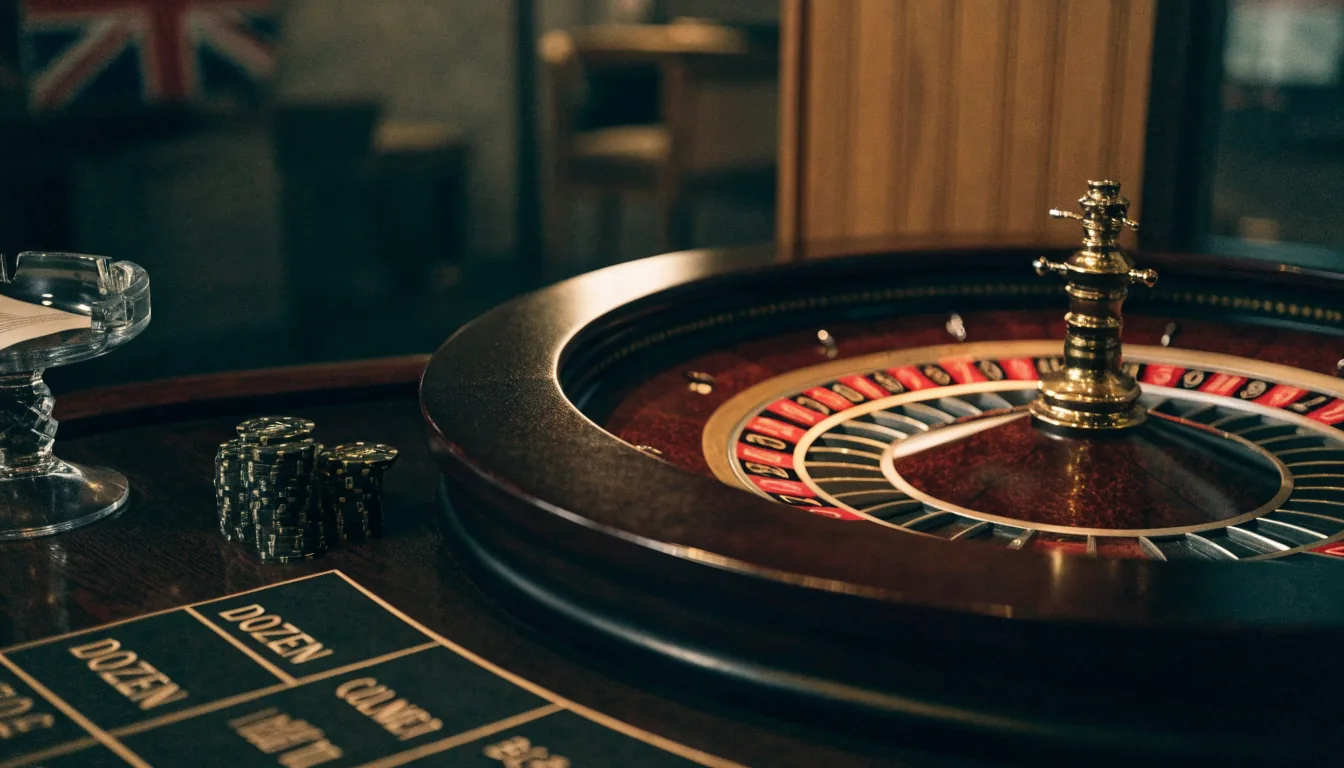
The session then becomes a matter of selecting the French roulette table and reviewing its displayed rules before placing a stake. With RNG play, the next round may arrive quickly; the interface’s steady succession of spins can make a small decision feel inconsequential. It is not. A limit set before the first deposit gives the session a boundary before momentum takes over.
Betting Systems Cannot Outrun Chance
The Martingale is an old answer to an uncomfortable experience: a run of losses feels as though it ought to be followed by a win. Its instruction is simple—double the stake after each loss, then use a win to recover the previous losses and leave a small gain. In a casino French roulette game, the arithmetic can look persuasive for as long as the sequence behaves.
The trouble is that each doubling makes the next decision more expensive. A losing streak does not become less possible because several losses have already occurred, and the bankroll absorbs every stake along the way. The system therefore concentrates risk precisely when losses have accumulated. A recovery plan can turn into a demand for more money.

No memory in the wheel. Each spin is governed by chance, not by a record of what came before. A run of black does not make red due; a run of losses does not make the next bet safer. The Martingale changes the size of exposure, not the probability of the result.
That distinction is easy to lose in the rhythm of play. A sequence gives the mind a story—balance is owed, the pattern is about to turn—and a betting system gives that story a procedure. Neither supplies evidence about the next spin. The apparent order belongs to the player’s interpretation, while the financial consequences belong to the bankroll.
Systems can organise decisions, but they cannot compel a favourable outcome or erase a losing run. Doubling is not recovery; it is escalation with a hopeful name.
Created by the ”Rainbow Riches Casino 3” editorial team.