Live Casino Lightning Roulette in the UK: How It Works
 Available in GB
A look at the studio stream, betting interface and how the live format differs from software-generated roulette.

Table of Contents
- How a Live Roulette Table Reaches the Screen
- The Wheel, the Zeroes and the Price of a Bet
- What Makes a Roulette Site Worth Considering
- First-Person Roulette, Without the Camera Myth
- Bonuses at a Live Table: Read the Small Print
- Playing the Game Rather Than Chasing the Screen
- A Demo Is Not a Payout
- The Dealer Is Part of the Format
- Online Play, at a Human Pace
- The Online Game and Its Built-In House Edge
How a Live Roulette Table Reaches the Screen
A live dealer roulette table is a small piece of studio production presented as a game. The wheel and the person operating it are physically present; the view reaches the player as a real-time stream. At the same time, bets are submitted through an on-screen interface. The screen is therefore doing two jobs: carrying the table into the room and carrying a player’s choices back to the game.
That division matters. A digital roulette game can generate its outcome entirely through software. In the live format, the visible activity comes from a studio table, while the interface provides the means to take part remotely. The image is not a decorative backdrop placed over a simulated round. It is a broadcast of gameplay taking place elsewhere, joined to a betting system on the same screen.
For someone looking at Lightning Roulette online, the first distinction is between the name of a game and the format in which it is offered. A title appearing in an online casino does not, by itself, describe how the game is produced. When it is presented as live dealer roulette, the defining arrangement is a studio stream with a human dealer and physical gameplay, alongside digital betting controls. The familiar machinery of the casino has been divided between two locations: the table in the studio, and the player’s device.
When choosing a place to play live casino Lightning Roulette in the UK, it helps to check practical details as well as the game itself. The verdicts below stick to the information available for each operator.
Payout speed: 1-3 business days Revery Play lists a payout speed of 1–3 business days. That is the only confirmed detail available here.
Payout speed: 1-3 business days Chanze lists a payout speed of 1–3 business days. That is the only confirmed detail available here.
Payout speed: 1-3 business days Amunbet lists a payout speed of 1–3 business days. That is the only confirmed detail available here.
Payout speed: 1-3 business days SpinFormula lists a payout speed of 1–3 business days. That is the only confirmed detail available here.
Payout speed: 1-3 business days NightLuck lists a payout speed of 1–3 business days. That is the only confirmed detail available here.
Payout speed: 1-3 business days Zombillion lists a payout speed of 1–3 business days. That is the only confirmed detail available here.
Payout speed: 1-3 business days BeOnBet lists a payout speed of 1–3 business days. That is the only confirmed detail available here.
Payout speed: 1-3 business days EvoSpin lists a payout speed of 1–3 business days. That is the only confirmed detail available here.
Payout speed: 1-3 business days Jetsetspins lists a payout speed of 1–3 business days. That is the only confirmed detail available here.
Payout speed: 1-3 business days NightWin lists a payout speed of 1–3 business days. That is the only confirmed detail available here.
It is an arrangement shaped by distance, but not by the fantasy that distance has disappeared. The table remains somewhere else. The screen connects to it, and the betting interface makes participation possible without placing a player beside the wheel. A modern casino has not abolished its threshold so much as moved it into software.
The interface is the practical hinge between watching and taking part. It displays the means to submit a bet, while the stream shows the live game in progress. Those functions sit together, but they are not identical: one is a broadcast, the other a transaction. The difference is easy to overlook when both are framed by the same screen. Yet it explains why a live table is neither simply a video nor simply a digital game.
In the United Kingdom, that format exists within a licensing system. Live dealer casinos may operate legally when they hold a licence from the UK Gambling Commission. Remote gambling operators serving the British market are required to hold the relevant Commission licence, whether the business is based in Britain or elsewhere. For an online casino offering live roulette to British customers, the location of its studio does not replace that requirement.
This makes licensing more than a badge attached to a website. It marks the operator’s place within the system governing remote gambling for the market. A studio may be abroad; the stream may cross borders; the dealer may be far from the person placing a bet. The regulatory question, however, follows the service being offered to customers in Britain. Distance travels easily. Responsibility is less mobile.
Age is another part of the doorway. Online gambling in the UK is for adults aged eighteen and over, and operators must verify a customer’s age before allowing a deposit into a gambling account. That check belongs to the account process, before money is deposited, rather than to the moment the wheel is on screen. The stream may feel immediate, but access to real-money play is not meant to rest on appearance or a casual declaration.
A live roulette listing can consequently look like a simple entertainment choice while depending on several layers working together: studio production, a real-time stream, a betting interface, and an operator authorised to serve the market. The person watching sees one continuous scene. Behind it are distinct roles and obligations. The dealer conducts the game; the software carries the image and records the selections; the operator provides the service under the relevant licence.
There is something revealing in that mixture of old and new. Roulette’s visible centre remains a physical wheel, while its contemporary doorway is an account screen and a stream. The casino has retained the theatre of a table but made access conditional on digital systems and regulatory checks. The wheel has not become virtual. Its audience has.
Remote gambling operators serving the British market must hold a licence from the UK Gambling Commission, regardless of where the studio or business is based.
The Wheel, the Zeroes and the Price of a Bet
A roulette result is decided by a simple event: the ball comes to rest in a numbered pocket, and a bet on that number wins. The apparent simplicity hides a consequential design choice. The wheel has pockets that match the numbers on the table, but it also has green zero pockets. Those zeroes are not decorative interruptions; they are part of the arithmetic that gives the house its edge.
The difference between European and American roulette is therefore more than a matter of table style. A European wheel has one green pocket, marked 0. An American wheel has two, marked 0 and 00. The extra pocket does not add another ordinary number to choose. It adds another possible result that can defeat a bet on a numbered outcome.
For a straight-up selection, the stated chance of winning is one in 37 on a European wheel and one in 38 on an American wheel. The single extra pocket makes the American version less favourable to the player on that bet. The distinction can be easy to miss on a screen, where the wheel and betting layout may share attention with the live presentation. Yet the pocket count is a fixed feature of the game, not a detail of its staging.
That is why the wheel matters when comparing tables, including a live casino Lightning Roulette table. The name of a game does not, by itself, explain the underlying number of pockets or the consequences of a zero. Those are questions of the roulette rules in use. A table’s displayed rules and paytable are the place to establish its terms; the central comparison here remains the familiar one between a single-zero and a double-zero wheel.
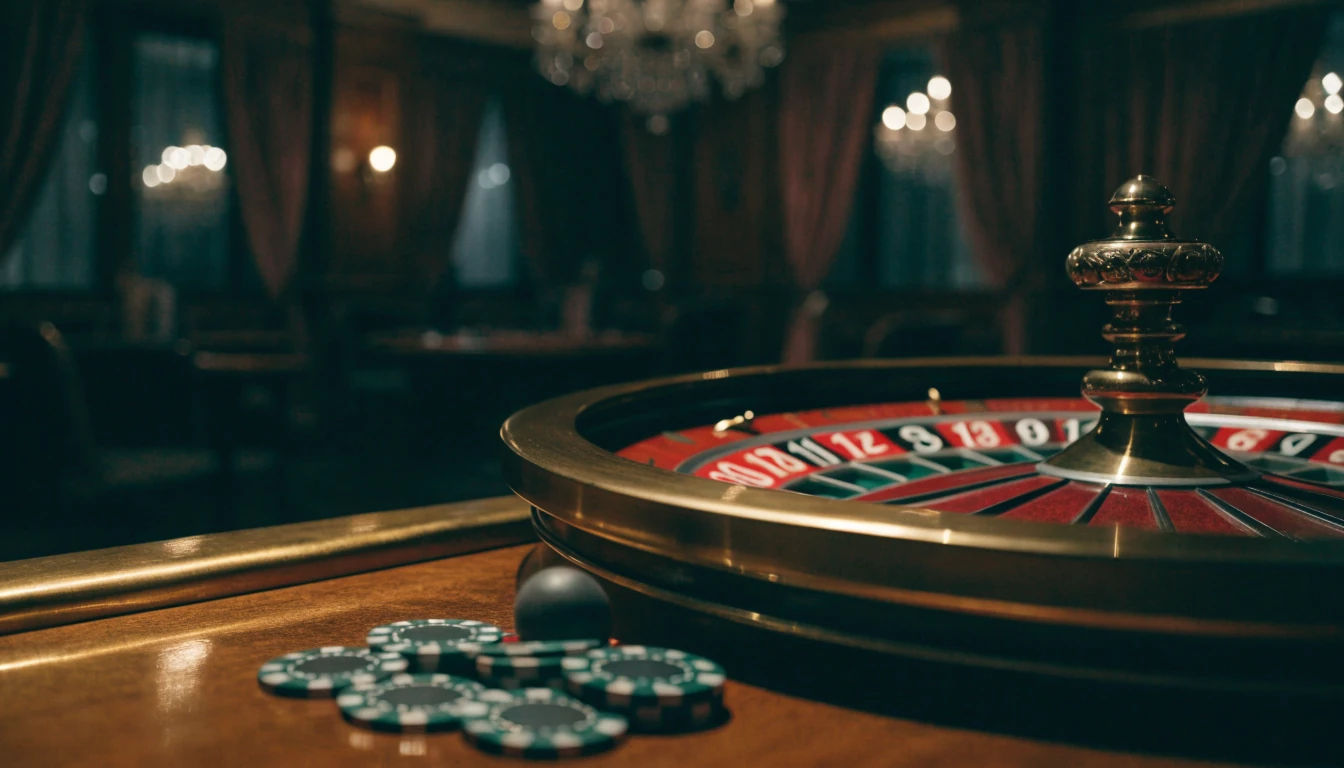
One pocket, one difference
The basic logic is visible without elaborate strategy. A straight-up bet selects one number. If the ball lands there, the selection matches the result; if it lands elsewhere, it does not. On a European wheel, the selected number sits among 37 possible pockets. On an American wheel, it sits among 38. The extra green pocket changes the chance of a match, even though the number selected is unchanged.
The difference may look small when expressed as a single pocket, but it is structural. Every spin starts afresh, and the wheel’s layout defines the possible results before the ball moves. A second zero is not a warning that the next result will be 00, nor does a previous result make one pocket due. It simply means the American wheel has an additional outcome in its set.
This is the quiet advantage built into the layout. The player chooses; the wheel supplies the wider field of possible endings. The zero belongs to neither red nor black, and it is not an ordinary numbered selection. Its presence helps explain why apparently similar roulette tables can carry different mathematical terms.
The distinction matters especially when the names of games make the table sound like a variation on a theme. A live casino Lightning Roulette search may point towards a particular branded presentation, but the general roulette comparison still begins with the wheel: how many pockets it has, what those pockets are, and how the rules treat them. No label can make the extra American zero disappear.
The price expressed as an edge
House edge gives another way to describe the cost built into a roulette bet. The stated house edge for a straight-up bet is 2.9%, while other bets carry a 2.7% edge. These figures describe the mathematical advantage held by the house under the stated rules; they do not predict the result of an individual spin. A winning number can arrive at once, or not at all. The edge is not a timetable.
Features a single green pocket (0), resulting in a house edge of 2.7% for most bets.
Includes two green pockets (0 and 00), which increases the house edge compared to the European version.
A wager on a single number with a stated house edge of 2.9%.
The difference between the two figures also shows why “roulette” is not a single undifferentiated wager. A straight-up bet concentrates on one number, while other bet types cover different selections. Their terms are not identical, so a comparison that looks only at the name of the table misses part of the price. The relevant measure is the edge attached to the particular bet, alongside the wheel on which it is placed.
These are not promises about what a session will return. A house edge describes the long-run mathematical relationship between stakes and outcomes, rather than a personal forecast. In the short term, results can vary sharply. That ordinary uncertainty is not an exception to the rules; it is what the rules permit.
The zeroes make the point neatly. European roulette has one; American roulette has two. The figures for winning a straight-up bet reflect that difference, while the house-edge figures distinguish that bet from other roulette wagers. In live casino Lightning Roulette, as in other forms of roulette, the wheel’s arithmetic deserves attention before the spectacle of the result. The ball is brief. The design is not.
What Makes a Roulette Site Worth Considering
A table’s name can attract attention; its practical conditions determine whether it fits a player’s circumstances. That distinction matters when comparing UK casinos offering Lightning Roulette. The useful questions are less glamorous than the label: how quickly rounds move, what the minimum stake is, and whether the connection can carry a live stream without interruption.
Live roulette moves more slowly than a digital version. The ball and wheel are part of a real-time game, while bets are entered through an on-screen interface, so there is less room for rapid, repeated decisions than in a computerised game. A slower rhythm can be a sensible reason to pause between rounds, but it also means a session takes time. A site that presents live tables as if they were instant-play games is not helping anyone judge the format.

Minimum stakes deserve attention before a table is opened. The lowest permitted bet is not a decorative detail: it sets the smallest amount that can be risked on a round. If that threshold is above the amount a player has decided to spend, the table is a poor fit, regardless of its presentation. Table limits can also differ between games and tables, so a casino’s general description is less useful than the limits shown for the specific roulette table.
One specialist review has described some live roulette and baccarat tables as starting at around 20p, with blackjack tables opening at higher levels. That is a report about particular tables, not a reliable market-wide standard. Minimums may vary, and the displayed table limit is the relevant figure at the point of choice. A low entry point does not make a game inexpensive in itself; it only describes the smallest permitted stake.
The connection is part of the table’s practical cost, too. Live games need a stable internet connection because the picture and betting interface have to keep up with events. A weak or fluctuating connection can make the experience frustrating and complicate decisions about when a round is accepting bets. Checking that the stream and interface remain responsive before treating a table as suitable is more useful than assuming a live game will behave like a lightweight digital one.
Explore slots, table games, live casino shows and crash-style games, with UK-focused coverage spanning formats…

For a UK player, the operator’s status is a basic threshold, not a quality award. Real-money gambling sites serving the British market must hold the relevant UK Gambling Commission licence. A licence does not establish that a particular table has suitable limits or that a connection will be reliable; it identifies the regulated setting in which the service is offered. The casino must also verify a customer’s age before allowing deposits, and online gambling is for adults aged eighteen or over.
The better comparison is therefore concrete and table-specific. Can the minimum stake sit within a fixed budget? Does the slower rhythm suit the intended session? Is the connection steady enough for live play? These checks say more than a broad claim that a casino is “best”, because they concern conditions that can actually affect the experience. There is no universal winner: a table that suits one player’s pace or budget may not suit another’s.
A polished lobby cannot alter those conditions. Nor does a prominent game title answer them. The modest details matter most: the limit beside the table, the reliability of the connection, and the time a live round takes to unfold. That is where a useful comparison begins—and where a headline stops being much help.
First-Person Roulette, Without the Camera Myth
“First person” can sound like a promise about the camera: the wheel seen from the player’s own eyes, the table close enough to touch, the room arranged around a single point of view. In a live dealer roulette game, the more dependable meaning is simpler. The player takes part through a screen, watching a real-time studio feed and placing bets through the game interface. It is a way of participating, not a guarantee of a particular camera position.

That distinction matters when looking for first-person Lightning Roulette in the UK. The live format joins two different things: footage of physical play and a digital control panel. A human dealer is present in the studio; the player’s choices are made on screen. The image may bring the table into view, while the interface translates a selection into a bet. The screen is both window and counter.
The word “first-person” belongs naturally to games in which the player’s viewpoint structures the action. In a live casino, the arrangement is less literal. The player is not the dealer, and the stream does not turn the studio into a room occupied by the viewer. Instead, the player watches events unfold from a remote position and acts through the controls provided. Participation, rather than a simulated body in the room, is the defining feature.
There is something revealing in that arrangement. The casino once depended on being physically present: a table, a dealer, other people gathered nearby. Live streaming carries part of that social scene across distance, but the interface preserves the dividing line. The player can observe a human-led game and submit a wager without stepping into the studio. The room remains elsewhere.
For anyone comparing a first-person roulette experience with a computer-generated one, the useful question is therefore not whether the image imitates the player’s eyes. It is whether the game is showing live studio activity, with a human dealer, while bets are handled through the screen. That is the core of live dealer play. The label may suggest a more intimate viewpoint, but the format is defined by the feed and the interface working together.
First-person
In live dealer roulette, this refers to the experience of participating via a screen through a real-time studio feed and digital interface, rather than a specific camera angle.
Lightning Roulette can be approached in the same way at the level of format: the phrase identifies a roulette game presented for live play, not a guarantee that the viewer occupies a specific seat or receives a particular visual treatment. The distinction keeps expectation in proportion. A close view can feel involving; a screen still remains a screen.
The best description of the experience is consequently neither “watching from the dealer’s eyes” nor “standing at the table.” It is remote participation in a live, human-run game, mediated by a betting interface. That may be less cinematic than the phrase first person suggests. It is also more precise.
Bonuses at a Live Table: Read the Small Print
A welcome offer can look generous in a banner and prove irrelevant at the live table. The distinction is often between what a bonus is made of and where it can be used: free spins are tied to slot games, while live roulette has its own rules for bonus eligibility and wagering.
A specialist review reports that most UK welcome offers consist of free spins on slots, which cannot be used at live tables. That is a description of offers covered by that review, not a promise that every operator’s promotion works the same way. For anyone comparing a casino for Lightning Roulette, the useful question is not simply how large the welcome offer appears, but whether its terms include live games at all.

Even when a promotion does accept live play, it may count only a small part of the wagering required to release bonus funds. A specialist review gives 10% as an example of live games’ wagering weighting. In practical terms, a bet at a live table may contribute far less to the stated requirement than a bet on a game with full weighting. The headline can therefore describe a benefit that is slow to unlock through roulette.
The wording matters. “Eligible” does not necessarily mean that every stake counts equally, and a game appearing in a promotion’s eligible list does not establish its contribution rate. The terms should be read for the game weighting, the wagering requirement and any maximum-bet condition while a bonus is active. These details determine whether playing live roulette advances the offer meaningfully or merely keeps the promotion in the background.
That changes how “best” should be understood when choosing an online casino for Lightning Roulette. A large slot-focused offer may have little value to someone interested in live tables; a smaller promotion with clear live-game terms may be more relevant. Neither headline size nor a general welcome label settles the matter. The conditions do.
There is also a social oddity in the arrangement. A casino can present its live table as a central attraction while its introductory promotion rewards play elsewhere. The bonus is not necessarily designed around the game that drew attention to the site. It is a separate contract, written in the quieter language of eligibility and weighting.
No promotion turns roulette into a guaranteed return, and a bonus should not be treated as money already won. Its value depends on the rules attached to it and on whether those rules fit the kind of play being considered. If the terms are unclear, the apparent value is difficult to judge.
Attention Welcome offers often consist of free spins for slots and may not be eligible for use at live roulette tables.
A promotion is optional. Before opting in, check its wagering requirement, game weighting and maximum bet limits; set a budget before playing and keep to it. This material is for entertainment only, not gambling advice.
Playing the Game Rather Than Chasing the Screen
At a live table, a roulette bet begins on the screen, not at the wheel. The player selects an option on the betting interface and places a stake; the round’s result comes when the ball settles on a number. A win depends on having selected that number. The distinction is simple, but the screen can make a wager feel like a sequence of quick choices rather than a decision with a cost.
That matters in a lightning roulette casino game, where the name may draw attention towards the display and away from the terms of the particular table. The name alone does not explain what every selection means or how a winning bet is settled. Those details belong to the table rules and paytable. They should be read before play, not reconstructed after a result.
A sensible session has a boundary before it has a first bet. A fixed budget gives the play a stopping point; it is not a target to recover after an unfavourable result or enlarge after a favourable one. Once the boundary is reached, the session is over. A screen can keep offering another round. It cannot make that round less costly.

The same restraint applies to patterns. A run of numbers may look meaningful when it is displayed in sequence, but previous results do not determine the ball’s next landing. A tracker can record what happened; it cannot turn the record into a forecast. Treating a recent result as a reason to raise a stake is chasing the screen in its most literal form.
For anyone intending to play a lightning roulette casino game in the UK, the practical order is therefore plain: establish a budget, understand the table’s rules and paytable, then make only the bets that fit within that limit. The bet is a selection, not a prediction of certainty. The result remains uncertain.
This is entertainment, not gambling advice. A budget can limit how much is put at risk, but it cannot make a losing result harmless or promise a winning one. When the attraction shifts from the game to winning back what has already been spent, stopping is the useful decision. The screen will still be there.
A Demo Is Not a Payout
A demo version of Lightning Roulette can sound like a small rehearsal before the real performance: the same game, but without money at stake. The distinction matters more than the word “demo” suggests. Free play is practice, not gambling for cash, and it does not produce winnings that can be withdrawn or spent. A successful run in a demonstration mode remains a result on that screen.
The label alone cannot establish exactly how a particular version works. A site may or may not offer a demo, and the available description of a live table does not guarantee that a free-play version reproduces its studio stream, interface or pace. Those details belong to the specific game and operator. The title is not a promise of identical conditions.
A demo version is intended for practice and familiarisation with the interface; it does not produce withdrawable winnings.
That uncertainty is worth keeping in view when considering a Lightning Roulette demo in the UK. A free mode can be useful for becoming familiar with a display or seeing how a game presents itself, if one is available. It cannot show what it feels like to stake money, nor can it turn practice results into an expectation of future outcomes. The boundary is plain. No cash prize.
The social habit of trying before buying has an older, less theatrical cousin in gambling: watching a game without risking anything. But a demonstration is not a sample of a future result. Roulette outcomes are individual events; a run of favourable-looking results in free play does not make a later real-money spin more likely to follow suit. A tracker or a practice session cannot alter the next result.
There is also a difference between knowing the controls and deciding whether to play for money. Familiarity with an interface may remove some uncertainty about where buttons appear, but it does not remove the financial uncertainty of gambling. If a move from practice to real stakes is being considered, the sensible dividing line is a fixed budget set beforehand, alongside a review of the table rules and paytable. Money intended for other purposes does not become safer because the screen has first been explored for free.
A free version may therefore be a way to look, not a way to earn. Its results are not a balance, a claim against the operator or evidence that a paid session will pay. The word “demo” describes the mode, not a bargain hidden inside it. Content about gambling is for entertainment purposes only, not gambling advice.

The Dealer Is Part of the Format
In live dealer roulette, the dealer is not a graphic placed over a computer game. A person spins a physical wheel, and the result comes from that wheel and ball. The distinction is simple, but it changes what the game is: not merely a set of numbers displayed on a screen, but a familiar casino ritual carried out by a human being.
That ritual has a history older than online gambling. The wheel, the dealer’s movements and the moment of waiting belong to a social form of play built around a shared table. Online, the table is no longer shared in the ordinary sense, yet the dealer remains visible as its central figure. The interface may organise the betting, but the human action at the wheel is what marks live dealer roulette as live.
Computerised roulette works differently. Its result is generated by a Random Number Generator, rather than by a dealer spinning a physical wheel. The screen may present numbers and betting options in either format, but the process behind the result is not the same. One involves a physical wheel and a dealer; the other relies on software.
That difference matters when a game is labelled as live, including a Lightning Roulette table offered by a UK live dealer casino. The label points to the format: a human dealer and physical gameplay, rather than a wholly computer-generated round. It does not mean that the dealer can determine or foresee where the ball will land. A person performs the spin; the result remains the result of the wheel.
Difference from RNG Roulette
Computerised roulette uses a Random Number Generator to determine results, whereas live dealer roulette relies on a physical wheel spun by a human dealer in a studio.
There is a quiet tension in the arrangement. The dealer lends the game a human scale, while the interface turns the table into something that can be joined remotely. The format borrows the visible customs of a casino without requiring everyone to occupy the same room. It is neither simply a machine nor quite a traditional gathering.
The distinction is not decoration. It is the format.
Online Play, at a Human Pace
Playing live dealer roulette online joins two different clocks. The table follows the rhythm of a physical game; the screen carries each player’s decisions back to it. Bets are selected and submitted through an on-screen interface, while the round itself proceeds more slowly than a digital roulette game. That interval is part of the format, not a defect to be hurried away.
For anyone considering Lightning Roulette online in the UK, the distinction matters. The name may suggest a brisk sequence of events, but a live table still depends on a round being opened for bets, those bets being placed through the interface, and play moving on at the table’s pace. The screen is not a private shortcut through the process. It is the route into it.
The slower tempo changes the feel of online play. Digital versions can move from one result to the next with little pause; a live table leaves more time between decisions. That can make the session feel closer to a shared event than to a rapid sequence of clicks. It also means that time spent at the table is not measured only by how quickly the interface responds. A round takes as long as the live format requires.
There is a practical condition beneath that apparent ease: the connection must remain stable. Live gameplay arrives as a stream, and a weak or interrupted internet connection can make following the table difficult. The interface and the broadcast have to work together; a visible betting control is of little use if the live action cannot be followed reliably.

Live games also tend to carry higher minimum bets than digital versions. That difference makes the table’s pace and its financial terms inseparable. A slower round does not make a stake smaller, nor does a pause create a reason to continue beyond a fixed budget. Table rules and the paytable belong in view before play begins. The sensible limit is the one set in advance, not one revised in the heat of a session.
Online live roulette is therefore neither quite a machine game nor a visit to a physical casino. It is a screen-mediated table, with the delays and requirements that follow from that arrangement. Entertainment, not gambling advice. The connection must hold.
The Online Game and Its Built-In House Edge
An online Lightning Roulette casino game still sits within roulette’s basic mathematical limits. The house edge is not identical across every kind of wager: straight-up bets carry a 2.9% edge, while other bets carry a 2.7% edge. The distinction is small, but it is part of the price attached to the choice of bet, not a feature that changes with the screen’s presentation.

A house edge describes the game’s built-in advantage over time. It does not predict the result of a particular spin, nor does it mean that every session follows a tidy mathematical path. Short runs can vary; the underlying odds do not promise a return to balance on any convenient schedule. The house keeps its edge without needing to remember what happened before.
That is why a results tracker cannot improve the chance of a number appearing next. A sequence may look suggestive when arranged in a list, but earlier outcomes do not alter the next spin. Nor can a pattern in past Lightning Numbers establish what will come next. Records describe the past, not a message from the wheel.
The practical limit is therefore mathematical, rather than technological. A live stream, interface or display may make a game feel immediate, but none removes the house edge attached to the wager. Roulette remains entertainment with an inherent cost, not a system that can be solved by watching long enough. No pattern can erase it.
This section is for entertainment purposes only and is not gambling advice.
What are the different types of roulette you can play with a live dealer?
The types covered here are European Roulette, with one green zero pocket; American Roulette, with 0 and 00; and French Roulette, where an even-money bet loses only half when the ball lands on zero.
What is the difference between European and American Roulette?
European Roulette has one green pocket, 0, while American Roulette has two, 0 and 00. The extra pocket makes the odds less favourable in American Roulette: a straight-up number has a 1-in-37 chance on a European wheel and a 1-in-38 chance on an American wheel.
How do you play live roulette?
You place bets through the on-screen interface while watching a dealer spin a physical wheel in a real-time studio stream. You win when the ball lands on a number you selected.
How does the house edge change between games?
In roulette, the stated house edge is 2.9% for straight-up bets and 2.7% for other bets. The wheel also matters: American Roulette has an extra pocket compared with European Roulette, while French Roulette halves the loss on even-money bets when the ball lands on zero.
Prepared by the Rainbow Riches Casino 3 editorial staff.