Casinos that accept Interac in the UK: what to check
 Available in GB
An Interac listing may not confirm that a UK customer can deposit or withdraw, so availability and account-specific conditions matter.
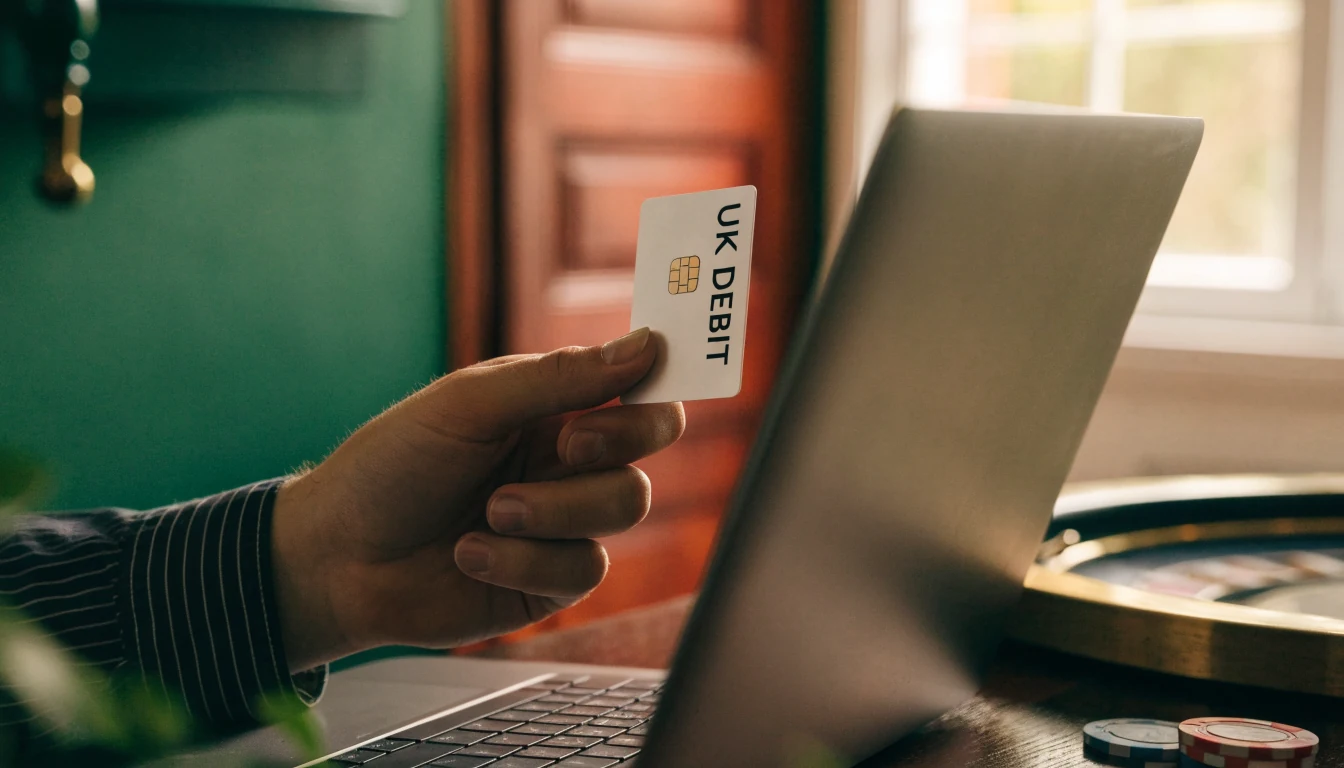
Table of Contents
- Interac in the UK: the payment label is not the whole story
- Deposits, withdrawals and the question of a return route
- What a UK casino cashier can—and cannot—confirm
- Depositing by Interac: what the available evidence can establish
- The deposit menu beyond Interac
- GBP, minimum deposits and the limits that shape a payment
- Casino bonuses and the fine print on payment methods
- Online slots, payment choices and the limits of the session
- A card deposit can be instant; a payout is another matter
- GamStop searches do not settle payment questions
Interac in the UK: the payment label is not the whole story
A payment name can look definitive on a casino page and still answer only part of the practical question. A listing may describe a method the operator supports in some circumstances; it does not establish that every customer in the UK can use it, or that every card or account bearing a related label will be eligible. Availability is not the same as personal access.
That distinction matters with Interac. The name in a heading or cashier is not, by itself, confirmation that an Interac card, debit product or account will work for a particular UK customer. A payment route has to be available for the customer’s location and account, and the specific product must meet the operator’s requirements. Broad labels can conceal narrower conditions.
Even familiar card brands illustrate the point. Specialist casino reviews list Visa and Mastercard among payment options, but that does not settle current UK availability or whether a particular card product is accepted. The cashier is where those details need to be checked. A brand name is a starting point, not a verdict.
When looking for UK casinos that accept Interac in 2026, check the payment options available to you and how quickly withdrawals are processed. The details below provide a payout-speed reference; they do not confirm Interac availability.
Payout speed: 1-3 business days Revery Play lists a payout speed of 1–3 business days.
Payout speed: 1-3 business days Chanze lists a payout speed of 1–3 business days.
Payout speed: 1-3 business days Amunbet lists a payout speed of 1–3 business days.
Payout speed: 1-3 business days SpinFormula lists a payout speed of 1–3 business days.
Payout speed: 1-3 business days NightLuck lists a payout speed of 1–3 business days.
Payout speed: 1-3 business days Zombillion lists a payout speed of 1–3 business days.
Payout speed: 1-3 business days BeOnBet lists a payout speed of 1–3 business days.
Payout speed: 1-3 business days EvoSpin lists a payout speed of 1–3 business days.
Payout speed: 1-3 business days Jetsetspins lists a payout speed of 1–3 business days.
Payout speed: 1-3 business days NightWin lists a payout speed of 1–3 business days.
There is also a difference between a method appearing somewhere on a site and being offered to a particular account at the moment a payment is made. Payment pages, general descriptions and account-level options do not necessarily say the same thing. The usable choice is the one actually shown for the account, with its conditions clear before a transaction begins. A label alone does not do that work.
Ownership details matter too. When the casino account and payment route belong to the same customer, basic checks are less likely to create avoidable friction. A mismatch between names or account details can complicate a transaction even when the payment brand itself is familiar. It is a small administrative principle with a large role in a system built to identify who is moving money.
The UK setting adds another boundary: real-money casinos serving the British market need a current Gambling Commission operating licence. That says something about the operator’s regulatory status, not whether a particular payment product will be accepted. The two questions are easily blurred because both appear on the same casino page. They remain separate.
So the useful reading of an Interac label is modest. It signals a method worth checking, not universal compatibility. Customer location, account details and the specific payment product still matter. The label is only the label.
Deposits, withdrawals and the question of a return route
A successful deposit settles only the first half of a payment. The balance appears in the casino account, but that does not establish that the same route can carry a withdrawal back. This distinction matters when considering whether an Interac-labelled option supports both directions: a payment button or a completed deposit is not, by itself, confirmation of an Interac payout route.

UK anti-money-laundering controls generally require a casino to return funds to the original payment source. This is part of the closed-loop approach to gambling transactions: money should not move freely between unrelated accounts simply because another route looks more convenient. The rule is about the source of funds, not the name printed on a cashier tile. A method’s availability for deposits therefore cannot settle whether it will be used for withdrawals.
Where the original route cannot receive a payout, the casino may offer an alternative, but that can bring additional checks. The account holder may need to verify ownership of the replacement bank account or payment account. Keeping the casino account details and payment route in the same customer’s name reduces avoidable friction; mismatched ownership can turn a straightforward transaction into a request for further evidence.
The first withdrawal can also involve KYC that has not been completed earlier. A specialist review notes that processing time includes the casino’s internal approval and that an initial payout may take longer while verification is completed. That is a reason not to read “instant” as a promise about the whole journey: the cashier’s deposit status and the arrival of withdrawn funds are separate events.
A practical check is to establish the complete route before depositing: whether the method is listed for payouts as well as deposits, whether the account can receive funds through it, and what happens if the original source is unavailable. The answer may depend on the individual casino and account, so a general claim about Interac casinos or Interac withdrawals in the UK cannot substitute for the cashier’s terms.
A successful deposit does not guarantee that the same payment route can be used for withdrawals, as UK anti-money-laundering controls generally require funds to return to the original source.
The regulatory setting matters too. Remote gambling licensees serving Great Britain must hold a UK Gambling Commission licence; a payment label does not change that requirement. An unlicensed site’s advertised withdrawal route does not provide the same UK regulatory framework. The route is part of the transaction, not an afterthought.
What a UK casino cashier can—and cannot—confirm
A payment logo is a broad statement; a working payment route is a narrower one. UK casinos commonly accept debit cards, including Visa and Mastercard, but that does not mean every card carrying those brands will work at every site. A general list can identify a method the operator supports without settling whether it is available to a particular UK customer or compatible with a particular card product.
A specialist review may list Visa and Mastercard among a casino’s payment options. That is useful as an indication, not a live promise: availability can change, and the card’s product type matters. The cashier is the place to check what the operator currently presents for the account and transaction. Even then, a displayed card brand is not a guarantee that every card under that brand is eligible.
This distinction matters to people looking for casinos accepting Interac in the UK. A cashier that lists card payments does not, by that fact alone, confirm acceptance of an Interac card or an Interac-branded debit card. Nor does the appearance of a familiar network settle how the issuer has classified the card. The practical question is not merely whether “cards” appear in a menu, but whether the specific payment option and card product are accepted there.


There is a hard boundary on the other side of the menu. Credit-card payments for gambling are not an eligible route at UK-licensed casinos. The regulator introduced the ban on 14 April 2020, and it has not been relaxed. A card that can be used for ordinary purchases is not thereby suitable for a gambling deposit; its credit status cannot be waved away by a casino’s general acceptance of card payments.
That rule also makes loose descriptions particularly unhelpful. “Cards accepted” may refer to debit cards, while the reader may be thinking of a credit card, a prepaid product or a card issued under a different national payment system. Those are not interchangeable categories. The cashier’s wording, and the payment option actually offered, carry more weight than a broad statement elsewhere on a site.
The same caution applies on mobile. A smaller screen may compress payment details, but it does not change eligibility. If a method is shown, that establishes what the cashier offers at that point; it does not establish that every card bearing a related name will pass. A listed brand is not a universal key.
The UK market’s ordinary debit-card acceptance and the restriction on credit-card gambling sit side by side. One describes a common route; the other draws a legal line. The cashier can clarify the first for a particular account. The second is not a matter of preference.
Credit Card Ban
Credit-card payments for gambling are strictly prohibited at UK-licensed casinos under regulations introduced on 14 April 2020.
Depositing by Interac: what the available evidence can establish
A payment label is not a promise that a deposit will work. Interac appearing in a general casino search, or being familiar as a payment service elsewhere, does not establish that a UK account can use it. The relevant evidence is the method actually offered in that casino’s cashier for the account in question. If Interac is not displayed there, its presence on a third-party page is not enough to treat it as an available deposit route.
The same caution applies to card products. A specialist review of casino payment options lists Visa and Mastercard, but that does not confirm that every UK customer can use every card linked to those networks. The cashier’s current options and the eligibility of the particular card still matter. A network logo is a broad signpost, not a transaction result.
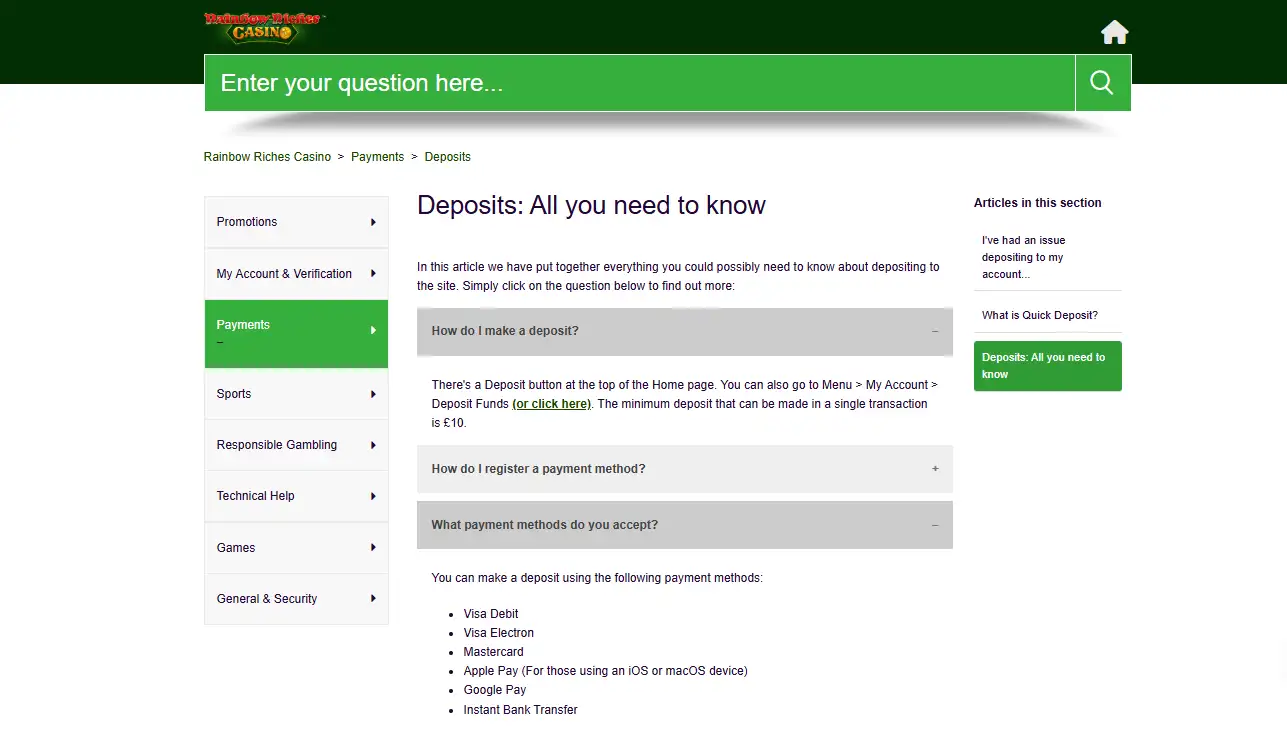
Currency is another part of the deposit decision. A specialist review reports that GBP is supported on the pages it examined, but the account currency should be checked before the first payment. If the account is set to another currency, the transaction may involve conversion; the amount shown by the payment provider and the amount credited to the casino account may then differ.
This leaves a straightforward answer to whether Interac can be used at UK online casinos: it cannot be assumed from the method’s name alone. The account cashier must confirm that it is offered, and the account currency must be clear before a deposit is made. Neither an advertised bonus nor a low-looking deposit figure can settle those questions; the payment option itself has to be present and usable for that account. A promotion’s terms are a separate matter.


The distinction is small but consequential. A payment method can exist in the wider market without being available at a particular casino, and a supported currency does not prove that every payment route will process in it. The practical check is therefore specific: the live deposit screen, the account’s currency setting, and the terms shown before confirmation. Not the label alone.
The deposit menu beyond Interac
When a payment route does not fit, the alternatives are not interchangeable. A debit card, a bank connection, a prepaid voucher and an e-wallet each leave a different shape in the transaction: a link to a bank account, a balance held elsewhere, or a route that stops at the deposit.
Debit cards are the familiar starting point. UK casinos commonly accept Visa and Mastercard debit cards, although the cashier determines whether a particular card and account can be used there. The distinction matters: a logo on a general payment page is not a promise that every card product will pass. Credit-card payments for gambling are not an alternative; UK rules prohibit them.
Open banking connects a payment to a bank account through an authorised service, while a bank transfer uses the bank’s own payment route. A specialist review describes these options as capable of providing instant deposits and fast withdrawals at many sites. That is a report about some operators, not a timing guarantee or a feature to assume across the market. The cashier’s current options remain the practical test.
Commonly accepted via Visa and Mastercard; eligibility is determined by the specific card product and the casino’s cashier.
Direct bank connections that can provide instant deposits and fast withdrawals at many sites.
Deposit-only options, such as Paysafecard, which do not serve as a route for withdrawals.
Services like Skrill and Neteller, which are site-specific and often excluded from promotional offers.
Prepaid vouchers take a narrower role. Paysafecard is a voucher for deposits only, so it is not a complete route for money moving both ways. That can suit a player who wants to set aside a separate amount for funding, but the transaction still has an endpoint: a voucher does not become a withdrawal method merely because it funded the account.
E-wallets form another category, though availability is site-specific. Skrill and Neteller appear at some casinos; a specialist review says they are often excluded from promotions. That caveat is about offer terms, not a reason to treat either wallet as universally unavailable or universally eligible. The method shown at checkout and the terms attached to a particular offer are separate matters.
There is no single substitute that answers every practical concern. A card may be accepted broadly, a bank route may connect directly to an account, a voucher may be deposit-only, and an e-wallet may depend on the casino’s current arrangements. None is a ranking. The useful comparison is whether the route appears in the cashier for that account and whether its role matches the intended transaction.
A payment menu is a small portrait of the systems behind it: banks, card networks, stored balances and prepaid cash-like instruments, each with its own boundaries. The labels can look like a tidy list. The routes are not.
GBP, minimum deposits and the limits that shape a payment
A deposit amount is not determined by the payment button alone. The casino account’s currency, the method’s minimum and the limits attached to the account all shape what can be sent in one transaction. A figure that looks modest in a cashier may also be converted before it reaches the account, changing its effective cost.


A specialist casino review describes GBP as supported, but that does not establish that every account is set up in sterling. The account currency is worth confirming before the first transaction: if the balance is held in another currency, a deposit may be converted on its way in. The displayed amount and the amount credited can then differ, with exchange-rate spread among the possible costs. A neat number on screen is not necessarily a neat result.
The distinction matters particularly for people comparing casinos that appear to accept the same payment method. Currency support belongs to the account and cashier, not simply to the method’s name. A payment route may be available while the account balance is denominated differently. Before sending funds, the currency shown in the account and the final deposit amount in the cashier are the practical details that govern the transaction.
Minimums put another boundary around the amount. A specialist casino review reports that deposits commonly begin in the £10–£20 range, with the threshold depending on the selected method. That is a reported range, not a universal tariff: one cashier may set a different entry point from another, and the method chosen can alter the smallest amount accepted. The cashier’s own figure is the one that applies to that particular transaction.
This can make the smallest deposit a less simple choice than it appears. A person may have a fixed sum in mind, but the payment method’s floor can require a larger transfer. If currency conversion applies as well, the amount leaving the bank or payment account may not match the amount credited in the casino balance. These are separate stages of the same decision: the method sets an entry condition, while the account currency affects how the value is represented.
- Confirm the account currency before depositing
- Check the method-specific minimum deposit limit
- Verify daily or monthly transaction ceilings
- Assume a low minimum implies a high maximum
- Expect a neat on-screen figure to avoid conversion costs
- Rely on general reputations instead of the live cashier
Maximums are less likely to be a single stable figure. A specialist casino review notes that ceilings may apply per transaction, per day or per month, and can vary with both the payment method and account status. The distinction between these periods matters. A transaction limit governs one payment; a daily or monthly cap can affect several deposits combined. A method that permits a particular amount in one payment does not, by itself, establish how much may be deposited over a longer period.
Account status is part of the calculation, too. The limit displayed for one account need not settle what another account can send, and a change in status may alter the available ceiling. A published figure, where one is shown, therefore needs to be read alongside the conditions attached to it and the current amount in the cashier. Limits are administrative boundaries, not merely a technical property of a payment button.
For anyone trying to plan a deposit, the useful sequence is straightforward: identify the account currency, check the method-specific minimum, then look for limits on a single transaction and across a day or month. The exact amount available should be confirmed in the live cashier before payment. That small piece of arithmetic can prevent a failed transfer or an unexpected conversion from being mistaken for a problem with the payment method itself.
It also changes how comparisons between casinos should be read. A low minimum tells little about the maximum, and a generous single-payment ceiling says nothing on its own about a daily or monthly cap. Nor does a sterling balance remove every possible cost: the provider or bank may still apply charges, while a conversion spread matters if the transaction is not processed in GBP. The total cost belongs to the particular payment, not to a general reputation attached to its method.


There is no meaningful universal deposit amount for every account. The practical boundaries are set by the currency in which the balance is held, the chosen method’s minimum, and the limits attached to that method and account. Check the figures where the transaction is actually prepared. The cashier is the arithmetic that counts.
Casino bonuses and the fine print on payment methods
A payment option can be familiar, accepted and easy to use without qualifying a deposit for a casino promotion. The cashier answers whether a transaction can be made; the bonus terms answer whether that transaction earns an offer. Those are separate decisions, though casino pages can place them close enough together to look like one.
This distinction matters when an Interac label appears beside a welcome offer or a slots promotion. Its presence does not establish that an Interac-funded deposit qualifies, nor that the offer is available to every account using that route. Payment acceptance and bonus eligibility are governed by different conditions. The relevant terms are those attached to the particular promotion, not the general impression created by a method appearing in a menu.
Promotional wording often gives the headline the largest type: a bonus, free spins, or another incentive. The restrictions sit elsewhere, where they specify which deposits count and which payment methods are excluded. A familiar method may therefore work for ordinary funding but fail the promotion’s conditions. That is not a contradiction; it is a distinction between access to the account and access to an offer.
Payment acceptance and bonus eligibility are separate: a method may be usable for funding an account but excluded from a specific promotion’s terms.
A specialist review reports that PayPal can be excluded from bonus eligibility, despite its popularity for speed and convenience. The same kind of review reports that Skrill and Neteller are available at some casinos and are often excluded from promotions. These are not fixed rules for every operator or offer. Terms change, and one casino’s policy cannot safely be carried over to another.
The practical point is narrow but important: a list of casinos that accept Interac would not, by itself, be a list of casinos offering a bonus on Interac deposits. Nor would a casino bonus advertised beside a payment logo establish that the two work together. The offer must name the qualifying method, or its exclusions must make the position clear. If the wording is ambiguous, the promotion’s full terms or the operator’s clarification matter more than a banner.
The promotion is its own contract
Bonus conditions can attach to the method used, the promotion selected, or the account’s eligibility. A deposit that reaches the balance may still be treated differently for promotional purposes. The cashier’s successful transaction message confirms funding, not the award of a bonus.
That difference also affects what a player can reasonably infer from an Interac-related offer. Search wording about an Interac casino bonus may describe a hoped-for combination, not a confirmed feature. The same caution applies to claims about slots bonuses: a casino may offer slots promotions while excluding particular payment methods, or may accept a method without attaching any promotion to it. The title of an offer is not the full rule.
The terms deserve attention before a promotional deposit, particularly where the chosen route is an e-wallet. PayPal, Skrill and Neteller should not be treated as interchangeable merely because all are electronic payment services. The available reporting points to exclusions for each in some promotional settings, but does not establish a single policy across UK casinos. An operator’s current offer terms are decisive.
There is little value in selecting a payment method solely because a bonus appears attractive. If the method is excluded, the deposit may not qualify; if the offer has other conditions, satisfying the payment rule alone may not be enough. The bonus is not the payment.
This is where the neatness of casino marketing meets the untidiness of its conditions. A logo can announce availability, and a banner can announce an incentive, while neither settles whether the two may be combined. The small print does the less glamorous work.
For any advertised promotion, the useful distinction is between a casino that accepts a payment method and an offer that accepts a deposit made through it. Interac acceptance does not prove bonus eligibility; a general bonus does not prove Interac eligibility. PayPal may be excluded, and Skrill or Neteller may be excluded at some sites, according to specialist review coverage. These examples are reasons to inspect the individual terms, not grounds to assume a universal rule.
No payment label carries a bonus with it. The promotion’s conditions decide.
Promotion Rules
- Bonus eligibility is governed by promotional terms, not payment availability
- E-wallets like PayPal, Skrill, and Neteller are frequently excluded from offers
- A successful deposit does not automatically award a bonus
- The promotion’s full terms are more decisive than marketing banners
Online slots, payment choices and the limits of the session
A slot session begins with a balance, but the payment label attached to a casino does not establish that a particular route is available to every account. Nor does it establish that a named game, or a mobile version of it, can be reached after depositing. Those details belong to the cashier and the games actually offered by the operator, not to the broad idea of an “Interac casino”.
The amount needed to begin also depends on the selected payment method. A specialist casino review places minimum deposits in a £10–£20 range, with the figure varying by method. That is an indication, not a universal entry price: the cashier’s stated minimum governs the transaction at that site. A balance that meets one method’s threshold may not meet another’s, so the funding decision can shape the start of a session before a reel has turned.
There is a more distinctly British limit once play begins. Online slots are subject to a maximum stake per game cycle of £5 for customers aged 25 and over, and £2 for those aged 18 to 24. These are ceilings, not suggested spending levels. The rule places a boundary around each spin, while leaving the wider question of how long or how often someone plays to other safeguards and personal choices.
The design of the session is constrained too. Autoplay is banned for online slots in Britain, and each spin must last at least 2.5 seconds. The pace is therefore not entirely a matter of interface preference: the law prevents a sequence of spins from being launched automatically and sets a minimum duration for each one. A small intervention in screen design; a larger statement about who controls the rhythm.

Payment and play remain separate stages, even when a cashier makes them appear to be one continuous process. A successful deposit only places funds in the account; it does not certify that a particular slot is available, that a mobile screen will show the same selection, or that the deposit meets a promotion’s terms. Bonus eligibility is a separate matter, and payment methods can be treated differently under promotion rules.
The sensible reading of a slot-focused casino description is therefore narrow. It may indicate that deposits are accepted and slots are offered, but it cannot settle the availability of a specific game or payment route for an individual account. The minimum is method-dependent, and the session itself is bounded by rules on stake and speed. No shortcut through the label.
A card deposit can be instant; a payout is another matter
A payment arriving in a casino account quickly says little about how quickly money can travel back. A specialist casino review describes the familiar contrast: a card deposit may appear instantly, while a payout can take several business days. These are separate stages, handled by different systems and subject to different checks. The first is not a promise about the second.
For anyone investigating whether Interac can be used at a UK casino, that distinction matters. A payment label in a cashier does not, by itself, establish how a withdrawal would be handled or how long it would take. Deposit speed cannot answer whether a particular account is eligible for the method, nor whether the casino can return funds through it. The cashier’s current terms and the withdrawal information attached to the account are the relevant details; speed should not be inferred from a logo.
Factors affecting payout timing
Internal approval by the casino and the completion of KYC verification are critical steps that can delay withdrawals, particularly for first-time payouts. Additionally, bank cut-off times, weekends, and currency conversion processes can further impact the delivery of funds.
Before money is released, a casino may need to approve the withdrawal internally. A specialist review identifies this approval process, along with whether the account has been fully verified, as factors in payout timing. The distinction can be especially visible on a first withdrawal: verification may still be under way, and processing can take longer while that is completed. KYC is not merely a formality at the edge of the transaction; it can determine when the transaction is allowed to move.
There is a mundane logic to the pause. Deposits are designed to move funds into an account, while withdrawals require the operator to check the request and the account behind it. An instant card authorisation therefore marks the start of a balance, not the end of a financial journey. Casinos have made the entrance look like a door that swings freely. The exit has paperwork.
The payment route can also affect the final wait. Specialist casino reviews describe PayPal, open banking services and debit cards connected to fast payout systems as among the quicker withdrawal options, but that is a comparative observation, not a guarantee for every operator or account. A listed method still has to be available for the customer’s withdrawal and pass the casino’s approval process. The account’s verification status remains part of the calculation.
Bank transfers have their own sources of delay after approval. A specialist review notes that delivery can be affected by the bank’s cut-off times, weekends and currency conversion. A request submitted near a processing cut-off may not move on the same schedule as one submitted earlier; a weekend can interrupt the ordinary banking sequence, and a conversion adds another step. Those influences concern delivery, not necessarily the casino’s decision to approve the payout.
The practical measure of speed is therefore not the deposit screen’s promise of immediacy. It is the full path: casino review, completed verification and transfer through the selected method. For Interac in particular, a deposit-time claim should not be mistaken for evidence of an equally swift payout. A fast beginning is only a beginning.

GamStop searches do not settle payment questions
Interac and GamStop describe different things. Interac is a payment name; GamStop is associated with self-exclusion. Seeing one mentioned alongside a casino does not establish whether that operator is connected to GamStop, nor does it show that Interac changes the operator’s self-exclusion arrangements. The two questions need separate answers.
That distinction matters when searches combine payment terms with phrases such as “not on GamStop” or “without GamStop”. A payment option cannot serve as evidence that a site is outside a self-exclusion scheme. Nor does the absence of a payment brand in a cashier tell anything reliable about a casino’s self-exclusion status. A label is not a safeguard.
For remote gambling operators serving Great Britain, UKGC requirements include prompting new customers to set a financial limit before making a first deposit. Operators must also make account-level limit controls accessible. These controls concern how gambling accounts are managed; they are not proof of a particular payment method’s availability, and they do not answer whether a named casino is connected to GamStop.

Self-exclusion is a serious boundary, not a payment preference. Where someone is trying to avoid gambling, looking for a route around an existing exclusion can undermine the purpose of that protection. The British regulatory approach treats account safeguards as part of the operator’s duties, rather than as an optional feature attached to a cashier menu.
The relevant checks are therefore separate: whether a site is legally entitled to serve customers in Great Britain, what self-exclusion arrangements apply, and which payment methods are actually available to an eligible customer. Interac alone settles none of them. A payment method may open a transaction; it does not grant permission to gamble, establish regulatory status or cancel a self-exclusion choice.
The distinction is plain, even if search terms blur it. A cashier answers a narrow question about payment. Safeguards answer another.
What is the fastest withdrawal method for UK casinos?
PayPal, open banking services and debit cards linked to fast payout systems are generally among the quickest options. The casino’s approval process and your verification status also affect how quickly funds arrive.
Do UK casino withdrawals require verification?
Casinos may need to verify your account, particularly before a first withdrawal. Having your account and payment details in the same name can help avoid extra checks.
Why can a fast payout casino still delay my withdrawal?
A fast payment method does not skip the casino’s internal approval process, and a first withdrawal may take longer if verification is still needed. Bank-transfer cut-off times and weekends can also affect delivery.
Can I deposit in GBP?
Yes, GBP is supported at the sites described. Confirm your account currency before your first transaction to avoid conversion.
What is the current minimum deposit?
The minimum deposit usually starts at £10–£20, depending on the payment method.
Are fast casino withdrawals guaranteed?
No. Withdrawal speed depends on the casino’s approval process, whether your account is fully verified, and the payment route’s delivery timing.
Written by the editors at Rainbow Riches Casino 3.