Online Casino with Daily Promotions in the UK
 Available in GB
Daily offers can involve bonus funds or other incentives, each with conditions that affect how rewards can be used and withdrawn.

Table of Contents
- What Daily Casino Promotions Actually Offer
- Today’s Promotions Have a Short Shelf Life
- Daily Drop-and-Win Mechanics, Without the Mystery
- How Casinos Build Promotions into the Daily Routine
- Free Spins: Small Values, Long Conditions
- Daily Offers for Existing Players
- Bonus Promotions and the Meaning of 10x
- What Makes a Daily Promotion Better on Paper
- New Promotions and Their Expiry Windows
- UK Players, Licensing and Different Rules Across the Country
What Daily Casino Promotions Actually Offer
A daily promotion is not a separate kind of gambling so much as a recurring invitation to take part in it. The offer may appear as a bonus, a reward or another incentive attached to an account. Its daily rhythm is the distinguishing feature: something is presented as available regularly, rather than as a one-off welcome. That can make the promotion feel like part of the casino’s ordinary furniture. It remains an offer with conditions, not a standing entitlement.
The phrase “daily casino promotions” can cover quite different arrangements. Some offers add bonus funds; others may invite participation through a particular gambling product. The common thread is not the shape of the reward but its promotional purpose. An incentive is designed to encourage activity, and its headline description rarely tells the whole story. The important question is what the offer permits and what must happen before any resulting funds can be withdrawn.
That distinction matters because bonus funds are not necessarily the same as cash in an account. A promotion may attach wagering requirements to those funds, meaning that they must be wagered before the associated winnings become withdrawable. Other terms can govern eligible games, maximum bets, cashout limits and expiry. These details affect the practical value of an offer; a prominent reward figure alone cannot settle it. A promotion is a small contract dressed for the occasion.
Daily promotions can change, so check the current offer terms before opting in. Payout timing is another practical detail to consider when choosing a UK casino.
Payout speed: 1-3 business days Revery Play lists payouts at 1–3 business days. This gives readers a stated timeframe to factor into their choice.
Payout speed: 1-3 business days Chanze lists a payout speed of 1–3 business days, a useful detail to keep in mind when reviewing its current promotions.
Payout speed: 1-3 business days Amunbet’s stated payout speed is 1–3 business days. Consider this timing alongside the terms of any promotion you plan to use.
Payout speed: 1-3 business days SpinFormula lists payouts at 1–3 business days, providing a stated timeframe for readers considering the site.
Payout speed: 1-3 business days NightLuck gives a payout speed of 1–3 business days. This is one practical point to check when weighing its current offers.
Payout speed: 1-3 business days Zombillion lists a payout timeframe of 1–3 business days. Readers can take this into account when reviewing its promotions.
Payout speed: 1-3 business days BeOnBet’s stated payout speed is 1–3 business days. Check the terms of any daily promotion as well before deciding.
Payout speed: 1-3 business days EvoSpin lists payouts at 1–3 business days, giving readers a clear timing detail to consider.
Payout speed: 1-3 business days Jetsetspins states a payout speed of 1–3 business days. This timeframe may be useful to consider alongside current promotional terms.
Payout speed: 1-3 business days NightWin lists payouts at 1–3 business days. Readers can factor in this stated timeframe when considering its offers.
For Great Britain, there is also a regulatory boundary around wagering requirements on incentives offered under a local licence. Rules effective from 19 January 2026 cap the requirement applied to bonus funds at ten times those funds. The limit is not an instruction to wager that amount, nor a description of how every promotion works. It is a ceiling on the requirement an operator may attach to the bonus funds. When an offer uses wagering, its stated terms still determine how the requirement applies.
The cap changes the background against which online casino promotions in the UK are presented. A headline may emphasise the reward, while the conditions determine the route from bonus funds to a possible withdrawal. Great Britain’s limit sets an outer boundary for one part of that route; it does not make different offers equivalent. Game eligibility and other terms still matter, and a player considering a promotion needs to read those conditions as a connected set rather than treating the wagering figure as the whole story.
A second rule concerns the contents of a single incentive. In Great Britain, one incentive cannot include more than one type of gambling product. In practice, that means a promotion cannot be structured as one package spanning distinct product categories, such as casino games and sports betting. This rule is about the design of the incentive, not a claim that an operator cannot provide different products separately. The boundary keeps a promotional offer from becoming a bundle whose conditions travel across categories.


There is a social logic to these limits. Promotions borrow the language of generosity, but they are commercial instruments: they give an operator a reason to invite continued participation and give a player a reason to consider an offer. Rules that constrain wagering requirements and prevent cross-product incentives place some boundaries around that exchange. They do not turn a bonus into a gift without strings. They make the strings subject to limits.
The daily label can also blur a useful distinction. A recurring offer may be available as part of a broader promotional programme, but recurrence does not mean that every account receives the same incentive or that the terms are identical each time. The description signals a pattern, not a guarantee. An offer’s actual conditions belong to that offer, and the relevant terms should be considered before it is claimed.
This is why comparisons based only on the largest-looking reward can mislead. A promotion is better understood through its structure: what kind of funds or opportunity it provides, what wagering requirement applies, which games qualify, and what restrictions could affect a withdrawal. The British rules establish two important boundaries, but they do not erase the difference between offers. The detail still does the work.
Attention: A promotion is a contract with conditions; a prominent reward figure alone does not determine the practical value of an offer.
Daily online casino promotions are therefore neither an automatic daily benefit nor a single standard product. They are recurring invitations shaped by individual terms and, in Great Britain, by rules governing incentives. The headline may be brief. The conditions are the substance.
Today’s Promotions Have a Short Shelf Life
A promotion marked as available today carries two different clocks. One concerns the time when it can be claimed; the other begins, in some offers, only after activation. Confusing them can turn a live-looking banner into a missed opportunity, or make an offer seem more urgent than its terms require. “Today” may describe the day a promotion is displayed, not the full period in which its bonus can be used.
The distinction matters because a claim window and an Expiry Period answer separate questions. The first says when an offer can be accepted. The second says how long the resulting bonus or promotional benefit remains available. A daily listing can disappear from a page while an already activated offer remains usable; equally, an offer still visible on the page may have a short claim window. The wording in the terms, rather than the placement of the banner, determines which clock applies.
A specialist review reports promotional Expiry Periods of 7 to 30 days after activation. That is a range described by one review, not a timetable that can be assumed for every casino or every offer. Individual terms may set a different period, and the key detail is the event that starts it: activation, receipt of the bonus, or another stated point. “Seven days after activation” is not interchangeable with “available until the end of today”. Small wording; large difference.


The daily label is a piece of merchandising, not a complete explanation of timing. It gives an offer a place in the day’s stream of messages: a tile on the promotions page, a notification in an account, perhaps a line in an email. Such presentation encourages quick decisions. Yet urgency in the display does not itself establish the deadline, just as a lingering banner does not extend one. The terms are the more prosaic clock, and the more important one.
This is why the order of events deserves attention. An offer may need to be claimed before its display period ends, while the benefit may remain active afterwards. Another may require action and use within the same stated window. Unless the terms separate those stages, the safest reading is not to infer that one deadline governs both. A promotion can be “today’s” without requiring every part of it to happen today; it can also be more restrictive than the headline suggests.
The relevant details are often scattered through the offer description: when claiming closes, when the Expiry Period starts, what must be completed before it ends, and what happens to any remaining bonus or winnings. A deadline may apply to the bonus funds, while winnings generated from them are subject to their own conditions. Those distinctions matter because an expired benefit may no longer be available for play, and winnings can depend on the rules attached to that benefit. Checking only the headline leaves the most consequential part unread.
- Check the claim window for the offer
- Verify the Expiry Period after activation
- Read the terms for the specific deadline
- Rely on the banner’s placement for timing
- Assume the display date is the expiry date
- Infer one deadline governs both claim and use
Timing also affects the practical value of an offer. A bonus that appears substantial may be difficult to use if its window is brief or if the conditions require attention the account holder cannot give during that period. Conversely, a clearly stated, longer window may make it easier to decide whether the offer fits into a routine. Neither case makes the promotion inherently worthwhile; it simply shows that value is not only a matter of the displayed reward. Time is part of the price.
A sensible comparison therefore begins with the calendar language, not the promotional adjectives. Is the offer available to claim today, or does the benefit itself expire today? Does its clock begin immediately, or only once it has been activated? Are the end point and consequences stated plainly? These are not fine-print niceties. They determine whether the offer is still an offer when there is time to use it.
The daily cycle gives casinos a steady reason to refresh their promotions and gives customers a steady reason to check them. But a fresh date on a page does not reset an already running Expiry Period. The display moves on; the terms keep their own time.
Daily Drop-and-Win Mechanics, Without the Mystery
A daily promotion can be less like a coupon and more like a small ritual: sign in, open a wheel, tap a spin button, see what appears. That sequence is the mechanic, not the prize’s full meaning. A daily login may unlock an opportunity automatically; a prize wheel may ask for a separate action; a loyalty scheme may make an opportunity available through participation over time. The visible motion is simple. The conditions around the result are a different matter.

These formats overlap, but they are not interchangeable. A login reward is tied to the act of returning. A wheel turns that return into a chance-based selection from displayed outcomes. A loyalty reward links access to a broader account programme. In each case, the player is encountering a route into a promotion, not necessarily receiving cash or a prize that can be withdrawn immediately.
A specialist review reports that recurring spin or wheel features have been associated with Gala Bingo, Foxy Bingo, JackpotJoy, Sun Bingo, Heart Bingo, Double Bubble Bingo, MrQ, PlayOJO, 888 Casino, Grosvenor Casinos, Genting Casino, Mecca Bingo and Buzz Bingo. That is a snapshot of named examples, not a permanent directory: promotional features can change, and an operator’s current terms are the more useful record of what is available now.
The wheel itself often borrows its appeal from the old fairground device: visible segments, a dramatic pause, then an outcome. Digital design turns this into a repeatable daily gesture. A login can serve as the cue to enter, while the wheel supplies suspense and the possibility of a reward. The presentation makes chance feel like an event. It does not make every segment equally likely, nor does the animation explain what happens after a win.
Recurring spin or wheel features have been associated with operators such as Gala Bingo, Foxy Bingo, JackpotJoy, Sun Bingo, Heart Bingo, Double Bubble Bingo, MrQ, PlayOJO, 888 Casino, Grosvenor Casinos, Genting Casino, Mecca Bingo and Buzz Bingo.
Some specialist coverage describes wheels that are opened after a deposit and then made available for daily spins without a further charge, with possible outcomes including free spins, cash and other rewards. That describes a reported arrangement, not a condition shared by every casino wheel. Whether a deposit is needed, whether access continues, and what counts as a qualifying account action depend on the offer’s own rules. The mechanics should not be mistaken for a general entitlement.
The distinction matters most when the wheel lands on something that sounds straightforward. “Cash” may appear more direct than a bonus reward, but the label alone does not establish whether the amount is withdrawable, subject to conditions or credited in another form. A prize described as free spins is an entry into another game mechanic, not a statement of cash value. A loyalty reward may be usable only in the way its programme defines. The result is the beginning of interpretation, not the end of it.
A useful way to read a drop-and-win feature is to separate three moments: access, selection and settlement. Access is what opens the feature—perhaps a login, loyalty status or a qualifying deposit. Selection is the action of spinning or opening a prize mechanism. Settlement is how the operator credits the outcome and what restrictions attach to it. The screen tends to emphasise the middle moment, because that is the entertaining one. The other two determine what participation actually entails.

This also explains why the words “daily” and “free” can describe only part of the experience. Daily may refer to the chance to return to a wheel, not a guaranteed prize each day. Free may describe the spin itself, while access could have a separate condition. A promotional tile is a signpost, not a complete account of the transaction.
For UK players, the practical habit is to inspect the offer details before treating a wheel result as spendable money. The rules should clarify how an outcome is credited and whether it carries conditions. That is separate from the entertainment of watching the wheel turn. A bright animation can make the mechanics feel transparent; the prize terms do the less theatrical work.
A spin is an event. A prize is a set of terms.
How Casinos Build Promotions into the Daily Routine
A daily promotion sounds like a benefit that arrives with the day itself, as dependable as a date changing on a screen. In practice, “daily” describes a schedule or a style of presentation, not a promise that every player will receive the same offer every day. The distinction matters. A calendar can make activity look regular while leaving the actual benefit conditional, selective or absent.
Promotions can be arranged as a sequence: one kind of invitation gives way to another, and the page or account area acquires the appearance of a continuing programme. That rhythm is useful to the business. It gives people a reason to return, and it turns occasional marketing into part of the ordinary interface. The casino is no longer merely announcing an offer; it is encouraging a habit of checking what has appeared.
How recurring labels work
A recurring label creates an expectation of a daily promotion, but it may be directed only at existing players and does not guarantee that every account receives a fresh offer every day.
The habit can be stronger than the reward. A recurring label creates an expectation, even when the terms do not guarantee that a particular account will receive a fresh promotion every day. Offers may be directed at existing players, and a promotional calendar may show a pattern without establishing a universal entitlement. “Daily” can describe the pace of the marketing, not the certainty of the outcome.
A report published by fluid-radio.co.uk describes reload bonuses for current players as appearing regularly in promotional calendars, sometimes on a weekly or daily basis. That is a reported pattern, not a rule governing every casino or account. A reload is also a request for another deposit, not simply a courtesy for having returned. Its place in a routine is therefore commercial as well as recreational: the reward is attached to further spending.
This is where the language of routine can blur a useful distinction. A calendar may suggest a dependable sequence, but each promotion remains a separate offer with its own terms. Recurrence does not make an offer automatic, nor does it establish that the same terms apply each time. The value of a routine depends less on the frequency implied by its presentation than on what the player must do to qualify and what restrictions follow.

There is also a human reason the pattern works. Repetition makes a small decision feel familiar. Opening an account page to check for something new can become part of the day before the player has decided whether the offer is worthwhile. The interface supplies the prompt; the player supplies the attention. A promotion may be modest, but the repeated invitation can be more consequential than its headline suggests.
None of this means that recurring offers are inherently poor value. It means that a calendar should be read as a timetable of possible marketing, not as a daily allowance. The practical question is whether the offer fits the player’s own plans, rather than whether it completes a streak or preserves a routine. An unclaimed promotion is not a missed obligation.
The distinction is plain, though easily obscured by cheerful labels: regularity belongs to the campaign; participation remains a choice. A daily rhythm can make a casino feel like part of the household schedule. The schedule, however, is built to bring the player back. Not quite a gift.
Free Spins: Small Values, Long Conditions
A daily spin looks like a small gift because its value is small. A specialist review puts the value of a spin in the 10p to 25p range, but the amount attached to each turn is only the first part of the calculation. The result may be credited as bonus funds, not cash ready for withdrawal. A win on the screen can therefore begin a further set of conditions rather than end the transaction.
Attention: Some free-spin bonuses require a minimum deposit before they can be claimed, meaning access depends on adding money to the account.
Some free-spin bonuses also require a minimum deposit before they can be claimed, according to a specialist review. That changes the character of the offer: the spins may be described as free, while access to them depends on adding money to the account. The deposit requirement and the spin value need to be read together. A small nominal prize does not make the cost of qualifying disappear.
The distinction between bonus funds and withdrawable cash matters most when winnings carry wagering requirements. A specialist review reports daily-spin requirements ranging from 20x to 65x. In Great Britain, however, rules effective from 19 January 2026 limit wagering requirements applied to incentive bonus funds to 10 times those funds. The reported range should not be taken as a description of what a Great Britain-licensed incentive may require under that rule. The terms attached to a particular promotion determine how its winnings are treated.

The arithmetic can make a modest prize feel more substantial than it is. If the win is held as bonus funds, it may have to be wagered before withdrawal is possible; the relevant multiplier applies to those funds, not to the value of the original spin. Other conditions can matter too, including which games count towards wagering and whether a maximum bet applies while bonus funds are in use. A promotion’s headline can be brief. Its conditions are less so.
A short expiry can make those requirements harder to meet. A specialist review describes spin winnings as expiring within 24 hours to 7 days. That period concerns the winnings from the spins, rather than simply the time available to activate an offer. The distinction is consequential: a spin may be claimed, produce a win, and leave only a limited period in which to satisfy the conditions attached to that win. The clock may start at a different point under different terms, so the wording matters.

There may also be a maximum amount that can be converted or withdrawn from spin winnings. Where a cap applies, a larger result does not necessarily mean a larger cash return. The value of the spin, the treatment of any winnings, the wagering requirement, the expiry period and any win cap form one connected set of terms. Reading only the number of spins leaves out most of the offer’s practical value.
This is why daily free spins promotions in the UK are better understood as conditional bonus opportunities than as a daily cash allowance. The small value is visible at once; the conditions determine what, if anything, can eventually be withdrawn. In gambling, the footnote often does the heavy lifting.
Daily Offers for Existing Players
A reload bonus belongs to the stage after registration. It is aimed at someone who already has an account, rather than being a welcome offer designed to bring a new customer through the door. The name suggests replenishment: a promotion attached to another deposit, offered within an existing relationship between player and casino.
That relationship has its own calendar. A report by fluid-radio.co.uk says reload bonuses can appear in promotional schedules weekly or even daily. This is a description of possible frequency, not a promise that every account will receive an offer on a fixed day. The distinction matters. A calendar may show a recurring pattern, while the promotion available to a particular player can still depend on the terms attached to it.
Reload bonuses are aimed at existing account holders rather than new customers and may appear in promotional schedules on a weekly or daily basis.
The language of regularity is persuasive because it turns an occasional incentive into part of a routine. A player who sees a new reload offer appear repeatedly may begin to treat it less as a separate promotion and more as a reason to return. The casino, meanwhile, has a familiar commercial interest: keeping an existing customer engaged. Nothing mysterious there. Just retention, dressed for the occasion.
For anyone assessing daily casino offers in the UK, the key distinction is between an offer’s appearance and its practical value. A reload is not automatically a benefit simply because it is recurring. Its worth depends on what the offer requires and what happens to any bonus funds or winnings under its terms. Those details can vary, so the label alone cannot settle whether a promotion suits a player’s plans.
Nor does a recurring schedule mean that a deposit is due every time an offer appears. The promotional calendar describes what may be made available; it does not turn an invitation into an obligation. That is a useful separation in a market where a bright banner can make an optional offer feel like the next step in an established habit.
Daily online casino offers for existing players therefore need to be read as individual promotions, not as a standing entitlement. Frequency tells something about the operator’s approach to retention, but little by itself about the value of a particular reload. The practical question is whether its conditions make sense before any money is added. A familiar rhythm can make that scrutiny feel tedious; it is precisely when a promotion feels routine that its terms deserve attention.

There is also a quiet difference between a welcome offer and a reload. The former marks entry; the latter addresses someone already inside. The second may feel more personal, because it arrives in the context of an established account. Yet an offer’s familiarity is not evidence that it is tailored, generous or compulsory. It remains a commercial proposal, with its own conditions.
Routine is not value.
Bonus Promotions and the Meaning of 10x
A 10x wagering requirement is a multiplier, not a promise that a bonus will become cash after a single round of play. It means the bonus funds must be wagered ten times over before the associated terms are satisfied. If the bonus is represented by B, the required wagering is 10B. The calculation concerns the amount staked; it does not mean that the player must lose that amount.
That distinction matters when comparing daily casino bonus promotions in the UK. A multiplier can look modest on a banner while still setting a substantial wagering task, depending on the bonus funds involved. The number alone does not reveal whether an offer is useful: it describes one condition, not the full bargain. Bonus terms govern what counts towards the requirement and what happens to winnings, so the multiplier should be read alongside those terms.
Wagering Calculation
Determine the amount of bonus funds (B) provided by the promotion.
Multiply the bonus funds by the requirement (e.g., 10x), resulting in a total wagering requirement of 10B.
Stake the required amount through qualifying play before the associated terms are satisfied.
In Great Britain, the arithmetic also has a regulatory boundary. From 19 January 2026, incentives offered by Great Britain-licensed operators cannot attach wagering requirements to bonus funds above ten times those funds. A 10x condition therefore sits at that ceiling; it is not a specially generous figure simply because it is the largest multiplier the rules permit. The cap sets an outer limit, not a recommendation.
There is a small but important difference between understanding the formula and deciding what it means in practice. A requirement describes turnover, not a guaranteed route to withdrawal. Each qualifying stake moves the calculation, while the result of play remains uncertain. The promotional language tends to make the bonus feel like a gift; the multiplier restores the ledger.
For a player weighing an offer, the useful question is not merely whether it says 10x. It is how the requirement applies to the bonus funds and what the terms say about eligible play and withdrawal. The cap restrains one part of the arrangement. It does not make every offer alike, or make wagering compulsory.
What Makes a Daily Promotion Better on Paper
A daily promotion can look generous in its headline and still compare poorly once its conditions are read together. The useful question is not simply how much bonus is offered, but what must happen before any resulting winnings can be withdrawn. Wagering requirements are central to that calculation, though the figure alone does not tell the whole story.

A specialist review of UK operators reports requirements ranging from 20x to 65x. That spread is a comparison point, not a promise that every current offer falls within it. A lower multiple may mean less wagering, but only if the requirement is calculated on the same basis. Terms may refer to bonus funds, or set out another calculation; the distinction changes the amount of play required.
Game eligibility matters too. Not every game should be assumed to contribute equally to wagering, and some may be excluded. A promotion that looks simple on its front page can become less attractive if the games a player prefers do little to advance the requirement. The terms, rather than the headline, define the route from bonus to withdrawable winnings.
Then there is the Max Bet rule. A high stake while bonus funds are active can breach the offer’s limit and put winnings at risk of being voided. A promotion is not better merely because its wagering requirement appears low if its other conditions are easy to overlook. The fine print has teeth.
A fair paper comparison therefore weighs the wagering calculation, eligible games and Max Bet rule together. It also checks any cashout limit and the offer’s other restrictions before a claim is made. No single headline number captures all of that. The best daily casino promotions in the UK, on paper, are those whose conditions are clear and workable—not simply those with the largest-looking bonus.
Evaluate Daily Promotions
- Calculate the wagering requirement
- Check the list of eligible games
- Verify the Max Bet rule
- Confirm the cashout limit
- Review all other restrictions
New Promotions and Their Expiry Windows
A newly posted promotion can look more attractive simply because it has just appeared. Newness, though, says nothing about how long its benefits remain usable or whether winnings survive after the offer itself ends. Those are separate questions, answered in the terms attached to that promotion.
Expiry can apply at more than one point: an offer may have a window for claiming it, while any resulting bonus funds or winnings may carry their own deadline. A specialist review reports spin winnings expiring within 24 hours to 7 days. That range is not a rule for every casino or every promotion; the applicable deadline is the one stated in the live terms. A prize that has been credited is not necessarily available indefinitely.
The distinction matters when an offer is newly announced. Its appearance may prompt a closer look, not an assumption that it is more generous or more durable than older promotions. Terms can define when the offer must be activated, which games count, whether a maximum bet applies and what happens to winnings at expiry. A cashout limit may also shape what can be withdrawn. These details determine whether a promotion remains useful after the initial claim.
There is a small but consequential difference between an expiry date for claiming and one for using winnings. If the first is mistaken for the second, a player may find that an apparently successful result has already lapsed. The promotion’s own wording should make clear which clock is running and what action, if any, preserves the funds.
Freshness is a publishing detail. Usability is a contractual one. Before treating a new daily promotion as an opportunity, its current terms need to be read as a sequence: claim, play, expiry, withdrawal. A new label cannot extend a deadline, and an expired bonus may leave no value to cash out.
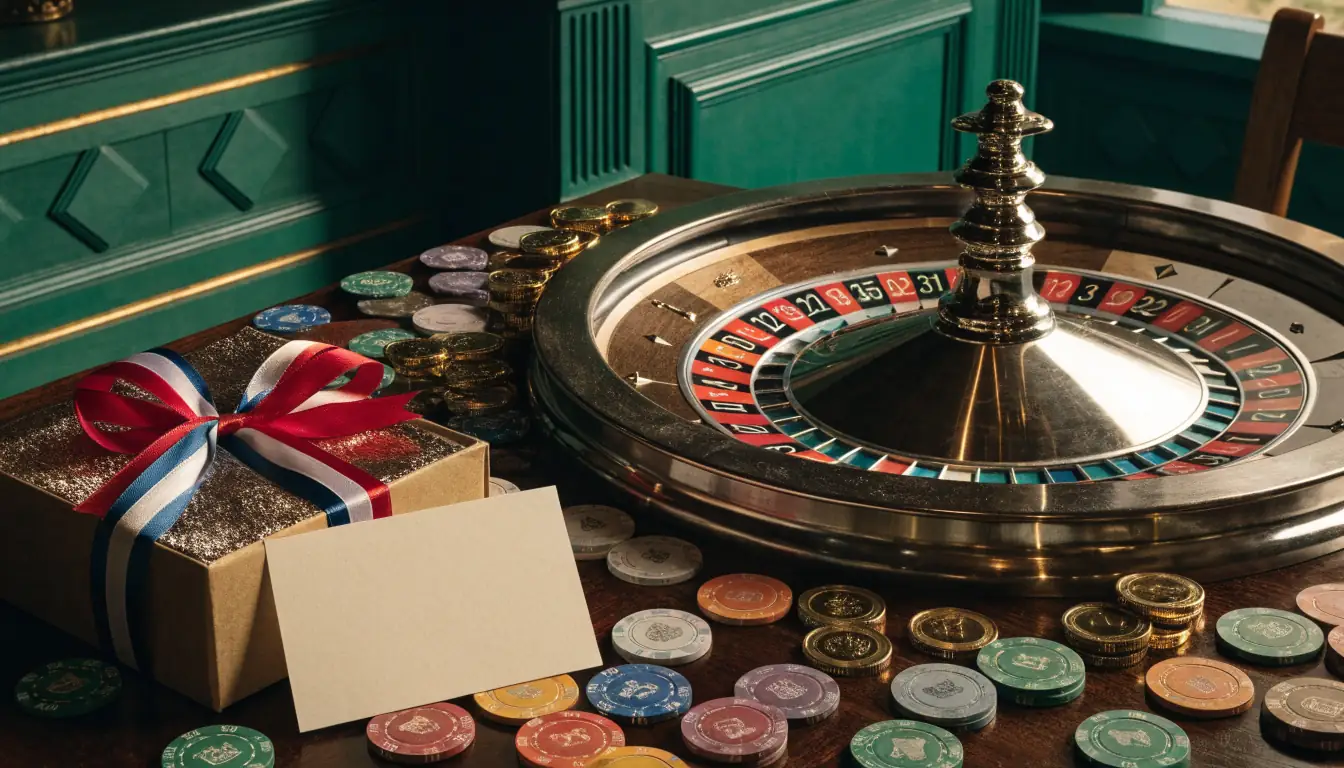
UK Players, Licensing and Different Rules Across the Country
“UK players” sounds like a single legal category. For gambling, it is not. Great Britain and Northern Ireland sit within the same state but do not share one regulatory arrangement for remote casinos.
In England, Scotland and Wales, operators providing most gambling facilities remotely to customers generally need an operating licence from the UK Gambling Commission. The requirement follows the market being served, not the operator’s address: a company based abroad still needs the relevant licence to provide remote gambling to customers in Great Britain. A promotion is therefore not separate from the service behind it. Its availability sits within the operator’s legal permission to offer gambling in that market.
That licence matters beyond the wording of a Daily Pick. A UKGC-licensed operator is subject to the rules and oversight of the British regulator; an operator outside that system does not provide the same route to UKGC licensee protections. Familiar branding, sterling prices or a page written for British customers cannot substitute for regulatory status. The distinction is less glamorous than a bonus headline. It is more consequential.

Northern Ireland requires a separate reading. Gambling is a devolved matter there, and the Gambling Commission does not regulate remote gambling activity in the same way as it does in Great Britain. Northern Ireland operates under different regulations. A statement about a British operating licence should not be stretched into a claim that the Commission governs every remote gambling service across the whole UK.
That matters when casino promotions are presented as suitable for UK players. The phrase may cover people living under different rules, while the legal basis for the operator’s service is not identical in each part of the country. A licence check should therefore be understood in its proper jurisdiction, rather than treated as a universal badge detached from location.
The law draws borders that advertising tends to smooth over. The offer may look the same; the regulatory framework may not be.
Published by the Rainbow Riches Casino 3 team.