Live Blackjack Online Casinos in the UK: How It Works
 Available in GB
Live blackjack brings a human dealer and physical cards to a digital table, with rules, variations and betting decisions shaping the experience.

Table of Contents
- What Makes a Live Blackjack Table Different
- Blackjack Rules: The Aim Is 21, Not a Guarantee
- How Blackjack Works—and Why No System Can Promise a Win
- The Live Dealer, the Table and the People Around It
- Blackjack Games: Side Bets and Table Variations
- Choosing a Blackjack Casino Without a Ranking
- Blackjack Casino Sites and the UK Licence
- Playing Live Blackjack: Pace, Preparation and Limits
- Bonuses at Live Tables: Read the Terms Before Opting In
- Casinos with Blackjack: What the Live Table Offers
What Makes a Live Blackjack Table Different
A live blackjack table joins two kinds of activity: a dealer handles physical cards in a studio, while players take part through a digital interface. The stream carries the table into the casino screen in real time; the buttons and betting controls carry each player’s decisions back to the game. It is neither a filmed demonstration nor a computer animation. The cards are real, and the person dealing them is present.
That distinction changes what the screen is showing. In a fully digital game, the dealing is generated by software and represented with graphics. In live blackjack, the camera shows a human dealer and cards from a standard deck being handled at the table. The software still matters: it provides the controls for placing bets and connects those actions to the live game. But the central event is happening in the studio, not being invented on the player’s device.
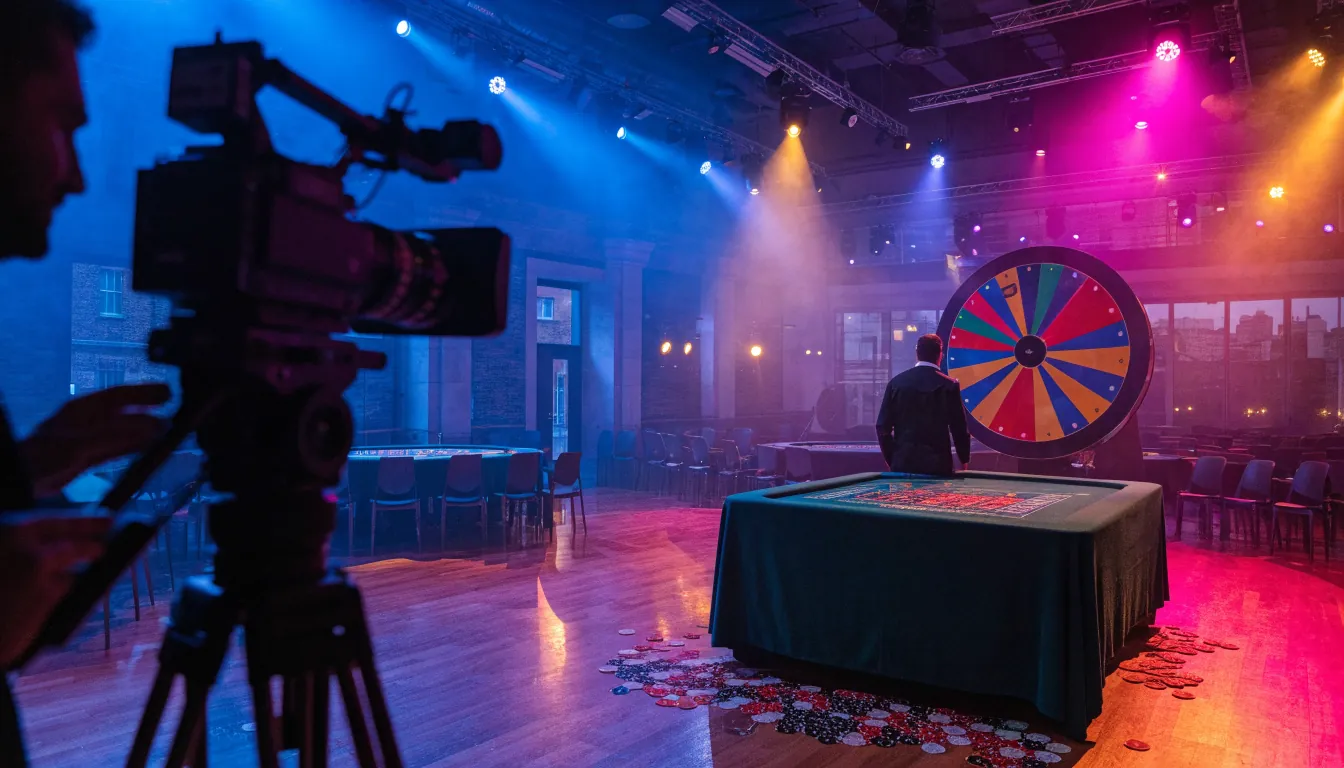
The arrangement is a small piece of remote theatre. A studio is built to make a table legible through a screen: the dealer, cards and relevant parts of the playing area are brought into view, while the interface gives the remote participant a way to join in. The screen therefore does two jobs at once. It presents a real-time scene and functions as the point of entry to it.
Choosing a live blackjack casino in the UK involves more than the game itself: withdrawal speed can also matter. Use this list as a reference point when considering your options.
Payout speed: 1-3 business days Revery Play lists a payout speed of 1–3 business days. This gives UK players a stated timeframe to consider when choosing a live blackjack casino.
Payout speed: 1-3 business days Chanze lists payouts as taking 1–3 business days. That stated timeframe is a practical detail to weigh when considering live blackjack.
Payout speed: 1-3 business days Amunbet has a stated payout speed of 1–3 business days. This offers a specific withdrawal detail for players looking at live blackjack options.
Payout speed: 1-3 business days SpinFormula lists a payout speed of 1–3 business days. Players can use this stated timeframe as one factor when considering its live blackjack offering.
Payout speed: 1-3 business days NightLuck gives a payout speed of 1–3 business days. This is a useful detail to keep in mind when exploring live blackjack casinos.
Payout speed: 1-3 business days Zombillion lists payouts as taking 1–3 business days. The stated timeframe provides a concrete point of reference for live blackjack players.
Payout speed: 1-3 business days BeOnBet has a stated payout speed of 1–3 business days. This withdrawal timeframe is the available detail to consider alongside its live blackjack option.
Payout speed: 1-3 business days EvoSpin lists a payout speed of 1–3 business days. This gives players a clear timeframe to factor into their live blackjack choice.
Payout speed: 1-3 business days Jetsetspins states that payouts take 1–3 business days. This timeframe is a relevant detail for players considering live blackjack.
Payout speed: 1-3 business days NightWin lists payouts as taking 1–3 business days. Players considering live blackjack can take this stated withdrawal speed into account.
This is why the format can feel different from a game that moves entirely through menus and graphics. The dealer’s actions unfold on camera rather than appearing as a sequence of programmed images. The player is not simply watching a recording; the stream is live, and betting takes place through controls linked to that table. The sense of presence comes from that connection between what is seen and what is being done.
The physical cards also mark a boundary between the studio and the device. A phone or computer can display the game, but it does not deal it. The dealer handles the deck; the interface registers participation. That division is easy to overlook because both parts occupy the same screen, yet it is the essential structure of live blackjack online.
For a UK audience considering a blackjack casino, “live” describes this method of delivery, not a separate kind of card game. The format brings a dealer-led table into an online casino, with real-time video on one side and digital betting controls on the other. It offers a view of an actual table without moving the table into the home. A familiar game, transported by camera and interface.
Blackjack Rules: The Aim Is 21, Not a Guarantee
The central rule of blackjack is easy to state: a player aims to beat the dealer with a hand worth 21 points or less. The target is not simply to reach 21. A lower total can still serve the aim if it beats the dealer’s hand; a total above 21 misses it. The dealer is the comparison, and 21 is the boundary.
That distinction matters because the number in the game’s name can sound like a promise of destination. It is not. The rules set a goal and a limit, not a result. A hand is judged against the dealer’s, and wanting to finish close to 21 does not ensure that it will do so—or that it will be the stronger hand.
Casino blackjack rules are built around this contest. The player is not trying to collect points in isolation, nor does the name mean that every successful hand must total exactly 21. The relevant question is whether the hand beats the dealer without crossing the boundary. Simple enough to explain; less obliging in practice.
There is a small piece of social history in that structure. Casino games turn chance into a legible contest: a table, opposing hands, a stated objective and a line that cannot be crossed. Blackjack’s aim is unusually plain, which may help explain its enduring appeal. The table does not ask for a theory of luck. It asks which hand prevails.
The rules also give the word “win” a narrower meaning than everyday speech sometimes allows. A player may have pursued the stated aim and still fail to beat the dealer. The objective describes what the game is organised around; it does not describe what every round will deliver. That difference is not fine print. It is the difference between a rule and a guarantee.
Attention: The aim of blackjack is to beat the dealer with a hand of 21 points or less, but reaching 21 is a goal and a limit, not a guarantee of success.
In a live casino, the same basic objective applies: beat the dealer while keeping the hand at 21 or below. The real-time setting may make the contest feel more immediate, but it does not alter the meaning of the target. The dealer’s presence gives the game a human face; the rule remains impersonal.
This is why “aim” is the useful word. It leaves room for uncertainty without making the rules obscure. Blackjack offers a clear measure of success, but clarity about the aim should not be mistaken for certainty about the outcome. The game sets the terms. It does not promise the ending.
This is general entertainment content, not gambling advice.
How Blackjack Works—and Why No System Can Promise a Win
A blackjack hand is not a puzzle with a hidden solution. Its result depends on the cards dealt and the choices available during play, while the dealer follows the table’s rules. A player may make a sensible decision and still lose; a poor decision may happen to win. The order of events gives each hand a shape, not a dependable ending.
That distinction matters because a run of wins can look like evidence. A few successful hands may suggest that a particular approach has been discovered, while a losing stretch can seem to demand a correction. Neither impression changes the underlying uncertainty. Outcomes arrive one hand at a time, and a short sequence cannot turn chance into a promise.
Blackjack also retains a house edge: over play, the casino has a mathematical advantage. That does not mean every hand, or even every session, ends in the casino’s favour. It describes the direction of the game’s structure, not a schedule for individual results. A player can win in the short term; the possibility of doing so is not proof that a method can make it happen on demand.

This is where staking systems often enter the story. Martingale, for instance, is built around increasing a stake after a loss, with the hope that a later win will recover earlier losses and leave a gain. The arithmetic can look reassuring when written as a tidy sequence. Play is less tidy. Losses can accumulate, and a larger stake does not improve the chance that the next hand will win. A staking pattern changes how much is exposed, not the cards.
The appeal is understandable. A system gives uncertainty a script: lose, raise the stake, recover; win, begin again. The script can make risk appear controlled because every move has a rule. But a rule for changing stakes is not a rule for changing the result. Martingale and similar approaches can lead to losses, rather than neutralising the house edge.
Nor does a past run provide a reliable forecast for the next hand. A streak may end, continue, or give way to a different pattern; none of those possibilities can be inferred with certainty from the fact that a particular sequence has already occurred. Remembering the last hand is part of being human. Treating it as an instruction from the next one is another matter.
In live play, the same distinction holds whether decisions are made through an online interface or at a physical table. The format may make each hand feel immediate and social, but atmosphere does not remove the house edge. No staking system can guarantee a win, and no method can turn a casino game into a dependable source of income.
Staking Systems
No staking system, including Martingale, can neutralise the house edge or guarantee a win; such approaches can lead to significant losses.
A fixed budget set before play helps keep the cost bounded; it does not make the outcome safer or more predictable. Once that boundary is reached, chasing losses or trying to extend a winning run only gives chance more room to work. Blackjack can be played for entertainment, but this is not gambling advice. The arithmetic offers no rescue.
The Live Dealer, the Table and the People Around It
A live blackjack table has a small public life. The dealer is not an animation repeating a polished gesture, but a person handling physical cards while the game is streamed in real time. Players see that work unfold and may be able to communicate with the dealer through chat. The encounter remains mediated by a screen, but it has the shape of a shared occasion: one person deals, several others watch, and the table gathers its own quiet audience.
That distinction matters. In a digital game, the interface can make each action feel private, even when it is part of a larger service. At a live table, the dealer’s presence gives the game a social centre. A greeting, a brief exchange or a comment in the chat can make the interval between hands feel less like waiting for software and more like sitting among strangers in a room. It is still a casino, not a neighbourhood parlour. The screen keeps the room at a distance.

Chat can also make the table less silent than its careful choreography suggests. Some live blackjack games allow messages to the dealer and other players. The exchange may be light, practical or absent altogether; the feature creates an opening, not an obligation. A player can follow the cards without joining the conversation, or type a few words into a space where the other participants remain unfamiliar. That mixture of visibility and anonymity is part of the modern casino ritual: everyone is present, but no one quite has to be known.
The dealer’s role sits between host and functionary. They manage the sequence of play, attend to the table and provide the human point of contact, while the betting interface remains on-screen. This division is telling. The dealer supplies the visible ritual; the platform handles the machinery around it. Neither cancels the other. The performance depends on both, and the online table would feel different if either side disappeared.
Bet Behind offers another way to occupy that shared space. Where a table permits it, a player can place a bet behind someone else’s hand rather than take a separate seat in the ordinary sense. The arrangement makes the table feel faintly like a small crowd gathered around a participant: one person’s hand becomes the focus, while others can have a stake in its course. It is a social feature with a practical edge, though it does not turn one player into a decision-maker for everyone else.
There is a curious economy to this arrangement. A live dealer blackjack casino sells the sense of company as much as the sight of cards, yet the company is carefully bounded. The dealer speaks through a chat window; other players appear as usernames or table presences; Bet Behind lets someone join a hand without occupying its central place. The table offers proximity without intimacy. That is a neat piece of modern manners.
Bet Behind
This feature allows a player to place a wager on another participant’s hand, meaning the outcome depends on another person’s decisions rather than their own strategy.
Side bets may appear at live tables too, but their presence belongs to the table’s options rather than its social character. What gives the live format its human texture is simpler: a dealer handling cards, a chat function that may connect the people watching, and occasional ways to share in another player’s hand. The rituals are modest. So is the promise of companionship.
Blackjack Games: Side Bets and Table Variations
A blackjack table can offer more than a choice of whether to take part in the main hand. Some live tables include side bets, while others allow Bet Behind: an option to wager on a hand being played by another participant. These features alter what can be selected at the table, but they do not change the basic character of a blackjack game.
A side bet is an additional wager, separate from the main blackjack bet. Its appeal is often the prospect of making another selection alongside the hand, but its precise conditions depend on the table. The name alone does not explain what must happen for a bet to succeed, how it is settled or how much it returns. Those details belong to the individual table rules and paytable, not to a general description of blackjack.
That distinction matters because “side bet” is a broad label, not a standard promise. One table may offer an extra choice that another does not, and the same feature can be presented differently across games. Before placing one, the rules should make clear what outcome qualifies and what the payout is. If that information is not easy to find, the bet is not made clearer by its position beside the main game.

Bet Behind serves a different purpose. It lets a participant place a wager on another player’s hand rather than taking a seat in the hand themselves. The other player makes the decisions for that hand; the Bet Behind participant is backing its outcome. It is therefore not the same as making an independent set of choices, and the distinction should be clear in the interface before a bet is placed.
The feature can make a table feel more open to participation when a seat is occupied or when someone prefers to follow another player’s decisions. But it also shifts the focus: the person placing the wager is not directing the hand. That is a small social arrangement with a practical consequence. The wager follows another person’s play, not a private strategy.
These options are not compulsory parts of every blackjack table. A straightforward main-hand wager may be available without any side bet or Bet Behind selection. Where extras appear, they should be treated as separate choices rather than as a package that improves the underlying game. More buttons do not mean more certainty.
For anyone comparing a casino blackjack game in the UK, table variation is best understood at this modest scale: which additional wagers are offered, whether Bet Behind is available, and how plainly the rules explain each option. The table’s paytable and rules deserve attention before play; a label or decorative prompt cannot substitute for them. Side bets and Bet Behind can change the shape of participation, but neither removes the uncertainty attached to a wager.
That is the whole distinction. These features widen the menu, not the guarantees. This is entertainment, not gambling advice.
- Review the individual table rules and paytable
- Verify the conditions of side bets before wagering
- Check the interface for Bet Behind clarity
- Assume “side bet” is a standard promise
- Treat additional wagers as a package to improve the game
- Rely on decorative prompts instead of written rules
Choosing a Blackjack Casino Without a Ranking
A “best” blackjack casino is less a universal winner than a match between a table’s conditions and the way a person wants to play. Live tables can differ in pace, entry cost and how reliably they run on a particular connection. Those practical distinctions matter more than a polished lobby or a prominent label. There is no useful ranking that can settle them for everyone.
The first difference is tempo. A live game moves more slowly than a digital version because it is streamed and conducted by a human dealer. The interval between decisions is part of the format, not a technical fault. That can make the table feel more deliberate, but it also means a short session may contain fewer hands than expected. A player who prefers rapid decisions may find the rhythm frustrating; someone who values a visible, shared game may find the same pauses part of its appeal.

That difference is worth considering before comparing tables. The advertised game name may be identical, while the experience is not: one table’s pace, interface and presentation may suit a player better than another’s. A table that looks lively on a screen is not necessarily an efficient way to spend an evening. It is still a game of waiting as well as betting.
Starting limits deserve particular attention because a live table can ask for a larger opening stake than its digital counterpart. A specialist review has reported that blackjack tables often have higher starting limits than live roulette and baccarat tables, which it said may begin at around 20p. That is a reported comparison, not a fixed rule for every casino or a dependable current price. Limits can differ between tables, so the displayed minimum is more informative than a general impression. A minimum that feels small in isolation can also become significant over repeated hands.

The sensible comparison is not simply which table has the lowest entry point. It is whether the minimum fits a budget set before play, and whether the table’s pace leaves enough room to keep that budget in view. A higher limit can make a live table unsuitable even when everything else looks appealing. A lower one does not make the game cost-free. The distinction is plain, if often neglected.
Connection quality is another part of the table, even though it sits outside the felt and cards. Live games need a stable internet connection. A stream that freezes, drops or falls out of step with the interface can interrupt the experience at precisely the point when a decision is due. This is not a matter of choosing a more exciting table; it is a condition of participating in a real-time game. A steady connection and a device that can display the stream clearly are practical prerequisites, not luxuries.
The casino’s own presentation can help establish whether the table is workable: the minimum stake should be visible, and the rules and paytable should be reviewed before play. These details are more useful than broad claims about atmosphere. A smooth interface cannot make an unsuitable limit affordable, and attractive studio design cannot repair an unreliable connection. The table has to function as a place to play, not merely as a picture of one.
Choosing a Table
- Check if the game pace is comfortable
- Verify the minimum stake fits the planned budget
- Ensure the internet connection is stable for live streaming
- Review the table’s specific rules and paytable
There is also a difference between comparing a table and comparing a casino as a whole. A site may offer more than one live blackjack option, while the conditions of those tables differ. The name of the game alone does not establish the minimum, pace or suitability. Nor does a prominent placement in a lobby amount to a recommendation. A calm comparison looks at the actual table details and the conditions under which the stream can be watched.
A useful assessment therefore begins with a few grounded questions: is the pace comfortable, is the displayed minimum within the planned budget, and is the connection stable enough for a live stream? These are not guarantees of a good outcome. They are ways to judge whether the format is appropriate before money is committed. The budget should remain a limit, not a target to recover after a poor run.
Blackjack remains gambling, and no choice of table changes that. This article is for entertainment purposes only, not gambling advice. A ranking can make a decision look simpler than it is; the table’s actual conditions are less glamorous and more revealing.
Blackjack Casino Sites and the UK Licence
A live blackjack table may look like a small room set apart from the rest of the internet: a dealer, a physical deck, a camera and a betting interface. Its legal status, however, does not come from the studio or the cards. In the United Kingdom, a live-dealer casino may offer its games legally only if it holds a licence from the UK Gambling Commission. The licence belongs to the operator; the live format describes how the game is delivered.

That distinction matters when comparing blackjack casino sites. A polished stream is not, by itself, evidence of regulatory standing, just as a familiar table layout says nothing about the company operating it. Remote gambling operators selling into the British market must hold the relevant Commission licence, wherever the business is based. An overseas address does not remove that obligation. The rules follow the market being served.
The legal framework reflects a particular view of gambling: it is a commercial activity permitted under public oversight, not a private arrangement made lawful by distance. The Gambling Act 2005 governs gambling in England, Wales and Scotland, while Northern Ireland has a separate legal framework. For online casinos serving British players, the practical point is straightforward: the operator must be licensed by the UK Gambling Commission. A casino’s own description of its status is not a substitute for that licence.
The licence also should not be confused with a promise about the experience. Live dealer games transmit a real-time session from a studio, where a human dealer handles the game; bets are entered through an on-screen interface. The screen joins two different spaces, but only one of them is the casino floor. The other is the regulated online service that takes the bets and provides access to the game.
This is why the question of legal status sits beside, rather than inside, the table experience. A dealer can appear attentive, the stream can be smooth, and the interface can make betting feel immediate. None of those features establishes whether the operator is authorised to serve the market. Regulation is less theatrical than the studio. It is also more consequential.
Regulatory Status
Attention: A polished stream or professional presentation is not evidence of legality; ensure the operator holds a current licence from the UK Gambling Commission.
A licensed operator must be identifiable as such through the UK Gambling Commission’s records. That is a more meaningful distinction than whether a site calls itself one of the best blackjack casino sites or gives its tables an impressive presentation. Such language is promotional; a current operating licence is a regulatory condition. There is no special legal category for a “best” blackjack site, and no visual flourish can create one.
The same principle applies to blackjack online casino sites reached through an app or a browser. The route to the table may change; the requirement on the operator does not. A live table remains an online gambling service even when the image shows a dealer in a studio and the cards are physical. The internet has not abolished the casino. It has moved the counter.
For a reader considering a British-facing site, the relevant distinction is therefore not between a live table and a digital one, but between an operator authorised for the market and one that is not. Online gambling is legal in the UK for adults aged eighteen and over when the operator holds a UK Gambling Commission licence. This is general information for entertainment, not gambling advice. A licence establishes the legal basis for offering the service; it does not turn a game of chance into a certainty.
Playing Live Blackjack: Pace, Preparation and Limits
A live blackjack session asks for a different kind of patience from a digital one. The dealer has to handle physical cards, and the game unfolds in real time; a screen cannot compress those actions into the quicker rhythm of an automated version. There is room between decisions for the table to breathe. There is also less control over how quickly a hand moves along.

That pace matters when setting aside time to play. A session can take longer than expected, not because the rules are complicated, but because each stage depends on the dealer and the table. Interruptions can be awkward: the game does not pause simply because attention has wandered elsewhere. A quiet setting and a clear stretch of time are practical preparations, not guarantees of a better result.
The connection deserves similar attention. Live blackjack depends on a stable internet connection to carry the stream and transmit choices through the on-screen interface. If the picture freezes or the connection drops, the experience becomes difficult to follow at precisely the point when decisions are being made. A reliable connection is part of the basic equipment. No dramatic revelation.
The other preparation is financial. Live tables have higher minimum bets than digital versions, so the amount needed to take part may be less flexible. A budget set before play gives the session a boundary; once it is reached, play should stop rather than expand in pursuit of losses or winnings. That limit matters more than the mood of the table. The game continues regardless.
A free-play mode, if a casino provides one, may help with learning where controls appear and how the interface responds. It cannot reproduce the financial pressure of real-money play, and it should not be treated as a way to earn cash. The distinction is simple, though online interfaces often make different forms of play look remarkably similar.
Before starting, it is worth allowing time to settle into the live format and keeping the planned spend separate from other funds. The slower rhythm can make a session feel less hurried, but it does not remove the possibility of loss or make a longer session safer. Pauses are useful; abandoning a preset limit is not.
Preparing for Play
- Set a fixed budget before starting and stop once it is reached
- Allow a dedicated stretch of time to accommodate the slower live pace
- Use a stable connection to avoid interruptions during decision-making
- Use free-play mode only to familiarise yourself with the interface
Live blackjack is entertainment, not gambling advice. Preparation can make the experience easier to follow, but it cannot turn chance into certainty.
Bonuses at Live Tables: Read the Terms Before Opting In
A blackjack casino bonus can look relevant because it appears beside a live table, but placement is not the same as eligibility. The offer may be intended for slots, while live blackjack is excluded or treated differently under its terms. A specialist review of UK welcome offers reports that most are free spins for slot games and cannot be used at live tables. That picture can change, so the terms attached to the specific offer matter more than a general description of casino promotions.
Even when a live table is eligible, its contribution towards wagering requirements may be limited. Live games can carry a small weighting, such as 10%, meaning only a fraction of a qualifying stake counts towards the requirement. The headline value of a casino blackjack bonus therefore says little about how much play at the table will count. Eligibility and weighting are separate conditions; both need to be clear before opting in.

A blackjack casino bonus offer may also specify which games qualify, when the bonus must be activated, and whether other restrictions apply. Those details belong to the offer’s terms, not to the table itself. A promotion labelled for casino games should not be assumed to cover every game in the lobby, and a slot free-spin package is not a live-table balance.
The same caution applies to searches for a blackjack casino no deposit bonus or a no-deposit offer in the UK. The wording alone does not establish that an offer is available, that blackjack is eligible, or that any resulting bonus can be used at a live table. The written conditions are decisive. No label can substitute for them.
Before accepting a bonus, check its wagering requirements, game weighting and maximum bet limits, as well as whether live blackjack is included at all. If the terms give no clear answer, the value of the offer is difficult to judge. A large figure can be less useful than a small, plainly stated condition.

Bonuses are optional, not a reason to increase stakes or continue beyond a set budget. Live blackjack involves financial risk; this page is for entertainment purposes only, not gambling advice.
Casinos with Blackjack: What the Live Table Offers
A casino with blackjack can present the game as more than a sequence of cards and decisions. At a live table, the dealer is visible on screen, and some tables provide chat for brief exchanges with the dealer or other players. The conversation is optional; the game does not become a social obligation simply because the table is shared.
That small feature changes the texture of an online casino with blackjack. A digital interface reduces play to buttons and outcomes. A live table leaves room for gestures, pauses and the familiar public ritual of a dealer managing the cards. It is still a game delivered through a screen, but not quite a solitary one.

Some live tables also offer side bets. These sit alongside the main wager rather than replacing it, adding another choice to the table interface. Their presence is a feature, not a reason to assume that a hand has become more favourable. The rules attached to any optional wager matter, and the table’s own information is where those terms belong.
Bet Behind is another possible option. It allows a player to place a wager behind someone else’s hand, joining the action without taking the main seat in the decision-making. The distinction is useful: participation need not always mean controlling the hand. A live blackjack casino site may offer this alongside chat or side bets, though features vary between tables.
The appeal of casinos with blackjack, then, is not only the game itself. It can be the choice between watching quietly, exchanging a few words, adding an optional wager or following another player’s hand. None of these touches changes what the table is. They change how it feels to be there.
Why does the dealer always win in blackjack?
The dealer does not always win. Blackjack has a house edge over time, but individual hands can go either way.
How do you play live roulette?
Choose a number or another bet, then watch the dealer spin the physical wheel. You win if the ball lands on a number you selected.
How does the house edge change between games?
It varies by game and bet. In roulette, straight-up bets have a 2.9% house edge, while other bets have a 2.7% edge.
Written by the editors at Rainbow Riches Casino 3.