Casino Dice Games in the UK: How They Work
 Available in GB
A guide to online dice wagers, dice-themed slots, demo play, casino odds and the trade-offs between UK-regulated and alternative sites.

Table of Contents
- Dice Games in the Online Casino
- The Different Worlds Behind UK Casino Sites
- What “Best” Can Mean in a Regulated Market
- Dice-Roll Slots and the Machinery of Chance
- Casino Dice Games and the House’s Long View
- Demo Play, Randomness and What It Can Show
- Crypto, Craps and the Alternative-Casino Trade-Off
- Bitcoin Payments Beyond the UKGC Space
- How Casino Dice Play Fits the Rules of Gambling
- What a Dice Casino Site Must Offer in Britain
Dice Games in the Online Casino
A casino game begins with a wager and an uncertain result. Players put cash or chips at stake on an outcome, or on a combination of outcomes; the attraction lies partly in the fact that the result has not yet arrived. Dice make that uncertainty unusually easy to picture. A small object is thrown, it lands, and a number faces upwards. The action is plain. The consequences are not.
Online casinos carry that basic arrangement into a screen-based setting where casino games are available, where permitted by law. A person looking for an online dice casino is therefore looking for more than an image of dice. The essential feature is a gambling game in which a stake is tied to possible results. The setting may be digital, but the wager still gives the random event its meaning.
There is a reason dice have such a durable place in the public imagination. Their shape suggests a self-contained contest between possibility and chance: no elaborate equipment needs to be understood before the object is rolled. Yet the simplicity of the symbol can disguise how varied casino games are. Some ask players to stake on a single possible outcome; others involve combinations. The shared idea is not a particular set of rules, but the link between a stake and what happens next.
That distinction matters when the phrase “online casino dice games” is used loosely. A game shown with dice may invite a familiar mental picture, but its appearance alone does not tell the whole story. Casino games are defined by the gambling arrangement, not merely by decorative imagery. The meaningful questions are what is being wagered on and which outcomes can affect the result. A picture of dice can signal chance; it cannot, by itself, explain the terms of play.

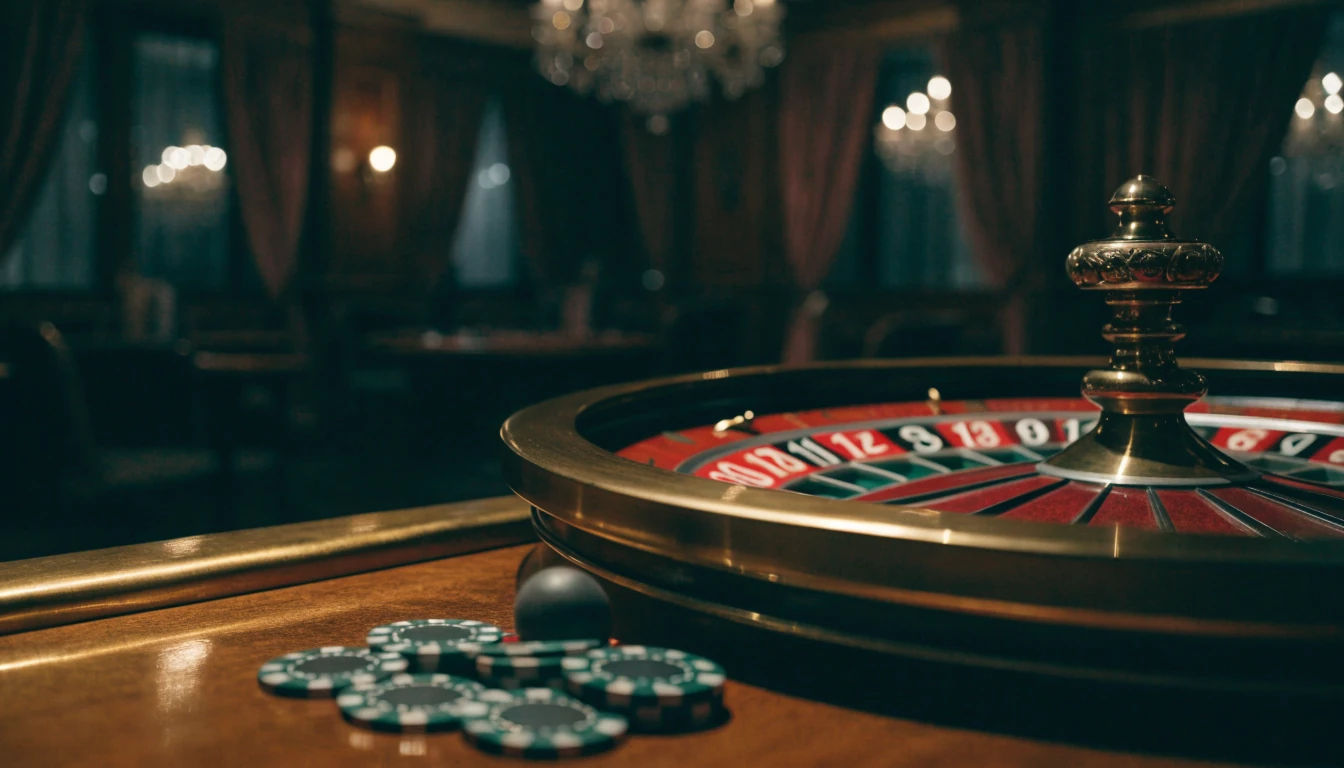
The online format changes the surroundings rather than the underlying human bargain. In a physical casino, a table, a dealer, other players and the room itself can make gambling feel like a public occasion. A digital game is encountered through a screen, often without that shared setting. The social theatre becomes smaller. The anticipation remains: a stake is committed, an outcome is awaited, and the result acquires importance because money or chips have been placed behind it.
That movement from a communal room to a private screen says something about how leisure has changed. Many activities once tied to a particular venue can now be encountered remotely, but gambling carries a sharper condition: online availability does not mean universal permission. Casino games are offered online where the law allows them. The distinction is simple, though easy to overlook when a game is presented as an ordinary part of a website. Access through a screen does not erase the rules that govern gambling.
Dice also appeal because they make chance visible in a way that is almost theatrical. A roll has a beginning, a brief interval of suspense and a result that can be seen. The image is older than any digital interface, and its familiarity helps make a game legible at a glance. That does not make every dice game interchangeable, or turn a visual motif into a full explanation. The design may borrow the language of the throw while the game’s actual structure depends on its own stated outcomes.
For someone exploring dice casino games online, the useful starting point is therefore modest: identify the wager and the possible result, rather than assuming that all games featuring dice work alike. Casino gambling is not simply the presence of a random-looking animation. It is the arrangement in which cash or chips are risked on what may happen. The animation can dramatise the uncertainty, but the wager is what makes it gambling.

The phrase “dice casino online” can sound like a request for a particular object or venue. In practice, it points to a broader meeting of old symbols and newer access. Dice remain instantly recognisable; online casinos make casino games available through digital channels where permitted. Between those facts sits the player’s decision to stake something on an outcome not yet known. The screen is new. The wager is not.
The Different Worlds Behind UK Casino Sites
A specialist review describes the UK online casino market in 2026 as divided between the UKGC-regulated space and offshore platforms outside it. The distinction is more than a difference in branding or website design. It marks two different relationships with British gambling regulation, even when both kinds of platform may be visible to people in the UK.
For dice casino sites, the first question is therefore not what games appear on the screen, but which regulatory space the operator belongs to. A site offering casino games with dice does not become part of the UKGC system simply because it accepts British customers or uses familiar language and currency. Offshore casinos can accept UK players while operating outside that system. Access and regulation are not the same thing.
In Britain, the legal framework places responsibility on operators selling remote gambling to British customers to hold the relevant UKGC licence. Online gambling is legal in the UK only through licensed and regulated sites. The Gambling Act 2005 governs gambling in England, Wales and Scotland; it does not extend to Northern Ireland. These boundaries matter because the phrase “UK casino sites” can describe websites aimed at British customers without accurately describing where their operators sit in the regulatory structure.

That is the central tension in the market. A platform may be reachable from the UK and may offer dice games or dice-themed slots, yet remain outside UKGC oversight. Its presence on a screen does not settle its regulatory status. The distinction is easy to miss when the interface presents all sites as comparable destinations, but the legal relationship behind them is not interchangeable.
One audience, different regulatory spaces
UKGC-regulated casinos operate within the British licensing system. Offshore platforms that accept UK players do not hold a UKGC licence and are not supervised within that same system. “Offshore” describes their position outside the UKGC space; it does not mean that a British player has entered a different version of the domestic licensing arrangement.
This helps explain why searches for dice casino sites UK can lead to markedly different kinds of operator. Some sites belong to the regulated British market; others are accessible from Britain but operate outside it. The games themselves may look similar. The regulatory setting does not.
The distinction also complicates the word “trusted”. It is often used as though trust were a visible feature of a site, like a dice symbol or a menu tab. In practice, the word cannot erase the difference between an operator inside the UKGC system and one outside it. A polished presentation, British-facing copy or a collection of casino dice slots does not, by itself, establish UKGC status.
Nor does a game’s format explain the operator’s position. Dice slots games and conventional casino games with dice may sit beside other gambling products on a site, but the appearance of a particular game says nothing about whether the platform is regulated in Britain. A slots dice game can be presented in much the same visual language across different sites. The institutional arrangement remains behind the curtain.
Operators within the British licensing system, supervised by the UK Gambling Commission.
Operators that accept UK players but operate outside the UKGC regulatory space.
Websites aimed at British customers, which may or may not hold a domestic license.
The market is not one long list
It is tempting to imagine the online casino market as a single catalogue in which sites differ mainly by game selection. That picture leaves out the most consequential division. In Britain, a regulated casino and an offshore platform accepting British players are not simply two entries in the same list with different themes. They occupy different positions in relation to the country’s gambling system.
This is why “UK-facing” and “UK-regulated” should not be treated as synonyms. A site may address an audience in Britain without belonging to the regulated UKGC market. Conversely, the existence of offshore platforms does not alter the licensing requirement for operators serving the British market. It reveals a gap between what can be encountered online and what forms part of the domestic regulatory system.
The language around casino dice sites can blur that gap. Terms such as “UK casino”, “dice casino” and “casino game with dice” describe a destination or product from the user’s point of view. They do not identify the operator’s licence. The same search for UK casino sites with dice games may therefore bring together sites whose regulatory status differs in a fundamental way.
Two worlds, one screen.
What “Best” Can Mean in a Regulated Market
When choosing a casino dice game in the UK, it helps to check practical details alongside the game itself. This list gives a quick reference to the payout speed provided for each operator.
Payout speed: 1-3 business days Revery Play lists a payout speed of 1–3 business days, a useful detail to consider when choosing where to play.
Payout speed: 1-3 business days Chanze lists a payout speed of 1–3 business days. This gives players a stated timeframe for payouts.
Payout speed: 1-3 business days Amunbet lists a payout speed of 1–3 business days, providing a clear payout detail for prospective players.
Payout speed: 1-3 business days SpinFormula lists payouts as taking 1–3 business days. Players can use this stated speed as one point of reference.
Payout speed: 1-3 business days NightLuck lists a payout speed of 1–3 business days, giving readers a specific detail to weigh when considering it.
Payout speed: 1-3 business days Zombillion lists a payout speed of 1–3 business days. This stated timeframe is relevant when reviewing the operator.
Payout speed: 1-3 business days BeOnBet lists a payout speed of 1–3 business days, offering a stated timeframe for players to consider.
Payout speed: 1-3 business days EvoSpin lists payouts as taking 1–3 business days. That is the available payout information for this reference.
Payout speed: 1-3 business days Jetsetspins lists a payout speed of 1–3 business days, a practical detail for readers assessing their options.
Payout speed: 1-3 business days NightWin lists a payout speed of 1–3 business days. This provides a clear, stated payout timeframe.
The phrase “best dice casino” sounds as though it ought to lead to a league table: a winner, some runners-up and a tidy verdict. In a regulated market, the first distinction is less glamorous. Before a casino can be judged on its games or presentation, it has to meet the legal threshold for offering gambling to people in Britain.
Since the Gambling (Licensing and Advertising) Act 2014, an operator seeking to take bets from British residents must hold a licence. For real-money gambling offered to customers in England, Scotland and Wales, that means a licence from the UK Gambling Commission, or UKGC. The licence is not a decorative badge beside a welcome offer. It is the condition that makes the operator’s service lawful in those parts of the country.
That changes the meaning of “best”. A ranking that places an unlicensed operator beside a licensed one as though they were simply rival shops leaves out the central fact: they do not occupy the same legal position. For a best dice casino in the UK, the starting point is therefore not a claim about the most exciting interface or the largest catalogue. It is whether the operator has the authority required to take real-money bets from British customers.

This is a baseline, not a medal. A licence does not, by itself, prove that every feature will suit every player, or that one casino is more enjoyable than another. Nor does it turn a subjective preference into an objective verdict. It establishes that the operator is within the system governing the market. The word “best” still has to carry a more modest burden: best according to which relevant measure, and for whom?
That distinction matters because casino language is fond of making unlike things sound comparable. “Best dice casinos” can imply a contest among game selection, account design, promotions and customer service. But those qualities are not interchangeable, and a polished page cannot answer the prior question of whether the operator is licensed to serve Britain. Without that legal foundation, the comparison starts on the wrong rung.
The same principle applies when a site presents dice-themed slots alongside other casino products. Their format does not exempt the operator from the licensing requirement. A game’s name or visual theme may suggest a particular kind of play; it says nothing about the operator’s legal standing. The law concerns the business offering real-money gambling, not the imagery chosen for a game.
Licensing Requirement
Online gambling is legal in the UK only through licensed and regulated sites; an operator must hold a UKGC licence to lawfully take real-money bets from British residents.
A sensible use of “best dice casino sites” is consequently narrower than advertising often suggests. It can mean a shortlist drawn only from operators that meet the British licensing threshold, followed by separate judgements about features that matter to a particular player. It cannot honestly mean that one licence alone settles every question of quality. Regulation supplies the floor, not the whole building.
There is a social choice inside that floor. Britain has made access to its real-money gambling market conditional on an operator holding the relevant licence, rather than treating the operator’s location or branding as a substitute for permission. That is not a promise that gambling becomes harmless. It is a statement about who may offer it under the rules of the market.
So the “best” in best dice casino UK begins with a plain test: the operator must be licensed to take those bets. Only after that can preference enter the argument. A ranking without that distinction may look decisive. It is merely incomplete.

Dice-Roll Slots and the Machinery of Chance
A dice-themed slot borrows the look and vocabulary of dice while remaining a gambling machine. Its reels, symbols and animations may suggest a roll, but the image of dice does not by itself make the game equivalent to throwing physical dice or playing a table game. The format is built around a machine’s way of presenting chance.
That distinction matters. A gambling machine is generally used by one player at a time and does not need a casino employee to run each turn. The player interacts with the machine; the equipment determines and displays the result. In an online casino, the screen supplies the cabinet and its familiar gestures, while software handles what happens behind them.
Some machine games belong to the category of random number games. In those, selected random numbers are generated by a computer or other gaming equipment and used to produce outcomes. A dice-roll slot game can evoke the suspense of dice landing, but the visual animation is not evidence that literal dice are being thrown. The relevant question is how the game’s outcome is generated, not how convincingly its graphics imitate a tumble across a table.

This is part of a longer history of gambling machines: chance made available through an apparatus rather than through a dealer’s hand. The machine removes the need for a croupier to manage each play, and the screen makes the process legible as a sequence of symbols and movements. Dice are especially useful imagery for that purpose. They are among the simplest signs of uncertainty: a small object, a brief roll, a result that cannot be read from its motion in advance.
Yet familiar imagery can blur the boundary between formats. A rolling-dice slot may look as though it is borrowing the language of a casino dice table, but the appearance alone does not establish the rules of a table game. Nor does a dice motif tell anything, by itself, about the software’s operation. A slot can dress chance in the costume of a roll without becoming a physical roll.
The same point applies to phrases such as “dice and roll” or “dice-themed slots”: they describe a visual family, not a single uniform mechanism. One game may foreground dice on its reels; another may use them as part of its animation or setting. Without a particular title and its rules, those differences cannot be collapsed into a claim about how every rolling-dice slot works.
The machine’s role is more prosaic than its theatre. For a random-number game, computer-generated selections underpin the outcome; graphics then give that outcome a visible form. A roll can be rendered with all the suspense of a miniature spectacle, but the animation should not be mistaken for a physical cause. The drama is on screen. The machinery is elsewhere.

That is why a dice roll slot is best understood as a themed machine format rather than as a new version of table dice. The symbols borrow an old social ritual of chance; the software translates it into a solitary interaction with equipment. One is a familiar metaphor. The other is the mechanism.
Casino Dice Games and the House’s Long View
A casino dice game begins with a wager on what may happen next. Cash or chips are placed against possible random outcomes, or combinations of outcomes, and the result decides whether the stake is lost or a gain is made. The appeal is immediate: a small object, a clear event, an uncertain result. The accounting is less visible.
Dice have long carried the romance of chance. Their throw seems to leave little room for human intention; once they are moving, the outcome belongs to no one. Casinos have learned to organise that uncertainty into a form of play. The player chooses where to stake, the game resolves an outcome, and the house’s interest lies not in predicting an individual throw but in the pattern across repeated play.
That distinction is the hinge between a short session and the casino’s long view. A player can win in the short term. A favourable result may arrive early, and a run of outcomes can make a dice table appear to have temporarily changed character. But casino games are generally arranged so that, over time, the operator has a predictable advantage. Individual results remain uncertain; the financial structure is not.
This is not a claim that every session ends in loss, nor that a particular result can be read from what came before. It is a difference in scale. A single outcome says little about the eventual balance. Repetition is where the house advantage does its work, quietly, without needing to defeat every player on every occasion. The casino does not need a lucky throw. It needs the game to continue on its terms.

That is why the phrase “dice casino” can suggest more certainty than the experience contains. Dice make chance visible, but they do not make it negotiable. The movement is dramatic; the underlying bargain is sober. A stake buys participation in an uncertain outcome, not influence over it. The possible gain gives the game its pull, while the operator’s long-term edge shapes the business behind the table.
In the UK, interest in casino dice often rests on this tension: the simplicity of watching a result unfold against the less theatrical mathematics of repeated gambling. There is no contradiction between a player’s genuine chance of a short-term win and the casino’s expectation of an advantage over time. Both belong to the same arrangement.
The throw is brief. The house thinks in seasons.
Demo Play, Randomness and What It Can Show
A demo can make a casino game’s sequence of choices and outcomes visible without turning each decision into a cash stake. That changes the social texture of play: the symbols, buttons and suspense remain, while the immediate financial consequence is removed. For anyone trying a dice casino game in demonstration mode, the distinction matters. The screen may look familiar, but the experience is not a record of what would happen in paid play.
Random number games use selected numbers generated by a computer or other gaming equipment. A demonstration can therefore offer a glimpse of how a game presents random outcomes: a number appears, a result follows, and the player sees how the interface connects the two. It cannot, by a handful of turns, establish how the underlying system produces those numbers. Nor can a streak, however persuasive it feels, show that a later result is due to change course.
That limitation is easy to forget. People are excellent at finding a pattern in a short run, especially when the pattern appears to reward a choice. But a demo’s outcomes are observations, not evidence that a player has discovered a reliable method. Free play can familiarise someone with the rhythm of a game; it cannot convert chance into a schedule.

The same caution applies across formats. A search for a dice casino demo might lead to a simple dice game, a craps-style table, or a dice-themed slot demonstration. These are not interchangeable experiences. In online craps, the table’s rules and sequence of play matter; in a slot, the machine’s interface organises the result differently. A demo may help make those differences legible, but it does not make one format a guide to another.
Nor does a free-spin display settle questions about cash play. A spin seen without a real stake is still only an outcome in a demonstration. It says nothing by itself about what a paid session would return, or whether a particular sequence will recur. The boundary is plain, if not always emotionally convincing.
Demo play is most useful as orientation: a way to see the pace, choices and presentation before money enters the scene. It is not a rehearsal that predicts the next result. Chance keeps its own counsel.

Crypto, Craps and the Alternative-Casino Trade-Off
Craps gives dice their most recognisable casino setting: a table game built around wagers on possible outcomes. Online, the same broad appeal can sit alongside a different kind of decision, about where the platform operates and how it takes payment. A crypto casino offering dice games may appear to combine familiar gambling with newer payment rails; the combination does not, by itself, say anything about the quality of the game or the protections around an account.
A specialist review of alternative casinos reports that some platforms accept Bitcoin, Ethereum and Litecoin, alongside conventional cards and e-wallets. That is a description of reported payment options, not a guarantee that every site supports each method or that a particular route will suit every customer. Payment choice can also obscure a more consequential distinction: non GamStop platforms operating outside the UKGC system do not carry a UKGC licence. A digital asset does not alter that regulatory position. Neither does a card logo.
Attention: The availability of cryptocurrency payments or the presence of player-protection tools is not a substitute for UKGC oversight or a domestic license.
The contrast is especially worth keeping clear in Britain, where legal online gambling is offered through licensed and regulated sites. Offshore platforms may still accept UK players, but their presence should not be mistaken for inclusion in the domestic licensing framework. The machinery of payment and the machinery of oversight are separate things.
Some alternative platforms provide their own player-protection features, including deposit limits, session timers and self-exclusion. These tools can help structure play, but their presence is not equivalent to UKGC oversight. Their terms, practical operation and accessibility matter; a button labelled “limit” is only useful if it can actually constrain activity.
This is the trade-off behind the phrase “crypto dice casino”: the attraction may be a choice of currencies and games, while the regulatory and protection context differs from that of a UKGC-licensed casino. Craps remains a dice game; the platform around it determines the conditions under which it is offered. A payment method is not a licence.
Bitcoin Payments Beyond the UKGC Space
Bitcoin can appear in discussions of dice casinos as a payment option, but it does not define a separate kind of dice game. It is one way some alternative platforms may accept funds. A specialist review describes the UK online casino market in 2026 as divided between UKGC-regulated operators and offshore platforms outside that system. The distinction is more consequential than the currency shown beside a deposit button.
A specialist review reports that some alternative platforms accept Bitcoin, alongside Ethereum and Litecoin, while also offering conventional cards and e-wallets. The available methods therefore vary: a bitcoin casino is not necessarily crypto-only, and the presence of Bitcoin does not establish that a particular dice game, such as Sic Bo, is available there. Payment options and game catalogues are separate matters.

The regulatory boundary remains. Remote gambling operators selling into the British market must hold a UKGC licence, regardless of where they are based. Offshore casinos operate outside that framework and do not hold a UKGC licence. Online gambling in the UK is legal only through licensed and regulated sites. Bitcoin does not alter those conditions, nor does it convert an offshore platform into a locally licensed casino.
That distinction can be easy to miss when the interface presents familiar elements: a balance, a game menu, a deposit screen. The payment method may feel technically different from a bank card, but the operator’s regulatory status is a separate question. A familiar-looking dice table does not answer it.
Bitcoin also belongs to a broader payment landscape rather than replacing it. Some alternative platforms may list cryptocurrency beside conventional methods; a platform’s actual options depend on its own arrangements. The currency is a means of transfer, not evidence of oversight, fairness or a particular level of player protection. Those questions cannot be settled by the word “Bitcoin” on a payment page.
For anyone comparing a bitcoin dice casino with a UKGC casino, the central difference is not simply how money enters an account. It is whether the operator sits within the UK licensing system that governs legal online gambling for British players. The distinction is regulatory, not decorative.
How Casino Dice Play Fits the Rules of Gambling
Casino gambling has a simple underlying arrangement: money or chips are staked on an outcome, and the game determines whether that stake produces a return. Dice can supply the uncertainty, but they do not change the basic exchange. The player risks something of value against a possible result; the casino sets the terms under which that result is paid.
Common Gambling Structure
- A stake of money or chips is placed on a random outcome.
- The game resolves the result according to established rules.
- The house generally maintains a predictable advantage over the long run.
- Individual short-term wins are possible, but the financial structure favors the operator over time.
At a table, play is generally between each player and the casino, not between players competing to take one another’s money. A croupier or dealer usually conducts the game, keeping the sequence of play within its established rules. That human presence gives table gambling a public little ritual: wagers are made, an outcome is settled, and the next round begins. The ceremony is not the source of chance, but it makes the transaction visible.
The question of how to play casino dice games therefore has two parts. One is the specific game’s own rules: what may be wagered on, how an outcome is determined and what counts as a winning result. The other is the shared structure beneath those rules. A stake is placed on a possible random outcome or combination of outcomes, then the game resolves it. The details belong to each game; the wager-and-result pattern is common to casino gambling.

Casino dice payouts are part of those terms. A payout is not simply a prize attached to the dice themselves: it follows from the wager and the result as defined by the game. Without a particular game’s rules, there is no single payout structure to describe. The word “dice” names a tool, not a complete set of instructions.
That distinction matters because the visible event can feel decisive while the economics sit in the background. Casino games are generally arranged to give the house a predictable advantage over the long run, even though a player may gain in the short term. Each individual result remains uncertain; the broader design is not. A table can make chance look intimate and immediate. The arithmetic is more patient.
So playing dice at a casino is not one universal procedure. It is participation in a particular game’s rules, through a stake on chance, within a house-run arrangement. The dice may be the most noticeable objects on the table. They are not the whole game.
What a Dice Casino Site Must Offer in Britain
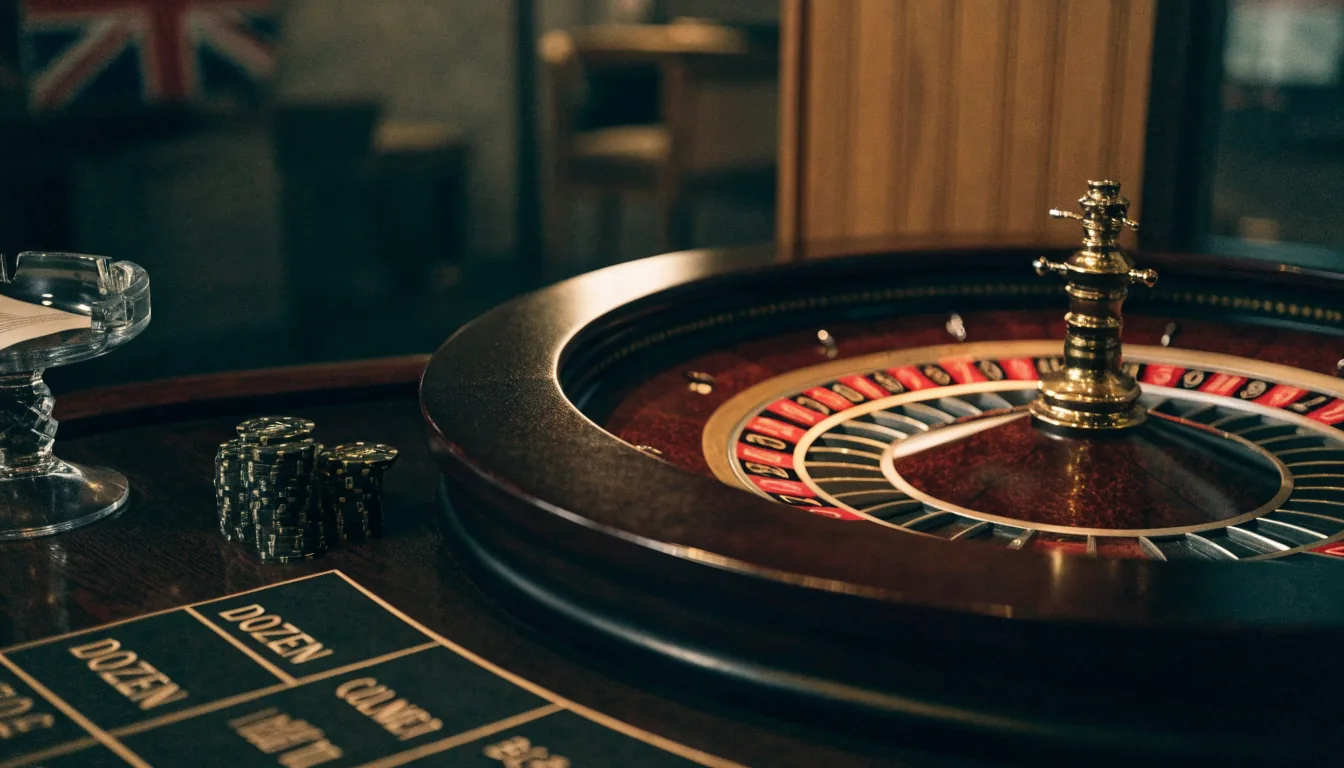
A site can dress a dice table in velvet, glass or the clean geometry of a phone screen. None of that changes the first condition of serving British residents: the operator must hold a licence. Since the Gambling (Licensing and Advertising) Act 2014, taking bets from people in Britain without one is not a matter of a less polished version of the same service. It places the operator outside the legal framework for the British market.
That requirement applies to the business behind the screen, not to the appearance of its games. Dice games at casinos may differ in presentation, pace and rules, but those differences do not create an exemption for the operator. A site cannot make itself suitable for British customers merely by offering a familiar game or accepting a familiar form of payment. The relevant baseline is its authority to offer gambling to people in Britain.

This is why a list of supposedly top dice casino sites can distract from a more basic question. A ranking may compare features, but a ranking alone does not establish that an operator is entitled to serve the market. Nor does a confident claim on a homepage amount to the licence itself. In a regulated system, the legal status of the operator is the threshold; the surrounding experience comes after it.
The distinction is not bureaucratic decoration. Gambling has always depended on institutions deciding which arrangements count as legitimate, and who may profit from them. Britain’s licensing rule makes that decision explicit for remote operators taking bets from residents. A dice game may look like a private exchange between player and screen, but the permission to provide it belongs to a regulated business.
So the essential offer is not a particular table, bonus or ranking position. It is lawful access through a licensed operator. Everything else is secondary.
Written by the editors at Rainbow Riches Casino 3.