Crazy Time Live Casino Game Show in the UK
 Available in GB
A guide to the studio stream, casino conditions, demo play, UK licensing questions and the limits of betting systems.
Table of Contents
- A Live Game, Not a Digital Slot
- Where the Game Sits in the UK Casino Landscape
- Casino Sites and the Conditions Behind the Screen
- Finding a Place to Play
- What Makes a Casino a Better Fit
- Strategy, Chance and the Limits of a System
- The Difference Between a Demo and a Live Table
- Free Play: What Can and Cannot Be Established
- GamStop Searches and the UK Licensing Question
- Bonuses, Wagering Terms and Live Tables
A Live Game, Not a Digital Slot
A casino game on a screen can belong to two quite different worlds. One is made entirely of software: symbols, tables and outcomes appear through a digital interface. The other has a studio behind it. A camera carries a live feed of a human dealer and the game in progress, while players use on-screen controls to place their bets. The screen is still the point of contact, but what it shows is happening in real time elsewhere.
That distinction matters when a game is described as a live casino experience. “Live” does not mean that the player is physically at a casino table, nor that the screen has somehow become a window without a frame. It means the action is streamed from a studio, with a person dealing and a betting interface layered into the experience. The dealer and the digital controls share the same view, each doing a different job.
This is the useful distinction behind searches for Crazy Time in an online casino. The wording can suggest a slot because casino games are often encountered as self-contained digital products, but a live-dealer format is not simply a slot with a more elaborate screen. Its defining feature is the streamed human presence. The game takes place in a studio; the player’s decisions are entered through the casino interface. No claim about a particular game’s rules or studio set-up is needed to understand that basic divide.
Choosing a place to play Crazy Time involves more than the game itself. This reference highlights the payout-speed information available for each operator.
Payout speed: 1-3 business days Revery Play lists a payout speed of 1–3 business days.
Payout speed: 1-3 business days Chanze lists a payout speed of 1–3 business days.
Payout speed: 1-3 business days Amunbet lists a payout speed of 1–3 business days.
Payout speed: 1-3 business days SpinFormula lists a payout speed of 1–3 business days.
Payout speed: 1-3 business days NightLuck lists a payout speed of 1–3 business days.
Payout speed: 1-3 business days Zombillion lists a payout speed of 1–3 business days.
Payout speed: 1-3 business days BeOnBet lists a payout speed of 1–3 business days.
Payout speed: 1-3 business days EvoSpin lists a payout speed of 1–3 business days.
Payout speed: 1-3 business days Jetsetspins lists a payout speed of 1–3 business days.
Payout speed: 1-3 business days NightWin lists a payout speed of 1–3 business days.
The interface mediates the encounter. A player does not reach across the screen to move a physical object or hand over a chip. Bets are selected and submitted through the controls, while the stream shows the dealer conducting the game. This arrangement is part broadcast, part transaction: a human performance is visible, but participation is organised by software. The dealer gives the table a recognisable social centre; the interface makes remote betting possible.
That combination has a different texture from a game that exists only as a digital sequence. In a fully digital game, the screen is the whole event: its graphics and controls present the play directly. In live-dealer play, the screen also carries a view of an event taking place in a studio. It is not a return to the old casino floor, exactly. The room is elsewhere, the betting is remote, and the camera decides what can be seen. A small theatre, with an account interface attached.
The human element changes the pace. Live games move more slowly than digital versions, in part because a dealer’s actions unfold in view rather than being compressed into an immediate software response. That interval is not merely decorative. It gives the stream a rhythm of its own: a game proceeds, a bet is entered through the interface, and the studio action continues. The player is not watching a prerecorded scene, but neither is the table physically at hand.
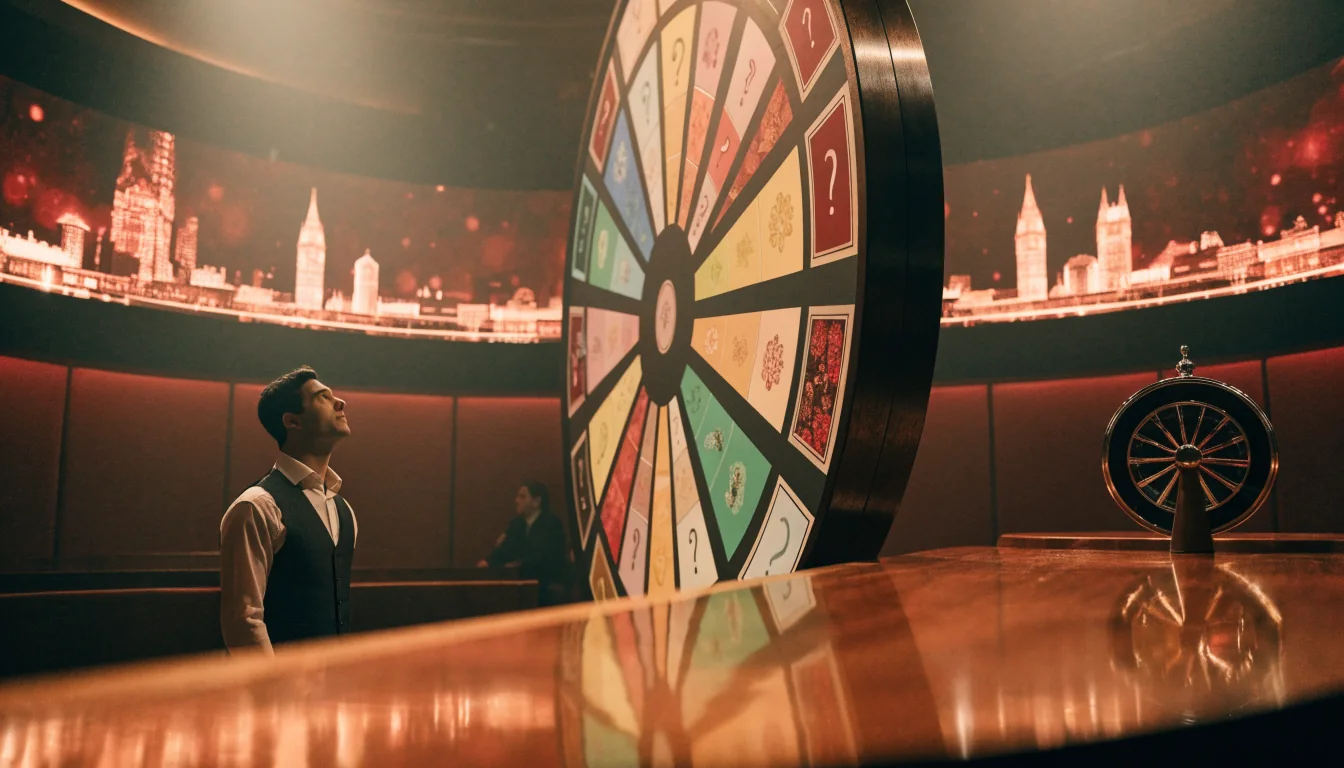
There is a practical cost to that kind of presence. Live tables have higher minimum bets than digital versions, and the stream needs a stable internet connection. Those features follow from the format: a live feed has to reach the screen while the betting interface remains usable. A weak connection can interrupt the very thing that distinguishes the experience. The human dealer is the attraction; the stream is also the dependency.
The difference is therefore not that one form is real and the other unreal. Both are mediated by screens and software. The distinction lies in what is being mediated. A digital game presents a software-made experience; a live-dealer game relays studio play and lets remote participants place bets through controls. One feels self-contained. The other leaves a visible trace of people, space and time beyond the device.
That visible human presence carries a familiar promise of company, though not necessarily conversation or intimacy. A dealer is part of the live scene, not a personal companion. The format borrows the social grammar of a table—the person dealing, the shared focus of a game—then adapts it for spectators and participants who may be far apart. The camera makes the studio legible; the interface turns watching into betting.
Live Casino Format
Live-dealer games are streamed from a studio with a human dealer, distinguishing them from fully digital software-based games.
The phrase “Crazy Time casino online” can be read as a request for that kind of screen-based access, but the important first question is one of format: is the experience a live studio stream, or a digital game presented entirely through software? The distinction is easy to blur when both appear among casino tiles and both are opened with a click. Their surfaces may be equally polished. Their underlying arrangements are not.
Live play is slower, requires a dependable connection and carries higher minimum bets than digital versions. It also places a human dealer and a real-time studio stream at the centre of the experience. Those are not minor embellishments to a slot. They are the format itself.
Where the Game Sits in the UK Casino Landscape
A live casino is not a separate legal category simply because its games arrive through a camera rather than a software animation. In the UK, live-dealer casinos are legal when they hold a licence from the UK Gambling Commission. That licence is the dividing line between an operator permitted to offer real-money gambling to the British market and one outside the domestic regulatory system.
The distinction matters because the studio and the website perform different jobs. A live game may be produced in a studio, with a dealer and a real-time broadcast, while the casino operator makes it available to customers through its own service. The studio’s presence does not, by itself, establish that every casino can offer the game or that a particular site is authorised to do so. The operator’s licensing position remains central.
British gambling law reflects a longstanding preference for placing responsibility on the businesses that make gambling available, rather than treating a game as lawful or unlawful in isolation. The Gambling Act 2005 governs gambling in England, Wales and Scotland; Northern Ireland has a different legal framework. For remote operators serving consumers in Great Britain, a Gambling Commission licence is required regardless of where the business is based. Geography does not provide a loophole.
That regulatory approach gives the phrase “UK casino” a practical meaning. It is not merely a label for a website that accepts customers from Britain, nor a claim that its games happen to be accessible there. A legal online casino serving British players must hold the relevant current operating licence. The same condition applies to live-dealer gambling: the televised format changes the experience, not the need for lawful authorisation.
There is a small but important difference between a game’s legal setting and its commercial availability. Licensing makes an operator eligible to offer gambling under the UK rules; it does not oblige that operator to carry every live title. A casino decides which games to include in its catalogue. As a result, a player looking for Crazy Time may find that the question is not simply whether live casino games are legal in Britain, but whether a particular licensed operator has chosen to make this title available.
Licensing
In the UK, a live casino is only legal if it holds a current operating licence from the UK Gambling Commission.
That choice can vary between operators and may change over time. A game’s absence from one casino does not establish that it is prohibited across the market, just as its appearance on a site does not make every other site a source for it. The UK casino landscape is therefore shaped by two separate gates: the regulator determines whether the operator may serve the market, and the operator determines which games it offers within that permission.
The distinction is less glamorous than the studio lights, but more consequential. A familiar game name can travel widely; a licence belongs to a specific business. Treating the two as interchangeable confuses entertainment with legal accountability. The broadcast may be international, while the permission to offer real-money play is tied to the market in which the operator does business.
This is why references to a “Crazy Time casino” or a “Crazy Time live casino in the UK” can describe different things. One may mean a licensed casino that carries the game; another may simply mean a site presenting itself as available to British players. The wording alone cannot settle whether the operator holds the required authorisation or whether the game is in its current catalogue. Those are distinct questions, and neither is answered by the title’s popularity or by the existence of a live stream.
For British consumers, the regulatory framework is not a decorative stamp on a page. It places the legal obligation on remote operators selling into the market, including those based elsewhere. A company’s location does not remove that requirement. Nor does the fact that a game is streamed from a studio transform an unlicensed offer into a licensed one.

The result is a market where a live game’s place depends both on regulation and on distribution. The law sets the boundary for legal provision; operators make the catalogue choices inside it. A title may be recognisable, yet its availability is never a universal feature of every UK casino. Licensing sets the terms. The menu remains the operator’s.
Casino Sites and the Conditions Behind the Screen
A casino’s page for Crazy Time can say that a live table is available, but the name on a menu is only the beginning of what matters. The operator is responsible for the conditions under which customers can access real-money play: its regulatory status, the way the live service is presented and whether the connection can sustain the stream. A polished lobby is not a substitute for those basics.
In the UK, a casino offering live-dealer games for real money must hold a current operating licence from the UK Gambling Commission. That requirement applies to operators serving the British market, even when the business is based elsewhere. The licence is therefore a meaningful point to establish when assessing a site, rather than an ornament in the footer. Online gambling is legal in the UK only through licensed and regulated sites, and customers must be aged eighteen or over.
A site’s own statements can be checked against the regulator’s public information. The UK Gambling Commission’s register identifies licensed operators; the relevant question is whether the company named in the casino’s legal or terms pages corresponds to the licensed entity. Branding and corporate names do not always look alike. That small administrative seam matters: a familiar casino name and a licence belonging to a different legal entity are not automatically the same thing.

What the site can actually support
A live table is not simply a game graphic that happens to move. The feed carries a studio’s real-time action, while bets are entered through the casino’s on-screen interface. That makes the operator’s delivery conditions part of the experience. The stream needs a stable internet connection; interruptions can make a live session difficult to follow, particularly when decisions and betting windows continue in real time.
Live play also unfolds more slowly than a digital version and carries higher minimum bets. Those are structural differences, not defects in a particular casino’s service. The operator’s table information should make the applicable limits visible before play, rather than leaving the important condition to be discovered once a session is under way. The site is the doorway; the table’s own rules and interface define what happens beyond it.
A useful assessment of Crazy Time casino sites in the UK therefore concerns more than whether a tile appears in a lobby. It includes whether the operator is licensed, whether the live-game section gives clear information about table conditions, and whether the service is presented as a streamed experience rather than a self-contained digital game. The quality of a site cannot be established from a promotional label alone.
Searches for live casino scores or scores associated with Crazy Time can also blur different questions. A casino’s display, results panel or promotional wording should not be treated as proof of a strategy, nor as a promise that past outcomes indicate what comes next. Scores are a description of recorded play only where the site explains what is being counted and how the display is produced. Without that context, a number on a screen is just a number.
The same restraint applies to claims about a casino being “best” for the game. A ranking can obscure the practical differences between operators: licensing, the clarity of table information and the conditions needed to keep a stream running. Those are observable features; broad praise is not. Dry distinction.
Bonuses attached to a casino may appear beside live games, but their presence does not establish that they can be used at a live table. Their conditions belong to the offer itself, not to the stream, and need to be read separately. A casino page can advertise several kinds of play under one roof without making their rules interchangeable. The screen may be shared; the terms are not.
Finding a Place to Play
The route to a live table begins in an online casino’s game lobby. Where Crazy Time is offered, it may be found among the live games or through the lobby’s search function. Casino menus differ, so there is no single path that applies everywhere: one site may group titles by format, while another makes its catalogue easier to search by name. The practical task is simply to locate the game’s entry and open it.
That distinction matters because a result labelled Crazy Time is not necessarily the same format as a live table. In live play, the screen carries a real-time studio feed with a human dealer, while bets are entered through the casino’s on-screen interface. The image and the controls sit together, but they do different jobs: the stream shows the table; the interface records a player’s selections.
Accessing Live Play
Enter the casino lobby and find the live-game area or use the search function for Crazy Time.
Select the game to open the live studio feed and betting interface.
Use the on-screen controls to select your bets before the betting window closes.
Once the game opens, the visible layout supplies the immediate instructions for participating. The interface presents the available betting choices and provides a way to select them before play proceeds. The precise arrangement can vary between casino sites and devices, so the position, wording and appearance of controls should not be assumed from one screen to the next. The same caution applies to any wheel shown in the broadcast: the image is part of the streamed game, while the bet itself is made through the interface.
A straightforward sequence is therefore: enter the casino lobby, find the live-game area or search for Crazy Time, open the live stream, then use the displayed controls to place a bet. The dealer and studio remain visible as the game unfolds. This is not a download of a self-contained digital game, nor a matter of pressing a control on the wheel itself. The player interacts with the casino’s interface; the studio supplies the live event.
The screen does not erase the distance between table and audience. It makes that distance orderly: the dealer performs in the studio, the camera carries the event, and the interface translates a remote participant’s choice into a bet. A small piece of theatre, with a cashier’s window attached.
When checking that the correct table has opened, the title and the live video are more useful than a similar-looking thumbnail in a lobby. If the stream has not loaded, the screen may not yet show the live game; a static preview alone does not establish that a live table is running. Casinos arrange their lobbies differently, and availability can vary by operator. There is no universal directory implied by the name.

The phrase “Crazy Time live casino” describes both a game and a mode of access: a studio stream reached through an online casino, with betting handled on screen. Finding it is a matter of navigating that particular casino’s lobby, not selecting a wheel directly from a general catalogue of games. Once inside, the live feed and the betting interface make the division clear.
What Makes a Casino a Better Fit
A casino can suit one style of live play and frustrate another. The useful comparison is not a league table of supposed winners, but a set of conditions: how quickly a table moves, what its minimum stake is, and whether the connection can sustain the stream. For a game-show format such as Crazy Time, those practical details matter more than a label such as “best”.
Live tables move more slowly than digital games. The dealer and the streamed action set the pace; decisions and bets cannot be compressed into the rapid cycle of a fully digital game. That can make the experience feel more social, but it also means waiting between rounds is part of the format. A casino’s interface should make the current betting stage and the available controls clear, rather than adding uncertainty to a game that already has its own rhythm.
- Check the specific table minimums before playing
- Ensure a stable internet connection for the stream
- Set a spending limit before the session begins
- Assume limits from other games apply to Crazy Time
- Rely on a polished lobby as a guarantee of stream quality
- Expect a live game to move as fast as a digital slot
Minimum stakes deserve equal attention. A specialist review has reported a starting figure of 20p for many live roulette and baccarat tables, while blackjack tables often begin at higher limits. These are reported examples, not a rule for the whole market, and they do not establish the minimum for Crazy Time at any particular casino. Table limits can differ by game and operator, so the figure shown at the table is the relevant one. A low entry point on another game says little about the cost of joining this one.
The stream itself is another dividing line. Live play needs a stable internet connection; interruptions can obscure the dealer’s actions or make it difficult to follow the table as the betting period changes. A casino may look polished on a quiet page and still be a poor fit if its live stream struggles on the connection available. Smooth viewing is not a luxury added after the game. It is part of being able to follow it.
The surrounding interface should also make the essentials legible: stake controls, the table’s minimum, and the point at which betting closes. A crowded screen or unclear labels can turn a simple choice into a hurried one. No operator can remove the slower pace or the need for a reliable stream; those are features of live play, not defects in a particular casino.
A sensible comparison therefore begins with the actual Crazy Time table, not a casino’s general claims. Its displayed minimum, the clarity of its controls and the steadiness of its stream are concrete measures. A set spending limit should be decided before play begins and kept in place. There is no casino choice that turns a live game into a predictable one.
The small print is the least theatrical part. It matters most.
This is entertainment information, not gambling advice.
Strategy, Chance and the Limits of a System
A strategy can mean two quite different things in a casino. It may describe how a game works: which choices are available, how a bet is settled, or what a rule requires. Or it may promise to turn chance into something manageable through a pattern of wagers. The first is explanation. The second is a claim about control.
For Crazy Time, the distinction matters more than any confident-sounding system. A staking plan can specify how much is placed and when to stop, but it cannot make an uncertain result obey a schedule. Nor does a record of previous results establish what will happen next. A tracker may organise past outcomes; it is not a forecasting instrument. Patterns can look persuasive after the event, when every run of results has already acquired a story.
The same restraint applies to claims about the game’s history. A name or a set of search results is not, by itself, a documented account of how a game was designed or how its rules developed. Without reliable historical evidence, a confident origin story would be decoration rather than explanation. There is enough to say about the broader habit of seeking systems: people have long tried to make chance legible, and gambling has supplied a ready stage for that ambition.
Roulette shows why the distinction between a rule and a prediction is useful. A straight-up bet has a house edge of 2.9%; other roulette bets have an edge of 2.7%. The different bet types change the terms of the wager, not the basic fact that the house retains an advantage. A system may redistribute risk across a sequence of bets, but it does not erase that advantage.

Blackjack offers another familiar test. Its aim is to beat the dealer without going over 21, yet the game still retains a house edge. Martingale, a staking system that increases the wager after a loss, can therefore lead to losses rather than reverse the underlying odds. A larger next bet changes the size of the exposure, not the result of the previous hand. The arithmetic is less obedient than the sales pitch.
Rules are worth understanding; supposed guarantees are not. In any casino game, a set budget and a stopping point are practical boundaries, not a method for making outcomes favourable. Losses and winnings alike are poor reasons to push beyond those limits. No tracker turns past results into certainty, and no staking sequence removes chance from the table.
The history of casino systems is, in part, a history of people trying to bargain with uncertainty. The bargain rarely improves with repetition. This is entertainment, not gambling advice.
The Difference Between a Demo and a Live Table
“Demo” and “live” describe different things, though casino menus can make the distinction look like a matter of presentation. A demo label generally signals a version intended to be viewed or played without the ordinary live-table process. It does not, by itself, establish that a particular game has a demo mode, what that mode contains, or whether it resembles the streamed experience. The label is not the table.
A live table has a more concrete meaning: gameplay is broadcast in real time from a studio, where a human dealer runs the game. Bets are placed through an on-screen interface while the stream shows what is happening. The screen is therefore a window onto an event unfolding elsewhere, rather than simply a display generated by software. That difference matters even when both formats share a title or a visual style.
Digital versions are not live broadcasts. Their pace and presentation belong to the software, while a live table follows the timing of the dealer and the proceedings in the studio. Live games move more slowly than digital versions, and their minimum bets are higher. They also depend on a stable internet connection: a stream that falters is not merely an unattractive animation but a broken view of the event.
There is a small cultural divide in the word “demo”. It suggests rehearsal: a low-stakes rehearsal room before the public performance. A live table, by contrast, puts the player into a timed, shared scene, with a dealer visible and the next stage of play arriving at the pace of the broadcast. Yet the word alone cannot certify that a demo reproduces that scene. A digital presentation may imitate its colours and layout without containing a dealer, a studio stream or live interaction.
Nor does “live” mean that every action becomes a conversation. The defining feature is the real-time studio gameplay, with bets made through the interface; any broader claim about what a particular table offers needs to be established separately. The distinction is about format, not a promise of identical rules, features or access across versions.
For anyone weighing a Crazy Time live casino demo against a live table, the useful question is what is actually being shown. Is it streamed gameplay with a human dealer, or a digital version presented on screen? The answer changes the pace, the connection needed and the minimum stake involved. A demo, where available, should not be assumed to settle those differences merely because it carries the same game name.

The distinction is plain, if the labels are not. This is entertainment, not gambling advice.
Free Play: What Can and Cannot Be Established
“Free” can describe different things in casino advertising. Free spins are an offer attached to slot play; a free-to-play version would mean being able to use a game without staking cash. The phrases are not interchangeable, though they can sit close together on a casino page. That distinction matters when a search for Crazy Time free play leads instead to an offer built around spins on slots.
A specialist review of UK casino offers reports that most welcome promotions are free spins for slot games, not credits for live tables. Such spins cannot be used at a live table. The word “free” therefore says little on its own about which game an offer covers. The named game, the format and the eligible play all matter.
Nor does a free-spin promotion establish that a particular live game has a free mode. It describes a promotional mechanic, not necessarily a way to try the game itself. A casino review that discusses free spins should be read for what those spins apply to, rather than treated as evidence that every game on the site can be played without a stake.
The same caution applies to phrases such as “free casino game”. They may refer to a separate digital version, a promotion, or simply a page discussing the game. The label alone does not settle which one is meant. Claims about a free version should be specific about the format being offered; promotional language is not a substitute for that detail.
There is also a difference between playing without staking money and receiving money that can be withdrawn. Free-play access, where offered, should not be mistaken for real-money winnings. A display or practice mode is not a cash balance, and free spins do not automatically mean that a live table is available at no cost.
For anyone comparing casino reviews, the useful question is narrow: does the offer apply to slots, to a live table, or to a distinct free-play format? A headline may compress those categories; the terms and game description need to separate them. “Free” is a small word with a large amount of housekeeping behind it.
Before Playing Live
- Confirm the operator holds a UK Gambling Commission licence
- Check if the welcome bonus is applicable to live tables
- Verify the game’s contribution rate toward wagering requirements
- Confirm the table’s minimum stake meets your budget
GamStop Searches and the UK Licensing Question
A casino described as being outside GamStop and a casino licensed to serve the UK are not interchangeable categories. GamStop is a self-exclusion programme; the phrase “not on GamStop” says nothing, by itself, about whether an operator holds permission to offer gambling to people in Britain.
For live-dealer games, the legal condition is clear: the operator must hold a UK Gambling Commission licence. That is the relevant threshold for a live casino serving UK players, whether its table streams Crazy Time or another game. A claim about GamStop arrangements cannot replace that licensing requirement, nor can a game’s presence on a casino site establish that the site is authorised.
The distinction matters because the labels answer different questions. GamStop concerns a programme; licensing concerns whether an operator may legally provide gambling in the UK. A search result or promotional description may use “outside GamStop” as its main selling point, but that wording alone does not establish the operator’s regulatory position. Nor does the name of a game provider, or the appearance of a familiar live show, settle the question.
A casino might be described online as a non-GamStop option, but the description should not be treated as proof of either its licence or its arrangements with the programme. The available public-facing label is not a regulatory document. In this market, the legal dividing line for live play remains the UK Gambling Commission licence.
There is no sound basis for treating every casino outside GamStop as having the same status, or for making a claim about a particular operator without evidence. The responsible distinction is narrower: legal live-dealer gambling in the UK is provided by operators holding the relevant UK licence. Anything said about a named casino’s GamStop status requires separate, current confirmation.
The subject is often reduced to a single label. The law is less casual.
This material is for entertainment purposes only and is not gambling advice.
Bonuses, Wagering Terms and Live Tables
A Crazy Time casino bonus can sound as though it belongs to the game itself. In practice, a promotion is an arrangement set by the casino, and its terms decide which games count towards any wagering requirement. The distinction matters: a bonus displayed beside a live table is not necessarily usable there, and a deposit offer does not automatically make live bets eligible.
A specialist review describes UK welcome offers as predominantly free spins for slots, which cannot be used at live tables. That is a description of the offers it reviewed, not a promise about every casino or a fixed rule for future promotions. The terms attached to an individual offer remain decisive. A deposit bonus, or a promotion described as a no-deposit bonus, should be judged by its written conditions rather than its label.
Game weighting is particularly important. Live games may count for only a small portion of wagering requirements; one stated example is a 10% contribution. In practical terms, that means eligible live play would make much less progress towards the requirement than a game counted in full. A headline bonus figure, therefore, tells little about how readily its conditions can be met.
The relevant details are the games included, their contribution rates, any maximum bet condition and the point at which winnings can be withdrawn. These rules affect the route from a promotional credit to a withdrawable balance; they do not promise a payout. If Crazy Time is excluded, or contributes little, a welcome offer may have scant connection to play at its table.
Promotional language is generous by design. The small print does the accounting.
Before opting in, the complete terms should be read for wagering requirements, game weighting and maximum bet limits. If those conditions do not suit the intended play, declining the offer may be clearer than treating it as extra value. This is general entertainment information, not gambling advice.
How do you play live roulette?
Place your bet through the on-screen controls, then watch the dealer spin a physical wheel. You win if the ball lands on a number you selected.
How do you choose a live dealer casino?
For play in the UK, choose an operator licensed by the UK Gambling Commission.
Which single rule has the biggest effect on house edge?
The zero rule makes a major difference: French Roulette returns half of an even-money bet when the ball lands on zero, while American Roulette has an extra double-zero pocket.
What are the different types of roulette you can play with a live dealer?
European Roulette has one green pocket, while American Roulette has 0 and 00. French Roulette is another version, with even-money bets losing only half when the ball lands on zero.
Is the house edge the same at live dealer casinos online?
No. In roulette, the house edge is 2.9% on straight-up bets and 2.7% on other bets.
How can you win live dealer roulette?
You win when the ball lands on a number you selected. The ball is spun on a physical wheel by the live dealer.
Why does the dealer always win in blackjack?
The dealer does not always win: blackjack players aim to beat the dealer with a hand totaling 21 or less. The game retains a house edge, but that does not mean every hand goes to the dealer.
Written by the editors at Rainbow Riches Casino 3.