iPad Casinos UK: Browser Play and What to Check
 Available in GB
The guide distinguishes browser usability, free slots, real-money routes and app labels without treating them as proof of compatibility.

Table of Contents
- Playing on an iPad: The Browser, the Screen and the Session
- What “Best” Can Mean When the Operator List Is Separate
- Free Play on an iPad: Slots Without a Cashier
- Real-Money Play and the Route In and Out
- Casino Apps on iPad: What the Label Does—and Does Not—Establish
- Free Slots and Downloads: Avoiding Assumptions About Installation
- The UK iPad Casino Search in 2026
- Casino Games on a Tablet: What Can Be Reliably Said
- Bonuses, Deposits and the Pay-by-Mobile Caution
- Live Dealer Play on an iPad: A Search Without Verified Tables
Playing on an iPad: The Browser, the Screen and the Session
An iPad puts online casino play somewhere between the private scale of a phone and the fixed arrangement of a desktop computer. Its larger display gives pages more room, while the touchscreen keeps the interaction close at hand. Neither feature, by itself, establishes that a particular casino site will work well on the device. The practical question is how the page behaves in the browser actually being used: whether its controls fit the screen, whether text remains legible, and whether the session stays manageable when the tablet is held, moved or set down.
“iPad-friendly” is best understood as a description of an experience, not a technical guarantee. A site may adapt its layout to a tablet-sized display, yet still present awkward menus or small buttons. Another may appear orderly in one orientation and less so in the other. Screen size does not remove the need for clear navigation; it simply changes where the friction appears. A compact page can be tidy without being easy to use, and a spacious one can still bury its account controls.
The browser is the setting for this kind of play. Opening a casino site on an iPad does not, on its own, say anything about whether a separate app exists or is required; that is a different question. Here, the important distinction is between reaching an online service through the browser and deciding whether that service is suitable for a tablet session. Pages can be designed for varied screens, but their behaviour should not be presumed from the device’s name alone. The iPad is a platform, not a certificate of compatibility.

A session also has a physical context. The tablet may be used at a desk, on a sofa or while travelling, and those settings affect attention as much as the interface does. A larger display can make information easier to scan than it is on a small phone, but it can also make a session feel more absorbing: the page occupies more of the field of view, and the boundary between leisure and prolonged attention becomes less visible. The device is neutral. The habits around it are not.
That matters particularly when real money is involved. In Great Britain, remote operators serving customers must hold the relevant UK Gambling Commission licence, and online gambling is legal for adults aged eighteen and over where the operator holds that licence. Operators must verify a customer’s age before allowing a deposit. These conditions concern the service and the person using it, not the size of the screen. A tablet does not change the regulatory status of a site, or turn an unlicensed service into a licensed one.
The iPad’s interface can nevertheless shape how clearly those conditions are presented. Account menus, notices and controls should remain findable rather than disappearing behind a crowded layout or an unexpected pop-up. A page that technically loads is not necessarily a page that communicates well. Legibility, stable navigation and the ability to pause without losing track of the session are modest standards, but they are more meaningful than a broad claim that a site “works on iPad.”
There is also a difference between the general playing environment and the specific content available within it. A tablet can provide access to online casino pages, but the device alone cannot establish which games, features or formats a particular operator offers. Nor does an attractive screen prove that every part of a service behaves consistently. The catalogue and the experience belong to the operator and its current site, not to the hardware.
In Great Britain, remote operators must hold a UK Gambling Commission licence, and online gambling is legal only for adults aged eighteen and over.
For the same reason, the word “online” should not be confused with effortless access. A session depends on the browser, the site’s layout and the surrounding conditions of use. A page may need to be revisited after switching tasks; a menu may behave differently from the main screen; a small control may be less forgiving than it appears. These are ordinary interface details, yet they determine whether a tablet feels like a considered way to use a service or merely a larger screen on which to make the same mistakes.
Money has its own route through the experience. Deposit methods, withdrawal options, fees and account checks are not qualities of the iPad, and a page that displays cleanly cannot confirm them. Those details belong to the live cashier and the account terms, which need to be considered separately before real-money play. The device can show the route. It cannot make the route reliable.
A sensible view of casino play on an iPad is therefore neither technological enthusiasm nor suspicion of the tablet itself. It is an ordinary browser-based activity shaped by screen layout, touch controls and the conditions of the session, within the same legal frame that applies elsewhere. A bigger screen can make a service easier to inspect. It cannot do the inspecting for anyone.
What “Best” Can Mean When the Operator List Is Separate
When choosing an iPad casino in the UK, it helps to check the information available about each option before deciding where to play. The verdicts below focus on the payout-speed details provided.
Payout speed: 1-3 business days Revery Play lists a payout speed of 1–3 business days. This is the available detail to consider when assessing it.
Payout speed: 1-3 business days Chanze lists a payout speed of 1–3 business days. This is the available detail to consider when assessing it.
Payout speed: 1-3 business days Amunbet lists a payout speed of 1–3 business days. This is the available detail to consider when assessing it.
Payout speed: 1-3 business days SpinFormula lists a payout speed of 1–3 business days. This is the available detail to consider when assessing it.
Payout speed: 1-3 business days NightLuck lists a payout speed of 1–3 business days. This is the available detail to consider when assessing it.
Payout speed: 1-3 business days Zombillion lists a payout speed of 1–3 business days. This is the available detail to consider when assessing it.
Payout speed: 1-3 business days BeOnBet lists a payout speed of 1–3 business days. This is the available detail to consider when assessing it.
Payout speed: 1-3 business days EvoSpin lists a payout speed of 1–3 business days. This is the available detail to consider when assessing it.
Payout speed: 1-3 business days Jetsetspins lists a payout speed of 1–3 business days. This is the available detail to consider when assessing it.
Payout speed: 1-3 business days NightWin lists a payout speed of 1–3 business days. This is the available detail to consider when assessing it.
“Best” is a word that pretends to settle a question while concealing several different ones. On an iPad, it might mean that a casino’s site is legible on a tablet, that its account pages are easy to navigate, or that its terms are clear before a session begins. Those are not interchangeable qualities. A polished screen cannot establish whether an operator is properly licensed, and a favourable ranking cannot tell every player what will matter most to them.
A useful comparison begins with the status of the operator, not the gloss of its presentation. In Great Britain, an online casino serving customers must hold a current UK Gambling Commission licence. That is a basic condition of legal operation, not a decorative badge. It places the operator within a system of rules governing remote gambling, rather than leaving the player to infer trustworthiness from branding, familiar colours or the ease with which a page loads.
The iPad adds a practical layer to the assessment. A site can be examined for whether its menus, account information and help pages remain understandable on a tablet screen. The point is not to award prizes for visual neatness. It is to notice whether essential information is findable without having to decipher cramped text or lose track of where the account controls are. Good presentation is useful when it makes the terms easier to inspect; it is less persuasive when it merely makes them easier to overlook.

A separate operator comparison has a narrower purpose: it can organise operators against stated criteria and make differences visible. The ranking itself is not a universal verdict. Its meaning depends on what it measures, how those measures are applied and whether the information is still current. A short verdict may compress a complicated service into a few words; that can help orient a comparison, but it cannot replace checking the underlying account and operator information.
This is where a distinction between stable criteria and changeable details matters. A current UKGC licence is a threshold question. Cashier conditions are not fixed in the same way. Minimum deposits, maximum transaction values and fees can depend on the selected method and the live cashier. Before depositing, the cashier is also where account financial-limit controls should be checked. A specialist review may describe what it found at the time it was prepared, but it is a snapshot, not a promise that the same terms remain in place.
- Verify the current UKGC licence status
- Check the live cashier for current limits
- Review financial-limit controls before depositing
- Rely on branding for trustworthiness
- Assume a ranking is a universal verdict
- Trust stale figures from old reviews
Withdrawals call for the same caution. Public banking information does not supply stable UK-specific figures for casino withdrawal limits, fees or processing times. The live cashier is the relevant place to establish what applies, and the details can change with the payment method as well as over time. A comparison that presents a neat figure without making its currency clear may look more precise than it is. Precision has a short shelf life.
The account itself also belongs in the assessment. The value of a site is not only what appears before registration, but whether its terms and account information can be understood when they matter. Financial-limit controls should be considered before the first deposit, and account-level facilities should remain accessible afterwards. That is not a measure of entertainment; it is part of the structure around play. A responsible service makes its limits legible rather than treating them as obscure administrative furniture.
The same principle applies to claims about convenience. A tablet-friendly interface may make browsing easier, but it does not establish that every account feature works identically across devices, nor does it settle questions about support, terms or payment conditions. Those need to be judged from current operator information, not guessed from the size of the screen. In a comparison, evidence should outrank adjectives.
So a sensible idea of the best iPad casino is not a single winner detached from its criteria. It is an operator whose legal status is clear, whose essential information can be examined on a tablet, and whose current account and cashier conditions are presented plainly enough to assess. The ranking can provide a starting point; its usefulness rests on the quality and freshness of what it compares. The word “best” remains a judgement. The evidence should not.

Free Play on an iPad: Slots Without a Cashier
A request for slot play at no cost is not simply a cheaper version of a real-money session. It describes a different purpose. The attraction may be the familiar rhythm of reels and choices, without turning entertainment into a financial transaction. On an iPad, that distinction matters: the screen can make a play session feel much like any other casino visit, while the absence of a cashier changes what is actually taking place.
“Free” needs a little care. It can describe play that does not involve staking money, but it can also appear as a label around a product whose other terms deserve attention. A free-play mode is not, by itself, a promise that every part of a service is cost-free or that it will remain separate from an account used for real-money gambling. The practical question is whether the activity being offered is genuinely a no-stake experience, rather than a route that leads towards depositing.
That distinction need not spoil the pleasure. It gives the session a clearer shape. Someone interested in free slot play may be looking for a brief diversion, a way to become familiar with the broad conventions of a slot-style game, or simply something to occupy a quiet stretch of the day. Those are reasonable interests in their own right. They do not have to be treated as preliminary steps towards spending.

The iPad’s large touch screen lends itself to casual use, but the device does not tell anyone what kind of play is happening. A polished interface, a casino-like visual design or the word “free” cannot settle the question. The terms attached to the particular experience do that. In particular, it is worth distinguishing play that does not require a stake from promotions or account features that may have conditions. Free play and a real-money offer are not interchangeable merely because they appear within the same service.
There is also a social habit behind the appeal. The slot machine has long been presented as a small, self-contained spectacle: lights, motion, a result arriving at the press of a button. Digital versions carry that compressed form of entertainment into a personal screen. On a tablet, the spectacle becomes quieter and more private. It can be picked up and put aside without the public setting that once made gambling a visible outing. The change is in the setting, not necessarily in the meaning of every product bearing a casino label.
For a person seeking a no-cost experience, the useful distinction is between entertainment and gambling with money at stake. That is not a judgement on the entertainment. It is a way to keep the expectations honest. A free session should not be assumed to provide cash winnings, nor should an invitation to play without charge be taken as evidence about what happens when real money is involved. Those are separate questions.

The word “best” can also blur the purpose. A favourite free experience depends on what someone enjoys: pace, presentation, simplicity or the amount of attention it demands. Without a specific, current product to assess, a universal recommendation would be little more than a taste presented as a verdict. The more useful approach is to look at the description and terms of the particular free-play option, and to decide whether it matches the intended kind of diversion.
This is especially relevant when a service places free play beside account registration or paid features. The presence of a no-cost option does not make the surrounding account obligations disappear. Nor does it mean that a player must progress from free play to depositing. A session can end where it began: as a pastime, with no cashier involved.
That boundary is worth keeping visible on a device designed to make transitions feel effortless. A tap can move between screens; it cannot make two different kinds of activity the same. Free play has its own appeal precisely because it need not be a rehearsal for a purchase. A small distinction. A useful one.
Real-Money Play and the Route In and Out
An iPad changes the shape of a casino session, not the rules governing its money. A real-money account still has an entrance and an exit, and neither should be inferred from the other. A deposit button says what may be used to put funds in; it does not promise that the same route will carry them back out.
Credit Card Ban
In Great Britain, casino gambling cannot be funded with a credit card, even when routed through a money service business or intermediary.
In Great Britain, remote gambling operators must hold a UK Gambling Commission licence to serve customers. That regulatory frame has a direct consequence for payment: casino gambling cannot be funded with a credit card. The restriction applies even when a payment is routed through a money service business. Moving the transaction through an intermediary does not change what it is for. A card that is a credit card is not made suitable by appearing inside a wallet or another service.
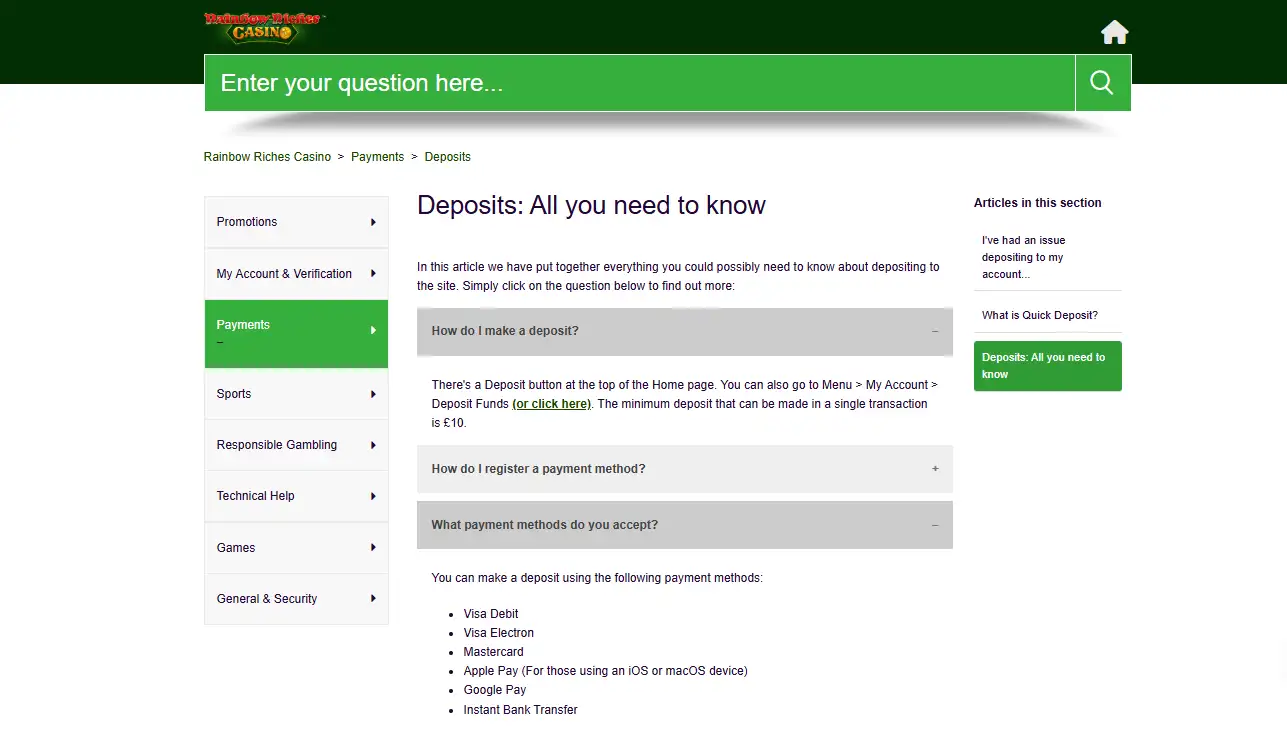
That distinction matters on a tablet, where payment screens can make a financial decision feel like one more tap in an entertainment session. The deposit method should be checked in the live cashier, along with the route offered for withdrawals. A specialist review may describe a method as accepted, but payment arrangements can change; the account’s own current cashier and terms are the practical reference, not a remembered list.
Before any deposit, the account’s payout route deserves the same attention as its way in. A specialist review may report withdrawals by debit card, bank transfer, PayPal, or an e-wallet such as Skrill or Neteller, but that is not a guarantee that each option is available to every account. Availability can depend on the operator’s current arrangements and the account holder’s details. Payment information should match the account holder’s identity and currency, and a method shown for deposits should not be assumed to work for withdrawals.
The distinction becomes especially important where a player chooses a method for convenience and later discovers that the withdrawal route is different. Some non-UK casinos require a withdrawal through the same method used to deposit, but that condition should not be projected onto every casino. The operator’s own terms establish what applies. A low balance may also fall below a stated minimum withdrawal threshold, while a request above a maximum may be divided into separate payments. Those are account conditions to establish, not universal rules.
Identity checks belong in the same preparation. Before depositing, the available payout route, any outstanding verification requirements and the current operator terms should be reviewed together. An unresolved identity check can affect the path from account balance to payment, so it is not merely administrative background. The relevant question is not only whether funds can be added, but whether the account is in a position to request a withdrawal under its stated conditions.
Minimum deposits, transaction ceilings, fees and processing times are cashier-specific and may vary with the selected method. Public banking information does not provide stable UK-wide figures for casino withdrawal limits, charges or processing times. The live cashier is the source for those details. Old figures copied from a review can become stale; financial terms are less permanent than a tablet’s glass suggests.
UK rules also require a new remote customer to be prompted to consider a financial limit before the first deposit, with account-level limit facilities remaining accessible afterwards. That requirement places a pause at the point when money first enters play. It is a modest intervention, but a meaningful one: the screen is not only a doorway to entertainment, it is also where a spending boundary can be set.
Account Preparation
- Confirm the operator holds a current UKGC licence
- Check the available payout route in the live cashier
- Complete all outstanding identity verification requirements
- Set a personal financial limit before the first deposit
Real-money casino play on an iPad is therefore not defined by a particular payment logo or by a deposit completing smoothly. It depends on a lawful operator, a permitted funding route, clear account terms and a withdrawal path that suits the account. The route in is only half the transaction. The route out needs checking before the first tap.
Casino Apps on iPad: What the Label Does—and Does Not—Establish
An “iPad casino app” sounds like a distinct product: something made for the tablet, installed on it, and ready to open whenever a session begins. The phrase can describe that expectation without proving that a particular casino has an app, that an app is available for iPad, or that a download is genuine. A label is not a product check.
The distinction matters because playing at an online casino on an iPad and using a dedicated app are not the same claim. A casino may be reached through a web browser, while an app-focused description suggests software intended to be installed and used separately. Whether either route works for a particular service depends on the current product and its terms. The device alone settles none of this.

Nor does the word “best” make the app question more definite. It may refer to ease of use, a familiar layout, or simply the fact that an app exists. Those are different tests, and none can be inferred from a search result title or a promotional phrase. Without a specific, current product to examine, a ranked list of iPad casino apps would turn a loose label into an unwarranted recommendation.
There is also a regulatory distinction behind the small icon. In Great Britain, a remote gambling operator selling to customers must hold the relevant UK Gambling Commission licence. The licence belongs to the operator, not to the tablet and not to the mere existence of an app. An installed program is therefore no substitute for checking which operator is behind it and whether that operator is licensed to serve the British market. The software can look like a doorway; it does not certify the building.

That is especially important where an app is encountered outside the operator’s own clearly identified service. A familiar name or polished presentation does not, by itself, establish who controls the account or where the software leads. The sensible distinction is between identifying a genuine operator and assuming that any item described as a casino app represents one. Names and appearances can be borrowed more easily than regulatory status.
The same caution applies to claims that an app is “for iPad”. That wording may describe intended use, but it does not establish present availability, compatibility with a particular device, or the details of installation. Those are product-specific matters, and they can change. A claim should be checked against current information from the operator rather than treated as a permanent feature of the casino.
An app may be the form a player prefers; it is not a separate guarantee of quality, security or suitability. The practical question is not simply whether an icon can be found, but what service it opens and who is responsible for it. For a British player, the operator’s UKGC licence remains the relevant regulatory fact. A download cannot confer one. Nor can a tablet.
Free Slots and Downloads: Avoiding Assumptions About Installation
A request for free slot play on an iPad can mean two different things: playing without staking money, or obtaining something to install. The distinction matters. “Free” describes the cost or mode of play; it does not establish that a download exists, that installation is required, or that a particular slot will run on the device.
A page describing free online play may open in a browser and require no separate file. Conversely, a download label suggests an installation step but does not, by itself, show what is being downloaded or whether it is suitable for an iPad. The wording attached to a result is not a technical specification. A small leap from “free” to “install now” can leave the important details behind.
Before installing anything, the nature and source of the file should be clear, along with the permissions requested and the conditions attached to its use. A slot presented as free should also be distinguishable from a real-money version: the word alone does not explain whether play uses virtual credits, whether an account is involved, or what happens if the experience later offers a route to gambling for money. Those are separate terms, not details that can be inferred from a download button.
The iPad itself does not settle the question. A page may use “iPad slots” as shorthand for content intended to be viewed on a tablet, without promising a downloadable product. Nor does a mention of an installation establish that the item is an official casino offering. The name, publisher and stated operating requirements need to be checked on the relevant product information, rather than inferred from promotional wording.
There is a quieter difference between downloading a game and saving a web page or shortcut for later access. Both can look like something added to the device, but they are not the same thing. A shortcut does not prove that the game has been installed locally, and a download label does not explain how the experience is delivered.
For free slots on an iPad, installation is therefore a separate question from whether free play is available. Treating the two as interchangeable can obscure what is being opened, what data it may use and whether the activity remains free. A download is not a guarantee of compatibility, safety or a particular game catalogue. Dry distinctions, but useful ones.
The UK iPad Casino Search in 2026
An iPad can be the screen through which a person reaches an online casino, but the year in a page title is not a promise that every detail has been freshly checked. In Britain, the important distinction is not the shape of the device but the status of the operator: a casino serving British customers for real-money play must hold a current UKGC licence. Online gambling is for adults aged 18 and over.

That regulatory frame has a history. The Gambling Act 2005 set rules for England, Wales and Scotland, while Northern Ireland sits outside that Act. The rules are attached to the service, not to whether it is opened on a tablet, phone or computer. An iPad does not create a separate category of casino.
The practical meaning of “2026” is therefore modest. It can orient a reader to the present year, but it cannot make an old page current by itself. Information about an operator’s cashier, including withdrawal methods, limits, fees and processing statements, can change. A specialist review may record what was available when it was written; it should not be treated as a permanent specification. The live cashier is the place to confirm what applies now.
This matters because online casino pages often gather unlike things under one label: descriptions of access, general claims about a service, and details that may alter without notice. Their shelf life differs. A broad explanation of how licensing works may remain useful longer than a payment detail copied from an earlier review. The dates and context attached to claims deserve attention.
The tablet in the phrase “iPad casino” is the setting, not the guarantee. It says little by itself about the operator’s current terms, the account conditions or whether a particular detail still holds. The calmest reading is the least glamorous: treat the device as a way to access the service, and treat time-sensitive claims as provisional until checked against the operator’s current information.
A year is not an update.
Casino Games on a Tablet: What Can Be Reliably Said
A casino on an iPad is not a single kind of entertainment. The category spans different forms of play, while a search for a particular title or a ready-made list assumes a catalogue that may vary from one operator to another. A tablet’s screen says nothing by itself about which games are offered.
That distinction matters in a market where the legal definition is broad: under the Gambling Act 2005, a casino is an arrangement that gives people the opportunity to take part in one or more casino games. For real-money play in Great Britain, the operator must hold a UKGC licence. The device does not alter that condition, nor does the word “casino” establish that every familiar format is present.
A general list of games for an iPad can therefore be less useful than it appears. It may blend categories, free-play experiences and real-money products as if they were interchangeable. They are not. Nor does a title that appears in one operator’s catalogue prove availability elsewhere. Catalogues are operator-specific; the iPad is merely the viewing surface.
Slots sit inside this wider landscape, but they are not the whole of it. British rules also shape how online slot play works: autoplay is banned, and each spin must last at least 2.5 seconds. The maximum stake per game cycle is £5 for adults aged 25 and over and £2 for those aged 18 to 24. These are conditions of play, not a guide to what any particular tablet catalogue contains.
Free games and real-money games also answer different needs, even when their appearance is similar. The presence of a game-like interface does not, by itself, reveal whether money is involved or what terms apply. Labels matter less than the actual setting.
Casino Game Rules
- Real-money operators in Great Britain must be UKGC licensed
- Autoplay is banned for online slots
- Each spin must last at least 2.5 seconds
- Maximum stakes are £5 for ages 25+ and £2 for ages 18-24
The sensible way to read a catalogue is as a current, operator-specific inventory, not a promise made by the device category. Broadly, casino games can be discussed; a reliable title-by-title list requires information about the particular operator and its current offering. The glass cannot supply that.
Bonuses, Deposits and the Pay-by-Mobile Caution
An iPad bonus offer is not a feature of the screen; its conditions belong to the operator’s account and cashier. A no-deposit offer should not be assumed to exist simply because the wording appears in a promotion or a search result. The terms determine who can claim an offer and which payment routes qualify. Specialist reviews report that Payforit deposits are excluded from many UK welcome offers, but the live promotion terms are the useful authority for any particular account.
Before a deposit, the cashier should be checked for its minimum, transaction ceiling and fees, alongside the account’s financial-limit controls. New customers must be invited to consider setting a financial limit before depositing, and those controls must remain available later. A small screen does not make the conditions smaller.

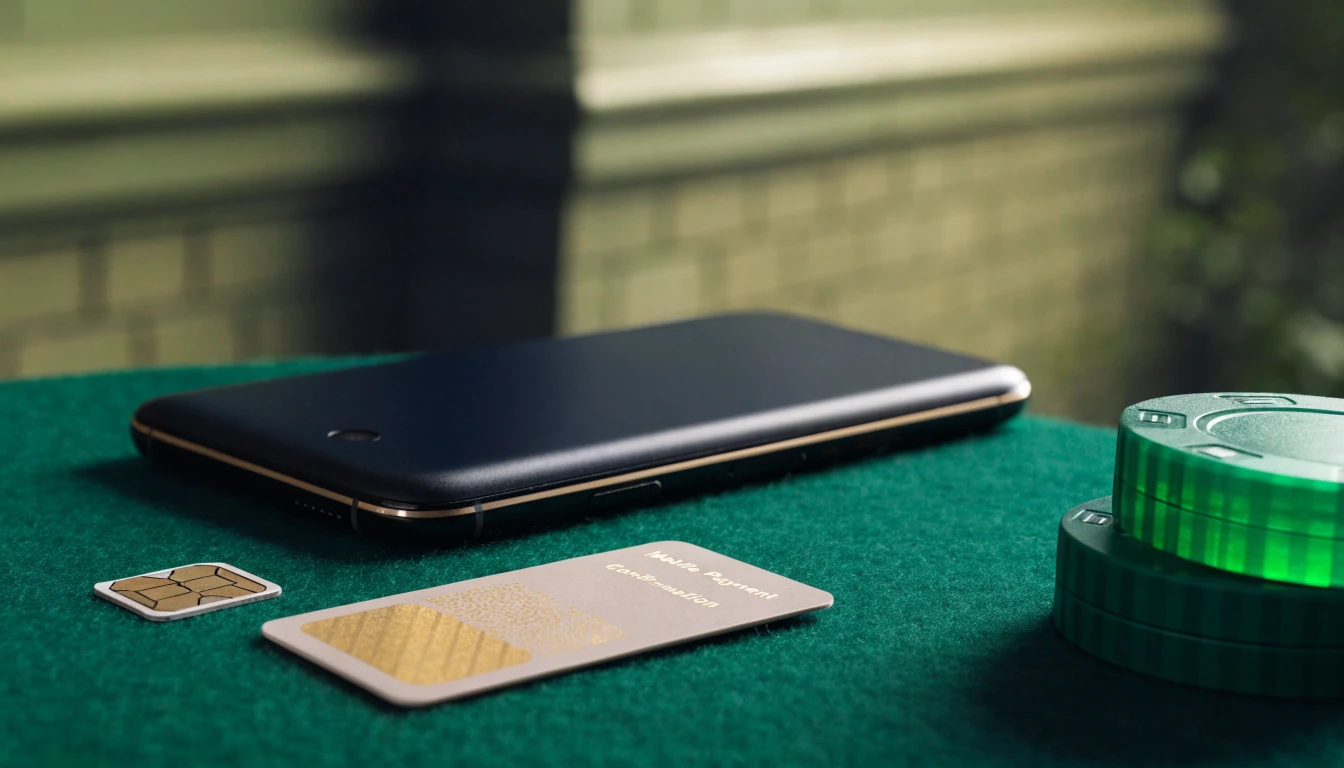
Payforit works differently from a bank or e-wallet route. The deposit is charged to a monthly phone bill or taken from prepaid mobile credit. The player selects Payforit, enters a mobile number, receives a confirmation code by text and submits it to complete the payment. It is a deposit route only: casino funds cannot be withdrawn through Payforit, so it should not be mistaken for a complete route in and out of an account. Specialist reviews describe deposits in the £3–£5 minimum range, with a £30 transaction cap; the current cashier and applicable rules should be checked, rather than treating reported figures as permanent.
Bitcoin availability calls for the same restraint. Independent current reviews have reported major cryptocurrencies among accepted methods, but that does not establish that a given iPad casino accepts Bitcoin now. The cashier is the evidence that matters. A familiar coin name is not a payment guarantee.

Live Dealer Play on an iPad: A Search Without Verified Tables
Live dealer play brings a human presence into a format otherwise made of interfaces: a camera view, a streamed table and decisions made through on-screen controls. On an iPad, the appeal is partly social and partly practical. The screen can make the table easier to follow than a phone display, while the session still takes place through a browser or another access route. Neither detail establishes which tables are available.
Blackjack is often central to searches for live casino play, but a general interest in live blackjack cannot confirm that a particular operator offers a table suited to an iPad. Availability may depend on the operator’s current catalogue and the way its service is presented on the device. A search result, promotional image or familiar game label is not a substitute for checking the live section itself.
The distinction matters in Britain, where real-money online gambling is legal only through sites holding a current UK Gambling Commission licence. Operators selling remote gambling to the British market must hold the relevant licence, wherever they are based. A polished stream does not establish that status; regulation and presentation are separate questions.
The tablet also changes the experience without changing the underlying rules. A larger display may make details more legible, but it cannot turn a live table into a verified feature, nor does it guarantee that every control or stream will behave identically across devices. Compatibility is a practical question, not a promise contained in the word “live”.
So the sensible description is modest: an iPad may be used to access live-dealer casino play, while specific tables, blackjack options and providers require current confirmation from the operator. The camera suggests immediacy. It proves very little else.
Do UK casinos offer welcome bonuses for Payforit deposits?
Usually not: most UK casinos exclude Payforit deposits from welcome bonuses and other promotions.
Is there a maximum deposit amount with Payforit at UK casinos?
Yes. Payforit deposits are capped at £30 per transaction; the cashier shows the limits that apply to your account.
Can I withdraw casino winnings to my phone bill with Payforit?
No. Payforit can be used for deposits, but not for withdrawing casino funds.
Which payment types are listed?
Listed options include Visa, Mastercard, Skrill, Neteller, PaysafeCard and several major cryptocurrencies. Payforit is also accepted at some operators.
Which UK casinos still accept Payforit in 2026?
Payforit is listed as available at Kwiff, NetBet, JackpotJoy and Virgin Games; check the current cashier to confirm.
Are online casino bonuses available with Payforit deposits?
Usually not. Most UK casinos exclude Payforit deposits from bonuses and promotional offers.
Written by the editors at Rainbow Riches Casino 3.