Casinos That Accept Wirecard in the UK: What to Check
 Available in GB
A payment option, the games catalogue and bonus conditions are separate parts of a casino offer, and each needs checking on its own.

Table of Contents
- A Payment Method Does Not Make a Slot
- Deposits, Bonuses and the Small Print
- What Casino Cashiers Commonly Accept
- Checking Whether a Payment Route Is Actually Available
- Card Payments and the Credit-Card Boundary
- Alternatives When Wirecard Is Not a Confirmed Option
- What Can Be Confirmed About Wirecard in 2026
- Why Withdrawals May Not Follow the Deposit Route Instantly
- Keeping Deposits and Withdrawals on a Clear Route
- Wirecard Searches and GamStop: Separate Questions
A Payment Method Does Not Make a Slot
A casino’s payment page and its games catalogue answer different questions. One describes how money may enter an account; the other describes what the operator offers to play. A Wirecard label, where one appears in a general discussion of payments, cannot establish that a casino has particular slots, a particular range of games, or a version designed for mobile use. Nor does it make a slot “best”. Those are claims about the games and the site, not about the route used to fund an account.
That distinction matters because the language around payment methods can make them sound like a kind of casino in their own right. “Wirecard casino” is shorthand, not a description of a game or a guarantee about the experience. A bonus belongs to the operator’s promotion and its conditions; a game belongs to the catalogue. Neither follows automatically from a payment brand. A list of sites using one method would still say nothing, by itself, about which slots they carry or whether those slots suit a particular player.
The British payment landscape offers a more ordinary point of comparison: UK casinos commonly accept debit cards, including Visa and Mastercard. That tells little about the games available, just as a named slot would tell little about how an account can be funded. Keeping the two questions apart prevents a payment phrase from doing more work than it can bear.
There is also a specifically British set of rules governing how online slots behave. Autoplay is banned, so a spin cannot be set to repeat automatically while the player looks elsewhere. Each online slot spin must last at least 2.5 seconds. These requirements apply to the play itself, not to whether a deposit was made by card, wallet or another route. A payment method does not shorten a spin or switch autoplay back on.

That separation reflects a wider regulatory instinct: money movement and game design are treated as distinct parts of remote gambling, each with its own boundaries. The first concerns how funds reach an account; the second concerns what happens once play begins. A payment brand may be useful as a filter when investigating funding, but it cannot stand in for evidence about a casino’s games, its mobile catalogue or the quality of its offering. Labels are not catalogues.
The same caution applies to descriptions of new casinos. A site being new, or being presented alongside a payment method, does not establish what its games catalogue contains. The useful question about slots remains a question about the operator’s actual games, while the useful question about a payment route remains a question about the operator’s payment arrangements. Conflating them produces a tidy phrase and a muddled answer.
Different subjects. Different evidence.
Deposits, Bonuses and the Small Print
A deposit and a bonus are separate decisions, even when a casino presents them as one offer. A payment can reach an account without qualifying for a promotion; the cashier’s acceptance of a method does not, by itself, establish that the bonus terms include it. That distinction matters when an offer is the reason for choosing a particular route.
PayPal illustrates the gap. A specialist casino review describes it as popular for speed and convenience, while noting that it may be excluded from bonus eligibility. That is a report about a payment method and promotion conditions, not a rule that applies to every casino. The operator’s current terms determine what counts. A familiar wallet logo beside the cashier does not settle the question.
The same caution applies to Skrill and Neteller. A specialist review reports that some sites offer these e-wallets and that they are often excluded from promotions. “Often” is not “always”: the wording leaves room for differences between operators and between offers. A payment method that qualifies for one promotion may not qualify for another, and the method’s presence on a general payments page is not a substitute for the terms of the specific bonus.
- Identify the exact promotion
- Check payment-method exclusions
- Read the full terms and conditions
- Rely on a promotional banner
- Assume a welcome page covers all routes
- Treat a payment label as proof of eligibility
This is where the small print becomes more than a formality. Promotional language tends to put the headline first and the conditions later. The relevant detail is not merely whether an offer exists, but whether a deposit made through the intended method is eligible for that offer. If the terms name excluded payment routes, those exclusions matter more than a broad claim that a casino has a welcome bonus.
For anyone considering a Wirecard-labelled deposit, the same logic applies without assuming that a particular casino accepts it. The word “bonus” does not make an unlisted payment route eligible, nor does a payment label appearing in a search result prove that it will work at the cashier. Payment acceptance and promotional eligibility are distinct checks. The bonus terms can answer the latter only once the actual method and offer are identified.
It is worth reading the conditions attached to the promotion rather than relying on a banner or a general welcome page. The terms should make clear which payment methods qualify and whether the offer is tied to a particular kind of deposit. If the wording is unclear, the uncertainty is itself relevant: a bonus that cannot be confidently connected to the chosen route should not be treated as part of the value of that deposit.
The reverse is also true. A method’s exclusion from a promotion does not necessarily mean it cannot be used for an ordinary deposit; it means the promotional benefit may not apply. Keeping those questions separate prevents a common confusion: “accepted by the cashier” and “eligible for the offer” are not interchangeable statements.
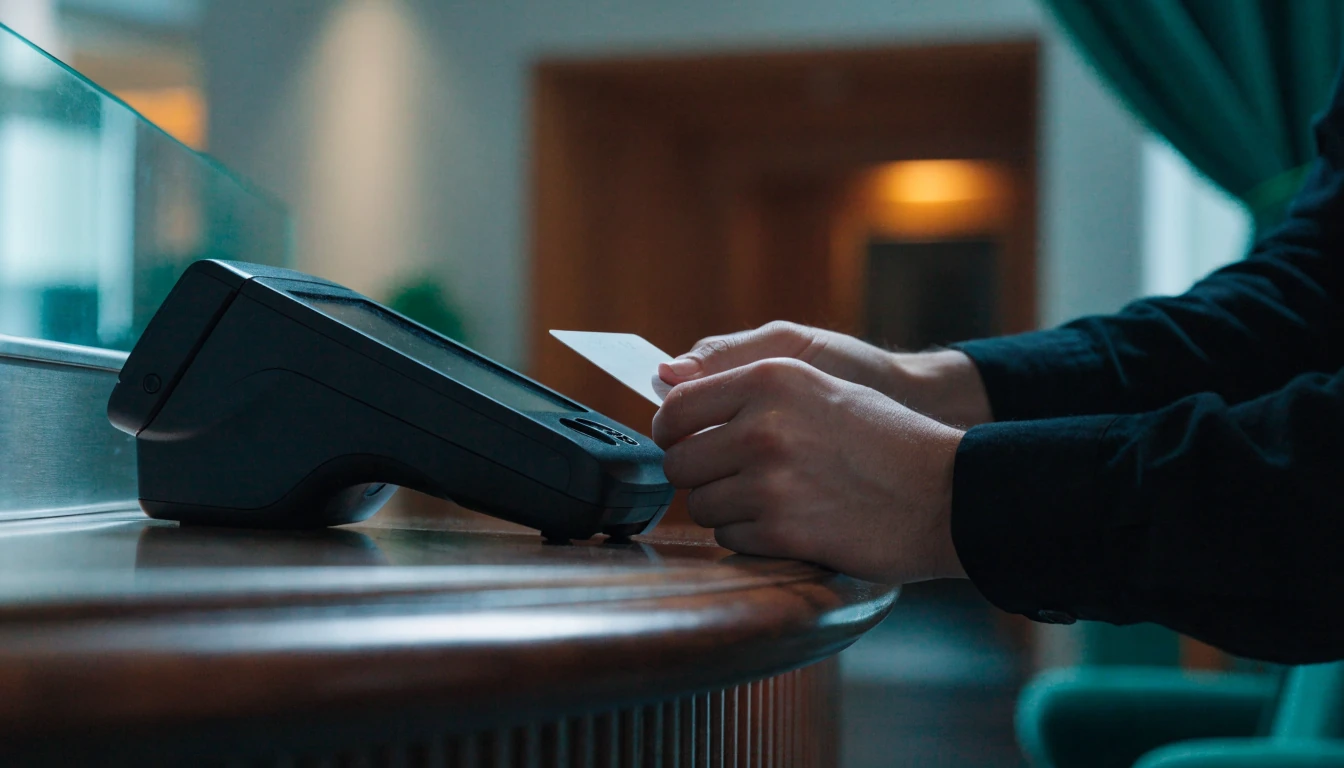
There is a small cultural history in this distinction. Casinos have long advertised incentives as if money arrives with a little extra attached. The conditions restore the bookkeeping that the headline softens. A bonus is not simply a gift placed beside a deposit; it is an offer governed by terms, and the payment route can be one of those terms. The administrative language may be less inviting than the banner. It is also the part that decides.
For a cautious comparison, the useful order is therefore simple: identify the exact promotion, check its payment-method exclusions, then consider whether the intended deposit route qualifies. A general page describing PayPal, Skrill or Neteller cannot answer every offer-specific question. Nor should a reference to a Wirecard account or deposit be read as proof of eligibility where the terms do not name that route.
Promotions can change, and specialist reviews can describe conditions that no longer apply to a live offer. The operator’s current terms are the practical reference at the point of decision. That does not make every offer transparent, but it keeps the distinction clear: payment access concerns the cashier; bonus eligibility concerns the promotion’s conditions. Small print, large consequences.
What Casino Cashiers Commonly Accept
A casino cashier is less a universal menu than a record of the payment arrangements an operator has chosen to support. Across UK casinos, debit cards are a familiar option, with Visa and Mastercard among the names that recur. That broad pattern is useful context for anyone comparing ways to fund an account, but it does not turn every card brand or financial product into an accepted method everywhere.
UK casinos commonly accept debit cards, including Visa and Mastercard, but the available options can differ between individual operators.
The cashier’s list can also give a misleading impression of uniformity. A payment logo may be recognisable across many services, yet the actual choices differ between casinos. The payment method, the account and the transaction all meet there, in a small interface that does more practical work than its modest design suggests. It is the operator’s working menu, not a national directory.
Wirecard searches sit against that wider background. A search for casinos accepting Wirecard deposits belongs to the same general question as a search for card payments, but the two are not interchangeable. The presence of familiar card names in the UK market does not establish that a particular branded service is available. Nor does the existence of a casino cashier imply that every method appearing in a search result can be used to make a deposit.
The distinction matters because payment branding can be complicated. A name may refer to a card, a service, or a product associated with another provider; those categories do not automatically share the same acceptance. A casino’s general support for debit cards is therefore a broad feature of the market, not evidence about every card product that might be described as a debit card. Familiarity is not confirmation.
Minimum deposits offer another point of comparison, though not a fixed market tariff. A specialist review puts the starting range at £10–£20, with the selected payment method affecting the threshold. That range is a reported guide rather than a promise that every casino will offer the same entry point. The amount shown for a particular route can differ from the amount attached to another, even within the same cashier.
This is one reason the headline figure rarely tells the whole story. A minimum deposit is a gate, not a measure of how much a payment route can handle overall. Maximum deposit limits may vary by method and account status, so a low entry threshold does not describe the full terms of use. The cashier’s figures belong to the specific transaction and account, not to a general idea of what casinos accept.

The payment menu also reflects a larger institutional habit: online gambling has to be made legible to systems built for money movement. Cards offer a familiar route; other payment arrangements may appear beside them, depending on the operator. Yet a list of method names does not tell the whole story of how an account is funded, and a broad description such as “card payment” can conceal important differences between products.
That is why broad market descriptions should stay broad. UK casinos commonly accept debit cards, including Visa and Mastercard. This says something meaningful about the payment landscape, but it does not identify a best casino, confirm acceptance of Wirecard, or establish that any particular branded route will appear in a particular account. Those are separate claims, and the distinction is more than wording.
The modest starting deposit is often the first figure noticed, because it makes a casino seem accessible at a glance. But the cashier is not merely a doorway with a price on it. It is where a casino’s chosen payment arrangements are presented, and the options are shaped by the method selected. The general picture is clear enough: debit cards are widely familiar, and minimum deposits can begin in the £10–£20 range according to a specialist review. The details remain local to each payment choice. A menu, not a guarantee.

Checking Whether a Payment Route Is Actually Available
A payment logo or method named on a casino page is not proof that the route will work for every UK account. Availability can depend on the current cashier options and on the particular card product. A specialist review of casino payment pages lists Visa and Mastercard, but that information is a starting point, not confirmation that either card is enabled for a specific account today.
The cashier is where the practical answer appears. Its deposit screen shows the methods currently offered to the account, alongside any relevant instructions. A payment option mentioned in an older review or on a general information page may not appear there. Conversely, seeing a familiar card brand does not establish that every card carrying that brand is eligible. The distinction is prosaic, but useful: a logo names a network; it does not settle the status of an individual product.
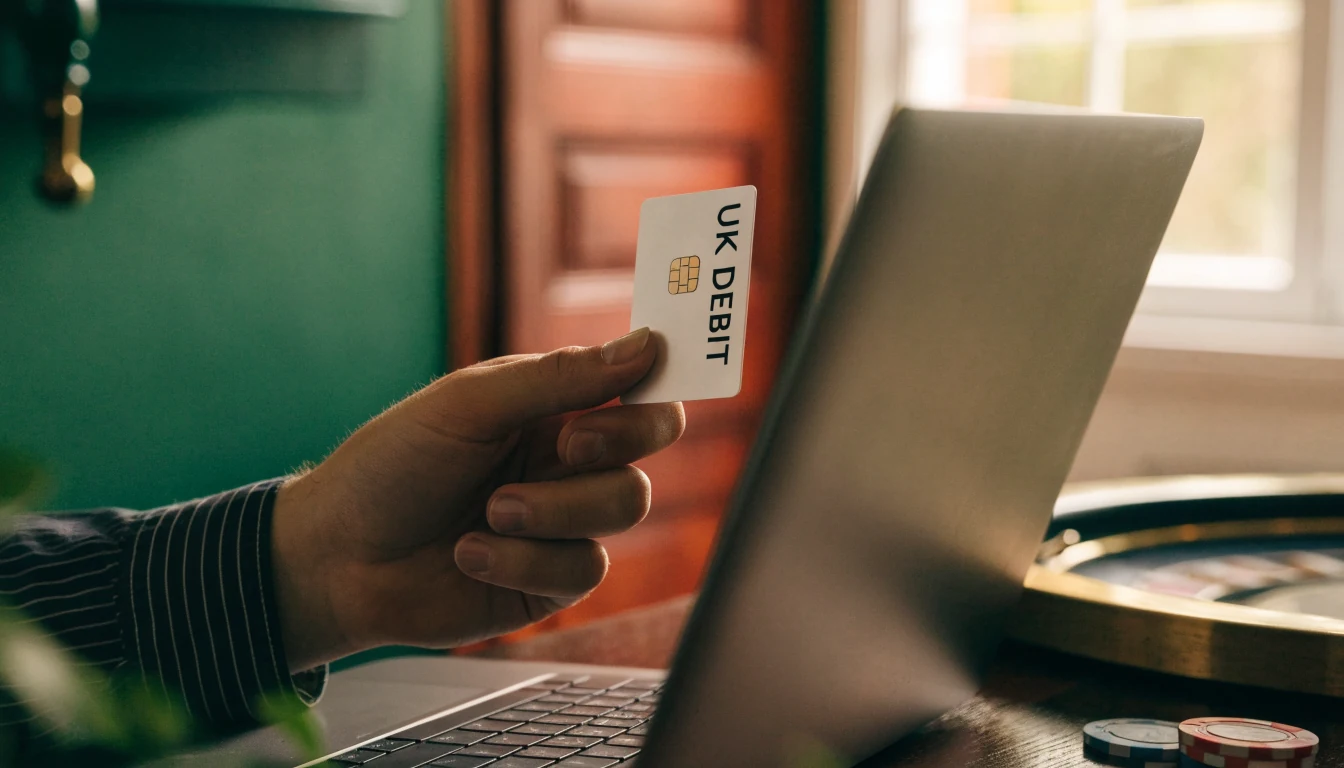
The same care applies to Wirecard. A general statement that a casino accepts card payments does not establish that Wirecard is supported, and an online reference to the name does not guarantee that the route is available in the UK cashier. If the method is not explicitly shown among the live deposit options, it should not be treated as confirmed. The screen, not the wording of a search result, is the relevant point of comparison.
Currency deserves its own check before the first transaction. Pages covered by a specialist review state that GBP is supported, but that does not remove the need to confirm the account’s selected currency. If an account is held in another currency, a deposit may involve conversion rather than a straightforward sterling payment. That can affect the amount charged, so the displayed currency and any conversion terms matter before confirming a transaction.
There is a small difference between a payment method being supported by a site and being available to a particular customer. The former is a broad claim; the latter is what the cashier actually offers after the account has been opened and the relevant details are in place. Payment pages can help identify what to look for, but they cannot substitute for that account-level check.
This is less glamorous than a list of casinos, and more dependable. For any named route, the useful checks are whether it appears in the current cashier, whether the displayed option matches the actual card or payment product, and whether the account currency is GBP before money is moved. A method absent from that screen remains unconfirmed, however often its name appears elsewhere.
Card Payments and the Credit-Card Boundary
A card logo does not settle the question of whether a payment is permitted. The important distinction is between an eligible debit-card transaction and credit-card payments for gambling. In Britain, the latter have been prohibited at UK-licensed casinos since 14 April 2020, and the rule has not been relaxed. A payment route does not become acceptable merely because it passes through a casino cashier.
Credit Card Ban
Credit-card payments for gambling have been prohibited at UK-licensed casinos since 14 April 2020.
That boundary matters when a search refers to a “Wirecard card”. The name alone does not establish whether the card product is a debit card, a credit card or something else, nor whether a particular casino currently supports it. Card type and cashier availability are separate checks. A general mention of Visa or Mastercard cannot answer either one for every product carrying those brands.
A specialist review may list Visa and Mastercard among a site’s payment options, but that is not confirmation that a particular card will work for a UK account. The live cashier is where available methods and eligible card products have to be checked. Even then, a credit card cannot be used for gambling at a UK-licensed casino. If a card is debit, its brand still does not guarantee acceptance.
The restriction also closes off an apparent workaround: credit-card funds cannot be routed through a money service business or a wallet that permits those funds to be used for gambling. The rule concerns the credit source, not just the label displayed at the final payment step. A wallet or intermediary does not turn prohibited credit-card gambling into an eligible debit-card payment.
This is why lists of casinos accepting a named card can be misleading when they treat the card name as a complete description. A casino may list a card network, while the customer’s own product, the account’s location or the current cashier options differ. For online and mobile casinos alike, the same distinction applies; the device used to open the cashier changes nothing about the credit-card boundary.

The practical reading is narrow. A debit card may be eligible where the casino’s cashier supports it, but the method should not be inferred from a brand name or from an old list. A credit card is not an alternative for deposits at a UK-licensed casino, whether presented directly or routed through a payment service that allows credit-card funds to be used for gambling.
That makes “accepted” a more precise claim than it first appears. It must refer to the actual payment product and the current UK cashier, not simply to a logo or a broad card category. Where that distinction is unclear, the safe conclusion is not that every card bearing a familiar name will work. It is that debit eligibility and credit prohibition remain different questions.
Alternatives When Wirecard Is Not a Confirmed Option
Payment routes found at UK-facing casino sites include bank transfers, e-wallets and cryptocurrencies, alongside Visa and Mastercard. That range is a map of the wider payment landscape, not evidence that each route is available at every casino or for every account. A specialist review of casino payment pages describes those categories among the methods listed by the sites it examined.
Open banking and bank transfers can serve as alternatives to a card route. A specialist review reports that these services can support instant deposits and fast withdrawals at many sites. The wording matters: a method’s presence on a payment page does not settle how it will work for a particular customer, or whether it will be offered for both directions of a transaction. “Bank transfer” can also cover different services, so the cashier’s own description is more useful than a broad label in an old comparison.
Can support instant deposits and fast withdrawals at many sites.
Provide a payment account between the bank and casino to avoid entering card details on multiple sites.
A distinct category that requires both the casino and the account to support the relevant route.
E-wallets form another part of the available landscape. They keep a payment account between the bank and the casino, which may suit people who prefer not to enter card details on multiple sites. Their presence, however, should not be mistaken for a universal route or a promise that a deposit can later be withdrawn in the same way. The payment method shown in the cashier is the practical point of reference.
Cryptocurrency is also mentioned among the options on some reviewed casino pages. It is a distinct payment category, not a simple replacement for a bank card: the casino and the account must both support the relevant route. A reference to cryptocurrencies in a general review does not establish which currencies a particular cashier accepts, or whether the option is available to a UK account.
These routes therefore offer alternatives to investigate, not a certified set of Wirecard replacements. Their usefulness depends on what a casino actually lists and permits. The names can travel farther than the payment function.
For a UK player, the sensible comparison is between the route displayed in the cashier and the purpose it serves: deposit, withdrawal, or both. A method that appears in a site-wide description may not be enabled for every customer, and a category such as “e-wallet” does not identify the specific service. Choosing a route by name alone can leave the important detail unresolved. The cashier is less lyrical, but more precise.
What Can Be Confirmed About Wirecard in 2026
Wirecard availability can change, so check the casino’s current payment options before depositing. This list offers a quick reference to the payout-speed information provided for the UK market.
Payout speed: 1-3 business days Revery Play has a stated payout speed of 1–3 business days.
Payout speed: 1-3 business days Chanze has a stated payout speed of 1–3 business days.
Payout speed: 1-3 business days Amunbet has a stated payout speed of 1–3 business days.
Payout speed: 1-3 business days SpinFormula has a stated payout speed of 1–3 business days.
Payout speed: 1-3 business days NightLuck has a stated payout speed of 1–3 business days.
Payout speed: 1-3 business days Zombillion has a stated payout speed of 1–3 business days.
Payout speed: 1-3 business days BeOnBet has a stated payout speed of 1–3 business days.
Payout speed: 1-3 business days EvoSpin has a stated payout speed of 1–3 business days.
Payout speed: 1-3 business days Jetsetspins has a stated payout speed of 1–3 business days.
Payout speed: 1-3 business days NightWin has a stated payout speed of 1–3 business days.
No UK casino can be presented as a confirmed place to deposit with Wirecard. That is the useful answer to a question often phrased as whether a casino accepts Wirecard cards, a Wirecard debit card or Wirecard Pay: those descriptions do not establish that a payment route is available for a UK account.
Payment names can be deceptively broad. A specialist casino review may list Visa and Mastercard, but a card logo on a general payment page is not proof that every card product works there. The cashier is where the current methods for a particular account are displayed, and card eligibility still needs checking there. Wirecard should not be treated as interchangeable with a listed card brand simply because a payment is described as card-based.
That distinction matters before any deposit is attempted. A casino’s payment page can describe methods in general terms, while the cashier shows what is available at the point of transaction. If Wirecard is not explicitly shown as an option, there is no sound basis for calling that casino a Wirecard casino or saying it takes Wirecard. Search-result wording, old references and broad claims about “card payments” cannot substitute for the method being named in the cashier.
The same caution applies to requests for Wirecard deposit casinos in the UK and to claims of instant Wirecard casinos. “Instant” describes processing, not acceptance: a fast payment route is irrelevant if it is not offered for the account. Nor does a successful-looking payment label establish that a particular Wirecard card product is eligible. The method and the product both matter.
Wirecard Status
Wirecard acceptance at UK casinos is not confirmed and cannot be inferred from generic card listings.
For a UK customer, the practical distinction is between a general mention of card payments and a named, selectable route. A cashier that lists Visa or Mastercard confirms those labels, not Wirecard by implication. Likewise, a phrase such as “debit card accepted” does not identify every card issuer or product that may be used. The precise option needs to appear at the payment stage.
So the answer remains deliberately narrow: Wirecard acceptance at UK casinos is not confirmed. No operator should be named as accepting it on the strength of a generic card listing. A cashier that explicitly names Wirecard would be the relevant place to verify availability; without that, the claim should not be made. A label is not a route.
Why Withdrawals May Not Follow the Deposit Route Instantly
A deposit can appear in a casino balance before the corresponding withdrawal is ready to leave it. The two transactions travel in opposite directions, but they do not necessarily pass through the same checks or move at the same speed. A quick card deposit, if a particular card is accepted, is not evidence that a payout to that card will be equally quick.

UK anti-money-laundering rules generally require winnings to be returned to the original payment source. That principle helps casinos check where funds came from and where they are going. It also means a requested payout may be reviewed against the deposit history, rather than treated as a simple transfer to any account named afterwards.
For someone searching for a casino that pays out to Wirecard, the crucial detail is not merely whether a Wirecard card can be used to deposit. The cashier and withdrawal terms need to show that the same route can receive payouts. A card name appearing in a deposit list does not, by itself, establish that withdrawals to it are supported. Nor does it establish that a Wirecard-branded product is currently available for a UK account.
There is an administrative interval as well. A specialist review describes withdrawal processing as dependent on the casino’s internal approval and the player’s verification status. The first payout may take longer while identity and account details are checked. Until that review is complete, the casino may not release the funds, even if the payment provider could process them promptly once sent.

The word “instant” tends to collapse these separate stages into one. In practice, a withdrawal has at least the casino’s decision to approve it and the subsequent movement of money through the chosen payment route. A delay at the first stage is not the same as a delay at the second. Neither can be inferred from how quickly a deposit appeared.
That distinction matters when assessing claims about Wirecard casino withdrawal times. Without confirmation in the casino’s own cashier that the route accepts payouts, an advertised deposit option cannot settle the question. The status of the account, completed checks and the casino’s approval process all shape what happens next.
Money moves. Permission takes longer.
Keeping Deposits and Withdrawals on a Clear Route
A payment route is not just a way into a casino account; it also leaves a trail of names and ownership details. When the account and payment method belong to the same customer, those basic details are less likely to create avoidable friction during a transaction. The arrangement is plain, which is precisely its virtue.

For anyone asking whether a Wirecard card can be used to deposit, that question is separate from whether the same route can later receive a withdrawal. A payment method should not be treated as a complete in-and-out channel merely because it appears at the deposit stage. The casino’s cashier and payment terms determine what is available for the account, and the route should be understood before money moves.
The cleanest arrangement is often one named account used consistently for both deposit and withdrawal. That does not promise a particular processing time, nor does it override a casino’s checks. It does reduce the chance that a mismatch between the account holder and payment details becomes an extra problem. A payment method belonging to someone else, or details that do not match, can complicate an otherwise ordinary transaction.
Speed at the first step is no reliable forecast of speed at the last. A card deposit may appear instantly, while a payout can take several business days. A specialist review describes this contrast; it is a reminder that the deposit and withdrawal stages are separate operations, not two ends of one instantaneous movement. A visible balance in a casino account is not the same thing as money returned to a bank or card account.

Consistency cannot make a slow process fast. It can keep the route legible: one customer, matching account details, and a payment method whose role in both directions is clear. That is especially useful where a search for Wirecard deposits tempts the assumption that depositing settles every practical question. It does not. The route matters after the deposit, too. Clear, not instant.
Wirecard Searches and GamStop: Separate Questions
A casino’s payment options and its relationship with GamStop are separate matters. The presence of Wirecard in a payment enquiry does not establish whether a casino is covered by GamStop, and GamStop status does not show whether Wirecard can be used. Treating the two as a package turns unrelated checks into a claim about a casino that the payment method alone cannot support.
That distinction matters when phrases such as “Wirecard casinos not on GamStop” suggest that one feature leads to the other. It does not. A payment route says something about how money might be put into an account; it is not evidence about gambling-control arrangements. Nor does the word “slots” change the question: a slot title cannot establish either payment availability or GamStop status.

There is a further boundary in the British market. Remote gambling licensees serving Great Britain must hold a UK Gambling Commission licence. A casino described as outside GamStop is not, on that description alone, shown to be unlawful; but that label is no substitute for checking its regulatory position. Online gambling in the UK is legal only at licensed and regulated sites. GamStop status and licensing status should not be collapsed into one another.
The control built into a licensed account begins before play. UKGC rules require remote operators to ask new customers to set a financial limit before their first deposit and to make account-level limit controls accessible. This is a separate safeguard, not a clue about which payment methods the cashier supports. The cashier addresses payment; the account’s controls address limits.
Search wording often tries to make one answer do the work of another. “No fee”, “not registered with GamStop” and “Wirecard accepted” are distinct claims, each requiring its own confirmation. None can be inferred from the others. The boundary is plain.
Why must withdrawals return to the deposit method?
Returning funds to the original payment source is a common anti-fraud and anti-money-laundering control. An alternative route may require additional verification.
What is the fastest withdrawal method for UK casinos?
PayPal, open banking services and debit cards linked to fast payout systems are generally among the quickest options. The casino’s approval process and your verification status also affect the wait.
Why can a fast payout casino still delay my withdrawal?
The casino must approve the withdrawal, and checks can take longer for a first payout if verification is still needed. An account that is not fully verified can also slow processing.
Are fast casino withdrawals guaranteed?
No. Withdrawal speed depends on the casino’s approval process and whether your account is fully verified; bank transfers can also be affected by cut-off times, weekends and currency conversion.
Which payment methods are accepted in Great Britain?
UK casinos commonly accept Visa and Mastercard debit cards. Open banking, bank transfers and some e-wallets are also available at many sites; check the cashier for the methods currently offered.
Are Visa and Mastercard deposits definitely debit cards?
No. Visa and Mastercard are commonly used for debit deposits, but check that your specific card product is eligible in the cashier. Credit-card gambling has been banned in the UK.
Is Skrill available?
Yes. Skrill is one of the common deposit methods at UK-friendly casino sites, though availability and bonus eligibility can vary by site and offer.
Written by the editors at Rainbow Riches Casino 3.