Casinos That Accept Upaycard in the UK
 Available in GB
Acceptance can vary by casino, so the signed-in cashier—not a general card label—is the practical confirmation.

Table of Contents
- Why Upaycard Availability Needs Checking at the Cashier
- Deposits, Bonuses and the Slot-Casino Cashier
- What Deposit Acceptance Can—and Cannot—Tell Players
- Card Eligibility and Payment Compatibility
- Slots, Games and What the Evidence Can Support
- Other Ways to Pay at UK Online Casinos
- Depositing by Card: Limits, Currency and Fees
- Withdrawals: The Original-Source Rule
- Payment Security and Avoiding Transaction Friction
- GamStop Status and Responsible Gambling Controls
Why Upaycard Availability Needs Checking at the Cashier
A search for casinos that accept Upaycard in the UK can suggest that acceptance is a fixed feature, like a game displayed in a lobby. Payments are less tidy. A method may be available at one site and absent at another, and a general reference to card payments does not establish that every card product will work.
A specialist review of casino payment pages lists Visa and Mastercard, but that does not confirm Upaycard acceptance. Nor does a familiar card logo settle the question: the cashier needs to show the payment route currently available for the account. The distinction is small on a screen and decisive at the point of deposit.
That is why a named list of casinos accepting Upaycard cannot be treated as a dependable answer without current cashier confirmation. Payment pages change; a method described in older information may no longer appear, while a broad “debit card” label may not identify which products the operator can process. Availability should not be inferred from the word “card” alone.
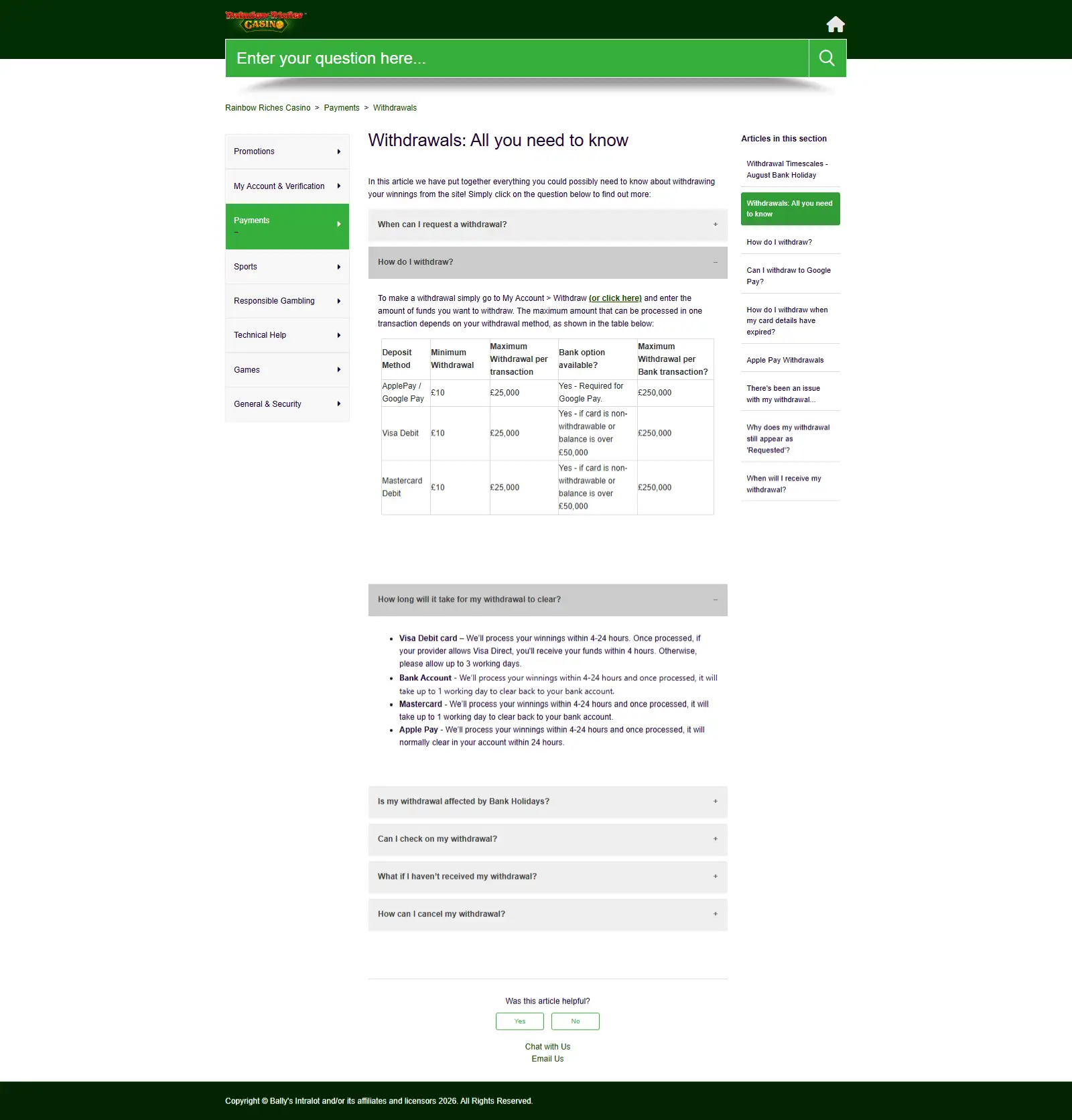
When considering a casino that accepts UpayCard in the UK, check the available payment methods directly before depositing. The details below note the payout speed provided for each operator.
Payout speed: 1-3 business days Revery Play has a stated payout speed of 1–3 business days.
Payout speed: 1-3 business days Chanze has a stated payout speed of 1–3 business days.
Payout speed: 1-3 business days Amunbet has a stated payout speed of 1–3 business days.
Payout speed: 1-3 business days SpinFormula has a stated payout speed of 1–3 business days.
Payout speed: 1-3 business days NightLuck has a stated payout speed of 1–3 business days.
Payout speed: 1-3 business days Zombillion has a stated payout speed of 1–3 business days.
Payout speed: 1-3 business days BeOnBet has a stated payout speed of 1–3 business days.
Payout speed: 1-3 business days EvoSpin has a stated payout speed of 1–3 business days.
Payout speed: 1-3 business days Jetsetspins has a stated payout speed of 1–3 business days.
Payout speed: 1-3 business days NightWin has a stated payout speed of 1–3 business days.
The useful check happens after signing in, in the casino’s deposit area. If Upaycard appears as a selectable option, the cashier provides a more relevant indication than a general payment-method summary. If it does not appear, a reference elsewhere to Visa or Mastercard cannot turn that into confirmation. There is no universal switch marked “card accepted” that covers every issuer and product.
This matters for searches about Upaycard deposits, debit cards or instant casinos: those phrases describe different expectations, but none substitutes for the current payment choices shown by a particular operator. “Instant” may sound like a property of the card; in practice, the first question is whether the cashier offers it at all. A label in an article cannot perform that check.
The narrow conclusion is the honest one. Upaycard acceptance should be confirmed in the live cashier, rather than assumed across UK casinos or promised through a static list. Visa and Mastercard references are useful only as evidence that those brands are named in a payment overview; they do not establish the present eligibility of Upaycard. The cashier is the point where a general claim meets an actual account. A modest test, but the relevant one.
Deposits, Bonuses and the Slot-Casino Cashier
A deposit and a bonus are two separate decisions, even when they appear beside one another in the same cashier. The payment route determines whether money can be sent to the account; the promotion’s terms determine whether that particular deposit counts towards an offer. A successful payment does not, by itself, settle the second question.
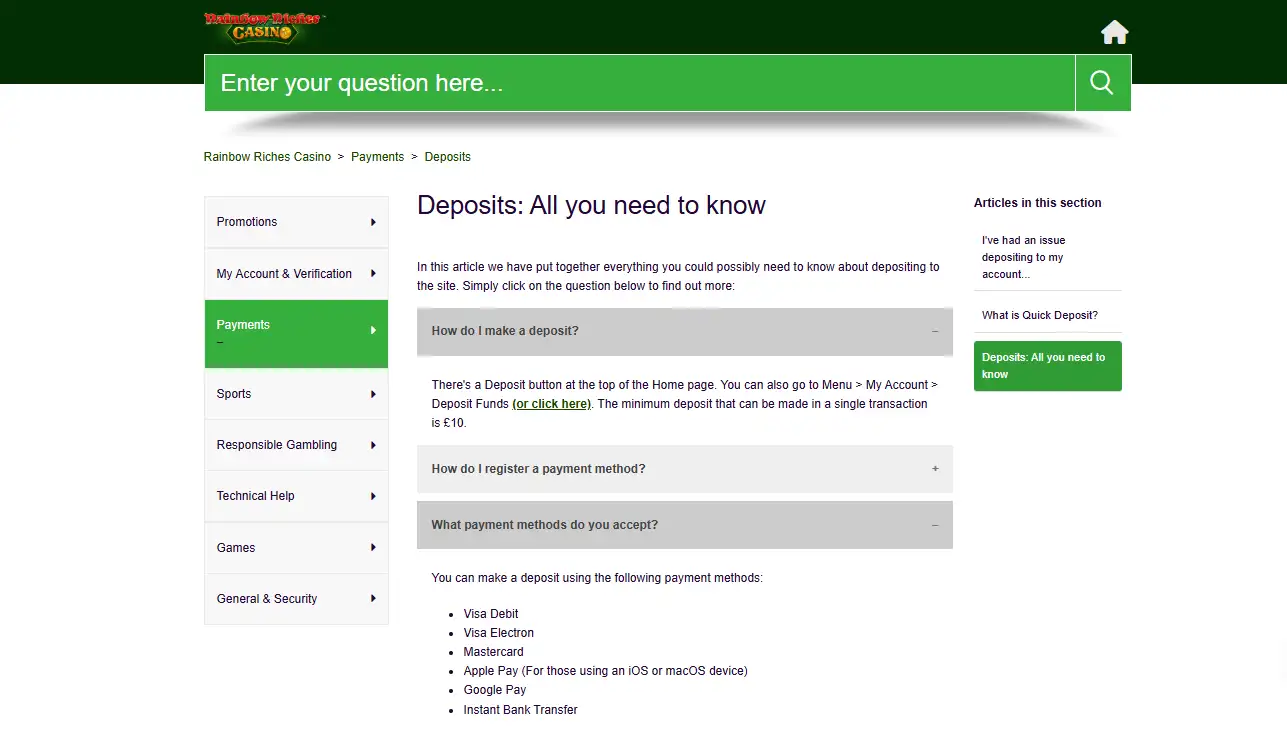

That distinction matters for anyone considering a casino deposit with Upaycard. A promotion may be open only to selected payment methods, or may exclude a method that the cashier otherwise accepts. The cashier can therefore show a route for adding funds while the bonus terms treat a deposit made through it differently. Neither screen should be read as a substitute for the other.
The cashier is an administrative crossroads, not a promise that every part of the offer applies. Its payment options relate to the transaction. The bonus page may set separate conditions: which deposits qualify, whether an offer must be activated, and what happens if funds are added before activation. Those details belong to the promotion’s own wording. A headline offer cannot answer them.
The payment option is not the promotion
The practical sequence is simple in principle. First, the casino presents the payment options available in the account. Separately, the promotion’s terms define which payment methods are eligible. If the chosen route is excluded, the deposit may still reach the casino account without attaching the advertised bonus. That is not a failed payment; it is a mismatch between a payment condition and a promotional condition.
The distinction can be easy to miss because casino interfaces often place deposit controls and promotional messages close together. A bonus banner may encourage a deposit, while the small print governs how that deposit is treated. The interface is designed to move money efficiently. Eligibility, less dramatically, lives in the terms.
- Check the payment route in the live cashier
- Review promotion terms for eligible methods
- Assume a bonus applies because a deposit is accepted
- Rely on general payment summaries for bonus eligibility
A specialist review has described PayPal as valued for speed and convenience while also noting that a casino promotion may exclude it. That is a report about a particular source’s account of bonus rules, not a fixed rule for every operator or offer. Promotions change, and the relevant terms are those attached to the current offer at the casino.
The same caution applies to Skrill and Neteller. A specialist review reports that some casinos make these e-wallets available while excluding them from certain promotions. The wording matters: availability at a cashier does not establish eligibility for every bonus, and a condition attached to one offer should not be projected onto another.
These examples are useful not as a ranking of payment routes, but as a reminder that casinos may separate the mechanics of payment from the commercial terms of a bonus. Upaycard should be assessed in that same two-part way: whether it can be used for the deposit, and whether the promotion’s conditions include deposits made through it. One answer cannot stand in for the other.
Reading an offer before adding funds
A slot-casino promotion can have conditions beyond the method used to deposit. The offer may specify how it is claimed and what kind of activity counts, so its wording should be read as a set of rules rather than as a decorative promise beside the deposit button. A payment can be processed while a bonus is not awarded if a required step was missed or a stated condition was not met.


It is also worth distinguishing the bonus balance from cash deposited into the account. They may be presented together in the interface, but their terms need not be identical. The promotion explains what applies to the offer; the cashier records the payment. When the two are treated as one thing, confusion tends to appear only after the transaction.
For an Upaycard deposit, no special bonus entitlement follows simply from naming the card in a search or seeing a payment route in an account. The promotion must say whether that deposit method qualifies, and the cashier must offer the route for the transaction itself. If either point is unclear, the offer’s terms or the operator’s support channel are the appropriate places to resolve it before funds are sent.
That is a modest discipline, but a useful one: check the payment route and the bonus condition independently. A casino can accept a deposit without accepting it as the qualifying deposit for a promotion. The distinction is less glamorous than the bonus banner. It is also the part that decides what the account actually receives.
What Deposit Acceptance Can—and Cannot—Tell Players
A payment method appearing on a casino’s list is a useful clue, but it is not a promise that every deposit will go through. “Accepted” can describe a general facility offered by a site; an individual transaction still has to match the conditions that apply to the account and payment route. The distinction is easy to miss because payment pages tend to compress several separate stages into one reassuring word.
Attention: A payment method appearing on a casino’s general list is a clue of possibility, not a guarantee that every individual transaction will be approved.
A published list may indicate that a casino has arranged to process a particular type of payment. It does not, by itself, establish that the option is available to every customer, that every card product will work, or that a particular transaction will be approved. Nor does a deposit listing confirm that the same method can be used to receive a payout. Those are separate questions, even when a site’s marketing presents payments as a single feature.
That matters when assessing claims about Upaycard. A general statement that a casino accepts cards, or that it supports a payment route, is not enough to establish that Upaycard deposits are accepted in every case. The wording may be broad while the actual option depends on the route presented for the customer’s account. A name on a list is evidence of a possible route, not proof of universal access.
The reverse is also true: the absence of a method from a general overview does not necessarily describe every payment option available at the point of transaction. Payment information can be presented at different levels of detail. A short promotional summary may say less than the cashier, while an old or general list may not reflect the choice currently displayed. Neither should be treated as a complete account of what will happen for a particular customer.
There is also a difference between a site accepting a payment category and the payment provider authorising an individual transaction. The casino’s published information cannot settle every part of that decision. Acceptance claims should therefore be read narrowly: they describe a stated capability, not a guarantee about a specific account, card or deposit.


The most reliable claims are precise about what they cover. “Card deposits are supported” is broader than a statement naming a particular card product; neither phrase alone confirms that a deposit will succeed for every customer. Similarly, a casino’s general payment list should not be read as evidence that a method supports both depositing and withdrawing.
This is less a technicality than a reminder about how commercial language works. A payment badge makes a complicated arrangement look settled. The transaction itself is less tidy: the casino, payment route and account must line up. Using account details and a payment route belonging to the same customer can reduce avoidable friction over basic ownership information, but it does not turn a general acceptance claim into a guarantee.
For anyone comparing claims about Upaycard, the sound conclusion is modest: a broad statement of acceptance may indicate a possible payment route, but it cannot establish suitability for every account or transaction. The label is not the transaction.
Card Eligibility and Payment Compatibility
A card payment has two separate tests: whether the casino’s payment system recognises the product, and whether the transaction details match the account being funded. A card can carry a familiar network mark yet still be unsuitable for a particular cashier. For anyone looking for online casinos accepting Upaycard payments in the UK, the name alone does not settle either question.
Eligibility depends on both the payment network (such as Visa or Mastercard) and the specific card product issued under that network.
A specialist review lists Visa and Mastercard, but that is not confirmation that every card product on those networks will work at every casino. Nor does a general mention of cards establish that Upaycard is treated as an eligible debit card. The relevant distinction is between the payment network and the particular card product issued under it. Eligibility can therefore depend on what the cashier supports and how the product is classified there.
This matters when a payment card is marketed or presented differently from a standard debit card. A search for casinos accepting Upaycard debit cards may suggest a neat category; the cashier may not use the same label, or may not show the route at all. A payment option displayed in general information is not a substitute for seeing the method available within the account’s own deposit screen. Nor should a card be assumed compatible merely because its branding resembles that of a listed method.
The account details matter just as much. The casino account and the payment route should belong to the same customer. When the name and ownership details correspond, basic checks are less likely to create avoidable friction. If someone attempts to fund an account with a card belonging to another person, the mismatch can complicate the transaction before any question of card acceptance is resolved. The point is not ceremonial: payment systems need to identify whose funds are moving and whose casino account is involved.


A practical compatibility check begins with the account profile and the card details. Names should be consistent, and the payment route should genuinely be the account holder’s own. The cashier’s wording can then be checked against the card’s actual product type, rather than relying on a broad label such as “Visa” or “debit”. If the method is absent or the card is rejected, that is a sign that the route is not currently available for that account or product—not proof that a different person’s card should be tried.
The same logic applies on mobile. A mobile casino is not a separate payment universe: its cashier may present the available routes differently, but a smaller screen does not make an ineligible card eligible. The useful distinction is between a casino that supports a named payment network and one that accepts the specific product attached to the customer’s account.
Searches for Upaycard casinos without wagering requirements mix two different matters. Payment compatibility concerns whether a transaction can be made; wagering conditions concern the terms attached to an offer. One cannot establish the other. A card passing an eligibility check does not, by itself, reveal anything about promotion terms.
The cleanest check is a consistent one: the casino account belongs to the customer, the card belongs to that same customer, and the cashier identifies the card product as supported. Familiar branding is not a verdict.
Slots, Games and What the Evidence Can Support
A payment card does not create a separate kind of slot. “Upaycard slots” may sound like a distinct catalogue, but the phrase joins two different parts of an online casino: how money is paid in and what games the operator makes available. A title does not become a special Upaycard game because a player uses that card to fund an account.
No Magic Category
A payment method is used to fund an account and does not create a separate catalogue of games or slots.
The same distinction applies to broader casino games. A site’s catalogue is a feature of the operator’s offering, not a property of the payment method. A card name therefore cannot, by itself, establish that a particular slot, table game or other title is present, accessible on every account, or reserved for a particular group of customers. The wording may be useful as shorthand for a player’s intended route into a casino, but it is not a dependable description of the games themselves.
That matters when comparing claims about the “best” games or bonuses associated with a payment card. “Best” needs a defined measure: it might refer to game variety, a particular feature, or terms attached to an offer. Without that measure, it is a verdict without a yardstick. Nor does a payment method alone establish that a bonus applies. Those are separate questions, and merging them can make an ordinary casino promotion appear tied to a card when no such link has been established.
Mobile access and newness are separate attributes too. A casino may present its games through a mobile-compatible site or app, while a newly launched site may have a changing catalogue. Neither description follows from the name of a payment card. A claim that a casino is new, mobile-friendly or especially rich in slots needs to stand on its own rather than borrow authority from a payment label.


The UK framework places a further boundary around online slots. For customers aged 25 and over, the maximum stake is £5 per game cycle; for customers aged 18 to 24, it is £2. The £5 limit for all adults took effect on 9 April 2025. These rules concern the stake, not which card was used to deposit. Payment and play remain distinct parts of the same account.
That separation is easy to lose in a compact phrase. A page presented as a list of card-linked games might imply that the titles have been checked for a special connection, when the label alone proves no such thing. Game names, availability and promotional terms need their own confirmation, rather than being inferred from the payment route.
In practical terms, a useful comparison treats the casino’s games, mobile presentation and promotions as separate features. The card may be relevant to funding the account; it does not, by itself, identify a catalogue or settle what is available to play. No magic category.
Other Ways to Pay at UK Online Casinos
For someone looking beyond Upaycard, the alternatives are not interchangeable. A payment route may suit a deposit but not a payout, or may come with conditions that only become visible when the cashier or promotion terms are read. The useful distinction is practical: how the money enters the account, and whether that same route can serve the rest of the transaction.
Debit cards are a familiar option at UK casinos, with Visa and Mastercard among the brands commonly accepted. That does not make every card product eligible: the cashier’s available methods and the card’s own restrictions still matter. Credit-card payments for gambling are prohibited at UK-licensed casinos, so a debit card is not simply a label for any bank card.
Commonly accepted brands like Visa and Mastercard; credit cards are prohibited for gambling in the UK.
Options like PayPal, Skrill, and Neteller; availability and bonus eligibility vary by operator.
Includes open banking for instant deposits and fast withdrawals via the ordinary banking system.
Prepaid vouchers used exclusively for deposits, not for receiving payouts.
PayPal offers another route. A specialist review describes it as popular for speed and convenience, while noting that a casino may exclude it from bonus eligibility. That is a reminder that payment choice and promotion qualification are separate questions. A method can be available for a deposit without every promotional offer applying to it.
Open banking and bank transfers are also mentioned by specialist reviews as routes that can provide instant deposits and fast withdrawals at many sites. “Can” is doing useful work here: the precise service and timing depend on the casino and the transaction. Bank transfers connect gambling accounts to the ordinary banking system, an arrangement less novel than the electronic cashier makes it appear. Money still travels through institutions with their own processes.
Paysafecard works differently. It is a prepaid voucher for deposits, and it is deposit-only. That makes it a distinct alternative for putting funds into an account, not a route for receiving a casino payout. Its boundary is clear, which is more than can be said of some payment menus.
Some casinos also offer e-wallets, but their presence is not universal. PayPal, Skrill and Neteller should not be treated as one uniform category: availability depends on the site, and a specialist review has noted that Skrill and Neteller can be excluded from promotions. The cashier and the offer terms therefore answer different questions, even when both concern the same deposit.
There is no single “best” Upaycard alternative across all circumstances. A debit card may be straightforward where accepted; an e-wallet may appeal where it is offered; open banking or a bank transfer may suit a customer who prefers a bank-linked route; and Paysafecard has a deposit-only role. The right comparison is between the route available at a particular casino and the purpose of the payment. Familiarity is not compatibility.
Depositing by Card: Limits, Currency and Fees
A card deposit is shaped by more than the amount entered in the cashier. The casino sets its own minimum and maximum, while the payment route and account status can affect the ceiling. A specialist review puts the usual starting minimum at £10–£20, depending on the method; that is a guide, not a promise that every cashier will accept a £5 deposit. Maximums may apply per transaction, day or month, and vary with both payment method and account status.
For anyone asking whether an Upaycard deposit can be made at a particular casino, the amount and currency are separate questions from acceptance. The cashier’s displayed options and limits determine what can be submitted; a card name alone does not settle the matter. UK-licensed casinos cannot accept credit-card payments for gambling, so a card deposit must not be assumed eligible simply because it is branded as a payment card.
Potential Transaction Costs
Charges may arise from several points: the casino, the payment provider, the card issuer or bank, currency conversion spreads, and the payment network.
Currency can alter the cost without changing the stated deposit. A specialist review reports GBP support on the pages it examined, but the account currency still needs confirming before the first transaction. If the casino balance and card account use different currencies, conversion may be involved. The exchange-rate spread can be less visible than a stated charge and, according to a specialist review, may cost more than a flat fee.
The possible charges sit at several points in the chain: the casino, the payment provider, the card issuer or bank, currency conversion, and the payment network. A specialist review notes these as potential sources, not a universal bill attached to every deposit. There is no single cheapest route for every amount. The meaningful comparison is the total cost of the proposed transaction, including any casino charge, provider or bank fee, conversion spread and network cost—not merely the line marked “fee”.
That arithmetic is less glamorous than a bonus banner, but it is the part that determines how much value reaches the casino balance. A displayed deposit amount is not always the final cost.
Withdrawals: The Original-Source Rule
A deposit and a withdrawal are separate stages, even when the same card is involved. A payment that reaches a casino account quickly does not establish how quickly a later payout will arrive. The casino must process the withdrawal, and the payment route may then take additional time to deliver the funds.

UK anti-money laundering rules generally mean that winnings are returned to the original payment source. This is the closed-loop principle: money goes back through the route used to fund the account, rather than automatically being sent wherever is most convenient. For someone looking into Upaycard casinos with deposits and withdrawals, the practical point is that accepting a card for a deposit does not, by itself, confirm that the same card can receive a payout. Nor does it establish a withdrawal timetable.
The casino’s own withdrawal information matters. It should explain how requests are handled and whether a payment method can be used for cashing out. If the original route cannot receive a return payment, the casino may set out an alternative process, which can involve further checks. A different destination is not necessarily an instant workaround.
There is also an approval stage before funds leave the casino. A specialist review notes that withdrawal times can include the operator’s internal processing and may be longer for a first cash-out while verification is completed. The same kind of review identifies account verification and internal approval as factors in payout speed. These are not properties of the card alone; a quick deposit cannot settle them in advance.
For searches about Upaycard withdrawals at UK casinos, claims of an instant or direct payout should therefore be treated cautiously unless the casino’s current terms specifically explain the route. “Fast” can describe the deposit, the casino’s approval, or the bank’s delivery step; those are not interchangeable. A clock with several owners.
A casino serving customers in Great Britain must hold the relevant UK Gambling Commission licence. That regulatory status does not promise a particular withdrawal speed, but it provides a formal framework for the operator’s terms and complaint handling. Offshore sites without a UKGC licence sit outside that system, so their payment assurances should not be confused with the protections attached to a licensed casino.
Licensing Warning
Offshore sites without a UK Gambling Commission licence operate outside the UK regulatory system and its payment protections.
The useful distinction is simple: deposit acceptance is not withdrawal confirmation. The original-source rule, verification status and the casino’s processing stage all shape what happens after a cash-out request.
Payment Security and Avoiding Transaction Friction
Payment security at an online casino is not simply a matter of whether a deposit goes through. A transaction also has to make sense as a movement of money between accounts belonging to the same person. When the account details and payment route point to one customer, basic ownership checks are less likely to become an avoidable obstacle.
That principle matters whether a deposit is made by card, through a named payment account or by another route shown by a casino. A payment option appearing on a screen does not, by itself, establish who owns the account behind it. The casino’s records and the payment account need to correspond. A mismatch can leave a transaction requiring clarification, even where no one intended to create a problem.
This is the practical logic behind using one named account consistently for deposits and withdrawals. It creates a clearer trail: the payment begins with an account in the customer’s name, and any return of funds can be connected to that same source. The route is not glamorous. That is rather the point.
Why funds are traced back
Returning money to its original source is a common anti-fraud and anti-money-laundering control. It helps establish that funds are moving back to the person and account associated with the original transaction, rather than being redirected to an unrelated destination. For a casino, a payment trail with consistent ownership is easier to interpret than one that changes names or accounts along the way.

This is part of the wider closed-loop approach to payments: money is generally expected to travel back through the route from which it came. The rule is not a judgement about an individual customer. It is a control applied to transactions, designed to reduce the possibility that a gambling account becomes a convenient passage for moving money between unrelated people or accounts.
The distinction is useful when considering casinos that accept Upaycard deposits in the UK. Even if a cashier displays a payment route, that does not mean every later transaction can be sent to any destination. Deposit and payout arrangements remain subject to ownership checks and the casino’s payment controls. A method’s presence at deposit stage is not a promise that it will operate as an unrestricted exit route.
Nor does a payment label, by itself, settle whether the account is personal, shared or held under another name. The meaningful detail is the relationship between the named casino account and the payment account. Keeping those details aligned gives the transaction a straightforward explanation, rather than asking a payment team to infer one.
When a different route needs more checking
Sometimes funds cannot be returned through the original source, or a different route is proposed. An alternative payout route may require further verification. That is a predictable consequence of breaking the simple link between the incoming payment and the outgoing one: the casino has to establish that the new destination is appropriate and belongs to the same customer.
Alternative Payout Process
The customer proposes a payout route different from the original source.
The casino performs additional checks to ensure the new destination is appropriate.
The customer provides evidence that the new account belongs to the same person named on the gambling account.
Additional checks are not evidence, on their own, that a payment has been rejected or that wrongdoing is suspected. They are a way of resolving questions that the original payment trail would otherwise answer. Ownership, account details and the relationship between the deposit and the requested destination may need to be confirmed before a different route can be used.
The point applies to casino websites and apps alike. A small screen can make payment choices look interchangeable, but the underlying accounts are not merely buttons in a menu. Each route has an owner, and changing that route can alter what needs to be established. Convenience at the moment of deposit does not erase the need for a traceable path afterwards.
For customers looking for a new casino accepting Upaycard, or for a site promoted as suitable for Upaycard deposits, security still rests on the same unshowy principle: the payment details should belong to the person named on the gambling account. A casino’s willingness to display a method does not establish that a third party’s account can be used, or that a later payout can be redirected without checks. The payment route and the customer’s identity are linked, not separate conveniences.
Consistency is the simplest safeguard
Consistent ownership details do not guarantee that every transaction will be frictionless; the casino still applies its controls. But using one named account for deposits and withdrawals reduces the chance that basic ownership questions will complicate the process. It also leaves less ambiguity about where funds came from and where they are meant to return.
That is the sober purpose of the closed loop. It may feel less flexible than choosing a fresh destination at payout, yet flexibility is not the only value at stake. In a regulated gambling system, a traceable route is part of how financial controls are made practical. The paperwork has a purpose.

GamStop Status and Responsible Gambling Controls
GamStop status and payment acceptance describe different things. Upaycard does not determine whether a casino is connected to GamStop, and an available payment option says nothing about the operator’s regulatory standing. Searches for casinos outside GamStop may therefore mix up a self-exclusion arrangement with the separate question of whether a site is lawful in Britain.
A remote gambling operator serving customers in Great Britain must hold a UK Gambling Commission licence. That requirement applies whether the operator is based in Britain or elsewhere. A site’s statement that it is not part of GamStop is not evidence that it holds the required licence; nor does the use of a particular card make an unlicensed site acceptable under British rules.
GamStop participation and the safeguards required of a UKGC-licensed casino should not be treated as interchangeable. Licensed operators must provide responsible-gambling tools, including self-exclusion. They must also make account-level financial controls available. Before a new customer can make a first deposit, the operator has to ask them to set a financial limit; those controls must remain accessible within the account. The obligations belong to the operator, not to the payment method.
This distinction matters for searches for “Upaycard casinos not on GamStop” or claims that a card is unaffected by self-exclusion. A payment brand cannot switch off an operator’s obligations, and a casino’s GamStop status cannot be inferred from its cashier. If a person has chosen self-exclusion, looking for another route to gamble can undermine that decision; the payment method does not change the purpose of the restriction.
The British framework treats access and safeguards as matters for the licensed operator, rather than as features supplied by a card. Self-exclusion is not a cashier setting.
Why must withdrawals return to the deposit method?
Returning funds to the original payment source is a common anti-fraud and anti-money-laundering control. Using another route may require additional verification.
What is the fastest withdrawal method for UK casinos?
PayPal, open banking services, and debit cards linked to fast payout systems are generally among the quickest options. Actual speed also depends on the casino’s approval process and whether your account is verified.
What is the current minimum deposit?
The minimum deposit usually starts at £10–£20, depending on the payment method.
Which method has the lowest fees?
There is no universally lowest-fee method. Compare casino and provider charges, any bank or issuer fees, currency conversion spread, and network costs for the payment you plan to make.
Which payment methods are accepted in Great Britain?
UK casinos commonly accept debit cards such as Visa and Mastercard, and some offer PayPal, bank transfers, open banking, e-wallets, or Apple Pay. Check the live cashier to confirm which methods are available for your account; a card listing does not by itself confirm Upaycard acceptance.
Do UK casino withdrawals require verification?
Verification may be completed before a withdrawal, particularly for a first payout, and can lengthen processing. A fully verified account is one factor in faster withdrawals.
Why can a fast payout casino still delay my withdrawal?
A casino’s internal approval process can take time, and first withdrawals may take longer while verification is completed. Bank transfer cut-off times, weekends, and currency conversion can also affect delivery.
Are fast casino withdrawals guaranteed?
No. Withdrawal speed depends on the casino’s approval process, whether your account is verified, and the payment route’s processing conditions.
Created by the ”Rainbow Riches Casino 3” editorial team.