UKash Casinos in the UK: Check Current Payment Options
 Available in GB
UKash references can persist after a payment option changes, so current cashier listings are more useful than old mentions.
Table of Contents
- Why a Familiar Voucher Name May Not Match Today’s Cashier
- Are UKash Casinos Still Available?
- What Replaced UKash — and What Did Not
- UKash Casino Sites and the Methods Their Cashiers Actually Show
- Online Casinos, Deposits and the Withdrawal Catch
- Can a Prepaid Voucher Be Used for Casino Play?
- Prepaid Deposits and the Limits That Come With Them
- Using Prepaid Payments on Mobile and Across Casino Cashiers
- Alternatives to UKash: Compare the Whole Payment Route
- Payment Security: Keep Ownership and Payout Details Aligned
Why a Familiar Voucher Name May Not Match Today’s Cashier
A payment name can survive in conversation long after it stops being a useful guide to a casino’s current deposit screen. That is the difficulty behind interest in UKash: the name points to a particular kind of voucher, while the practical question is whether a casino’s cashier displays it as an available method.
Those are not the same claim. A page, review or old reference that mentions UKash does not establish that a particular operator accepts it now. Nor does a familiar brand name tell anything by itself about the conditions attached to a payment route. A cashier is more concrete: it shows the methods available to that account at that time, before a transaction is attempted.
A specialist review of casino payment information describes websites mentioning Visa, Mastercard, bank transfer, e-wallets and several cryptocurrencies. That gives a picture of the categories discussed in those materials, not a universal menu and not confirmation of UKash acceptance. Payment options can be specific to an operator, and a method named in a general overview may not appear for every customer.
Use this list as a starting point when researching UKash-related casino options for the UK. Check each casino’s current payment methods and terms before signing up.
Payout speed: 1-3 business days Revery Play has a stated payout speed of 1–3 business days.
Payout speed: 1-3 business days Chanze has a stated payout speed of 1–3 business days.
Payout speed: 1-3 business days Amunbet has a stated payout speed of 1–3 business days.
Payout speed: 1-3 business days SpinFormula has a stated payout speed of 1–3 business days.
Payout speed: 1-3 business days NightLuck has a stated payout speed of 1–3 business days.
Payout speed: 1-3 business days Zombillion has a stated payout speed of 1–3 business days.
Payout speed: 1-3 business days BeOnBet has a stated payout speed of 1–3 business days.
Payout speed: 1-3 business days EvoSpin has a stated payout speed of 1–3 business days.
Payout speed: 1-3 business days Jetsetspins has a stated payout speed of 1–3 business days.
Payout speed: 1-3 business days NightWin has a stated payout speed of 1–3 business days.
The distinction matters because payment language is often made to do too much. “Voucher” can suggest privacy, prepaid spending or a familiar brand, but it cannot substitute for checking what the casino actually presents. A cashier entry is evidence of an offered route; a passing mention elsewhere is only a mention.
There is also a quiet difference between a historical question and a present-tense one. Asking what happened to UKash concerns the name and its place in payment history. Asking whether a casino accepts it concerns a live operator and its current cashier. A page answering the first cannot, on that basis alone, settle the second.
So a list of casinos associated with UKash needs more than repeated references to the voucher. It needs a current, operator-level indication that the method is available. Until that distinction is kept clear, the name may look like an answer while leaving the transaction itself unresolved. Dryly put: recognition is not acceptance.
Are UKash Casinos Still Available?
There is no sound basis for a blanket yes or no about UKash acceptance at UK casinos. A familiar payment name in a search result, an old casino page or a discussion copied from an earlier period does not establish that the method can be used now. Nor does the absence of a current mention prove that UKash has been discontinued everywhere. The status of an individual payment route and the status of the name itself are separate matters.

That distinction matters because a casino’s payment arrangements are not fixed by a label attached to the site. Methods can differ between operators, and an option described in general terms may not be available to every customer or for every payment product. Even card references need care: a specialist review may list Visa and Mastercard, while present UK availability and the eligibility of a particular card still need to be checked with the operator.
UKash therefore cannot be treated as a confirmed route simply because a casino is described as UK-friendly or accepts prepaid payments. Those are broader descriptions, not proof of a specific voucher being accepted. Equally, a page that omits the name does not settle whether an operator might offer it under a different arrangement. The cashier is where a claimed option becomes concrete; until then, the claim remains a claim.
The wording “UKash casino” can also carry more certainty than it deserves. It may refer to a casino once associated with the voucher, a site that accepts some other payment method, or a page that has not kept pace with the operator’s current arrangements. Those descriptions are not interchangeable. A named payment option is meaningful only when the operator identifies it as available and its conditions are clear.
For anyone trying to establish whether UKash is still accepted, the useful distinction is between historical association and present availability. The former can survive on old pages long after payment arrangements have changed; the latter requires a current, operator-specific confirmation. Without that, neither a list of purported UKash casinos nor a categorical claim that none remain is dependable.
This leaves a deliberately narrow answer: UKash acceptance at UK casinos should not be assumed, but its continued availability or complete disappearance cannot be stated as a universal fact. The name alone settles nothing.

What Replaced UKash — and What Did Not
A payment method does not become a replacement merely because it serves a similar purpose. A voucher, an e-wallet and a bank payment can all move money into a casino account, yet they work through different systems and carry different conditions. Treating them as interchangeable turns a practical question into a misleading shortcut.
That distinction matters when the old name still has a presence in people’s memories. “Replacement” can mean a company continued under a new name, a different product took over the same role, or simply that another kind of payment became available. Those are separate claims, not stages in one tidy story.
One documented change in the wider payments landscape is EcoPayz’s rebrand to Payz in 2022. The name changed; that does not make Payz a renamed UKash, nor does it establish that it inherited UKash’s arrangements or is accepted by a particular casino. A rebrand has a fairly narrow meaning. It is not a family tree.
The broader market has several payment categories, including debit cards, bank transfers, e-wallets and prepaid vouchers. Their overlap is functional rather than proof of succession. A player choosing among them may encounter different account requirements, cashier availability and rules for moving money back out. Similarity at the point of deposit does not guarantee similarity elsewhere.
So the phrase “what replaced UKash” has no single safe answer. It may refer to a name change, a substitute way to pay, or a casino’s current cashier options. Those meanings should not be collapsed into one claim. A method can be an alternative for a particular transaction without being UKash’s successor in any corporate or technical sense.

The same care applies to the question of whether UKash casinos remain available in Britain. A payment brand’s history alone cannot establish what a casino currently accepts. The useful distinction is between a service’s relationship to an old brand and the options a licensed casino actually presents at checkout. One is a question of lineage; the other is a live payment choice.
Names travel further than payment systems. That is the small trap.
UKash Casino Sites and the Methods Their Cashiers Actually Show
A site described as a UKash casino may display a broader payment menu than the name suggests. A specialist review of casino payment pages records Visa, Mastercard, bank transfers, e-wallets and several cryptocurrencies among the methods mentioned across the websites it examined. That is a snapshot of what those pages list, not confirmation that every method is available to every UK customer.
The cashier is the more useful record. It shows which payment routes are presented for the account and transaction in question, rather than relying on a logo or a general payment page that may not reflect current access. A method can be named on a site yet not appear as an available choice at the point of payment.
Card labels need particular care. Specialist review material lists Visa and Mastercard, but the current UK availability of a card and whether that particular card product is eligible must be checked in the cashier. In Britain, credit-card payments for gambling are prohibited; a card logo alone does not establish that a permitted debit-card transaction can be made.
Credit Card Ban
In Britain, credit-card payments for gambling are prohibited; a card logo alone does not establish that a permitted debit-card transaction can be made.
The same distinction applies to a UKash label. A page title or payment graphic is not the same thing as an option that can be selected. The relevant evidence is the live cashier, with the account signed in and the intended transaction selected. If UKash is not offered there, other listed methods do not prove that it is.
Payment menus are practical interfaces, not promises. Check what is actually selectable before treating a site as a UKash option.
Online Casinos, Deposits and the Withdrawal Catch
A deposit button answers only half of a payment question. It shows that a cashier may accept money through a particular route; it does not establish that winnings can travel back along it. That distinction matters for any voucher-led casino search, including searches for UKash. A payment name can appear in a deposit discussion while the route for cashing out remains different, restricted or unavailable.
The practical check is therefore not simply whether a method is listed. It is whether the casino’s payment terms explain both ends of the transaction: deposits and withdrawals. A prepaid voucher such as Paysafecard illustrates the divide: it is used for deposits only. That does not make it a complete payment route, and it says nothing by itself about UKash. The cashier has to be read as a system, not as a menu of interchangeable labels.
This is where the tidy idea of putting money in and taking money out by the same convenient means meets regulation. UK anti-money laundering rules generally require payouts to return to the original payment source. The rule is not a flourish attached to the withdrawal page; it shapes what a casino can do when funds leave an account. A deposit method may be accepted because it can identify the incoming payment, yet not be suitable for returning a payout.

The return route can also be affected by how the account is set up. If a payment source cannot receive the withdrawal, the casino may need to use another permitted route and ask for additional verification. That can mean more than choosing a different button. The operator may need to establish that the alternative account or method belongs to the same customer and that the change is consistent with its checks. Closed-loop rules make the transaction legible; exceptions make it slower to explain.
There is a social history in this small inconvenience. Cash once arrived with a person’s face and name attached; digital payments arrive through a chain of accounts, providers and records. Gambling regulation treats that chain as something to inspect, not merely a technical convenience. Money should not be allowed to acquire an anonymous second life between deposit and payout. The procedure can feel awkward precisely because it is doing work.
For a player comparing online casinos, the useful distinction is between a deposit option and a usable round trip. A payment route that takes a deposit but cannot receive a withdrawal may still be usable for playing, but it is not a complete answer to the question of how winnings will be paid. Before making a deposit, the cashier and payment terms should make clear whether the method supports both directions and what happens if the original source cannot accept funds.
This is also why a familiar voucher name cannot settle whether a particular casino accepts it in a meaningful sense. Even if a cashier presents a method for deposits, that alone would not establish a withdrawal route. Nor does the appearance of an alternative settle the matter: alternatives can involve further checks, and the operator’s terms determine how the payment chain works in practice. A list of logos is not a payout policy.
Attention: A payment route that takes a deposit but cannot receive a withdrawal may still be usable for playing, but it is not a complete answer to the question of how winnings will be paid.
A withdrawal may therefore involve a different process from a deposit, even when both are attached to the same casino account. The casino must approve the request and apply its checks; the payment provider then has its own role in receiving or processing funds. Where a source cannot be used for a return, additional verification may be needed before another route is approved. The process is not always symmetrical.
The essential question is not whether money can enter an account, but whether the whole route is clear before it does. A cashier that names a deposit method without explaining its place in the withdrawal process leaves an important part of the arrangement unresolved. A payment method is only as useful as the path back.
Can a Prepaid Voucher Be Used for Casino Play?
A prepaid voucher can be part of the route into casino play, but its role may stop at the deposit. Paysafecard is a clear example: it is a prepaid voucher used for deposits only. That means it can fund a casino account where the method is accepted, but it is not a route for withdrawing winnings. The distinction is plain; the consequences are easy to overlook.
A deposit is money moving into an account. A withdrawal is money moving out. A payment method that handles the first does not automatically handle the second, and a voucher should not be treated as a complete payment loop simply because it appears among deposit options. With Paysafecard, the deposit-only boundary matters: the voucher may help put funds into play, but it cannot serve as the payout destination.

That answers one part of the question about playing online slots with a prepaid voucher. If a casino accepts Paysafecard for deposits, the deposited balance may be used for casino play under that operator’s terms. The voucher itself is not a special kind of stake attached to a particular game. It is a way to fund an account. Whether the balance can be used for slots, table games or live casino play depends on the games and account rules at that casino, not on the voucher’s name.
The same distinction applies to live games. A payment method does not determine which games an account can access; it supplies funds, while the casino’s own conditions govern play. For a prepaid voucher, the useful question is therefore not only whether it can make a deposit, but what happens after the balance is used and a withdrawal is requested. Paysafecard is deposit-only, so another permitted payout route is needed.
This is where the familiar idea of a voucher can mislead. A paper or digital token feels self-contained: value is bought in advance, then spent. Casino accounts are less tidy. A deposit can enter the account through one channel while a withdrawal must leave through another. The voucher’s prepaid character does not make it a reusable bridge in both directions.
UKash belongs in a separate part of that distinction. Seeing Paysafecard accepted at a casino would confirm an option for that named voucher, not a general acceptance of prepaid vouchers and not acceptance of UKash. The names are not interchangeable. Nor does the fact that one prepaid product can be used for deposits answer whether UKash can be used at online casinos, on mobile casinos or for a particular game. Each claim concerns a specific payment option, rather than a broad category.
Seeing Paysafecard accepted at a casino confirms an option for that specific voucher, not a general acceptance of all prepaid vouchers or the acceptance of UKash.
Mobile access does not alter the basic function of a payment method. A voucher that is deposit-only remains deposit-only when an account is opened on a phone; the device does not turn it into a withdrawal method. The practical use is still to fund an account, subject to the casino accepting that voucher for deposits. Mobile presentation may change how a cashier is displayed, but not what “deposit-only” means.
Questions about whether UKash can still be used in the UK, or why it was discontinued, concern UKash itself. They cannot be answered by borrowing Paysafecard’s properties. One voucher’s deposit role gives no history or status to another. That is a small but important discipline in payment language: “prepaid” describes a broad arrangement, not a promise that every product bearing that character works at every casino.
For a player considering casino use, the clearest distinction is between funding and cashing out. Paysafecard can be a deposit method where offered; it is not a withdrawal method. A prepaid voucher may therefore support the beginning of play without completing the full movement of money through the account. Two directions, two different questions.
Prepaid Deposits and the Limits That Come With Them
A prepaid deposit can feel neatly bounded: money is set aside before play rather than drawn directly from a bank account. But the voucher’s face value is only one boundary. The casino cashier sets another, and those two limits do not necessarily line up. A payment method may have its own minimum, while the operator may apply separate rules to the account.
A specialist casino review puts common minimum deposits at £10–£20, depending on the method selected. That is a reported range, not a universal tariff. The cashier’s displayed amount is the relevant figure for a particular account, and it may differ across payment options at the same casino. A prepaid route with a lower voucher value may therefore be unusable if it falls below the casino’s minimum for that method.

The upper boundary is less visible until a deposit is attempted. A specialist review notes that maximum deposits can be set per transaction, per day or per month, with the applicable ceiling varying by payment method and account status. The status of an account can matter because operators may apply different conditions as checks are completed or circumstances change. No single maximum describes every cashier.
Small print, large consequences.
For prepaid users, these limits shape how a balance can be divided. A voucher’s value does not automatically determine how much a casino will accept in one go, or how often further deposits can be made. A cashier may show a transaction ceiling; broader account controls may impose a separate boundary over a day or month. Treating those as one limit can make the payment appear to fail for no obvious reason.
There is also a distinction between a payment cap and a financial limit chosen for safer gambling. UK Gambling Commission rules require remote gambling operators to prompt new customers to set a financial limit before their first deposit. They must also make account-level limit controls accessible. These controls belong to the customer’s account, rather than being a feature of a particular voucher.

That distinction matters. A payment method’s maximum determines what the cashier will process; an account limit is a tool for managing gambling expenditure. Choosing a prepaid option does not replace the requirement for the operator to provide those controls, nor does it mean that the amount available on a voucher is a suitable personal limit. The payment instrument governs the route of the money. The account controls govern a different question: how much spending is permitted under the settings in place.
Before a deposit, the cashier and account settings should be read together. The minimum tells whether a selected amount can be accepted. The method-specific maximum sets a transaction boundary, while any daily or monthly ceiling may apply across deposits. The account’s financial-limit controls sit alongside those payment rules, not beneath them. A prepaid balance can make spending feel contained; the actual boundaries are still set in more than one place.

Using Prepaid Payments on Mobile and Across Casino Cashiers
A payment method’s presence on a casino’s desktop page does not establish that it will appear in every cashier, or that it will work in both directions. The practical check is specific to the account and transaction: what is displayed when logged in, whether the method is available for a deposit, and whether it can also receive a withdrawal.
That distinction matters on a phone. A mobile cashier may organise its options differently from the desktop version, so a familiar logo elsewhere on the site is not enough to confirm availability. The cashier itself is the relevant record. If a prepaid option is shown for adding funds, that alone does not establish a route for taking money out. Deposit-only means precisely that.
There is no sound basis for treating the phrase “prepaid payment” as a single, interchangeable category. A cashier may list one payment service and omit another; availability can also depend on the account and the operator’s current arrangements. The same caution applies to UKash: a site’s general payment information, or a method that looks similar, cannot by itself confirm that UKash is accepted. The displayed option needs to name the method in question.

A specialist review reports Visa and Mastercard among the methods listed by the sites it examined. That is not a guarantee that either card will be available to every UK customer. Current availability and eligibility depend on the cashier and the card product, so those details need checking there. The label is only the beginning.
Mobile usability should be separated from payment eligibility. A method can be visible on a small screen while remaining unavailable for a particular account, or available for deposits but not withdrawals. Before relying on a route, the cashier’s own descriptions and transaction choices matter more than a general claim that a casino accepts prepaid payments. If an option is absent, a page elsewhere on the site does not make it available.
Payouts add a further constraint. UK anti-money laundering rules generally require winnings to return through the original payment source. That can make a deposit method unsuitable as a complete payment route if it cannot receive withdrawals. The relevant question is therefore not simply whether a voucher can fund play, but whether the operator’s arrangements allow the full deposit-to-withdrawal path.
- Identify the exact method in the logged-in cashier
- Confirm it is offered for the intended transaction
- Establish how withdrawals are handled before depositing
- Rely on a logo or general payment page
- Assume desktop availability equals mobile availability
- Treat a deposit-only method as a full payment route
A sensible compatibility check is modest: identify the exact method in the logged-in cashier, confirm that it is offered for the intended transaction, and establish how withdrawals are handled before depositing. The check should be repeated on mobile if that is where the account will be managed. Payment screens change; the name remembered from a previous visit may not describe the present route.
A logo is not a route.
Alternatives to UKash: Compare the Whole Payment Route
There is no single payment method that can be declared the best substitute for a UKash deposit in every casino. A useful comparison starts with the route as a whole: whether the cashier accepts the method, whether it suits the intended deposit, what happens to bonus eligibility and how the funds can be paid out. A familiar logo is only one part of the arrangement.
Debit cards are a straightforward place to begin. UK casinos commonly accept debit cards bearing the Visa or Mastercard name, but that does not mean every card product or account will be eligible at every site. The cashier determines what is available for a particular account. Credit-card payments for gambling are not an equivalent option: UK rules prohibit remote gambling operators from accepting them, including through a money service business.

PayPal offers a different kind of convenience, with a payment account between the bank and the casino. A specialist review describes it as popular for speed and ease, while also noting that a casino may exclude PayPal deposits from bonus eligibility. That is a reason to read the promotion’s payment terms before choosing the method, not a permanent rule about every casino or offer. A deposit can arrive as intended while failing to qualify for the extra terms attached to a bonus.
Bank transfers and open banking are also worth comparing where they appear in the cashier. A specialist review reports that these routes can support instant deposits and fast withdrawals at many sites. The wording matters: availability and processing depend on the casino and its payment arrangements, so a method’s general reputation does not establish what one particular cashier will do. Bank transfers can also be affected by cut-off times, weekends and currency conversion.

E-wallets such as Skrill and Neteller are offered by some sites. A specialist review notes that they are often left out of promotions, so the same bonus check applies here. An e-wallet can be a distinct way to move money, but its presence does not by itself settle whether a deposit qualifies for an offer or whether the casino supports the intended payout route.
That last point is where a superficial comparison tends to fail. The method that looks easiest at the deposit screen may not be the one that fits the full transaction. Before funding an account, the terms for the method and any promotion need to be read together. A headline bonus is not the same as a bonus available with every payment choice.
Fees deserve the same scrutiny. A specialist review identifies possible charges from the casino, payment provider, card issuer or bank, as well as exchange-rate spreads and network fees. The amount shown beside a transaction may therefore not tell the whole story. In particular, a conversion spread can cost more than a visible flat fee. What matters is the total cost for the intended amount and currency, rather than whether one provider advertises no separate charge.
Commonly accepted Visa or Mastercard products; availability depends on the specific card and casino cashier.
Popular for speed and ease, though some casinos may exclude PayPal deposits from bonus eligibility.
Can support instant deposits and fast withdrawals, subject to cut-off times and currency conversion.
Services like Skrill and Neteller are available at some sites but are often excluded from promotions.
Currency is part of that calculation. If a casino account and a payment account do not use the same currency, conversion may enter the route and add a cost that is easy to overlook. A method that appears fee-free at one stage may still involve a rate set elsewhere. The comparison is less about finding a universally cheapest logo than identifying where charges and conversion can occur.
The practical choice is therefore conditional, not a ranking. A debit card may suit someone who wants to use a bank-linked method; PayPal may appeal for account-based payments; a transfer or open banking route may be preferable where the cashier supports it; and an e-wallet may suit an existing account. None should be treated as a direct UKash replacement merely because it can fund a casino account.
Nor does a payment method create a no-deposit bonus. Deposit methods concern how money enters an account; promotional eligibility is a separate matter governed by each offer’s terms. The sensible comparison is the entire route—cashier availability, promotion conditions, payout support and possible charges—rather than the first screen alone. Brands change. The small print stays consequential.
Payment Security: Keep Ownership and Payout Details Aligned
A payment route is not just a way into a casino account. It also leaves a trail linking the deposit, the customer and any later payout. When the account details and the payment method belong to the same person, there is less room for a basic ownership mismatch to interrupt that trail. The arrangement is plain, which is part of its value.
This matters even when a payment option appears straightforward in a cashier. A name on the casino account that does not match the account or service used to pay can prompt questions before funds are released. That does not, by itself, establish wrongdoing; it does give the operator a reason to check who controls each part of the transaction. Anti-fraud and anti-money-laundering controls are built around that distinction.

UK anti-money-laundering rules generally require a payout to return to the original payment source. This is often described as a closed-loop approach: money leaves through a route associated with the customer and is directed back through that route, rather than being sent wherever is most convenient later. If the original route cannot receive a withdrawal, the operator may need to verify an alternative. That can add steps, not because every alternative is suspicious, but because the connection between the customer and the destination must be established.
The cleanest arrangement is often one named account used consistently for both deposit and withdrawal. Consistency reduces avoidable friction; it does not promise that a payout will be immediate or that no checks will follow. Operators still need to complete their own approval process, and account verification can affect when a withdrawal is released.
A specialist casino review notes that processing can take longer for a first withdrawal while verification is being completed. That is a description of a possible delay, not a fixed timetable. The casino’s internal review and the status of the account both matter. A payment method may move funds quickly in one direction while the operator’s approval remains a separate stage.
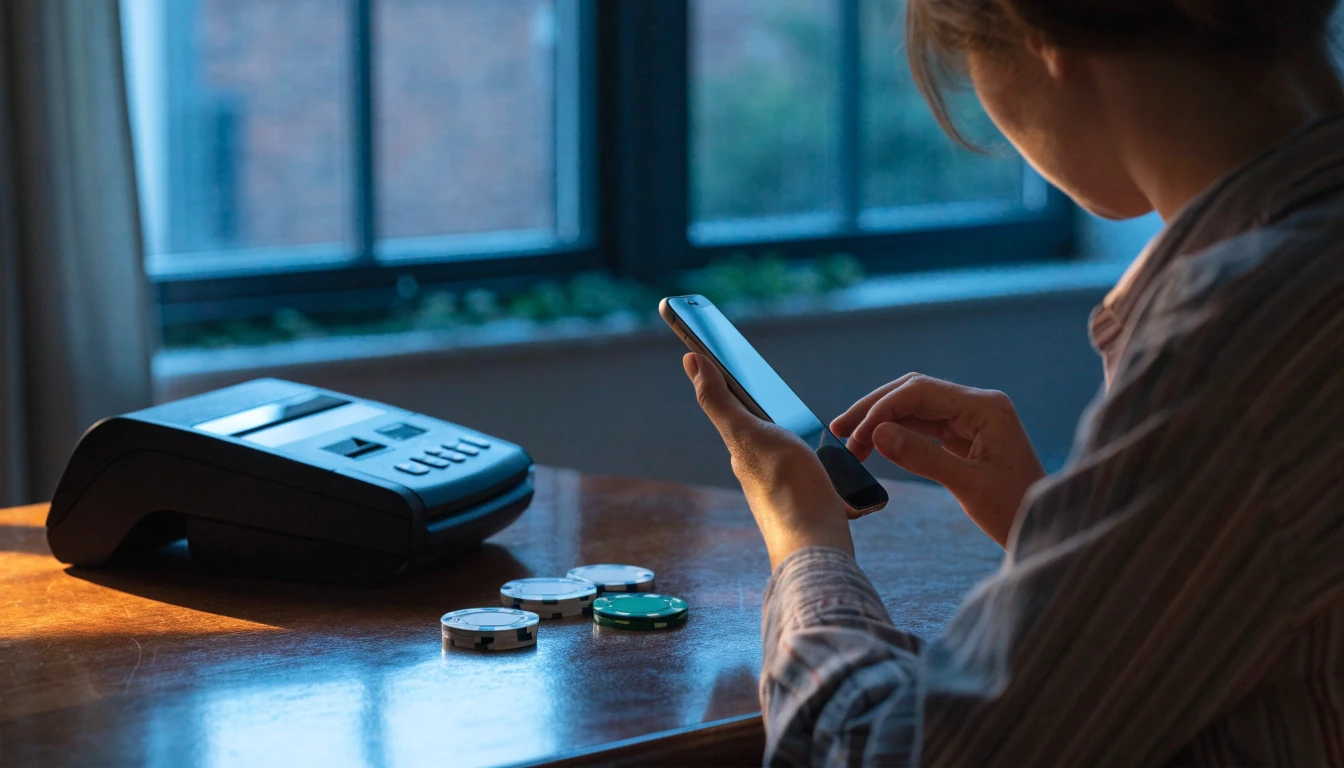
This is where expectations often become untidy. The time shown for a payment service cannot, on its own, describe the whole journey from requesting a withdrawal to receiving it. The casino must first approve the request; verification may be required; then the payment route handles the transfer. Each stage has a different owner. A delay at one stage does not necessarily mean the payment has been lost, but the reason should be clarified through the operator’s account or support process.
For anyone comparing casinos that appear to accept a familiar voucher name, the security question remains separate from the label: whose account is being used, and where can an approved payout lawfully return? A name in a search or a payment logo in a cashier cannot settle those details. The route is only coherent when the customer, the casino account and the payment destination line up.
A small administrative principle, with substantial consequences.
Why can a fast-payout casino still delay my withdrawal?
Because the casino must approve the withdrawal, and first payouts may take longer while verification is completed. An instant deposit does not mean the payout will be instant.
Why must withdrawals return to the deposit method?
Returning funds to the original payment source is a common anti-fraud and anti-money-laundering control. Using another route may require additional verification.
Are fast casino withdrawals guaranteed?
No. Withdrawal speed depends on the casino’s approval process and whether your account is fully verified.
Is Skrill available?
Yes, Skrill is available at some UK-friendly casino sites and remains a common deposit option. It may be excluded from promotions.
What is the current minimum deposit?
The minimum deposit usually starts at £10–£20, depending on the payment method.
Which method has the lowest fees?
There is no universally cheapest method. Compare the casino’s charges, provider or bank fees, currency-conversion spread and any network costs for the payment you plan to make.
Are Visa and Mastercard deposits definitely debit cards?
No, the card brand alone does not confirm the card product. Check that your card is eligible in the cashier; credit-card gambling has been banned in the UK since 14 April 2020.
Published by the Rainbow Riches Casino 3 team.