Casinos That Accept Google Pay in the UK
 Available in GB
Google Pay availability does not confirm bonus eligibility or explain how withdrawals will be handled.

Table of Contents
- Google Pay, bonuses and the small print
- What the cashier can—and cannot—confirm
- Google Pay and the games behind the payment button
- Online casinos and the question of account ownership
- Cards, Google Pay and the UK credit-card boundary
- When Google Pay is not the route: other payment methods
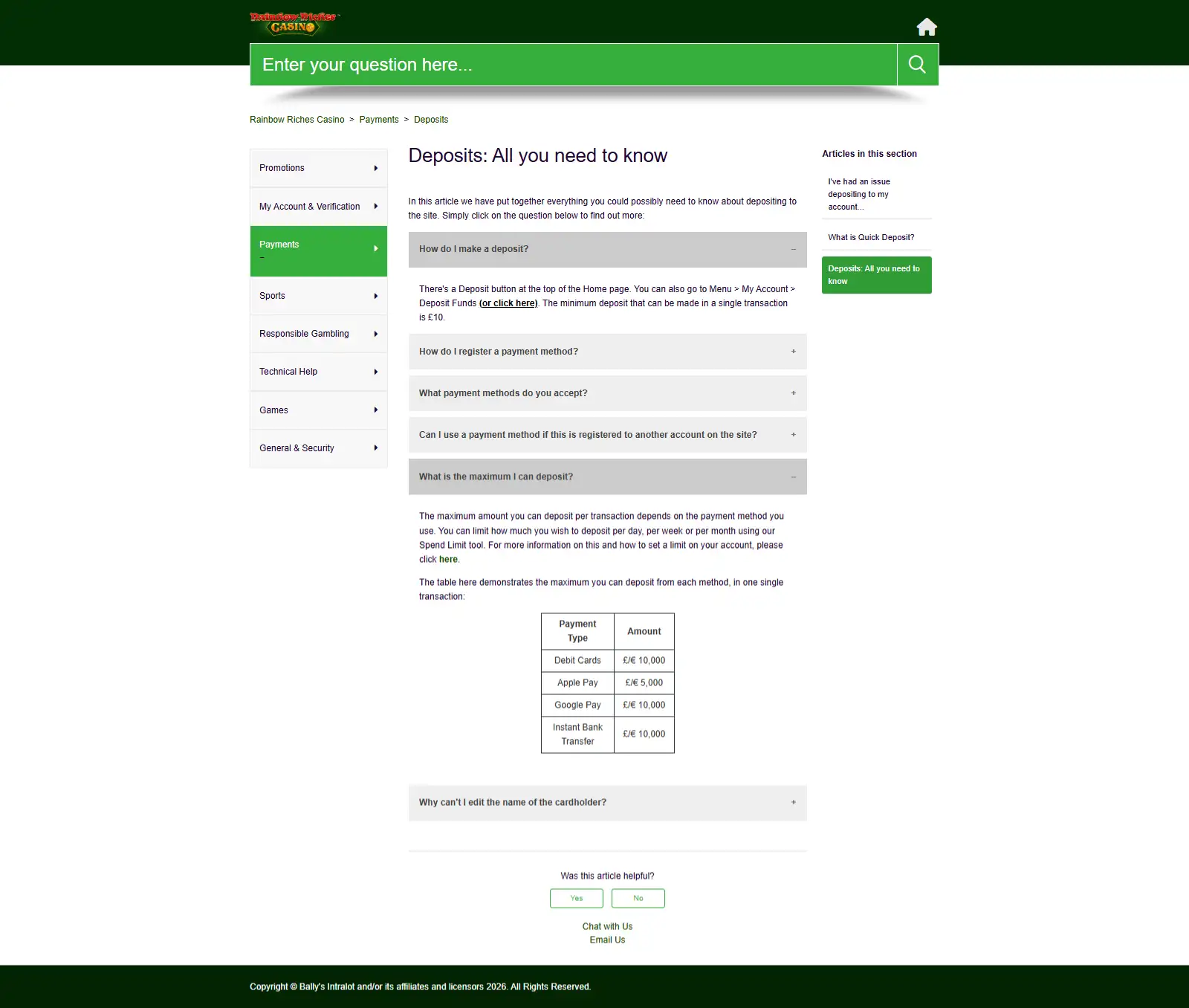
- A deposit option is not a promise of instant payment
- Why Google Pay deposits do not settle the withdrawal question
- Deposits, payouts and the route money takes back
- Google Pay does not establish a casino’s GamStop status
Google Pay, bonuses and the small print
A deposit method and a welcome offer are separate parts of a casino account, even when they meet at the same payment screen. Google Pay may appear as a way to fund an account, but that alone does not establish whether a particular promotion applies to a deposit made through it. The offer’s terms decide that point. A payment button is not a bonus clause.
That distinction matters because promotions are built around conditions, not simply around the act of depositing. Terms may define which payment methods qualify, what counts as an eligible deposit and whether a bonus must be activated before the payment is made. If Google Pay is not addressed clearly, the offer cannot safely be assumed to cover it. A deposit might still reach the account while failing to qualify for the promotion attached to it. The money arrives; the bonus does not.
This is not a peculiarity of Google Pay. A specialist review has noted that PayPal can be excluded from bonus eligibility, despite its popularity for speed and convenience. The same kind of review has reported that Skrill and Neteller are available at some sites but are often excluded from promotions. Those observations are not a rule for every operator or a permanent feature of the market: bonus conditions can change, and one casino’s terms do not settle another’s. They do show why the payment method should be treated as part of the offer’s fine print rather than as a detail that can be settled by its general availability.
When looking for a UK casino that accepts Google Pay, check the payment options shown at registration or cashier, as availability can vary. The details below provide the stated payout speed for each operator.
Payout speed: 1-3 business days Revery Play has a stated payout speed of 1–3 business days. No information is provided here about whether it accepts Google Pay.
Payout speed: 1-3 business days Chanze has a stated payout speed of 1–3 business days. No information is provided here about whether it accepts Google Pay.
Payout speed: 1-3 business days Amunbet has a stated payout speed of 1–3 business days. No information is provided here about whether it accepts Google Pay.
Payout speed: 1-3 business days SpinFormula has a stated payout speed of 1–3 business days. No information is provided here about whether it accepts Google Pay.
Payout speed: 1-3 business days NightLuck has a stated payout speed of 1–3 business days. No information is provided here about whether it accepts Google Pay.
Payout speed: 1-3 business days Zombillion has a stated payout speed of 1–3 business days. No information is provided here about whether it accepts Google Pay.
Payout speed: 1-3 business days BeOnBet has a stated payout speed of 1–3 business days. No information is provided here about whether it accepts Google Pay.
Payout speed: 1-3 business days EvoSpin has a stated payout speed of 1–3 business days. No information is provided here about whether it accepts Google Pay.
Payout speed: 1-3 business days Jetsetspins has a stated payout speed of 1–3 business days. No information is provided here about whether it accepts Google Pay.
Payout speed: 1-3 business days NightWin has a stated payout speed of 1–3 business days. No information is provided here about whether it accepts Google Pay.
Google Pay, then, should not be treated as either a bonus-friendly or bonus-ineligible method by default. The relevant question is narrower: does the specific promotion include deposits made through that route? An offer advertised as a welcome bonus may have its own definition of a qualifying deposit, and that definition can matter more than the promotion’s headline. A deposit made before reading the conditions can leave a customer with an ordinary funded balance but no entitlement to the advertised extra.
There is a broader social history in this small distinction. Bonuses make a casino’s welcome look generous, while payment terms quietly sort one kind of money from another. The headline is public; eligibility is contractual. That is not necessarily evidence of a trick, but it is a reminder that a promotion is an arrangement with conditions, not a gift without them.
The amount needed to open a deposit is another condition that can depend on the chosen method. Specialist casino reviews describe minimum deposits as starting in the £10–£20 range, with the precise entry point varying by payment option. That range is a guide to the kind of threshold encountered, not a universal Google Pay minimum or a promise that every account will display the same figure. The amount shown for the selected route is the one that matters for that transaction.


Deposit ceilings are less tidy still. A casino may set a maximum for a single transaction and separate limits over a day or a month; the applicable figures can vary with both the payment method and the account’s status. A limit attached to Google Pay should therefore not be inferred from a limit shown for a card or another route. Nor does an account’s ability to make one deposit establish how much it can deposit in total over a longer period. Payment rules tend to keep their own books.
Bonus eligibility and deposit limits can intersect without being the same rule. A method may permit a deposit within its transaction ceiling but not qualify for a promotion. Conversely, an offer’s qualifying deposit conditions do not tell anyone what the payment method’s maximum is. Reading one set of terms as though it answers the other is an easy way to mistake a usable payment route for a usable bonus route.
For anyone considering a Google Pay deposit at a UK casino, the sensible order is to establish what the promotion says about eligible payment methods, then note the minimum and maximum that apply to the intended deposit. The offer’s conditions and the payment limits answer different questions. Neither can be replaced by the simple fact that Google Pay appears among the available options.
- Establish what the promotion says about eligible payment methods
- Note the minimum and maximum limits for the intended deposit
- Assume a bonus covers Google Pay just because the payment button is available
- Deposit before reading the specific conditions of the offer
The small print is doing real work.
What the cashier can—and cannot—confirm
A payment-method logo on a casino page is a useful clue, but it is not the same thing as a working route for a particular account. The cashier is where the distinction becomes practical: it shows the methods presented for a transaction and, where the operator provides the information, the relevant conditions attached to them. For anyone checking whether Google Pay is available, that is a more useful test than treating a general payment page as a promise.
Availability can depend on the operator’s current arrangements and on the account’s circumstances. A method mentioned in a review or displayed in promotional material may not appear when the cashier is opened. Conversely, a cashier can reveal an option that a general page describes only briefly. The display answers a narrow question: what is being offered in that account at that point? It does not establish that every customer, device or underlying card will be eligible.
That distinction matters with Google Pay because the name identifies a wallet route, not an unconditional acceptance of every card connected to it. A specialist review may list Visa and Mastercard among a casino’s payment methods, but that is not enough to confirm current UK availability or whether a particular card product can be used. Those details need to be checked in the cashier. The logo is a beginning, not a verdict.

A payment list can flatten several separate questions into one neat row of symbols. Is the method listed? Is it available for the account? Is the card linked to it eligible? Does the account hold funds in the currency the operator will use? Each answer can matter before a transaction is attempted. The cashier is useful precisely because it brings some of these questions close to the point at which they become real, rather than leaving them scattered across a site’s general information.
There is a limit to what the screen can settle. Seeing Google Pay offered does not, by itself, prove that a specific linked card will pass the provider’s checks or that a transaction will be accepted. Nor does the presence of Visa or Mastercard settle the matter: the card network name is broader than the eligibility of an individual product. A method can be visible while a particular card remains unsuitable. The cashier can identify the route on offer; it cannot turn a label into universal compatibility.
Currency deserves equal attention, though it attracts less attention than the payment logo. Specialist reviews of the supplied casino pages say that GBP is supported, but the account currency still needs to be confirmed before the first transaction. A site’s ability to support pounds does not automatically establish that every account is set to pounds. If the account is configured in another currency, conversion may enter the transaction and alter the amount represented on the casino balance.
If an account is configured in a currency other than GBP, conversion may enter the transaction and alter the amount represented on the casino balance.
This is not merely a matter of presentation. A balance shown in a different currency changes how a deposit is understood, even when the payment itself appears straightforward. Confirming the account currency before proceeding helps establish whether the amount will be handled as expected or converted. The cashier may show the currency at the deposit stage; account settings or the operator’s payment information may also clarify it. The important point is to establish the denomination before money moves, rather than infer it from a British-facing page.
The cashier is therefore best treated as a compatibility check, not as a complete account of the operator’s payment policy. It can show the methods currently offered and may expose conditions that a broad list leaves out. It cannot promise that every card linked to Google Pay is eligible, that a payment provider will approve a transaction, or that an account’s currency matches the reader’s assumption. A visible option is useful evidence. It is not certainty.

This distinction also explains why payment information should be read at the level of the actual account rather than as a universal catalogue. General pages describe the operator’s arrangements in broad terms; the cashier presents the available routes in context. Where those two views differ, the practical question is not which logo looks more authoritative, but which information applies to the account before a transaction is begun.
The old habit of reading a payment page as a fixed menu belongs to a simpler retail world, where a card symbol often meant little more than “we take this card”. Digital gambling adds account configuration, payment-provider rules and currency choices to the same small panel. The cashier cannot answer everything, but it can prevent a broad claim from being mistaken for a personal confirmation.
A careful check is modest: establish whether Google Pay is displayed, whether the intended card is eligible, and whether the account currency is GBP before proceeding. Those are separate checks, even when the screen makes them look like one. Logos are tidy. Compatibility is not.

Google Pay and the games behind the payment button
A Google Pay symbol in a casino cashier answers a narrow question: whether that payment route is presented for a deposit. It says nothing, by itself, about the games waiting beyond the cashier. The two parts of a casino website may share a screen, but they are separate systems: one handles money, the other presents the catalogue.
That distinction matters when looking for Google Pay slots. A slot does not become a Google Pay game because a casino accepts Google Pay, just as a debit-card logo does not identify the titles available there. UK casinos commonly accept debit cards, including Visa and Mastercard; that familiar payment choice still cannot tell anyone which games are on a particular site. Payment labels describe a transaction route, not a game’s identity.
The same limit applies to claims about the best casinos for Google Pay games. “Best” might refer to the range of slots, the quality of the mobile experience, or the terms attached to an offer. Google Pay alone settles none of those comparisons. A casino could display the payment method and have a catalogue that changes over time; the button is not a catalogue index, and it does not certify that a particular title is present.
Mobile use adds another layer of confusion. A payment option shown on a phone does not establish that every game is designed for mobile play, nor does it show how a title performs on a given device. The cashier and the games lobby answer different practical questions. One concerns the available payment route; the other concerns what can be played and how it is presented. Treating a mobile payment label as evidence about the mobile game selection is a neat shortcut, but a misleading one.
Nor can a Google Pay deposit label identify a new casino in any meaningful sense. It does not show when a site opened, how its catalogue is assembled, or whether a particular game is available there. A list of casinos that accept Google Pay may be useful for comparing payment access, but it cannot double as a verified list of Google Pay slots. Those are different lists, built from different information.

This is why broad phrases such as “Google Pay casino games” can blur the subject. The payment method belongs to the cashier; the title belongs to the game catalogue. A site may make both visible under one brand, yet visibility is not proof of a connection between them. The method used to fund an account does not mark individual games or sort them into a special category.
For a meaningful comparison, the game itself has to be identified in the casino’s catalogue, while the payment route has to be checked separately in the cashier. Without verified game names, there is no sound basis for naming particular Google Pay slots or ranking them. The button cannot do that work. It only points to the till.
Online casinos and the question of account ownership
A Google Pay button, where a casino makes one available, answers only part of a practical question. It may indicate that a payment route can be selected; it does not make the casino account and the payment account interchangeable. The details attached to each still matter.
The least complicated arrangement is one in which the casino account and the payment route belong to the same customer. Matching ownership information reduces the chance that a transaction is delayed by a basic question about whose money is moving. It is an unglamorous principle, but financial systems have never been especially fond of ambiguity.
That point applies whether a deposit is made through Google Pay or another method. A casino account opened in one person’s name and a payment route belonging to someone else create a mismatch that may need explaining. Even when the people involved know exactly what they intended, the operator has to assess the transaction from the records available to it. Familiarity between friends or relatives does not turn one person’s account into another’s.
To remove avoidable friction, ensure one named customer, one casino account in that customer’s name, and a payment method belonging to the same person.
For anyone considering Google Pay at an online casino, the useful distinction is between availability and ownership. Availability concerns whether the operator presents that route for a particular account. Ownership concerns whether the payment details and casino account relate to the same customer. One does not settle the other. A payment option can be visible while a particular arrangement still raises questions.
This is also why searching for online casinos that accept Google Pay cannot, by itself, establish that every customer will be able to use it in the same way. A general description of a payment method says little about the identity attached to an individual transaction. The important practical habit is consistency: the casino account should contain the customer’s own details, and the payment route should also be theirs.
There is a social logic behind this fussiness. Remote gambling takes place at a distance, where an operator cannot rely on the ordinary signs of a face-to-face exchange. It therefore leans on records: names, account details and the relationship between a customer and a payment route. That can feel bureaucratic, especially when the sums are modest, but the same system is intended to make it harder for funds to pass through accounts with unclear ownership. The formality is not a verdict on the customer. It is how a remote business tries to establish who is on the other side of the screen.

The cleanest route is often the simplest one: one named customer, one casino account in that customer’s name, and a payment method that belongs to the same person. That does not promise that every transaction will proceed without questions; it does remove an avoidable source of friction. Google Pay’s presence in a casino’s payment choices cannot substitute for that consistency, nor can it establish that a casino will pay out to Google Pay. Those are separate matters.
The principle is plain. Names should match.
Cards, Google Pay and the UK credit-card boundary
Google Pay can make a card payment feel like a different kind of transaction: the phone supplies the gesture, while the card sits behind it. For casino deposits, that distinction has a firm legal edge. A digital wallet does not turn credit-card funding into an acceptable gambling payment simply by placing another interface between the card and the operator.
The UK regulator prohibited credit-card gambling on 14 April 2020, and the rule remains in force. Remote gambling operators cannot accept credit-card payments for gambling, including credit-card funding routed through a money service business. The restriction is about the source of the funds, not the elegance of the payment button. A Google Pay option is therefore not a route around the boundary.
Debit cards remain part of the ordinary UK casino payment landscape. Casinos commonly accept debit cards bearing Visa or Mastercard, though that broad pattern does not establish that every card or every digital-wallet transaction will work at every site. The distinction between debit and credit matters more than the familiar logo: the same payment brand can appear on different card products, and only credit-card gambling is prohibited under this rule. The technology does not erase the product underneath it.
Credit-Card Prohibition
UK regulators prohibit credit-card gambling; a digital wallet does not make credit-card funding an acceptable payment method.
That is why “Google Pay accepted” needs a little interpretation. It describes a payment route, not permission for any funding source that might be attached to it. If a wallet can draw on credit-card funds for gambling, a UK-licensed operator cannot accept that payment. A debit-card route is a different matter, but Google Pay itself does not certify the underlying card as eligible. Nor does a casino’s acceptance of debit cards establish that it accepts Google Pay.
The boundary was drawn to prevent gambling from being financed through borrowed card credit. Its persistence is a reminder that payment systems are not neutral plumbing: regulation follows the economic substance of a transaction, even when the interface makes that substance less visible. The screen may simplify the tap. It cannot simplify the rule.
For anyone comparing online casinos accepting Google Pay, the useful distinction is not between a plastic card and a phone, but between a permitted debit-funded payment and a prohibited credit-funded one. A mobile casino may present the same payment choices as its desktop version, but the device does not alter the UK credit-card restriction. When a payment method is described in broad terms, that description should not be read as an invitation to use credit.

The same principle applies to Google Pay casino payments generally: a digital wallet is not a special exemption from the rules governing gambling deposits. Card-linked convenience has a boundary, and in Britain that boundary has been settled for years. Debit, not borrowed credit.
When Google Pay is not the route: other payment methods
A payment method is a piece of infrastructure, not a badge of quality. If Google Pay is absent, the alternatives differ in what they connect: a bank account, a payment wallet, a card or a prepaid balance. That distinction matters more than a long row of logos.
Debit cards remain the familiar fallback. UK casinos commonly accept Visa and Mastercard debit cards, although that broad pattern does not mean every card product works at every site. Cards draw on a bank account directly; digital wallets instead place a service between the customer and the casino. The convenience of either route depends on the account and the operator, not on the brightness of the button.

Skrill is one of the deposit methods a specialist review identifies as common at UK-facing casino sites in 2026. Its role is straightforward: funds are held in an e-wallet and sent onwards, rather than charged directly through a card at the point of deposit. Neteller is another e-wallet name found in the market, but availability is site-specific. A wallet is not a universal spare key.
Names can also outlive products, or change while the habit remains. EcoPayz became Payz in 2022. That is useful context when old payment lists or saved account details still carry the earlier name; the rebrand does not establish that a particular casino accepts the service today.
Bank transfers and open banking offer a different connection, authorising movement from a bank account rather than relying on a card or a stored wallet balance. A specialist review reports that these routes can support instant deposits and fast withdrawals at many sites. “Can” is doing necessary work: the route’s presence and performance are not identical across operators. The old promise of a single payment rail for every purpose has never quite survived contact with the cashier.
Paysafecard belongs in a separate category. It is a prepaid voucher for deposits, not a route for withdrawing casino funds. That makes it a way to pay without entering card details at the casino, but not a complete substitute when the whole journey of money matters. A deposit-only method is precisely that.
There is no single best alternative to Google Pay for every account. A debit card may be the simplest familiar route; an e-wallet may suit someone already using one; bank-linked services connect more directly to a current account; and Paysafecard offers a prepaid deposit route with a clear boundary. The relevant comparison is not which name sounds newest, but whether the payment method fits the intended use and the account’s terms.

The market’s payment menus can look like a catalogue of interchangeable tools. They are not. Some move money through a bank, some hold it briefly elsewhere, and one prepaid option stops at the deposit. That is the difference worth noticing.
A deposit option is not a promise of instant payment
A Google Pay button in a casino cashier answers one narrow question: whether that route is presented for payment. It does not establish that a particular customer can deposit at that moment, or that a transaction will be immediate. The difference matters because a payment label describes an available channel, not the state of an account or the outcome of an attempted payment.
For UK-licensed remote gambling operators, age checks come before deposits. A customer must have their age verified before funds can be deposited into a gambling account. The payment method cannot bypass that gate. Nor does a successful-looking selection in the cashier make an account ready for real-money play if the required check has not been completed.

There is another pause before the first deposit. UKGC rules require operators to ask new customers to set a financial limit before accepting that first payment, and to make account-level limit controls accessible afterwards. This is not a payment-provider feature. It is an operator responsibility, built into the account’s entry to gambling rather than attached to Google Pay in particular. The prompt may interrupt the neat sequence imagined by a button: choose, confirm, play. A small administrative hinge.
Minimum deposits are not one fixed figure across payment routes. A specialist review gives a reported starting range of £10 to £20, while the selected method can affect the amount required. That is a report, not a universal tariff: the cashier’s displayed terms govern the transaction in front of the customer. Deposit ceilings can also differ, whether they apply to one transaction or are set across a day or month; account status may affect them too. A method’s presence therefore says little about how much an individual account can put through it.
Deposit Readiness
- Complete age verification
- Set a required financial limit
- Check the minimum deposit amount for the selected method
- Verify that the account is permitted to make the intended deposit
That distinction is useful when comparing casinos that accept Google Pay in the UK. The practical test is not simply whether the wallet appears among the payment choices, but whether the account has cleared age verification, completed the required limit-setting step and is permitted to make the intended deposit. Those are separate conditions, controlled by different parts of the arrangement.
Speed is separate again. A payment option may be available without proving how quickly a particular deposit will complete. Verification, account controls and transaction handling all sit between the name of a method and usable funds. “Accepted” is a modest word. It is not a stopwatch.
Why Google Pay deposits do not settle the withdrawal question
A Google Pay button in a casino cashier answers a narrow question: whether that route can be used to fund an account. It does not establish that the same casino can send winnings back through Google Pay. Deposit and withdrawal options are separate parts of the payment system, even when they appear under one payment brand.
UK anti-money laundering rules generally mean that a payout must go back to the original payment source. This closed-loop approach helps operators check where funds came from and where they are being returned. If the original route cannot receive a withdrawal, the casino may need to use another permitted method or ask for further verification. That can make a Google Pay deposit compatible with play while leaving Google Pay unavailable for cashing out.
The distinction matters when comparing casinos that accept Google Pay. A deposit option is not evidence of direct withdrawal to Google Pay, nor does it promise that a payout will be instant. The payment method’s own processing speed is only one part of the journey. The casino must first approve the withdrawal, and account checks can affect the time involved.

A specialist review source notes that first withdrawals may take longer while verification is completed. That is a separate delay from the transfer itself: the payment provider cannot move money that the casino has not yet authorised. Once approved, the chosen payout route still has its own processing stages.
Specialist payment reviews describe PayPal, open banking services and debit cards connected to fast payout systems as among the quicker withdrawal routes. That comparison does not mean they are available at every casino, or that they can replace Google Pay in every account. The actual options depend on the operator’s withdrawal arrangements.
The practical test is therefore not simply whether Google Pay appears beside the deposit field. It is whether the casino’s withdrawal terms identify an eligible return route for that deposit, and what verification the operator requires before release. A payment logo describes an entry point, not the whole circuit.
Small distinction. Big consequence.
Deposits, payouts and the route money takes back
A deposit is only the first leg of a payment. A Google Pay button, where it appears, says little about how money will travel back or what the complete transaction may cost. The useful comparison is between the route into the casino account and the route out of it, not the speed of the first screen alone.
A specialist review notes that a card deposit may arrive instantly while a payout takes several business days. That difference reflects two separate processes: funds reaching the operator and a withdrawal being checked, approved and sent onwards. A quick deposit therefore cannot be treated as a timetable for receiving a balance later.

Bank transfers bring their own timing variables. A specialist review points to cut-off times, weekends and currency conversion as factors that can affect delivery. A transfer initiated near a bank’s processing cut-off may not move on the same schedule as one made earlier; a weekend can interrupt the working-day sequence, while conversion adds another step. “Bank transfer” is a route, not a promise of arrival time.
Costs also belong to the whole journey. A specialist review identifies possible charges from the casino, payment provider, card issuer or bank, as well as exchange-rate spreads and network fees. A visible flat charge is not necessarily the full price: a less obvious conversion spread can cost more. The relevant comparison is the amount actually debited against the amount credited, alongside any stated fee.
That accounting matters when an account is funded in one currency and paid out through another, or when different services handle the two legs. Keeping one named account consistent for deposit and withdrawal is often the cleanest route; it reduces avoidable friction over whose funds are moving. It does not erase processing steps or guarantee that the return journey will match the outward one.
For a Google Pay deposit, the same distinction applies. The method’s presence at deposit does not settle the timing or cost of the later transaction. The cashier’s terms and the payment provider’s charges define the practical route, while bank processing and currency conversion can change what arrives and when. Fast in. Slower back.
Google Pay does not establish a casino’s GamStop status
A Google Pay button says something about a payment route, not about a casino’s relationship with GamStop. Its presence cannot show whether a site is connected to the self-exclusion scheme, whether an account is covered by a registration, or whether a casino is “not on GamStop”. Payment branding is not a status check.

That distinction matters because searches for Google Pay casinos outside GamStop can make two separate questions look like one. A casino may describe a deposit method in its cashier, while its regulatory position and self-exclusion arrangements are governed elsewhere. One does not follow from the other. Nor does Google Pay make a site exempt from the rules that apply to remote gambling in Britain.
For real-money gambling serving Great Britain, a current UK Gambling Commission operating licence is required. UKGC-licensed casinos must provide responsible-gambling tools, including self-exclusion. That requirement is not proof, by itself, that a particular operator participates in GamStop; neither does a Google Pay listing prove that it does not. The label answers the wrong question.
A site’s legal status should therefore be assessed through the UKGC public register, rather than inferred from the payment options it displays. The register can establish whether the operator holds a licence. It cannot be replaced by a Google Pay logo, an “unrestricted” claim, or a list of games described as Google Pay slots. Games and payment methods do not determine self-exclusion status.
The same caution applies to claims that a casino is not covered by GamStop or is unaffected by it. Such wording needs independent confirmation about the operator and the relevant scheme; the deposit method is not that confirmation. A payment button is a narrow piece of information. It has no authority to declare a casino outside a self-exclusion system.
Where a person has chosen self-exclusion, looking for casinos said to be outside it risks turning a protective boundary into a payment-method hunt. The useful distinction is plain: Google Pay concerns how money may enter an account; licensing and self-exclusion concern the conditions under which gambling is offered. Different matters.
Why must withdrawals return to the deposit method?
Returning funds to the original payment source is a common anti-fraud and anti-money-laundering control. An alternative route may require additional verification.
What is the fastest withdrawal method for UK casinos?
PayPal, open banking services and debit cards linked to fast payout systems are generally among the quickest options. The casino’s approval process and your verification status also affect how soon funds arrive.
Which method has the lowest fees?
There is no universally cheapest method. Compare the casino’s charges, provider and bank fees, currency conversion spread and any network costs for the payment you plan to make.
Is Skrill available?
Yes, Skrill remains a common deposit option at UK-friendly casino sites, though availability varies by site and it may be excluded from promotions.
Why can a fast payout casino still delay my withdrawal?
The casino’s internal approval can take time, and first withdrawals may be delayed while verification is completed. Your account’s verification status affects payout speed.
Do UK casino withdrawals require verification?
Verification may be needed, particularly for a first withdrawal. Completing it can affect how quickly the casino approves the payout.
Are fast casino withdrawals guaranteed?
No. Payout speed depends on the casino’s approval process and your verification status; bank transfers can also be affected by cut-off times, weekends and currency conversion.
Prepared by the Rainbow Riches Casino 3 editorial staff.