Casinos That Accept E-Checks in the UK: How to Check
 Available in GB
E-check availability depends on the casino cashier and account route, so general payment-page claims may not confirm UK access.

Table of Contents
- Checking Whether an Online Casino Supports E-checks
- What Acceptance Means at a UK Casino
- Deposits: The Methods UK Casinos Commonly Offer
- Deposit Speed, Limits and the Meaning of “Instant”
- An E-check Casino Is Only Useful if the Account Route Fits
- Comparing Casino Payment Costs Without a “Best” Claim
- Payment Availability on Casino Apps
- Confirming Payment Details Before a Transaction
- Payment Fees and Currency Conversion
- Withdrawals and the Return-to-Source Rule
Checking Whether an Online Casino Supports E-checks
A casino’s payment page can look like an answer while remaining only a starting point. For anyone looking for an e-check online casino in the UK, the practical test is whether the option appears in that casino’s own cashier at the point when a deposit method is being selected. A general mention elsewhere on the site is not enough to establish that e-checks can currently be used by a UK customer.
That distinction matters because payment information can be broad, old or written for more than one market. A page may describe methods available across several countries, while the cashier presents only those enabled for a particular service. The payment menu is where a claim becomes actionable—or fails to.
Start with the cashier
The check is straightforward: open the casino’s deposit area and look for an option explicitly labelled “e-check” or “eCheck”. A nearby reference to bank payments, electronic payments or cheques should not be treated as confirmation unless the cashier identifies the method itself. Similar-sounding labels can describe different routes.
When looking for a UK casino that accepts echeck, check the payment methods available to you before depositing. The details below give the stated payout speed for each listed operator.
Payout speed: 1-3 business days Revery Play has a stated payout speed of 1–3 business days.
Payout speed: 1-3 business days Chanze has a stated payout speed of 1–3 business days.
Payout speed: 1-3 business days Amunbet has a stated payout speed of 1–3 business days.
Payout speed: 1-3 business days SpinFormula has a stated payout speed of 1–3 business days.
Payout speed: 1-3 business days NightLuck has a stated payout speed of 1–3 business days.
Payout speed: 1-3 business days Zombillion has a stated payout speed of 1–3 business days.
Payout speed: 1-3 business days BeOnBet has a stated payout speed of 1–3 business days.
Payout speed: 1-3 business days EvoSpin has a stated payout speed of 1–3 business days.
Payout speed: 1-3 business days Jetsetspins has a stated payout speed of 1–3 business days.
Payout speed: 1-3 business days NightWin has a stated payout speed of 1–3 business days.
If no e-check option is visible, the site has not confirmed that the method is available through that cashier. It is better to leave the question unresolved than to infer acceptance from a generic payment logo, a description on another page or a third-party list. Payment menus are not decorative, though some pages seem to think otherwise.
A search for online casinos that take e-checks in the UK can therefore produce leads, not a dependable answer. The deciding evidence is the option shown by the casino when its deposit methods are displayed. If the cashier does not name e-checks, there is no solid basis for treating that casino as an e-check site.
Treat payment pages as clues, not proof
A specialist review may list Visa and Mastercard as payment methods for a casino. That can help identify what to check, but it does not settle whether either card product is available to a UK customer at the time of a transaction. Current UK availability and card-product eligibility need to be checked in the cashier. The same caution applies to e-check claims: a list is useful only if it matches the live payment choices.
This is especially important when a page uses a wide label such as “bank payment” without specifying the route. An e-check should not be assumed to sit inside that category. The cashier needs to make the method clear enough to identify; otherwise, the claim remains ambiguous.
The same rule applies to pages carrying lists of “top” or “best” e-check casinos. A ranking cannot turn an unconfirmed payment method into a confirmed one. If the underlying listing does not establish that e-check appears in the UK-facing cashier, its position on a page adds no useful certainty. A neat list can still be an untidy answer.


Check the wording, not just the symbol
Payment icons are easy to scan and easy to misread. A logo may refer to a card brand, a bank route or another payment service, rather than an e-check. The label beside the option matters. A method should be counted as available only when the cashier identifies it as e-check and presents it as a selectable payment choice.
If the wording is unclear, the casino’s own support channel can be asked whether e-check is currently available in its UK cashier. The useful point is a direct confirmation of the named method, not a general assurance that the site accepts electronic payments. A broad answer leaves the original question open.
There is no need to substitute a different method when e-check is absent. A casino can have other payment choices without accepting this one, and the presence of familiar alternatives does not prove anything about e-check availability. The check is specific: is e-check named in the cashier, or clearly confirmed by the casino as available there?
Keep the check current
Payment options can change, so an old page or saved list may no longer describe what the cashier offers. A check made at the time of considering a deposit is more useful than a claim copied from an earlier review. That does not make the cashier a promise that every transaction will proceed; it simply establishes whether the method is being presented as an available choice at that moment.
- Check for the explicit “e-check” label in the cashier
- Verify payment options while signed into your account
- Ask support for direct confirmation of the named method
- Rely on general mentions of e-checks on the website
- Infer acceptance from generic payment logos
- Trust third-party lists over the live cashier
For UK-facing sites, the same care should be taken with any payment claim, not only e-checks. A specialist review might be a useful pointer, but the operator’s current cashier is the place to verify the method. Until e-check appears there, calling a site an e-check casino goes beyond what has been confirmed.
The quietest conclusion is also the soundest: check the cashier, look for the explicit label, and do not turn a general payment statement into a specific claim. No confirmed option, no confirmed e-check.
What Acceptance Means at a UK Casino
A casino can say that it accepts a payment method without confirming that every UK customer can use it. The statement may describe the operator’s general payment arrangements, while the options available to a particular account are narrower. For e-checks, a broad claim of acceptance is not the same as seeing the method offered in the account’s cashier.
That distinction matters because payment information is often written to describe a site as a whole. It may cover more than one country, account type or route into the service. A method mentioned on a general page can therefore be relevant background, but it does not settle whether it is available to a UK-based customer at the point of transaction. Nor does a familiar payment logo establish that every product associated with that brand is eligible.
The same caution applies to cards. A specialist casino-payment review may name Visa or Mastercard, but that does not establish that every card bearing either mark can be used by every UK customer. Current availability and eligibility for a particular card product need to be confirmed in the cashier. The logo is a family name, not a promise about every member of the family.


An e-check claim should be read with the same care. A page may use broad wording such as “accepted payments” or display a method in a general list. That tells less than an account-specific option presented when the customer is signed in and preparing a transaction. The difference is not merely technical. It separates a description of what a service may support from a confirmation that the route is actually open for that account.
For a UK-facing casino, there is also a distinction between serving the market and making every listed payment route available in it. Remote gambling licensees selling into the British market must hold a Gambling Commission licence, but the licence does not turn a general payment statement into an individual eligibility check. Regulation establishes the operator’s standing to serve the market; it does not determine which payment buttons appear for each account.
This is why a phrase such as “UK casinos that accept e-checks” can conceal more than it reveals. It may refer to a casino that names e-checks somewhere in its payment information, one whose cashier offers the method to some customers, or one where the route is presently available to the specific account in question. Those are different levels of acceptance. Only the last one is transaction-ready.
The cashier is the practical point at which a general claim becomes specific. It shows the methods the account can select at that time, rather than the full range the operator may describe elsewhere. If e-check is absent there, a mention on a promotional or help page does not establish that it can be used for the account. If it is displayed, that is a more direct indication of availability, though the transaction details still need to match the account.
Remote gambling licensees selling into the British market must hold a Gambling Commission licence, though this does not guarantee that every listed payment route is available for every account.
Currency is another part of what a general acceptance claim can leave unresolved. A specialist review may state that GBP is supported, but the account’s own currency should be checked before the first transaction. If the account is set to another currency, a payment can involve conversion even where the payment brand itself is recognised. The important point here is not to infer account settings from a broad description of the casino.
The wording on a site can also blur the difference between a method being recognised and being usable. “Supported” may refer to a technical arrangement, a service available in another market, or a route subject to account-specific conditions. A payment page may be accurate in its own terms and still fail to answer the narrow question of whether an e-check is available to this UK account now. Such language is not necessarily false; it is simply less precise than the cashier.

There is a useful hierarchy of evidence. A general payment page describes the operator’s stated range. A customer-support answer may clarify the intended scope of that statement. The account cashier shows the options presented for a particular account. The closer the evidence is to the account and intended transaction, the less room remains for a broad claim to be mistaken for personal availability.
“Accepted” is therefore not a single status. It can mean named in general information, offered in a particular market, or selectable for an individual account. For e-checks, the first meaning should not be mistaken for the third. A method that exists in the operator’s vocabulary but not in the account’s cashier is not an available route for that transaction. The distinction is modest. It matters.
Deposits: The Methods UK Casinos Commonly Offer
The payment picture at UK casinos is more familiar than the phrase “e-check casino” suggests. Debit cards are a common deposit route, with Visa and Mastercard among the cards accepted. Open banking and bank transfers are also available at many sites. These are distinct routes in the cashier, not evidence that a casino accepts e-checks under another name.
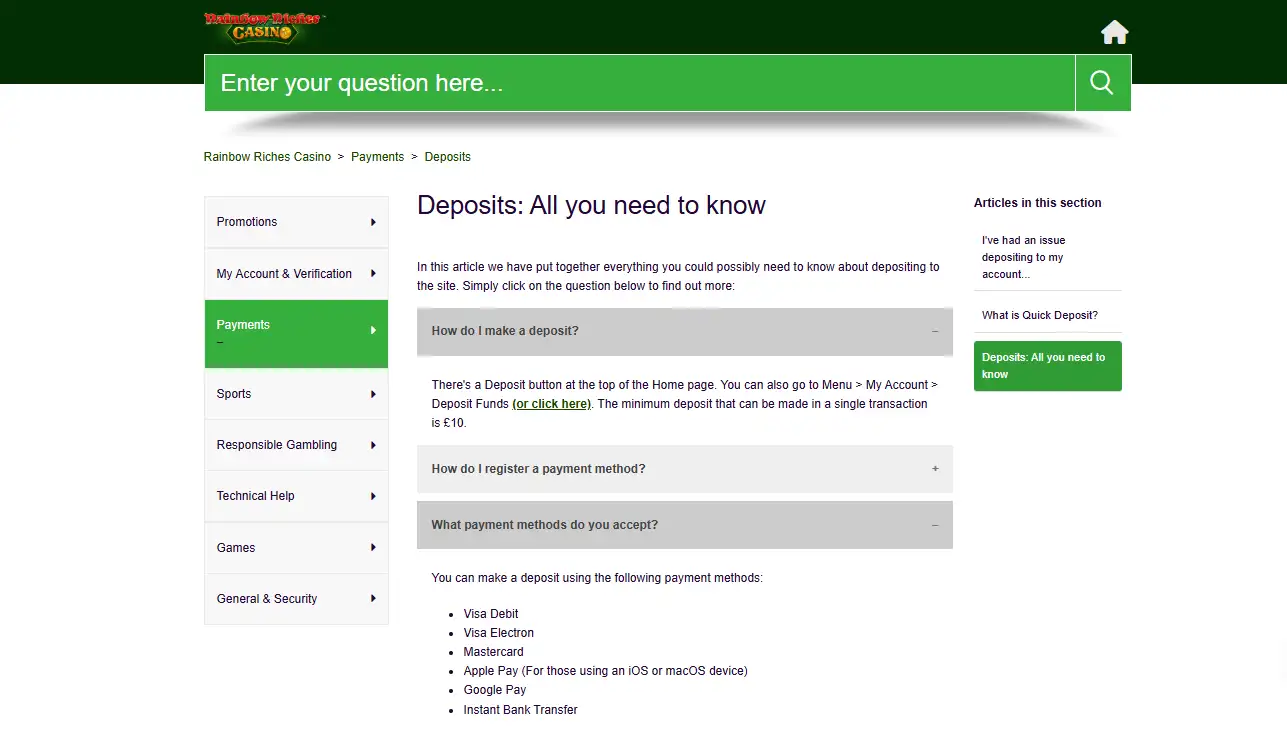
That distinction matters because payment labels can sound interchangeable when they are not. A bank transfer moves money through a bank transfer process; open banking provides a way to connect a payment to a bank account. Neither should be treated as an e-check simply because a bank account is involved. The name displayed by the casino and the options available at the point of deposit are what establish the route being offered.
For anyone looking for an e-check deposit casino in the UK, the broader landscape is therefore a useful point of comparison, not a substitute answer. A casino may offer familiar card and bank-based methods while having no e-check option. Conversely, a payment description that sounds unfamiliar should not be assumed to mean a cheque-based service. The cashier’s wording needs to be taken literally.
Debit cards remain a familiar route
Debit cards have a central place in the UK casino payment landscape. Visa and Mastercard are commonly accepted, and the route is distinct from paying with a credit card. That distinction is not merely a matter of terminology: remote gambling operators cannot accept credit-card payments for gambling, including credit-card funding routed through a money service business. UK-licensed casinos cannot accept credit cards for gambling.
Credit Card Ban
UK-licensed casinos are prohibited from accepting credit-card payments for gambling, including those routed through a money service business.
The ban has made the debit-card label especially important. A logo alone does not establish that every product carrying that brand is eligible: the relevant card must be a debit card, and the casino’s cashier remains the practical place to confirm what can be used. A payment method listed in general information is not a promise that every card or account will work.
There is something distinctly British in the way this ordinary card route sits alongside more elaborate payment language. Digital finance often arrives wrapped in technical names; the checkout still has to identify a straightforward source of funds. The familiar option has not disappeared.
Bank-linked routes are not one category
Open banking and bank transfers offer another way to fund a casino account. A specialist review reports that these routes can support instant deposits and fast withdrawals at many sites. That is a description of what may be available, not a guarantee for every casino, customer or transaction. The payment options still depend on the particular site and cashier.
The two terms should also remain separate. A bank transfer and an open banking payment may both involve a bank account, but that does not make them the same service. Nor does either label establish that a casino accepts e-checks. For someone comparing casino sites that accept e-check deposits in the UK, this is the essential boundary: a bank-linked alternative may be worth considering, but it cannot be counted as an e-check unless the casino identifies it that way.


The cashier is a rather plain piece of interface, but it carries the useful detail. General payment pages can describe broad capabilities; the deposit screen shows the choices presented for the account at that moment. A method’s presence there is more meaningful than resemblance between its name and a term found elsewhere.
Comparing the routes without inventing a match
Debit cards, open banking and bank transfers form a practical reference point for assessing the wider payment menu. They show that UK casinos can offer more than one way to deposit, while also making clear that “bank-based” is not a sufficiently precise category. The names matter. So does the difference between a route being familiar in the market and a particular casino listing it.
This avoids a common category error: treating every electronic payment connected to a bank as an e-check. The word “electronic” can make separate systems sound like variants of one method. In a cashier, however, the distinction affects what the customer is being asked to use. If the listed choices are debit card, open banking and bank transfer, those are the choices shown; they do not establish an additional e-check option.
The reverse is also true. A casino’s use of an unfamiliar label should not be translated into “e-check” without confirmation from the operator. Payment names are not decorative synonyms. They describe the route the transaction is expected to take.
For the UK market, then, the dependable comparison is modest: debit cards, including Visa and Mastercard, are commonly accepted; open banking and bank transfers can also be available at many sites. The exact menu belongs to each casino, and a bank-linked method should not be promoted into an e-check by guesswork. No grand taxonomy is needed. Just the names in the cashier.
Commonly accepted routes including Visa and Mastercard, distinct from credit cards.
A bank-linked route that can support instant deposits and fast withdrawals.
A standard bank-linked method that is distinct from open banking or e-checks.
Deposit Speed, Limits and the Meaning of “Instant”
“Instant” describes a result, not a complete account of a deposit. A payment may appear in a casino balance promptly while still being subject to a minimum amount, a transaction cap or checks on the account. The word tends to make a process sound simpler than it is. In a regulated market, the cashier’s conditions matter as much as the speed claim.
Specialist casino reviews report that open banking and bank transfers can deliver instant deposits at many sites. That is a description of what may be available, not a promise that every transfer will be immediate in every account. A payment can depend on the route selected and the casino’s own handling of it. A label such as “instant” is therefore best read as a possible deposit outcome, not a guarantee covering every attempt.
This distinction matters when assessing claims about instant e-check deposits in the UK. A casino’s description of a payment as quick does not establish how long a particular transaction will take, or whether the method will be offered to a particular account. Nor does it establish that an e-check deposit has the same timing as open banking or a bank transfer. The cashier’s displayed terms are the practical boundary of any speed claim.
There is also a difference between the payment moving and the balance being available for play. “Instant” may refer to the point at which funds reach the casino, but a transaction can still be declined or held for review. The useful question is not simply whether a method is called instant; it is what happens when the amount, account status or payment details do not meet the stated conditions. Those conditions are less dramatic than a speed badge, and more consequential.


Minimums and maximums
A specialist review may describe minimum casino deposits as starting within a £10–£20 range, with the selected payment method affecting the threshold. That range is not a universal price of entry. The minimum shown for a specific transaction is the relevant figure, and it may not match a general payment page or an older description elsewhere.
Maximums are less likely to fit into one neat figure. A casino may set a ceiling for a single transaction and separate limits over a day or a month. The available amount can also depend on account status, so a limit shown to one customer need not apply to another. Specialist reviews note these differences, but the actual cashier and account controls determine what can be deposited in a given case.
Limits are not merely a technical inconvenience. They shape how money enters a gambling account and put a boundary around what the payment system will accept. In Britain, remote gambling licensees must prompt new customers to set a financial limit before their first deposit, and the account must provide accessible controls for managing limits. That requirement places a deliberate pause before the first payment: the deposit is not meant to be the first moment at which the question of spending is raised.
The distinction between a payment cap and a personal financial limit is important. A method’s maximum concerns what a transaction route or casino will process. An account limit concerns the customer’s own control over gambling spend. One does not replace the other. A deposit can be below the method’s ceiling yet still be blocked by an account control; conversely, a permissive account setting does not make a payment route accept an amount beyond its cap.
Attention The term “instant” refers to a possible deposit outcome and does not guarantee the speed of every transaction or the absence of account-specific limits.
For e-check deposits, the same caution applies without assuming a particular technical design or timing. A phrase such as “fast” or “instant” cannot settle the minimum, maximum or account conditions attached to an individual payment. Those details need to be visible in the transaction flow before funds are committed. If the cashier shows a limit or a restriction, that is more useful than a general speed claim.
The sensible reading of “instant” is narrow: a deposit may be credited without a noticeable wait under the conditions stated by the casino. It says nothing on its own about the amount accepted or the customer’s account controls. Speed is only one part of the transaction. The fine print has the last word.
An E-check Casino Is Only Useful if the Account Route Fits
Finding a casino that mentions e-checks settles only one part of the practical question. The payment route also has to fit the account holder. When the casino account is registered in one person’s name but the payment account belongs to someone else, the mismatch can complicate a transaction before the payment method itself becomes relevant.
The straightforward arrangement is one set of matching ownership details: the casino account and the payment account both belong to the same customer. That does not promise that a transaction will proceed without checks, but it removes a basic source of avoidable friction. Names that differ, or payment details associated with another person, may lead to questions about who is funding the gambling account.
This is not peculiar to e-checks. It is a matter of keeping the identity attached to the gambling account aligned with the identity attached to the payment route. A method can appear suitable in principle and still be an awkward choice if its account details do not belong to the casino customer.


The cleanest arrangement is often a single named account used consistently for both deposits and withdrawals. That continuity makes the route easier to understand: funds enter through an account belonging to the customer, and any payment returned through that route is associated with the same person. Switching between accounts or relying on another person’s payment details can make that picture less clear.
Consistency, not cleverness. A payment route is only useful when its ownership fits the account using it.
Comparing Casino Payment Costs Without a “Best” Claim
A “best” payment method sounds like a tidy verdict. The bill is less tidy. A casino may charge for a transaction, while the payment provider, bank or card issuer may apply separate fees. If funds cross currencies, an exchange-rate spread can add a cost without appearing as a separate line. A network fee may also form part of the total.
A specialist payment review describes these as costs that can arise at different points in the transaction. That distinction matters: a cashier showing no casino fee does not establish that the entire route is free. The provider or bank may have its own terms, and the exchange rate used can affect the amount finally charged.
The visible fee is not always the largest one. A conversion spread can cost more than a stated flat charge, depending on the currencies and rates involved. The comparison therefore needs to account for the amount sent and the amount deducted, not just the fee label displayed beside a payment option.
Hidden Payment Costs
A transaction’s total cost may include casino fees, provider charges, bank fees, network costs, and exchange-rate spreads if currencies differ.
This is why no route can be named as the universally cheapest, whether the comparison is between e-check casinos in the UK or other payment methods. The answer changes with the casino’s charges, the provider’s pricing, any issuer or bank fee, currency conversion and network costs. A method that looks inexpensive in one account or transaction may not produce the same total elsewhere.
A useful comparison keeps the same transaction amount and currency in view, then checks each possible charge across the route. Casino terms can clarify whether the operator adds a fee; provider and bank terms may disclose charges outside the cashier. Where the displayed balance and the account’s currency differ, the conversion rate deserves particular attention.
The word “best” can conceal the question that matters: best by which cost, for which transaction, and under whose pricing? Without a consistent basis, a ranking turns unlike charges into a false contest. The total is what counts.
Payment Availability on Casino Apps
A casino’s payment page can describe methods the business supports without showing what a particular customer can use in its app. The cashier is where that distinction becomes practical: payment options may be displayed for the account and transaction in progress, rather than offered as a universal menu.
That matters for anyone looking for an e-check option in a UK casino app. A general reference to e-checks, if one appears in payment information, does not establish that the method is currently available in the app, for a UK account, or at the point of deposit. Nor does the app’s presence on a phone make a payment route available by default. Availability has to be checked in the relevant cashier.
The interface can also make a method seem more widely supported than it is. A payment logo on a general information page may represent a method accepted somewhere in the operator’s services, while the app’s cashier may present a different set of choices. A specialist review that lists Visa or Mastercard is useful as a pointer, not as confirmation that a particular UK customer can use a particular card product. The cashier remains the test.
A careful check is straightforward: open the app’s cashier while signed into the relevant account, inspect the payment methods shown there, and confirm that the intended route is offered for the transaction. If a method is absent, a logo elsewhere is not a substitute. If the app links to a separate payment page, the method should still be confirmed in the transaction flow before proceeding.
Apps are interfaces, not promises. A casino may support a payment method in general, while a particular account or cashier does not present it. E-check availability should therefore not be inferred from a casino’s name, a generic payment list, or the fact that its app exists. The live cashier is the relevant evidence, and its options can change. A small distinction, with real consequences.
Confirming Payment Details Before a Transaction
A payment method mentioned in a casino’s general information is not enough to establish that it is available for a particular account. Before depositing, the cashier is the practical reference point: it shows which methods can be selected at that stage of the transaction. This matters when looking for e-check casinos in the UK, since a broad description of payment options does not confirm that an e-check is currently offered.
Verify Deposit Details
- Confirm e-check is selectable in the live cashier
- Check that the account currency matches the intended payment
- Ensure the payment account name matches the casino account name
- Verify the current minimum and maximum deposit limits
Card names need the same care. A specialist review may list Visa or Mastercard among a casino’s methods, but that does not confirm current UK availability or that every card product is eligible. UK-licensed casinos cannot accept credit-card payments for gambling. The cashier’s available options, together with the casino’s terms, should make the permitted route clear before payment details are entered.
Currency is a separate check. A specialist review may state that a site supports GBP, but the account’s selected currency still needs confirming before its first transaction. If the account is set to another currency, a deposit may involve conversion rather than being processed as a straightforward sterling payment. The displayed currency and any conversion terms are more useful than a general statement about support.
These checks concern the transaction as it is actually presented, not a casino’s broad payment claims. The method must appear as selectable, and the account currency should be clear before proceeding. A name in a payment list is not a completed check.
Payment Fees and Currency Conversion
The cost of a casino payment can be distributed across several places rather than displayed as one charge. A specialist payment review identifies possible fees from the casino, payment provider, card issuer or bank, as well as exchange-rate spreads and network charges. Which of these applies depends on the route and the transaction; a method’s name alone does not reveal its full cost.
Currency conversion deserves particular attention because its price may be folded into the exchange rate. A provider can show no separate conversion fee while applying a rate less favourable than the reference rate. The difference is the spread: an indirect charge, but a charge all the same. A specialist payment review notes that this spread can exceed a visible flat fee. That is not a rule for every transaction; it is a reason to compare the rate as well as the fee label.
For an e-check payment, the same caution applies at the point where currency and charges are presented. The method’s availability does not establish that the casino, provider or bank will impose no cost. Before confirming a transaction, the useful comparison is between the amount being debited and the amount credited, alongside any stated fees and the exchange rate used. If the account and payment are both in pounds, conversion may not arise; if currencies differ, the spread can change the effective cost.
A displayed “no fee” message answers only a narrow question. It may describe the casino’s charge, not the provider’s, issuer’s or network’s. The total is assembled elsewhere.
Withdrawals and the Return-to-Source Rule
An e-check deposit does not, by itself, establish that an e-check can also receive a casino withdrawal. The route for a payout depends on the casino’s payment arrangements and the account’s transaction history. For UK customers, a central constraint is the return-to-source principle: anti-money-laundering controls commonly require winnings to go back through the original payment source.

This is part of a broader closed-loop approach to payments. It helps connect the money paid in with the money paid out, rather than treating a casino balance as a free-standing transfer account. If the original route cannot accept a payout, an alternative may be considered, but it can prompt additional checks. A different account name or payment source can create avoidable friction; consistency matters.
The withdrawal clock also has more than one moving part. A specialist payment review notes that processing can include the casino’s own approval, and that an initial withdrawal may take longer while KYC is completed. That means a transfer time quoted by a payment provider is not necessarily the time a customer waits from requesting a payout to seeing funds arrive. Internal review comes first.
For anyone considering an e-check casino withdrawal in the UK, the practical question is therefore not simply whether the deposit method appears in a payment list. The relevant details are whether the cashier permits withdrawals by that route, whether the account has completed verification, and whether the casino will return funds to the same source used to deposit. Deposit and payout are related, but they are not identical services.
A payout can be orderly and still take time.
Why must withdrawals return to the deposit method?
Returning funds to the original payment source is a common anti-fraud and anti-money-laundering control. Using another route may require additional verification.
What is the fastest withdrawal method for UK casinos?
PayPal, open banking services and debit cards linked to fast payout systems are generally among the quickest. Actual timing also depends on the casino’s approval process and whether your account is verified.
Do UK casino withdrawals require verification?
Verification may be needed, particularly for a first withdrawal. Payouts can take longer while the casino completes those checks.
Which method has the lowest fees?
There is no single lowest-fee method for every transaction. Compare casino and provider charges, currency-conversion costs and any network fees for the payment route and amount you plan to use.
Are fast casino withdrawals guaranteed?
No. Withdrawal speed depends on the casino’s internal approval process and whether your account is fully verified.
Why can a fast payout casino still delay my withdrawal?
The casino must approve the withdrawal, and verification can add time, especially for a first payout. Bank transfers may also be affected by cut-off times, weekends and currency conversion.
Can I deposit in GBP?
Yes, GBP is supported, but check your account currency before your first transaction to avoid conversion.
Written by the editors at Rainbow Riches Casino 3.