UK Casinos That Accept E-Wallets: Payment Guide
 Available in GB
E-wallet availability depends on the casino cashier, and deposit options may not match the routes available for withdrawals.

Table of Contents
- How E-Wallet Casinos Fit into the UK Payment Landscape
- Comparing E-Wallet Casino Terms Beyond the Headline
- From E-Wallet Deposit to Casino Withdrawal
- Wallet Names and Availability in 2026
- Deposit Thresholds, Limits and the First-Deposit Prompt
- Which Payment Routes Work for Deposits and Payouts?
- E-Wallets Do Not All Work the Same Way
- The Cost of Paying by E-Wallet in Pounds
- Checking a Casino’s E-Wallet Options at the Cashier
- Payment Ownership, Fraud Checks and Withdrawal Delays
How E-Wallet Casinos Fit into the UK Payment Landscape
An e-wallet does not make a casino a different kind of establishment. It is one possible route for moving money between a customer’s payment account and a gambling account, sitting alongside more familiar methods such as debit cards. The distinction matters because the word “casino” can make payment choice sound like a feature of the games or the operator’s identity. In practice, it belongs to the less theatrical business of the cashier.
Debit cards remain part of that picture. UK casinos commonly accept debit cards bearing the Visa or Mastercard names, giving them a familiar place beside digital wallets. That does not make every card or every product interchangeable, nor does a logo on a general payment page settle what can be used at a particular cashier. The broader point is simpler: e-wallets are one part of a mixed payment landscape, not a replacement for cards.
The appeal of a wallet is partly that it gives a payment a recognisable home outside the casino account. Rather than treating each deposit as an isolated card transaction, the customer uses an account with a payment provider as the intermediary. That arrangement may feel like a separate layer between everyday banking and gambling, though it should not be mistaken for a guarantee about privacy, speed or eligibility. Those are questions for the specific service and operator, not consequences that follow automatically from the label “e-wallet”.
When choosing a UK casino that accepts ewallets, check the payment details that matter to you before signing up. This list provides a concise reference point on the payout speed information available for each operator.
Payout speed: 1-3 business days Revery Play lists a payout speed of 1–3 business days.
Payout speed: 1-3 business days Chanze lists a payout speed of 1–3 business days.
Payout speed: 1-3 business days Amunbet lists a payout speed of 1–3 business days.
Payout speed: 1-3 business days SpinFormula lists a payout speed of 1–3 business days.
Payout speed: 1-3 business days NightLuck lists a payout speed of 1–3 business days.
Payout speed: 1-3 business days Zombillion lists a payout speed of 1–3 business days.
Payout speed: 1-3 business days BeOnBet lists a payout speed of 1–3 business days.
Payout speed: 1-3 business days EvoSpin lists a payout speed of 1–3 business days.
Payout speed: 1-3 business days Jetsetspins lists a payout speed of 1–3 business days.
Payout speed: 1-3 business days NightWin lists a payout speed of 1–3 business days.
That label is broad. It gathers together services whose names and histories differ, and it can encourage the mistaken impression that they all behave alike. Some are prominent in casino payment menus; others may appear only in particular settings. A category is useful for finding the general subject, but it is a poor substitute for checking what an individual casino actually offers. The cashier, not the category name, is where an abstract option becomes a usable one.
Skrill illustrates how a wallet can become familiar in the casino context without becoming universal. A specialist casino review describes Skrill as one of the common deposit methods at UK-facing casino sites in 2026. That is a dated observation from a particular kind of source, not a permanent rule for every operator. Its significance is less that it settles a ranking than that it shows how payment habits can acquire their own established vocabulary: a wallet may be known to players because it recurs in casino discussions, even while availability remains a matter of the individual site.
There is a social history tucked into this ordinary-looking choice. Payment systems are often presented as neutral plumbing, but each one asks people to organise money in a particular way: through a bank card, a named account or an intermediary service. The casino cashier turns those habits into menu options. Its neat rows of logos make unlike systems look comparable, although a shared place on a screen says little about how each method works or what conditions attach to it.
For that reason, “casinos that accept e-wallets” is best understood as a description of compatibility, not a promise that every wallet works everywhere. An e-wallet online casino in the UK is not a special regulatory class or a guarantee of a particular payment experience. It is a casino at which at least one wallet may be available as a payment route. The plural can make the market sound more uniform than it is. It is not.

The same distinction applies to claims about the “best” e-wallet casinos. A label of that kind can blur together several separate judgements: whether a wallet is listed, whether it suits a person’s ordinary finances, and whether its terms fit the intended use. Those are not one question. A prominent payment option may be convenient for one account-holder and irrelevant to another. Nor does a familiar wallet name alone tell anything decisive about the quality of the casino itself.
The useful starting point, then, is modest. Debit cards are commonly accepted in the UK, including Visa and Mastercard, while e-wallets form another visible strand of the payment mix. Skrill is described as common in specialist coverage of UK-facing casino sites in 2026, but that observation should not be stretched into a claim of universal availability. The menu is a map, not the territory. The cashier supplies the detail.
Comparing E-Wallet Casino Terms Beyond the Headline
An e-wallet can make a casino deposit feel like a small administrative event: select a method, confirm the payment, return to the game. Promotions make the comparison less tidy. A wallet may be accepted for ordinary play yet treated differently when a bonus is involved. The payment button answers one question; the promotion’s terms answer another.
That distinction matters because an offer is not simply attached to an account. Its rules can define which deposits qualify, which payment methods are excluded and what happens if a player claims the offer using an ineligible route. The details belong to the casino’s own promotion terms, not to the general reputation of a wallet. A method’s familiarity or ease of use cannot settle eligibility.

A specialist casino review has described PayPal as popular for speed and convenience while noting that it may be excluded from bonus eligibility. That is a report about a possible condition, not a fixed rule across UK casino sites. The practical implication is modest but important: a PayPal deposit and a bonus-qualifying deposit are not necessarily the same thing. The promotion terms need to be read alongside the payment information.
The same caution applies to Skrill and Neteller. A specialist review reports that these wallets are available at some sites and are often excluded from promotions. Availability does not itself mean that every offer accepts the wallet, or that the same condition applies across operators. An exclusion can be tied to a particular promotion, so a general statement on a payment page may not answer the question raised by a specific offer.
The offer is part of the payment choice
The word “bonus” can make an offer sound like a simple addition. In practice, its terms establish the boundaries of the deal. A deposit might be accepted by the cashier yet fail to meet the conditions for a promotion. If the offer matters to the decision, the payment method should be checked against that offer before it is used.
This is not a claim that promotions are inherently poor value, or that wallet users should avoid them. It is a reminder that the advertised headline and the conditions operate together. A welcome offer, for instance, cannot be judged only by its displayed amount; its eligibility rules determine whether a particular payment route can activate it at all. The same principle applies to other promotions: the relevant terms are those attached to the specific offer being considered.
The comparison therefore has two separate columns, even when no table is needed: what the cashier accepts, and what the promotion permits. Confusing them is easy because both may appear close together on a casino site. They are still distinct conditions. One concerns whether a payment can be made; the other concerns whether that payment counts for an offer.
- Check the promotion’s payment-method wording
- Read the specific offer’s eligibility rules
- Verify the method in the cashier against the offer
- Assume a wallet is eligible just because it’s accepted
- Rely solely on the advertised headline
- Confuse cashier acceptance with promotional eligibility
Read the terms before relying on the headline
The useful detail is often in the promotion’s payment-method wording. It may identify excluded wallets directly or set a broader condition that affects eligibility. If the wording is unclear, the offer should not be treated as confirmed merely because the wallet appears in the cashier. A casino’s general payment information and its promotional rules serve different purposes.
This also changes what “best” means in a comparison of e-wallet casinos. Convenience alone is an incomplete measure if a player intends to claim a promotion. A wallet may suit the payment itself while failing to suit the offer; another route may be eligible but less appealing for other reasons. There is no universal winner independent of the intended use. The terms decide the narrow question of eligibility, while the player’s priorities decide whether that condition matters.
A careful comparison need not become a hunt for hidden traps. It is simply a way of separating a payment feature from a promotional promise. The first can be visible in a list of accepted methods; the second depends on the offer’s wording and the method used. For PayPal, Skrill or Neteller, the existence of a possible exclusion is reason to check the relevant terms, not evidence that every promotion excludes them.
A headline can be generous. The small print decides whether it applies.

From E-Wallet Deposit to Casino Withdrawal
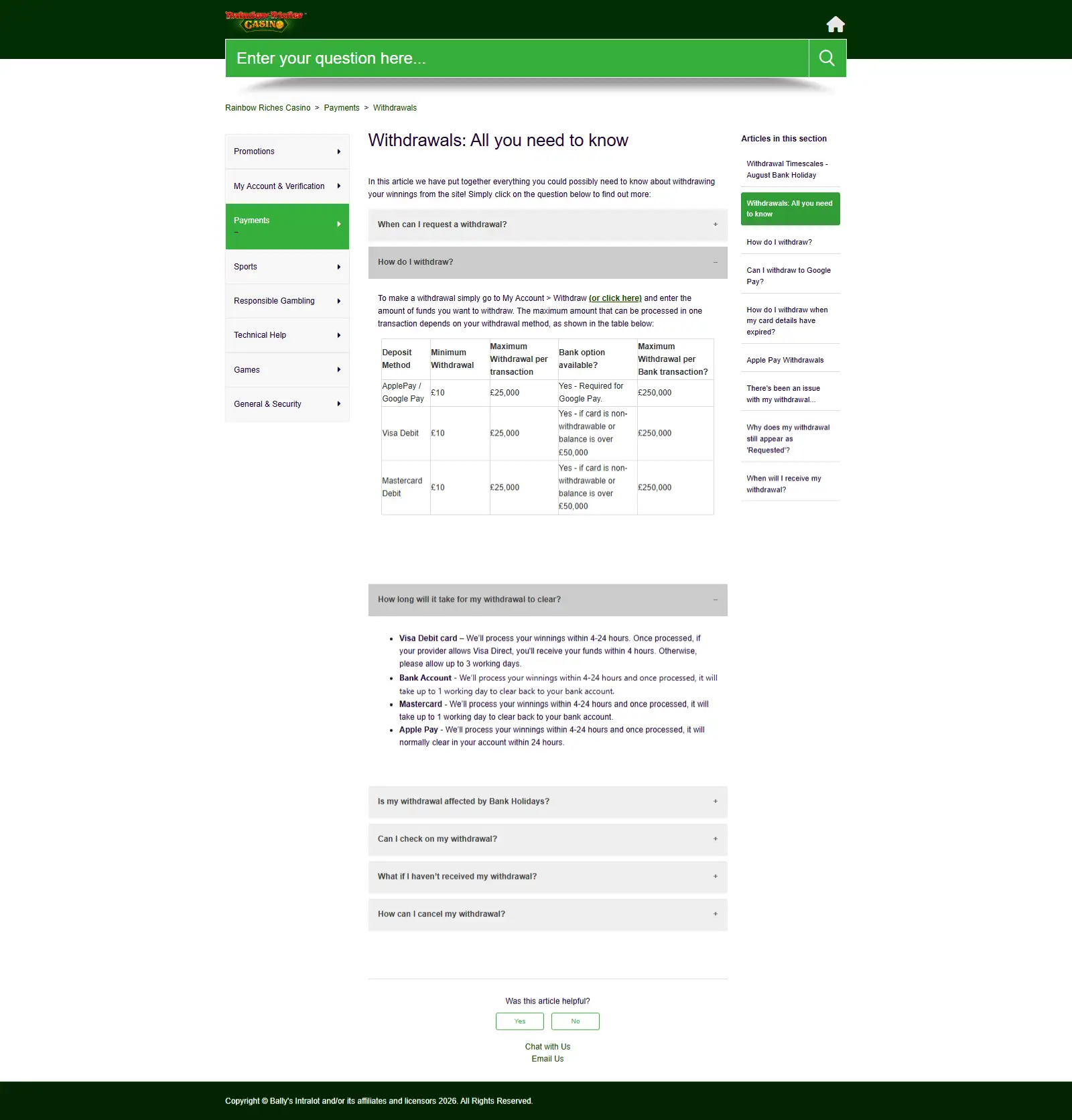
An e-wallet deposit and a casino withdrawal are two different events, even when they use the same account. The first is a payment into the gambling balance; the second is a request that must pass through the casino’s own process before money is sent out. A wallet can make the first step feel immediate without making the whole journey equally quick.
The distinction is easy to miss because the deposit appears in the account balance as soon as it is accepted. That visible change says little about how a later payout will be handled. A withdrawal may involve a review by the casino before it is released, followed by the payment provider’s part of the transfer. The balance on screen is not the same thing as money returned to a wallet.
The route back
UK anti-money-laundering rules generally require winnings to go back to the payment source used to fund the account. This is often called a closed-loop approach: money entering through one route is expected to leave through that route, rather than being redirected at will. It helps make the movement of funds legible, which matters in a system built to deter laundering as well as to process ordinary payments.
For someone using an e-wallet, that can mean a withdrawal is directed back to the wallet connected to the deposit. The casino may not treat a different wallet, card or bank account as an interchangeable destination simply because it belongs to the same person. Where the original route cannot be used, an alternative may need to be considered under the casino’s procedures; it should not be assumed that a preferred destination can be substituted without checks.
UK anti-money-laundering rules generally require a closed-loop approach, meaning winnings must be returned to the original payment source used to fund the account.
The rule is not a comment on the convenience of a wallet. It reflects the way regulated gambling treats the movement of money: the payment trail matters. A neat loop.
Approval is part of the journey
A withdrawal request is not necessarily a completed payout. A specialist review of casino payment procedures describes processing as including internal approval, with a first withdrawal potentially taking longer while verification is completed. That distinction explains why a payment method’s advertised speed cannot, by itself, establish when funds will arrive.
Before releasing a payout, a casino may need to review the request and confirm that account requirements have been met. If verification is still outstanding, the casino’s review can add time before the payment provider even begins its part. Later withdrawals may follow a different path if the account has already been checked, but there is no universal timetable that applies to every casino and every payment route.
This is where the apparent simplicity of an e-wallet meets the less visible administration behind a gambling account. A quick transfer into the casino does not remove the operator’s responsibility to assess a withdrawal. Nor does the fact that a request has been submitted mean that the wallet provider has received it.
Speed in, time out
A specialist payment review notes that a card deposit can be instant while its payout takes several business days. The comparison is useful beyond cards: the speed of funding and the speed of receiving a withdrawal are separate questions. A deposit confirms that money has reached the casino balance; a payout depends on approval and the route back.
That gap is not necessarily evidence that a transaction has failed. The request may still be under casino review, awaiting verification, or moving through the payment system after approval. The status shown in the casino account therefore matters: “requested”, “approved” and “paid” describe different stages, even if the labels vary between operators.
For e-wallet users, the practical point is to think of the transaction as a sequence rather than a single click. Funds go in, a withdrawal is requested, the casino handles its review, and the payment is then sent through the relevant channel. The wallet’s role begins and ends around that process; it does not control the casino’s decision to release funds.
A casino that accepts e-wallet deposits may still set conditions for withdrawals, including returning money to the original source and completing any outstanding checks. The cashier’s payment choices are only one part of the arrangement. The route out is governed by both the payment trail and the casino’s approval process.
Wallet Names and Availability in 2026
Payment names can outlive the products they once identified. That is not unusual in finance, where a rebrand may change the label before every casino page, comparison table or old account note catches up. EcoPayz became Payz in 2022. A page that still says EcoPayz may therefore be using an old name rather than pointing to a separate wallet.
Brand name changes
EcoPayz became Payz in 2022. References to EcoPayz in older reviews or pages may be pointing to the same service now known as Payz.
The distinction matters when checking whether a casino accepts a particular service. A familiar name in an old review is not proof that the same option is present in a current UK cashier. Nor does a changed brand name, by itself, establish that the method is offered at a particular site. The name is a clue, not a live availability check.
Jeton has a narrower footprint. A specialist review reports that it remains available at a handful of UK online casinos in 2026. That is a limited snapshot, not a basis for treating Jeton as a standard option across the market. Its presence may be relevant to someone who already uses the service, but broad claims about casino coverage would go beyond what that report supports.
This unevenness is part of the ordinary life of payment systems. A method can retain a recognisable identity while the number of places displaying it changes. A reader comparing UK casinos that accept e-wallets may encounter a wallet in one cashier and not another; a general label such as “e-wallets accepted” does not settle which names are available. The category describes a kind of payment route, not a promise that every named provider will appear.
Names also travel through different layers of information. Casino pages may show a current brand, while an older review keeps the previous one; search snippets and saved notes can preserve the discrepancy longer still. In the case of Payz, the 2022 change gives a practical way to read those references: EcoPayz is the former name, not an additional option to count separately.
The year in a payment guide is consequential because availability is not a permanent property of a brand. A wallet’s name can remain stable while its acceptance varies by casino, and a renamed service can appear under either label in material of different ages. Treating every name encountered as a distinct, currently supported method creates a false sense of breadth. The list looks larger. The choice may not be.

For a narrow view of e-wallet availability in 2026, the useful distinction is between a confirmed naming change and a reported, limited presence. Payz has a clear history: EcoPayz adopted that name in 2022. Jeton’s reported appearance is more selective, with a specialist review placing it at only a handful of UK online casinos. Neither point justifies an all-purpose directory of casino sites, and neither substitutes for checking a specific operator’s current payment options.
That restraint is less dramatic than a sweeping list of the best casinos that accept e-wallets, but it is also less likely to turn yesterday’s menu into today’s certainty. Payment brands have histories; cashiers have current settings. The difference is small in wording and large in practice.
Deposit Thresholds, Limits and the First-Deposit Prompt
A deposit minimum is a threshold, not a recommendation about how much to spend. One specialist casino review places the starting point at £10–£20, with the exact figure depending on the payment method. That range is a useful indication of what a cashier may show, not a fixed rule applying to every casino or wallet. The amount displayed at the point of deposit is the operative one.
Maximums are less tidy. A casino may set a ceiling for a single transaction, then separate daily or monthly limits; the available headroom can also depend on account status. A specialist review describes these limits as varying by payment method and customer account. In practice, an e-wallet’s own transaction ceiling and the casino’s cashier limit can both matter. The smaller restriction decides what can pass.
This is where the word “limit” carries two different meanings. A payment cap is imposed by the casino or payment route. A financial limit is a control set on the gambling account, intended to bound spending over time. They may appear near each other in the account interface, but they serve different purposes: one governs whether a transaction can be processed; the other helps define the customer’s own boundary.

UK Gambling Commission rules require remote gambling operators to prompt new customers to set a financial limit before they make their first deposit. They must also provide accessible account-level limit controls. The prompt is therefore not an optional flourish in the cashier, nor a suggestion that can simply be skipped as irrelevant. It sits before the first payment because the boundary is meant to exist before money enters the account.
That sequence says something about the modern gambling interface. The cashier is designed to move funds efficiently, while regulation inserts a pause at the point where the account becomes financially active. A modest procedural interruption. The law has made room for a decision before the transaction, rather than treating control as an afterthought.
The deposit field and the account limit should not be confused. A permitted deposit can still be inconsistent with a customer’s chosen financial limit, while a high transaction maximum is not a target. A wallet that accepts a deposit does not establish that its limit is suitable for the account holder; it establishes only that the route can process that amount under its current conditions.

For anyone comparing casino sites that accept e-wallet deposits in the UK, the useful details are the cashier’s minimum, the applicable maximums, and the location of account-level controls. These terms can differ even where the same wallet name appears. The sums are only one part of the arrangement; the point at which the operator asks for a spending boundary is part of it too.
Which Payment Routes Work for Deposits and Payouts?
A payment button in a casino cashier answers only part of the practical question. A route may be available for putting money into an account without being offered for withdrawals. Compatibility therefore means checking both directions, rather than treating a deposit option as proof that the same route can carry a payout.
Visa and Mastercard are familiar names in UK casino payment menus, but their appearance on a casino’s general payment information does not establish that every card can be used by every customer. A specialist casino review lists both networks while noting that current UK availability and eligible card products need to be confirmed in the cashier. The distinction matters: a network name is not a promise about a particular card.
Credit Card Ban
The UK regulator prohibited credit-card payments for gambling on 14 April 2020, including funding routed through money service businesses.
The card rules also have a firm boundary. The UK regulator prohibited credit-card payments for gambling on 14 April 2020, and the ban remains in force. That applies to credit-card funding routed through a money service business as well as direct card payments. A debit card is not the same thing as a credit card, but the product type must still be eligible under the casino’s payment rules.
Apple Pay occupies a narrower place in this comparison. Some casinos holding a UK Gambling Commission licence accept it for deposits. That does not, by itself, show that Apple Pay is available for withdrawals; the cashier’s separate deposit and payout options matter. A route can be useful at the point of entry and still leave the return journey to another method.
Open banking and bank transfers add another possibility. One specialist review describes these routes as capable of providing instant deposits and fast withdrawals at many sites. That is a report about the methods’ potential, not a timetable applying to every casino or transaction. The operator’s approval process, the precise route offered and the customer’s account arrangements all shape what happens in practice.
A sound comparison is therefore less about collecting payment logos than tracing a complete route: what can fund the account, what can receive a withdrawal, and whether the same method is available for both. The cashier is the useful point of reference because it presents the options attached to the account rather than a general description of a payment brand. If a method appears only beside deposits, it should be treated as a deposit route, not assumed to cover payouts.

Names are easy to print. Compatibility is the harder part.
E-Wallets Do Not All Work the Same Way
“E-wallet” sounds like a single payment category, but it can describe tools with quite different roles. A prepaid voucher such as Paysafecard is a deposit-only option: it can put money into a casino account, but it is not a route for receiving a withdrawal. The distinction is practical, not cosmetic. A method that works at the point of entry does not necessarily complete the journey back out.
That makes the broad label a poor guide to what happens after a deposit. A voucher and an electronic wallet may sit beside each other in a cashier menu, yet their functions need not match. Treating them as interchangeable can lead to a familiar disappointment: the deposit is accepted, but the same method is unavailable when funds are due to leave the casino.
Skrill and Neteller occupy a different place in the picture. They are available at some sites, though the name of a wallet alone does not establish whether that particular casino accepts it for deposits, withdrawals, or both. Availability is a property of the operator’s payment arrangements, not a promise built into the brand. The word “wallet” does little work here.
Deposit-only options, such as Paysafecard, that cannot be used to receive withdrawals.
Services like Skrill and Neteller that may support both deposits and withdrawals depending on the operator.
The final authority on which specific functions a payment method permits at a particular site.
This distinction matters especially when a casino presents several methods under one heading. A prepaid code is not a stored account in the same sense as a wallet service, and a wallet’s presence does not prove that it can handle every stage of a transaction. Each option has to be understood by what it actually permits, rather than by the family name assigned to it.
There is a small cultural history in the vocabulary. Digital payments are often grouped by the feeling they offer—money held at a remove from a bank card—rather than by the route funds can take. For a player, that blur can make a menu look more uniform than it is. The useful question is not simply whether a casino accepts e-wallets, but what each named method can do there.
A prepaid voucher is an entrance, not an exit. A wallet may have a broader role, but its function depends on the site. The category is wider than the capabilities.
The Cost of Paying by E-Wallet in Pounds
A payment’s cost is not always the figure shown beside the deposit button. A specialist review identifies several possible charges along the route: a casino fee, a payment-provider fee, a fee from the bank or card issuer, currency conversion and, where relevant, network costs. Which of these applies depends on the transaction and the accounts involved.
Currency is often the quiet variable. If a casino account is held in a currency other than pounds, converting a payment can affect the amount that leaves the wallet or arrives in the account. The account currency is worth confirming before the first transaction; a pound-denominated balance avoids one possible conversion step, though it does not establish that every other charge is absent.
The exchange rate itself can carry a cost. A specialist review points out that the spread between a provider’s rate and a reference rate can outweigh a visible flat fee. The fee on screen may look modest while a less obvious rate difference does more damage. Not dramatic, just harder to see.
For e-wallet casinos for UK players, the useful comparison is therefore not a brand name against another brand name, but the complete cost of a particular payment. A fee-free deposit can still involve conversion, while a stated charge may be the only cost on another route. The result can change with the amount, the currency settings and the provider’s terms.

A specialist review also cautions against treating any payment method as the universal low-cost choice. The comparison needs to include casino charges, wallet fees, any bank or issuer charge, the exchange-rate spread and network costs where applicable. The same method can produce a different total when the currency or transaction changes.
Before confirming a payment, the relevant figures are those attached to that transaction: the amount debited, the currency used and any fee or conversion rate displayed by the casino or wallet. If the route does not make the total clear, the payment should not be treated as cost-free merely because no separate charge is prominent. The final cost is the amount surrendered, not the neatest line in the cashier.
Checking a Casino’s E-Wallet Options at the Cashier
A general payment list is a starting point, not a promise about what will appear in a particular account. Specialist reviews of casino sites have noted menus containing Visa, Mastercard, bank transfer, e-wallets and several cryptocurrencies. That breadth says little about whether a specific wallet is available to a particular customer at the moment of payment. The cashier is the evidence that matters.

Payment menus can differ from one casino to another, and a method mentioned in a review may no longer be displayed when an account is opened. Even a list labelled for the UK may describe a broad selection rather than every option available to every customer. A site can accept several kinds of payment without accepting every named wallet. The menu is not a contract with the whole internet.
The cashier also helps distinguish an e-wallet option from a general reference to wallets in a site’s payment information. Before starting a transaction, the displayed choices can be checked against the wallet account actually held, including whether the casino presents it for the intended transaction. A method shown for one stage should not be assumed to appear at another. Availability is specific, not implied by a logo elsewhere on the page.
Jeton illustrates the limits of broad lists. A specialist review reports that it remains available at a handful of UK online casinos in 2026. That is a narrow presence, not evidence that a casino mentioning e-wallets will offer Jeton. The same caution applies to any individual service: a category label does not establish that a named provider is supported.

For a useful check, the casino’s own cashier should be consulted after signing in, with the account set to the intended country and currency where those settings are available. Payment pages can provide context, but the live menu shows which routes the account can select. If the preferred wallet is absent, a general comparison or an old review cannot make it available. The screen settles the matter.
This is also why an e-wallet casino list should be treated as a snapshot rather than a permanent directory. Methods change, and a list can age faster than its wording suggests. Availability at the point of use is the practical test. No broader claim is needed.
Payment Ownership, Fraud Checks and Withdrawal Delays
A payment route is not just a way for money to enter a casino account. It also leaves an ownership trail. When the casino account and the e-wallet belong to the same customer, their basic details are less likely to conflict, reducing avoidable friction during a transaction.
That consistency matters when a withdrawal is requested. UK anti-money laundering rules generally require funds to be returned to the original payment source, part of the closed-loop rules used to help prevent fraud. A casino may therefore check whether the named account holder matches the payment details before releasing funds. The procedure can look bureaucratic; the purpose is control.
The cleanest route is often one named account used for both the deposit and the withdrawal. Switching to a different wallet or another payment route can make the ownership trail less straightforward. It may lead to additional KYC checks, particularly if the casino needs to establish that the alternative account belongs to the same person.
Those checks are separate from the payment provider’s own processing. A transfer can be held up while the casino reviews account or payment details, even when the wallet itself is functioning normally. First withdrawals may also involve verification, so an immediate deposit says little about when a payout will be cleared.
For casinos accepting e-wallets in the UK, the practical point is not simply whether a wallet appears in a cashier menu. The account name and payment route should form a consistent trail, and the casino’s rules determine what happens when that trail changes. Fewer complications, not a promise of speed.
Why can a fast payout casino still delay my withdrawal?
A quick payment method does not bypass the casino’s internal approval process. A first withdrawal may take longer while your account is being verified.
What is the fastest withdrawal method for UK casinos?
PayPal, open banking services and debit cards linked to fast payout systems are generally among the quickest options. The casino’s approval process and your verification status also affect how soon the money arrives.
Are Visa and Mastercard deposits definitely debit cards?
No. The Visa or Mastercard logo alone does not confirm that a particular card product is eligible; check the casino cashier and the card’s details. UK gambling operators cannot accept credit cards for gambling.
Which method has the lowest fees?
There is no universally cheapest method. Compare casino and provider charges, bank or issuer fees, currency-conversion spread and any network costs for the transaction.
Do UK casino withdrawals require verification?
Verification may be needed, particularly for a first withdrawal, and completing it can affect processing time. Casinos may also require payouts to return to the original payment source.
Are fast casino withdrawals guaranteed?
No. Withdrawal speed depends on the casino’s approval process and whether your account is fully verified, as well as the payment method.
Why must withdrawals return to the deposit method?
Returning funds to the original payment source is a common anti-fraud and anti-money-laundering control. An alternative payout route may require additional verification.
Created by the ”Rainbow Riches Casino 3” editorial team.