UK Casinos That Accept AstroPay: What to Check
 Available in GB
AstroPay may fund an account where offered, but it does not determine game availability or guarantee how deposits and withdrawals work.

Table of Contents
- AstroPay, Slots and the Limits of What Can Be Confirmed
- AstroPay Deposits, Bonuses and Online Casino Accounts
- What a Casino Cashier Can Confirm About AstroPay
- Accepting a Payment Is Not the Same as Accepting Every Card
- Other Ways to Fund an Online Casino Account
- Online Casinos and the AstroPay Question
- Instant Deposits Do Not Promise Instant Payouts
- Deposit Amounts, Account Currency and Limits
- Why Withdrawals Usually Return to the Original Source
- The Cost of Paying: Fees, Currency Spread and Network Charges
AstroPay, Slots and the Limits of What Can Be Confirmed
A casino payment option and a slot catalogue answer different questions. AstroPay, where offered, would concern how an account is funded. It does not identify which games that account can open, nor does it make a slot an “AstroPay game”. The distinction is easy to lose in phrases such as AstroPay slots or casinos with AstroPay games, but the payment label describes the route into an account, not a feature built into a particular title.
That matters when judging lists of supposedly compatible games. A catalogue may contain slots from different studios, with different themes, mechanics and availability across devices. None of those qualities establishes that a particular title is tied to AstroPay. A list presented as the best AstroPay slots in the UK would therefore suggest a connection between the payment method and the games that the label alone cannot demonstrate.
The same separation applies to mobile play. A slot may be available through a casino’s mobile site or app, but that says something about the game’s access and presentation, not about how the casino account can be funded. “Mobile AstroPay casino” combines two separate questions: whether the casino supports a payment route for an account, and whether its games work on a mobile device. One answer cannot stand in for the other.
For UK players looking at casinos that accept AstroPay, payout timing is one practical detail to consider. The entries below include the stated payout speed for each operator.
Payout speed: 1-3 business days Revery Play has a stated payout speed of 1–3 business days.
Payout speed: 1-3 business days Chanze has a stated payout speed of 1–3 business days.
Payout speed: 1-3 business days Amunbet has a stated payout speed of 1–3 business days.
Payout speed: 1-3 business days SpinFormula has a stated payout speed of 1–3 business days.
Payout speed: 1-3 business days NightLuck has a stated payout speed of 1–3 business days.
Payout speed: 1-3 business days Zombillion has a stated payout speed of 1–3 business days.
Payout speed: 1-3 business days BeOnBet has a stated payout speed of 1–3 business days.
Payout speed: 1-3 business days EvoSpin has a stated payout speed of 1–3 business days.
Payout speed: 1-3 business days Jetsetspins has a stated payout speed of 1–3 business days.
Payout speed: 1-3 business days NightWin has a stated payout speed of 1–3 business days.
Nor does the word “new” resolve the issue. A newly launched casino may have a fresh catalogue or a different account interface, but age alone says nothing about whether AstroPay is offered or which titles are available. Likewise, calling a casino the best for AstroPay games turns a broad payment description into an apparent judgement of its slots. Without a clear basis for connecting the two, that label is more confident than useful.
Bonuses add another layer of confusion. A promotion may apply to an account or to specified games under its own terms; it does not convert those titles into AstroPay-compatible slots. The game and the payment method remain separate parts of the experience, even when both appear on the same casino website. A bonus-led ranking of games should therefore not be read as proof that the games have any special relationship with AstroPay.
The more precise way to think about the subject is modest: payment options concern the account, while game availability concerns the casino’s catalogue and access conditions. A slot list can describe titles, but it cannot establish a payment connection merely by placing AstroPay in its heading. No catalogue magic.
AstroPay Deposits, Bonuses and Online Casino Accounts
A casino account joins several things that are often treated as one: identity, payment method and promotional eligibility. They are not interchangeable. Seeing AstroPay mentioned in connection with a deposit does not establish that it can be used to open an account, that it is available to every customer, or that a deposit made with it qualifies for a bonus. Those are separate questions, and the answer to one does not settle the others.

This distinction matters most when an offer is involved. Casino promotions have their own conditions, which can specify how an account must be funded for the promotion to apply. A payment option may be available for deposits while remaining outside the methods accepted for a particular offer. Conversely, an offer’s existence says nothing by itself about whether AstroPay is available to a given account. The promotion’s terms and the payment options shown to that account have to be read together.
That is less glamorous than the language of a welcome bonus, but more useful. A headline describes an invitation; the conditions describe its boundaries. If a bonus is important to the decision, the relevant point is not simply whether the casino advertises one. It is whether the named payment method is eligible under that offer’s current terms, and whether the account can use that method at all. Neither should be inferred from a general claim that a casino supports a payment service.
Payment-method exclusions are not unique to AstroPay. A specialist review has reported that PayPal, despite its appeal for speed and convenience, may be excluded from bonus eligibility. Another specialist review describes Skrill and Neteller as available at some sites while often excluded from promotions. These are reports about particular findings, not fixed rules for every casino or every offer. Promotion terms can differ, and a method’s presence in a cashier does not automatically put it inside the bonus conditions.
Attention: A payment method may be available for deposits while remaining outside the methods accepted for a particular bonus offer.
The account itself is part of the calculation. Remote gambling operators serving Great Britain must hold the relevant UK Gambling Commission licence, and operators must verify a customer’s age before allowing a deposit. New customers must also be invited to set a financial limit before their first deposit; account-level controls must remain accessible. Those requirements shape the opening of a real-money account, though they do not answer whether a particular payment method qualifies for a promotion.
The distinction between account status and offer status can be easy to miss. A customer may have an account without being eligible for a given bonus; a payment method may appear among deposit choices without being named as eligible in the offer conditions. And a bonus may be available to an account while a particular funding route is not accepted for it. The wording of the offer, not the promotional headline, is where such differences become visible.
Searches for AstroPay casino accounts, deposits and bonuses often collapse these questions into one imagined package: a site, a payment option and a welcome offer all guaranteed to fit together. The more careful reading is narrower: payment availability and promotional eligibility are distinct, account-specific matters.
There is also a difference between the casino’s general description of its payment options and the choices available after an account is created. A broad payment logo or a third-party mention may not establish that the route is currently offered to every UK account. Equally, a promotion described in general terms may carry conditions that limit which deposits count. Treating either description as a promise about the other is how a plausible assumption becomes a disappointing one.

The same caution applies to offers framed around slots. A bonus may be presented alongside casino games, but that does not establish that a specific game is eligible, nor does it identify games that can be funded through AstroPay. Payment eligibility, bonus eligibility and game eligibility are different layers. A search for all three cannot make them one fact.
In Britain, online gambling is legal for adults aged eighteen and over at sites holding a UK Gambling Commission licence. That regulatory framework sits behind the account; it does not certify any particular bonus or payment combination. An account is not a voucher for every offer. Read the conditions as conditions.
What a Casino Cashier Can Confirm About AstroPay
A payment method is not a permanent feature of a casino merely because it appears in a general list of options. Availability can depend on the operator’s current setup and the account being used. For AstroPay, the practical test is whether it appears as a usable choice in the cashier after the account has been opened and the customer has signed in. A mention elsewhere is not the same confirmation.
This distinction matters because payment pages are often written for a broad audience, while a cashier is part of a live transaction system. It can show which methods are offered at that moment and whether a particular account can proceed with one. If AstroPay is absent, a general reference to it cannot establish that it is available for that transaction. If it appears, the details shown during the deposit flow still matter.
A mention of a payment method on a general information page is not the same as confirmation of its availability in a live transaction system.
The cashier is also where the stages of a transaction become visible. A method may be named in an information page without being selectable at the point of payment. Conversely, the options shown inside an account may differ from a site-wide list. The useful evidence is not the logo alone but a method that can be selected and followed through the operator’s displayed instructions. That is a modest standard, but a necessary one.
The same caution applies to claims about casinos or casino apps accepting AstroPay. An app and its operator’s website may present payment information differently; neither should be assumed to show the same options without checking the account’s cashier. Nor does a list of casinos establish that every customer can use a named method. The operator’s current payment screen is the relevant point of reference.
A sensible check is therefore practical rather than promotional:
- Sign in to the relevant casino account and open its cashier.
- Look for AstroPay among the deposit methods actually offered.
- Confirm that the cashier allows the account to continue with that choice.
- Read the transaction details shown before approving a payment.
- Check the account currency displayed before the first transaction.
These steps do not establish that AstroPay is accepted at any particular casino. They establish how to distinguish a current account-level option from a broad claim. A payment method listed in a review or on a general information page may describe a site at a different time, or may not reflect eligibility for every account. A specialist review can be useful as background, but it cannot replace the cashier’s live display.
Currency deserves attention at the same point. Some casino information pages state that GBP is supported, but that should not be treated as proof that every account is denominated in pounds. A specialist review may describe GBP availability at the site level; before the first transaction, the account currency itself needs to be confirmed. If the displayed currency differs from the payment currency, conversion may enter the transaction. The cashier’s figures and terms are more relevant than a general statement on a page.
There is a broader reason to prefer the account-level view. Payment systems are not simply a row of familiar logos. They are arrangements between an operator, a payment provider and an individual account, with each side applying its own conditions. A method that appears in a description does not necessarily mean that the whole route is open to every customer at every moment. The cashier makes that boundary visible, even if it does not explain every technical reason behind it.
For a UK casino, the payment check sits within a regulated setting. Remote gambling operators serving Great Britain must hold the relevant UK Gambling Commission licence, and age verification must take place before a customer is allowed to deposit. Those requirements do not prove that AstroPay is available; they define the framework in which a legal deposit is offered. A payment logo cannot stand in for either an active transaction option or the operator’s regulatory status.
- Sign in to the casino account
- Open the live cashier
- Confirm the method is selectable
- Check the displayed currency
- Rely on general payment logos
- Trust third-party mentions
- Assume all accounts have same options
- Ignore the transaction details
The result is less dramatic than a list of supposed AstroPay casinos, but more useful: availability is something the live cashier can confirm for a particular account, not something a name on a page can guarantee. If the method is not present or cannot be selected, the claim has not become a working deposit route. The screen is the evidence.
Accepting a Payment Is Not the Same as Accepting Every Card
A payment-method label can make an option look settled when it is only a starting point. A casino might display a card network, a digital wallet or a named payment service, but that does not establish that every product connected to it can be used. The distinction matters for anyone looking for casinos accepting AstroPay in the UK: a general payment label is not proof that an AstroPay card, or a particular card product, will work at a given site.
A specialist review lists Visa and Mastercard among the payment methods shown by the sites it examined. That is useful as a record of what those pages state, not as a guarantee of what a UK customer can use now. Availability can vary by site, account and product. The cashier is where the current options and eligibility of the particular card must be checked before a transaction is attempted.

The word “card” can conceal several different arrangements. A debit card draws on funds held in an account; other card products may work differently, even when they carry a familiar network name. On UK-licensed casinos, credit-card payments for gambling are prohibited. The regulator’s ban took effect on 14 April 2020 and remains in force. A payment method’s appearance in a list therefore cannot override the rules governing the underlying product.
This also explains why searches for AstroPay card casinos, AstroPay debit cards or mobile casinos that accept AstroPay cannot be answered by treating every label as interchangeable. A site’s general payment information may not describe the precise instrument, account type or route available to a particular customer. Nor does a label alone settle whether a payment can be made from a mobile device. Those details belong to the live cashier and its terms, not to assumptions drawn from a brand name.
Ownership is a second, quieter part of acceptance. When the casino account details and payment route belong to the same customer, basic identity checks are less likely to collide with mismatched names or account information. That is not a promise that a transaction will be approved; it is a way to avoid an unnecessary discrepancy at the outset. Shared details, plainly, are easier to reconcile.
A payment can fail to fit even when its brand seems familiar. The name on the casino account, the ownership of the card or payment account, and the product’s eligibility all matter. If those pieces do not line up, a customer may face questions that have nothing to do with the game itself.
The practical distinction is simple: a casino accepting a payment network is not necessarily accepting every card issued under that network, and a general AstroPay reference would not establish that every AstroPay product is supported. Current availability needs to be confirmed for the specific account and payment product. Labels are not permissions.
Credit Card Ban
Credit-card payments for gambling are prohibited at UK-licensed casinos under regulations that took effect on 14 April 2020.
Other Ways to Fund an Online Casino Account
AstroPay is only one possible route into a casino cashier. Across the UK market, the better-established alternatives include debit cards, bank transfers, prepaid vouchers and selected e-wallets. Their usefulness depends less on a universal ranking than on what a particular casino supports and what the payment method is allowed to do.
Debit cards are a familiar option. UK casinos commonly accept Visa and Mastercard debit cards, although a logo on a general payment page does not guarantee that every card product will work for every account. Debit is the important distinction: credit-card payments for gambling are not permitted at UK-licensed casinos. The familiar card brands can therefore cover very different funding arrangements, and the distinction is regulatory, not cosmetic.
Bank transfers and open banking offer another route, linking a deposit to a bank account rather than a card or stored wallet. A specialist payment review reports that these services can provide instant deposits and fast withdrawals at many sites. That describes availability at some operators, not a promise for every cashier or every transaction. Bank payment rails have their own practical character: they connect gambling to ordinary banking, where identity and account ownership are already central facts of the transaction.
Prepaid vouchers suit a different purpose. Paysafecard is used for deposits only, so it should not be treated as a complete substitute where a player expects the same method to carry funds back out. It separates the act of paying from the bank account, but the deposit-only boundary matters. A payment method can be convenient at the entrance and absent at the exit.
E-wallets are also present, though availability is selective. Skrill and Neteller appear at some casinos; a specialist casino review notes that promotions often exclude these methods. That is a condition worth checking in the offer terms, rather than assuming that a deposit route and a bonus offer automatically fit together. The cashier and the promotion rules answer different questions.

These alternatives do not form a ladder from inferior to superior. A debit card may be straightforward where accepted; a bank transfer may fit a player who prefers account-to-account payments; a voucher offers deposit-only use; and an e-wallet depends on both casino support and the applicable offer conditions. The label “alternative” says little about whether a method can be used for every purpose.
For a legitimate UK casino account, the useful comparison is therefore practical: whether the method is listed for the account, whether it supports the required transaction, and whether its terms conflict with a promotion. No single payment route replaces AstroPay in every respect. Payment systems are less interchangeable than their neat rows of logos suggest.
Online Casinos and the AstroPay Question
The appeal of AstroPay is easy to understand: a familiar payment name seems to promise a straightforward route from a payment account to a casino balance. But a casino’s general payment information and its support for one particular method are not the same thing. A list of online casinos that accept AstroPay can only be useful when that acceptance is confirmed for the relevant site and its UK service.

Learn why Boku is not a bank-cheque payment: deposits are charged to a mobile phone…

Learn why Boku support does not prove Apple Pay availability, how phone-bill deposits differ, and…
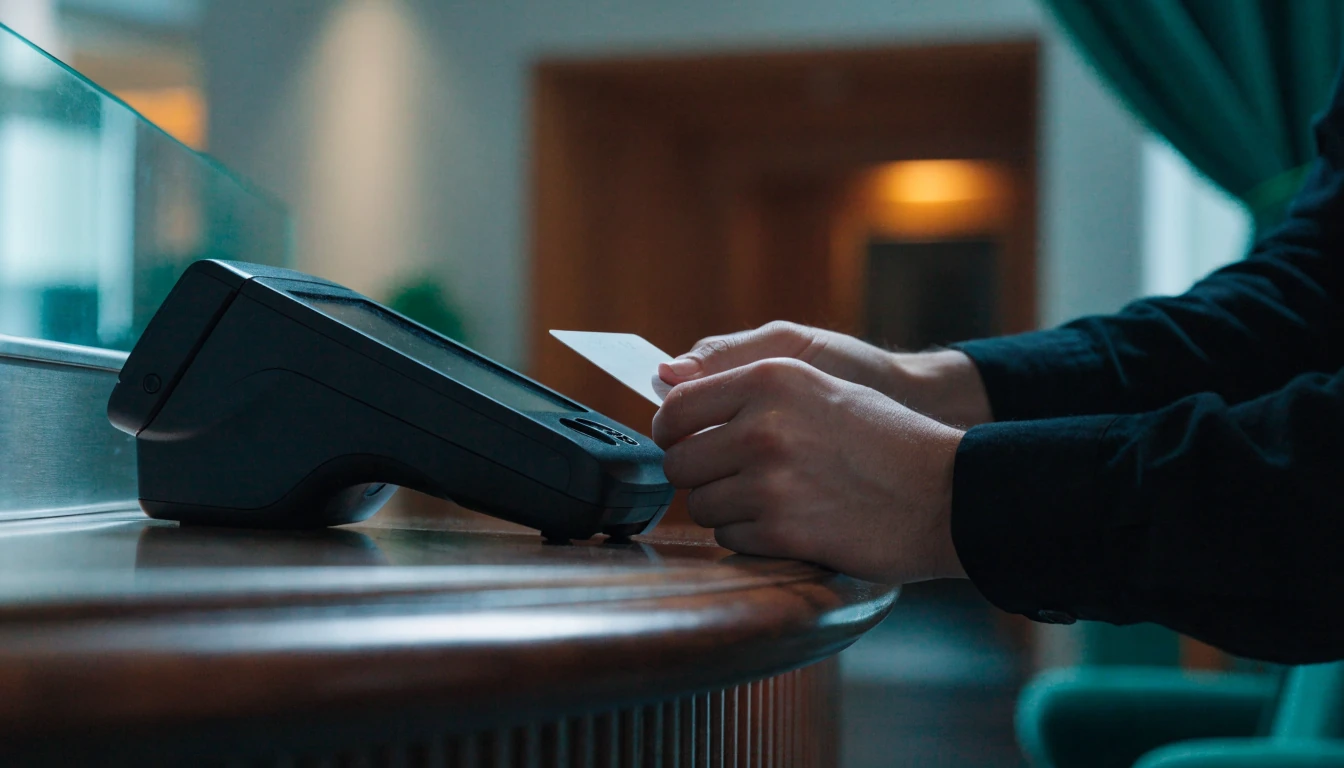

A specialist review comparing casino payment pages recorded Visa, Mastercard, bank transfers, e-wallets and several cryptocurrencies among the methods mentioned. That range shows how varied casino funding arrangements can be; it does not establish AstroPay as an available option at any particular operator. Nor does a broad label such as “e-wallets” identify every provider included. Categories are not endorsements, and they are not a reliable substitute for a named method.
This is why claims about the best AstroPay casinos require care. “Best” implies that the sites have first been shown to accept the payment method being compared. Without that starting point, rankings risk turning a general description of casino payments into a specific promise. A site may list several familiar brands, while another may offer a different selection. Payment arrangements are not uniform across the market.
The same caution applies to the phrase “AstroPay accepted”. It needs to refer to a live option for the casino’s UK customers, not merely to an old review, a general payment guide or a reference to digital payments as a category. Even an operator’s published list can be a snapshot rather than a guarantee of what is available to every account. Payment options change; the name on a page can remain after the practical arrangement has changed.

Card names illustrate the distinction. Specialist reviews may list Visa and Mastercard, but that does not settle whether a particular card product is currently available to a UK customer. Current availability and product eligibility need to be checked in the casino’s cashier. In Britain, credit-card payments for gambling are prohibited at UK-licensed casinos, so a card brand on a list should never be read as permission to use every card carrying that brand.
A responsible answer to whether AstroPay can be used at a UK online casino therefore depends on operator-specific confirmation, rather than on the existence of online casinos as a broad category. A directory that names a casino without showing that the payment method is supported says little about the actual transaction. A page that distinguishes an explicit AstroPay option from generic electronic payments is more informative, though the current arrangement still matters.
There is a further boundary around the word “casino”. Real-money remote gambling offered to customers in Great Britain must be provided by a UK Gambling Commission licensee. A payment claim does not establish that an operator is licensed, and a licence does not establish that AstroPay is available. These are separate facts, each with its own consequence.
The practical landscape is less tidy than a search phrase suggests. Payment names travel well; eligibility does not.
Instant Deposits Do Not Promise Instant Payouts
A deposit and a withdrawal are separate transactions, even when they involve the same casino account. Money arriving quickly at the start says little about how soon a later payout will reach a bank or payment account. The two movements pass through different checks and processes.
A specialist review describes card deposits as potentially instant while a payout may take several business days. That is a useful distinction, not a timetable that applies to every casino or every transaction. The deposit confirms that funds have reached the account; a withdrawal must also be requested, reviewed and released by the casino before the receiving provider can process it.
Deposit vs Payout
Instant deposits do not guarantee instant payouts, as withdrawals require separate approval and verification processes.
That middle stage matters. Withdrawal processing time includes the casino’s own approval, so a payment can remain pending before it has even begun its journey out of the account. A specialist review also notes that first withdrawals may take longer when verification is still being completed. KYC is not merely paperwork attached to the end of a transaction: it can determine whether the operator is ready to approve one at all.
This is why an “instant” label attached to a deposit method cannot sensibly describe the whole cash cycle. It refers to one leg, under the conditions of that payment, not to the casino’s review of a later withdrawal. An AstroPay deposit, if available to an account, would not by itself establish how quickly a payout is approved or delivered. The cashier’s payment options and the withdrawal process answer different questions.
There is a small but consequential difference between money showing in a balance and money being back in the account from which it can be spent. The first is a credit to a casino ledger; the second depends on the operator’s approval and the receiving route. Even a fast payment rail cannot remove a review that has not yet happened.
For anyone comparing casinos said to accept AstroPay, advertised deposit speed should therefore be read narrowly. It may describe the incoming payment, not the time needed to complete a withdrawal. Approval and verification remain part of the clock.
Fast in; not necessarily fast out.

Deposit Amounts, Account Currency and Limits
The amount needed to open a balance is not a fixed property of AstroPay. It depends on the casino and the payment route shown in its cashier, so a figure advertised for one method cannot safely be carried over to another. A specialist review puts the minimum deposit at £10–£20, with the selected method affecting where within that range a site sets its threshold. That is a guide to the figures reported, not a promise that an AstroPay deposit will be available at either amount.
For anyone checking whether an AstroPay deposit can be made at a UK online casino, the useful detail is the amount displayed after the account is signed in and the payment method is selected. A payment label on a general information page does not settle the minimum for a particular account. Nor does it establish that a particular AstroPay card or balance will be accepted.
The upper boundary is less tidy. Casinos can set separate maximums for a single transaction, a day or a month, and those ceilings may depend both on the payment method and on the account’s status. There is no single maximum that can be attached to the name AstroPay across different sites. The amount shown before confirmation is the practical one; a cashier may also prevent a deposit that exceeds a method-specific or account-level cap.
Currency deserves the same attention as the deposit amount. A specialist review reports GBP support, but an account’s currency should still be checked before its first transaction. If the account is denominated in another currency, a deposit may involve conversion rather than simply transferring the displayed sterling amount. The difference can be easy to overlook when attention is fixed on the minimum.
Factors affecting deposit limits
Minimum and maximum limits depend on the specific casino, the chosen payment route, and the status of the individual account.
The figure must not be inferred from a general minimum range or from the method’s name. Account currency first; method and amount after.
Why Withdrawals Usually Return to the Original Source
A casino payout is not simply a transfer to whichever destination is most convenient. In the UK, anti-money-laundering rules generally require winnings to be returned through the payment source used to fund the account. This closed-loop approach helps connect the movement of money to the customer and the original transaction, rather than allowing funds to pass through an unrelated account.
The same arrangement serves an anti-fraud purpose. If a deposit came from a payment route held in the customer’s own name, returning funds along that route helps reduce the scope for another person’s payment details to be used to move money out. It is a small piece of financial housekeeping with a serious job: making the path of funds easier to account for.
That is why searches for AstroPay withdrawals need a distinction between a payment method appearing at deposit and a route being available for payouts. A casino’s payment options do not, by themselves, establish that an AstroPay card or account can receive a withdrawal. The payout route is subject to the operator’s current arrangements and the account’s circumstances; no general claim about direct AstroPay withdrawals follows from the method’s name alone.
If the original source cannot receive a payout, an operator may consider another route, but a change of destination can bring further checks. The casino may need to establish that the alternative account belongs to the same customer and that the requested transfer fits its anti-fraud and AML controls. Additional verification is therefore a practical consequence of changing the path, not necessarily evidence that a payment has gone wrong.

The cleanest route is often one named account used consistently for deposits and withdrawals. Matching ownership details across the gambling account and payment method can avoid preventable questions, while an unfamiliar or third-party destination may complicate them. For anyone comparing casinos with AstroPay, the relevant detail is not merely whether a method is displayed, but whether the operator permits it as a withdrawal destination for that account.
No shortcut around the checks.
The Cost of Paying: Fees, Currency Spread and Network Charges
A payment screen can make cost look simple: a stated fee, or no fee at all. But the visible line is only one part of the calculation. A specialist review identifies possible charges from the casino, payment provider, card issuer or bank, alongside exchange-rate spread and network fees. Which of these apply depends on the transaction; a payment label alone does not settle the matter.
Currency conversion is easy to overlook. If an account and payment source use different currencies, the rate applied may include a spread: a difference between the exchange rate used for the conversion and a reference rate. A specialist review notes that this spread can cost more than a visible flat fee. The cheaper-looking route is not necessarily cheaper in the end.

Learn how casino games, account offers and payment routes differ, and why a Klarna deposit…
Learn why old UKash references may not match a casino’s current cashier, and why the…


That distinction matters when comparing any method promoted for casino payments, including a route described as AstroPay. It does not establish that a UK casino accepts AstroPay, or that every transaction through it carries the same charges. The total depends on the specific provider, issuer, network and currencies involved. A fee advertised by one party may say nothing about costs imposed by another.
The useful comparison is therefore the amount that leaves the payment source against the amount credited to the account, with any separate charges and conversion terms considered together. A zero-fee notice may describe only the casino’s own charge. It cannot, by itself, rule out provider fees, bank charges or an exchange-rate spread.
This is less tidy than a single fee table. It is also more honest. Payment costs belong to the whole route, not just the button bearing its name.
Why must withdrawals return to the deposit method?
Returning funds to the original payment source is a common anti-fraud and anti-money-laundering control. An alternative payout route may require additional verification.
Why can a fast payout casino still delay my withdrawal?
A casino must approve the withdrawal internally, and first withdrawals may take longer while verification is completed. Payouts can also take several business days even when deposits are instant.
Are Visa and Mastercard deposits definitely debit cards?
UK casinos commonly accept Visa and Mastercard debit cards, while credit-card gambling has been banned since 14 April 2020. Check the cashier to confirm that your specific card product is eligible.
Can I deposit in GBP?
Yes, GBP is supported. Confirm your account currency before depositing to avoid conversion costs.
What is the current minimum deposit?
The minimum usually starts at £10–£20, depending on the payment method.
Which method has the lowest fees?
There is no universally cheapest method. Compare casino and provider charges, currency conversion spreads, and any bank or network fees for the amount you plan to deposit or withdraw.
Which payment methods are accepted in Great Britain?
Common options include Visa and Mastercard debit cards, bank transfers and open banking, PayPal, Skrill, Neteller and Paysafecard. Some UKGC-licensed casinos also accept Apple Pay; Jeton is available at a handful of sites. Check the cashier for current availability and eligibility.
Created by the ”Rainbow Riches Casino 3” editorial team.