UK Casino Sites That Accept EcoPayz and Payz
 Available in GB
EcoPayz became Payz in 2022, but availability can vary by country and account, and deposit options do not confirm the withdrawal route.

Table of Contents
- EcoPayz, Payz and the UK cashier
- When a payment method meets a slot promotion
- Deposits are only half the payment route
- Accounts, apps and the details that must match
- Checking whether a casino still takes Payz
- Cards, wallets and cashier compatibility
- Other ways to fund a UK casino account
- Withdrawals, processing time and the return route
- GamStop status does not change payment safeguards
- Deposit amounts, limits and the cost of moving money
EcoPayz, Payz and the UK cashier
EcoPayz became Payz in 2022. The name changed; the practical question did not: does a casino’s cashier currently offer Payz to customers in the United Kingdom? Older pages, saved payment guides and familiar branding may still use “EcoPayz”, but that label alone cannot establish what a UK customer can select when making a deposit.
That distinction matters because payment methods are not permanent fixtures of a casino’s public identity. A site may mention a wallet in general information while its live cashier presents a different set of options for a particular country or account. Payment availability can depend on where the customer is based, so an international list of casinos that accept EcoPayz is not necessarily a useful answer for someone in the UK. The cashier is where a general claim meets an actual transaction.
The rebrand also complicates the language around the method. Someone searching for an EcoPayz casino may be referring to Payz, even if the older name is the one remembered or still displayed in material written before the change. Conversely, finding the word Payz on a page does not prove that the method is enabled for deposits from the UK. Names identify the service; they do not settle the question of access.
When choosing a UK casino that accepts ecoPayz, check the payout details as well as whether the payment method suits you. This list gives a concise overview of the payout speed provided for each site.
Payout speed: 1-3 business days Revery Play lists a payout speed of 1–3 business days.
Payout speed: 1-3 business days Chanze lists a payout speed of 1–3 business days.
Payout speed: 1-3 business days Amunbet lists a payout speed of 1–3 business days.
Payout speed: 1-3 business days SpinFormula lists a payout speed of 1–3 business days.
Payout speed: 1-3 business days NightLuck lists a payout speed of 1–3 business days.
Payout speed: 1-3 business days Zombillion lists a payout speed of 1–3 business days.
Payout speed: 1-3 business days BeOnBet lists a payout speed of 1–3 business days.
Payout speed: 1-3 business days EvoSpin lists a payout speed of 1–3 business days.
Payout speed: 1-3 business days Jetsetspins lists a payout speed of 1–3 business days.
Payout speed: 1-3 business days NightWin lists a payout speed of 1–3 business days.
There is a small history in that change. Payment brands, like banks and telephone companies, acquire public familiarity gradually, then alter their names at a pace that does not oblige every guide, cashier label or customer memory to keep up. The result is a split vocabulary: the current name in one place, the old one in another. Neither should be mistaken for confirmation of what the cashier will accept.
For UK customers, the relevant setting is not an abstract list of “best EcoPayz casinos”, nor a promise attached to a brand name. It is the payment menu shown by a casino serving the British market. Remote gambling licensees selling into Great Britain must hold the relevant UK Gambling Commission licence, and online gambling is legal in the UK at licensed and regulated sites. That regulatory framework concerns the operator’s permission to serve the market; it does not mean every payment method is available at every licensed casino.
A cashier can therefore be understood as a small, practical border crossing. The operator may serve a UK customer, and the customer may have a Payz account, yet the method still needs to appear as an available choice for that account and transaction. A payment brand’s general presence on a site, or a description copied from an older page, is not the same thing as an active option in the UK-facing cashier. Administrative precision is less glamorous than a casino banner. It is also more useful.

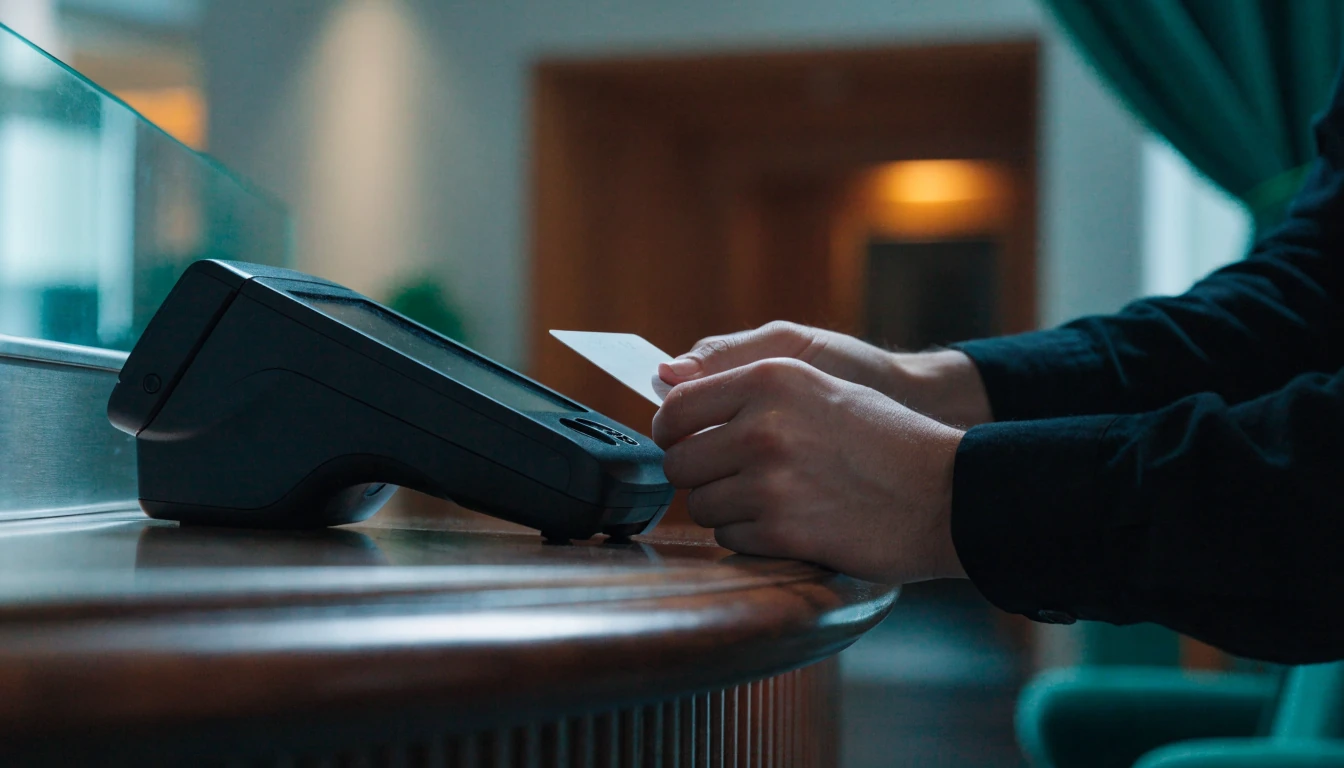
Currency is another part of that practical picture. A specialist review reports that some casino pages describe GBP as supported, but the account currency needs to be confirmed before the first transaction. If the casino account is set to another currency, conversion may enter the payment route. The point is not that every account will incur conversion, but that the currency displayed at account level should not be inferred from a general statement about payment support. A method can be available while the transaction still involves a currency choice.
The same caution applies to card information. A specialist review may list Visa or Mastercard among a site’s payment options, but that does not establish current UK availability or eligibility for every card product. The cashier remains the place where those details become specific. This is a useful distinction in a market where “accepted” can sound like a universal promise, although payment systems are not universal simply because their logos are familiar.
The word “deposit” also keeps the question properly narrow. A casino page that says Payz is accepted may be referring to funding an account, and that statement should not be stretched into a claim about every part of the payment relationship. For the basic terminology question, however, the essential point is straightforward: EcoPayz is the former name; Payz is the name introduced by the rebrand; and the cashier determines whether the method is offered to a UK customer at the point of use.
That is why old references to EcoPayz are not automatically wrong, but are incomplete. They can lead to the right service under an earlier name, while leaving the important matter unanswered: whether the current UK cashier shows Payz as an available method. A list can preserve a name long after the underlying options have changed. The screen is the evidence.
Rebrand Note
EcoPayz became Payz in 2022. While older guides or branding may still use the name EcoPayz, the current service is Payz.
When a payment method meets a slot promotion
A casino cashier and a slot promotion answer different questions. The cashier shows whether a payment method can be used to fund an account; the promotion’s terms decide whether a particular deposit qualifies for an offer. Seeing EcoPayz, now called Payz, among the available methods does not establish that a deposit made with it will trigger a bonus.
That distinction matters because promotions are rules about eligibility, not simple rewards attached to every transaction. A casino may list a wallet as a deposit option while setting separate conditions for bonus participation. Those conditions can specify which payment methods count, which offers are available to particular customers, and what actions are needed to claim an offer. The decisive text is the promotion’s own terms, read alongside the cashier options shown for the account.
The same caution applies to searches for new casinos that accept EcoPayz or Payz. A site being new, or advertising a wallet in its payment information, says nothing by itself about whether a slot offer applies to deposits made through that wallet. Nor does a reference to “free slots” mean that real-money play is free of conditions. Promotional play, where offered, remains subject to the terms attached to that promotion. The phrasing may sound generous; the rules do the accounting.
A specialist casino review has reported that PayPal may be excluded from bonus eligibility, despite its popularity as a payment option. That is a specific report, not a universal rule for every casino or offer. Separate specialist reviews have described Skrill and Neteller as methods available at some sites and often excluded from promotions. These observations are not a reliable substitute for the current terms of a particular offer: payment policies and promotions can change, and one operator’s conditions do not settle another’s.

The practical point is narrower than a ranking of the best new EcoPayz casinos in the UK. A payment method’s presence does not make a casino’s promotion suitable, and a promotion’s headline does not prove that a deposit through Payz qualifies. Eligibility should be checked in the terms for the precise offer, not inferred from a general payment-method page or from the fact that a wallet appears in the cashier.
Slot interest can also be separated from the funding route. Someone looking for online slots to play with Payz is asking, in effect, whether the casino offers slot play and accepts that payment method. Those are two separate features. Neither establishes which games are available, whether a particular promotion covers them, or whether an offer is open to that account. No game title needs to be attached to the payment method for the distinction to matter.
The phrase “free slots for real money” folds together two different ideas. Free play refers to play without staking a personal deposit on each turn; real-money play involves funds and can produce real-money outcomes. A promotion may connect those ideas through its own rules, but the wording alone does not explain how. Any claim of free play should therefore be read with attention to eligibility and conditions, rather than treated as a promise that a Payz deposit will unlock a particular benefit.
- Check the promotion’s own terms for eligibility
- Confirm the method is available in the live cashier
- Read the rules for any “free slots” offers
- Assume a payment method automatically triggers a bonus
- Rely on general payment pages to confirm offer eligibility
- Treat “free slots for real money” as a promise without conditions
For a Payz deposit at an online casino, the useful sequence is simple: confirm that Payz is offered in the live cashier, then check whether the specific slot promotion accepts deposits made that way. If the terms list excluded methods, that list takes precedence over assumptions based on the cashier. If the terms are unclear, the promotion cannot safely be treated as eligible merely because the wallet works.
The method moves money. The terms decide the offer.
Deposits are only half the payment route
A casino cashier can accept a payment for a deposit without offering the same method for a withdrawal. That distinction matters when checking whether EcoPayz, now called Payz, can serve as more than a way into an account. A deposit button confirms only that the casino is prepared to receive funds through that route at that moment; it does not establish that winnings can be sent back through it.
The practical question is therefore about the full payment path. If Payz appears in the deposit menu, the withdrawal terms or cashier should still be checked for how a payout is handled. The casino may return funds to the original source, use another available route, or require extra checks before arranging an alternative. The visible list of deposit methods cannot settle that question.
This is not merely a matter of interface design. UK anti-money-laundering controls commonly require a casino to return withdrawals to the payment source used to fund the account. Returning money along its incoming route helps operators establish where funds came from and where they are going. It also limits the scope for a gambling account to function as a convenient transfer point between unrelated payment channels.

That control can shape what happens when a player has deposited through a wallet but requests a payout elsewhere. The casino may need to review the payment history and determine whether the requested destination is acceptable under its procedures. A different route is not automatically available simply because it appears elsewhere in the cashier. More checks may follow.
The process can be especially noticeable on a first withdrawal. Before releasing funds, the casino may need to complete internal approval and confirm that the account has passed verification. A specialist review describes first payouts as potentially taking longer while those checks are completed; it is not a fixed timetable for every operator. Withdrawal speed depends on both the casino’s approval process and whether verification is complete.
There are two separate clocks, then: the time spent on the casino’s own review and the time taken for the payment to reach its destination. A deposit may be accepted promptly, while a payout waits for approval or outstanding verification. Once released, the receiving provider’s processing is another stage. Treating the initial deposit experience as a forecast of withdrawal speed confuses the entrance with the exit.
For anyone comparing casino sites that accept EcoPayz deposits in the UK, the useful test is not simply whether the brand appears in a list of payment methods. The cashier and withdrawal terms need to show whether the route supports payouts and what happens if the original method cannot be used. Availability can vary by account and transaction, so a general mention of Payz does not prove that every customer can withdraw through it.
A payment method is only half a route until the return leg is clear. The small print does the other half.
Attention: A casino may accept a payment method for deposits without offering the same method for withdrawals.
Accounts, apps and the details that must match
A payment method can appear in a casino’s general information and still be absent from the cashier attached to a particular account. The practical question is not merely whether a casino accepts a wallet, but whether its account system recognises the payment details as belonging to the same person who registered and is making the transaction. Matching names and other basic ownership details reduces the chance of avoidable checks or delays.
This is less glamorous than a list of games, but more useful. A slot lobby can be identical across a website and an app while the payment journey differs: the app may open a reduced cashier, redirect to a browser, or ask for a separate sign-in. None of those arrangements should be assumed from the app’s presence alone. The relevant detail is what the logged-in account can actually access.
An account and a payment wallet are separate records, even when both are held by the same person. Names, contact information and other identifying details that do not line up can turn a routine payment into a request for clarification. Using a payment route owned by the account holder keeps the basic ownership story coherent. It does not guarantee that a transaction will be accepted, but it removes one avoidable source of friction.

The same principle applies when moving between devices. A casino account created on the website should not be treated as a different account simply because the app has its own icon; the sign-in and cashier shown after access are what matter. If the app’s payment screen does not display the expected method, that is not proof that the method is unavailable everywhere on the site, nor is a method mentioned on a site page proof that it is enabled for that account. Availability is specific to the cashier in use.
Searches for casinos with EcoPayz accounts can also blur two different things: having an account at a casino and having an account with a payment provider. They are not interchangeable. A casino account identifies the player to the operator; a wallet account identifies the customer to the payment service. Both records need to support the same transaction, and the operator’s cashier is the point where that compatibility becomes visible.
A specialist review may list Visa and Mastercard among a site’s payment options. That is a starting point, not a promise that every card product will work for every UK customer. Current availability and card eligibility need to be confirmed in the cashier. The account’s country, currency and the specific payment instrument can affect what is offered, so a general logo on a page should not be read as individual approval.
Nor does an app remove the ordinary checks attached to a real-money account. Its interface may make the route look shorter; it cannot make mismatched ownership details more convincing. The sensible arrangement is a casino account and payment route held in the same customer’s name, with the cashier checked from the account actually being used.
A small consistency test.
Checking whether a casino still takes Payz
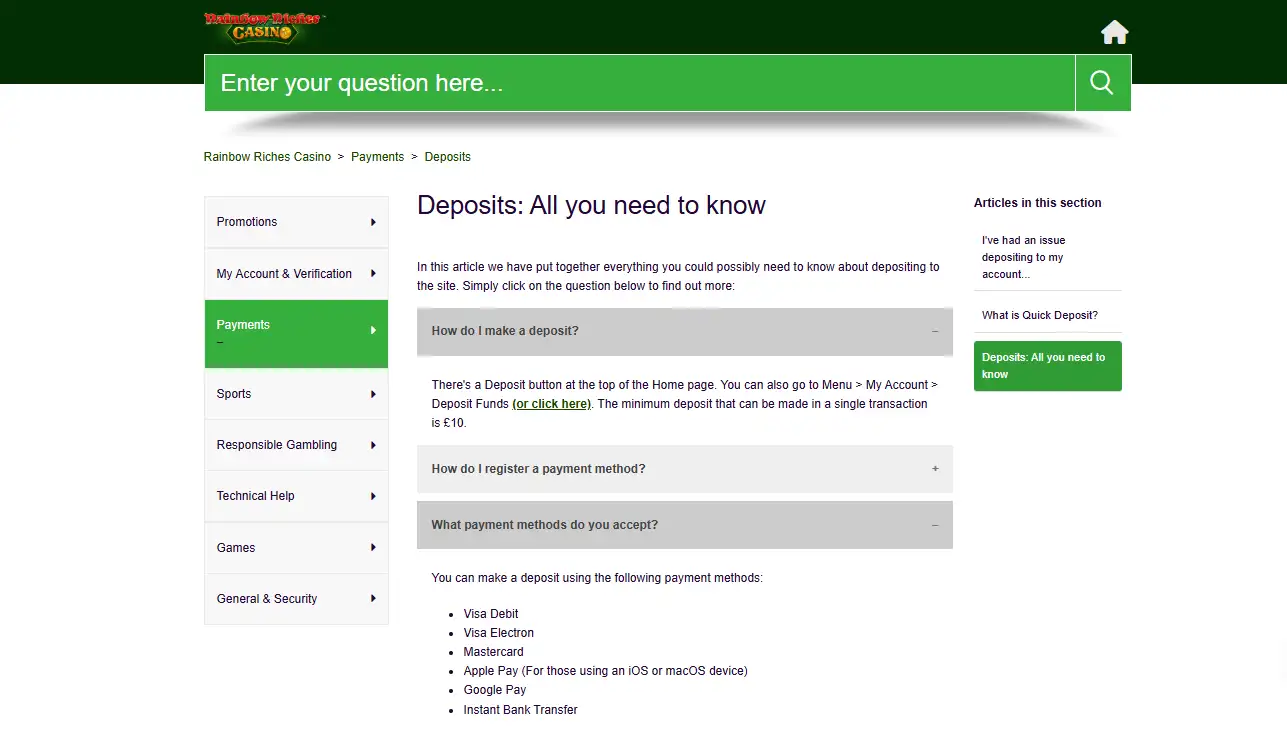
A payment logo on a casino’s website can outlive the arrangement it describes. Cashier menus change, and a method mentioned on an information page may not appear when a particular customer is ready to deposit. For anyone looking for casino sites that accept EcoPayz in the UK in 2026, the useful question is therefore not only whether a site has named the service, but whether Payz is available in its live cashier for a UK account.
The name itself has changed. EcoPayz rebranded as Payz in 2022, so older pages may still use the former name even when they refer to the same service. That is a clue to check the date and wording of a payment-method list, rather than treating every mention of EcoPayz as proof of a current option. A page can preserve yesterday’s vocabulary long after its cashier has moved on.
The cashier is the more immediate evidence. A general payments page may describe methods supported by the operator, while the transaction screen shows what can be selected for the account in front of it. If Payz is absent there, an old article or logo does not make it available. If it appears, that confirms the method is being offered in that particular context; it does not establish that every casino customer sees the same menu.
This distinction matters because availability is not simply a property of a casino’s brand. The relevant combination is the operator, the UK market and the customer’s own account. A method can be discussed on a site without being selectable for a UK customer, and a page may remain online after its payment information has become stale. Marketing copy is a record of what a company chose to say, not a live transaction.

Searches phrased around EcoPayz deposits, Payz payments or casinos that “take” the wallet often point towards lists assembled at different times. Such lists can help identify what to investigate, but they should not settle the question. The name in a list may be old; the cashier is where the current choice becomes visible.
There is also a practical difference between a site saying that it accepts a payment method and the method being usable at the point of payment. The account may need to be logged in before the available choices are displayed. A cashier that shows Payz for one customer is evidence about that customer’s options, not a standing promise to everyone in the UK. Small distinction. Important one.
A careful check begins with the operator’s current payment information, then moves to the cashier itself. The first can explain what the site claims; the second shows what it is presently offering. If the wording is unclear, the operator’s support team can clarify whether Payz is enabled for UK customers, but a general reply should still be weighed against the options displayed in the account.
The name has travelled from EcoPayz to Payz; availability can travel in and out of a cashier just as quietly. A current menu is more useful than a dated list, and a UK account’s own menu is more informative than a broad statement about the brand.
Cards, wallets and cashier compatibility
A casino’s acceptance of debit cards does not, by itself, mean it accepts every card connected to a payment account. Visa and Mastercard are widely used debit-card networks at UK casinos, but a wallet and a card linked to that wallet are separate payment routes. The cashier needs to identify the route it supports.
Credit Card Ban
Remote gambling licensees cannot accept credit-card payments for gambling, including funding routed through a money service business.
That distinction matters for searches about EcoPayz cards in the UK. EcoPayz became Payz, but the rebrand does not establish that a casino accepts a Payz card. Nor does a cashier’s display of Visa or Mastercard prove that every card carrying those network marks will work. The payment provider, card issuer, product type and the casino’s own rules can all affect eligibility.
Some specialist casino reviews list Visa and Mastercard among payment options. Such a listing is a useful pointer, not confirmation that the method is available to every UK customer or that every product on the network is eligible. The live cashier is the practical test: it shows which options the casino makes available for the account and transaction in question. A method appearing in general payment information may not be selectable there.
UK rules draw a firm line around card funding. Remote gambling licensees cannot accept credit-card payments for gambling, including credit-card funding routed through a money service business. A casino’s card option therefore concerns eligible debit-card payments, not permission to use a credit card through a different-looking route. The regulator’s ban on credit-card gambling took effect on 14 April 2020 and remains in force. Paperwork can change; that boundary has not.
A wallet payment is not automatically interchangeable with a wallet-linked card either. A customer may see a wallet brand in a cashier while a card bearing a familiar network logo is handled as a card transaction, or the reverse may not be supported at all. Those labels do not settle which route the casino accepts. The cashier’s named option does.

The same caution applies to mobile casino apps. An app may provide access to the same account while presenting a different cashier interface; a payment method should not be assumed available merely because it appears on a desktop page or in a general list. The relevant detail is whether the specific cashier offers it for a UK account at the time of deposit.
For Payz, the safe distinction is narrow: acceptance of ordinary debit cards is not evidence of acceptance of a Payz wallet or a Payz-linked card. Unless the cashier explicitly presents that payment route, the network logo alone cannot answer the question. Familiar marks, different doors.
Other ways to fund a UK casino account
An EcoPayz alternative is not simply another logo in a cashier. The useful distinction is what each route can do: move money from a bank, provide a prepaid balance, or act as an e-wallet. Those categories come with different conditions, so a method that suits deposits may not suit every other part of casino banking.
Open banking and bank transfers are one bank-based option. A specialist review describes these services as offering instant deposits and fast withdrawals at many sites, but availability and speed depend on the casino and the payment route shown in its cashier. A bank transfer is not a single uniform service: the name of the option matters less than whether it is available for the account in question.
Prepaid vouchers offer a different kind of separation. Paysafecard is a deposit-only method, so it can fund an account but should not be treated as a route for receiving a payout. That limitation may appeal to people who prefer to set aside a sum before playing, but it makes the voucher unsuitable as a complete payment route. The boundary is clear.
Includes open banking and bank transfers, often providing instant deposits and fast withdrawals.
Examples like Paysafecard are deposit-only methods, unsuitable for receiving payouts.
Services such as Skrill, Neteller, and Jeton, though some may be excluded from promotions.
E-wallets such as Skrill and Neteller are offered by some casinos. Specialist reviews report that these wallets are often excluded from promotions, although the condition belongs to each offer and cashier rather than to the wallet category as a whole. A deposit method and a promotion can coexist on the same site without that particular deposit counting towards the offer. The terms decide.
Jeton is another possible alternative, though specialist reviews describe it as available at only a handful of UK online casinos in 2026. That is a narrow foothold, not evidence of broad acceptance. Its presence on a general payment list would still leave the practical question unanswered: does the current cashier display it for the intended account?
Debit cards are another familiar category in the UK market, but a casino’s acceptance of cards does not establish that it accepts every wallet or wallet-linked product. The cashier’s live options remain the relevant test. This is not a matter of brand recognition; payment systems distinguish between products that may look similar from the outside.
There is no universal best alternative to EcoPayz. Bank-based services, vouchers and e-wallets serve different purposes, and their availability can vary from one casino to another. A deposit-only voucher has a different role from a wallet, while a bank option may be more suitable where both funding and withdrawals matter. Comparing the method’s function, its current availability and any offer conditions is more useful than choosing by name alone.
Withdrawals, processing time and the return route
A deposit and a withdrawal may travel at different speeds, even when they appear to use the same payment route. A specialist review describes card deposits as potentially instant, while a payout may take several business days. That contrast is a reminder that the time shown at the deposit stage says little about when returned funds will reach an account.

There is also a step before the payment provider becomes involved: the casino’s own approval. A specialist review notes that withdrawal timing can depend on internal processing and whether the player’s identity has been verified. This matters particularly when a first payout prompts KYC checks. If documents or account details still need review, the request may remain with the casino before it is sent onward.
Paperwork has its own clock.
UK anti-money-laundering and anti-fraud controls commonly favour returning funds to the original payment source. This closed-loop approach makes the route of money easier to trace and can mean that a withdrawal is not simply directed to whichever account is most convenient at the time. If the original source cannot receive the payout, another route may be considered, but that can bring additional verification.
For someone looking at EcoPayz casinos with withdrawals, the important distinction is between having used a method to deposit and having that method available for the payout. A payment logo or a successful deposit does not, by itself, establish that withdrawals can be sent back through the same service. The casino’s live cashier and withdrawal terms determine what is possible for that account.
Consistency reduces avoidable complications. A named account used for both deposit and withdrawal is often the cleanest arrangement: the casino can more readily match the payment to the customer, and the return route is less likely to raise basic ownership questions. Using another person’s account, or switching to a different route without a clear reason, can lead to requests for further checks. The payment method and the casino account should belong to the same customer.
Withdrawal Processing
- Withdrawal speed depends on both the casino’s internal approval and the provider’s processing
- UK anti-money-laundering controls often require returns to the original payment source
- Identity verification (KYC) can delay first-time payouts
- Using a named account for both deposit and withdrawal reduces complications
The word “fast” therefore needs two separate clocks. One measures the casino’s review and approval; the other measures delivery after the payment has been released. A displayed processing estimate may describe only one of them. The payout route, verification status, and the provider’s own handling all shape the final wait, so a quick deposit is not a promise of a quick withdrawal.
GamStop status does not change payment safeguards
EcoPayz or Payz appearing in a casino cashier says nothing, by itself, about the casino’s relationship with GamStop. A payment option is a feature of the transaction; it does not establish an operator’s regulatory position or whether it participates in a self-exclusion scheme. The same applies to a site describing itself as outside GamStop. A label is not proof.
That distinction matters because searches for casinos outside GamStop can make the payment method seem like a route around a safeguard. It is not. EcoPayz does not switch off account controls, alter an operator’s obligations or confirm that a particular casino is suitable for UK customers. Nor does a cashier listing establish that a site is connected to, or independent of, GamStop.

In Great Britain, remote gambling licensees must hold the relevant UK Gambling Commission licence to serve customers legally. The Commission’s rules also require operators to prompt new customers to set a financial limit before their first deposit and to make account-level limit controls accessible. Those requirements concern the operator and the customer account, not the brand of wallet used to fund it.
This makes the practical distinction plain: GamStop status and payment compatibility are separate questions. A site’s claims about one do not answer the other. For UK customers, the legal position of the operator matters; a familiar payment logo cannot stand in for it. Neither can an “outside GamStop” description.
The distinction is especially important where self-exclusion is part of someone’s effort to stop gambling. A payment method should not be treated as a workaround, and a casino’s wording should not be taken as evidence that safeguards do not apply. UKGC-licensed sites also have obligations around account limits, regardless of whether a customer deposits through a wallet or another method.

There is no shortcut in the cashier. EcoPayz acceptance cannot verify a casino’s GamStop status, and GamStop status cannot be inferred from EcoPayz acceptance. The two facts belong to different parts of the relationship between a player and an operator. A payment rail is not a regulatory certificate.
Deposit amounts, limits and the cost of moving money
The minimum needed to open a deposit can vary with the payment method. A specialist casino review puts the starting range at £10–£20, but that is not a fixed rule for every cashier or account. The amount shown at the point of payment is the practical threshold: an EcoPayz or Payz deposit cannot be assumed to share the minimum displayed for a card or another wallet.
The maximum is not a single figure either. Casinos may set transaction, daily or monthly ceilings, and the available amount can depend on both the method and the account’s status. A displayed limit is therefore more useful than a general claim about what an EcoPayz casino allows. If a deposit is rejected or reduced, the cashier’s own terms explain which restriction applies.

The amount leaving an account may also differ from the amount credited. A specialist casino review notes that costs can arise at several points: the casino, payment provider, card issuer or bank may charge a fee, while currency conversion can add an exchange-rate spread. Network charges may also apply. A visible flat fee is not the whole calculation; the conversion rate can carry a cost of its own.
GBP support does not by itself establish that an account is set to pounds. Confirming the account currency before depositing helps avoid an unintended conversion, and comparing the final credited amount with the amount sent makes the cost easier to see. No universal cheapest method follows from the payment label alone. The arithmetic depends on the actual amount, the route it takes and the charges attached to that route.
Why must withdrawals return to the deposit method?
Returning funds to the original payment source is a common anti-fraud and anti-money-laundering control. An alternative route may require additional verification.
What is the fastest withdrawal method for UK casinos?
PayPal, open banking services and debit cards linked to fast payout systems are generally among the quickest. The casino’s approval process and your verification status also affect the time.
Which payment methods are accepted in Great Britain?
UK casinos commonly accept debit cards such as Visa and Mastercard. PayPal, open banking, bank transfers, and e-wallets such as Skrill and Neteller are also available at some sites; check the casino cashier for current options.
Are Visa and Mastercard deposits definitely debit cards?
No. The logos alone do not establish which card products are eligible, and availability must be checked in the cashier. Credit card gambling has been banned in the UK since 14 April 2020.
Can I deposit in GBP?
GBP is supported at some casinos, but check your account currency before depositing. If it is set to another currency, conversion may apply.
What is the current minimum deposit?
The minimum deposit usually starts at £10–£20, depending on the payment method.
Which method has the lowest fees?
There is no universally cheapest method. Compare casino and provider charges, any bank or issuer fees, currency-conversion spread, and network costs for your transaction.
Is Skrill available?
Yes, Skrill is available at some UK-friendly casino sites. It may be excluded from promotional offers.
Created by the ”Rainbow Riches Casino 3” editorial team.