Credit Cards at UK Casino Sites: What the Ban Means
 Available in GB
UK-licensed casinos cannot accept credit-card funds for gambling, whether play takes place online or at a physical venue.

Table of Contents
- Can Credit Cards Be Used for Gambling in the UK?
- Why the Credit Card Ban Still Shapes Casino Payments
- What the Ban Means for Casino Payment Routes
- Which Payment Methods Casino Cashiers May Offer
- Checking Card Acceptance Before a Deposit
- How to Compare Casino Payment Costs
- Deposits, Withdrawals and the Route Back
- Credit Cards and Casinos Outside GamStop
- The Credit Card Casino Search and Its Practical Alternative
- Online Slots Without Credit Card Payments
Can Credit Cards Be Used for Gambling in the UK?
No. A UK-licensed casino cannot accept credit-card payments for gambling, whether the game is played online or in a physical venue. That means a credit card cannot be used to fund an online casino account, pay for a casino game at a land-based establishment, or place a stake on a slot machine through a licensed operator.
The rule is straightforward, even if the language around card payments can make it seem otherwise. A casino may refer to cards in general, or display familiar payment brands, but that does not make credit-card gambling available. The relevant distinction is the type of card and the purpose of the payment: credit-card funds cannot be accepted for gambling by a UK-licensed casino.
For online play, this answers the practical question of whether a credit card can be used to deposit at a UK casino. It cannot. The same applies when the intended game is an online slot rather than a table game. A different game does not create an exception, and a payment does not become acceptable simply because it is made through a website rather than across a casino counter.
Credit-card availability and payment terms can change, so check the current cashier information before choosing a UK casino. The payout details below provide one practical point to consider.
Payout speed: 1-3 business days Revery Play lists a payout speed of 1–3 business days. Check its current cashier information to confirm whether credit-card payments are available.
Payout speed: 1-3 business days Chanze lists payouts as taking 1–3 business days. Confirm the current payment options directly before relying on credit-card access.
Payout speed: 1-3 business days Amunbet gives a payout speed of 1–3 business days. Its current cashier details are the place to verify credit-card availability.
Payout speed: 1-3 business days SpinFormula lists a payout timeframe of 1–3 business days. Check its current payment information for details on credit-card deposits.
Payout speed: 1-3 business days NightLuck lists payouts at 1–3 business days. Confirm whether credit cards are currently supported by checking its payment terms.
Payout speed: 1-3 business days Zombillion gives a payout speed of 1–3 business days. Check its current cashier information to establish whether credit-card payments are an option.
Payout speed: 1-3 business days BeOnBet lists payouts as taking 1–3 business days. Its current payment terms should be checked for credit-card availability.
Payout speed: 1-3 business days EvoSpin lists a payout speed of 1–3 business days. Consult its current cashier details to see which payment methods, including credit cards, are available.
Payout speed: 1-3 business days Jetsetspins lists payouts at 1–3 business days. Verify current payment options directly, as credit-card availability is not specified here.
Payout speed: 1-3 business days NightWin gives a payout speed of 1–3 business days. Check its current payment information to confirm whether credit-card payments are supported.
The boundary also applies in land-based casinos. The setting may change from a screen to a gaming floor, but the restriction on credit-card payments for gambling does not. A venue’s other card facilities, if any, should not be confused with permission to use credit-funded money to gamble. The rule concerns the gambling payment itself.
This can make everyday ideas about cards feel misleading. In ordinary retail, a card is often treated as a single, familiar way to pay. In gambling, the regulatory question is narrower: whether the money being used is credit and whether it is being accepted for a wager or casino play. The plastic in a wallet is not the whole story. The source and purpose of the funds matter.
The ban has applied since 14 April 2020 and has not been relaxed. Its effect is not limited to a particular kind of casino game or to one way of placing a bet. UK-licensed casinos cannot take credit-card payments for gambling, so there is no compliant route in which a customer simply presents a credit card and deposits directly into a casino account.
That does not mean every mention of a card on a casino website refers to a credit card. Payment pages may use broad wording, while a cashier presents the methods actually available for a particular account. Nor does a logo by itself establish that every product issued under that brand can be used. The central point remains: a credit card cannot be used to fund gambling with a UK-licensed casino.


The licence is important because this answer describes the regulated British market. Remote gambling operators selling into Great Britain must hold the relevant Gambling Commission licence, and legal online casino gambling is provided by licensed operators. Northern Ireland has a distinct legal framework, but the UK credit-card gambling restriction is the practical rule addressed here for licensed casino play.
For anyone considering casino play, the short answer is therefore not dependent on whether the game is online, in a venue, or a slot. A UK-licensed casino cannot accept a credit card for gambling. The rule is firm.
Why the Credit Card Ban Still Shapes Casino Payments
The date is fixed: on 14 April 2020, the UK gambling regulator banned credit-card payments for gambling. The rule remains in force. For remote gambling licensees serving the British market, a casino cannot accept a credit card as the means of funding gambling; the passage of time has not turned the restriction into a temporary measure or a historical footnote.
That answers the central question of whether credit cards are allowed at UK online casinos: they are not accepted for gambling at UK-licensed sites. The rule applies to the gambling transaction, not merely to a particular casino’s preferred cashier design. Nor does the word “card” settle the matter. A payment method’s appearance in a general list says little, on its own, about whether a particular transaction is permitted.
Credit Card Ban
UK-licensed casinos are prohibited from accepting credit-card payments for gambling. This restriction has been in force since 14 April 2020.
The timeline and the cashier are separate questions. The ban sets a boundary; the methods shown at a casino are the available routes on the other side of it, and those can differ between sites. A rule that has remained unchanged since 2020 does not mean every cashier has stayed unchanged, or that a method displayed at one operator will appear at another. Regulation defines what cannot be accepted; it does not publish a permanent menu of everything that can.
This distinction helps explain why the subject continues to cause confusion. “Card payment” is often treated as a single category in ordinary conversation, while gambling payments depend on the nature and use of the funds. A familiar card brand may be associated with more than one card product, and a cashier’s wording may be broader than the transaction it will actually allow. The ban concerns credit-card payments for gambling, not every payment bearing a card logo.
As for why credit cards were banned, the reliable point is the regulatory decision and its continuing effect. The date alone does not establish the regulator’s motives, and it would be misleading to turn an assumed rationale into a settled fact. The practical answer is less complicated: the restriction began on a specific day and has not been relaxed.
There is no sunset date to wait for and no change in the rule’s status to infer from a casino’s branding. The relevant distinction is between a credit card used to fund gambling, which UK-licensed casinos cannot accept, and other payment arrangements whose availability must be assessed separately. That is the shape the ban still gives to casino payments. A firm line; a changing cashier.


What the Ban Means for Casino Payment Routes
The credit card gambling ban is not confined to a payment form that asks for a card number at the casino cashier. A deposit does not become acceptable merely because the card is one step removed from the gambling account. Remote gambling licensees cannot accept credit-card payments for gambling routed through a money-service business, either.
That distinction matters because payment journeys can look different at the surface while relying on the same source of funds. If a credit card is used to fund an intermediary and that money is then sent to a casino, the extra stop does not turn the payment into an ordinary non-credit deposit. The restriction follows the use of credit for gambling, not just the label attached to the final transfer.
Wallets require a related distinction. A wallet is not automatically barred simply because it is an intermediary; the relevant issue is whether it permits credit-card funds to be used for gambling. Where it does, a UK-licensed casino cannot accept that wallet payment for gambling. Where a wallet separates or restricts the funding route, its treatment depends on how the service works and what the operator allows. The name of the wallet alone settles little.
This is why “pay by credit card” can be an incomplete description of a transaction. The card might not appear in the casino account at all, yet still fund the money used there. Conversely, a wallet balance does not, by itself, show that credit has funded a deposit. The funding path matters.
The credit-card gambling restriction applies even if the payment is routed through a money-service business or an intermediary; inserting a payment service does not create an exception.
The rule therefore reaches beyond the cashier’s visible buttons. A payment route involving a card, an intermediary and a casino remains subject to the credit-card restriction; inserting a payment service does not create an exception. It is a practical boundary, not a puzzle about how many steps a transaction can contain.
That boundary should not be confused with a claim that every wallet payment is prohibited. The restriction concerns wallets that allow credit-card funds to be used for gambling. It does not make all e-wallets equivalent, nor does the presence of a wallet brand establish which funding sources are available for a particular transaction. The operator’s permitted routes and the wallet’s own funding rules both matter.
The same care applies to money-service businesses. A transfer may be presented as a remittance or intermediary payment, but that description does not make credit-card-funded gambling permissible. For a remote gambling licensee serving the British market, the route cannot be used to accept credit-card payments for gambling.
The cashier is only the visible end of the chain. The source still counts.
Which Payment Methods Casino Cashiers May Offer
With credit-card payments for gambling unavailable at UK-licensed casinos, the cashier may show several other routes. The menu is not standard across the market: a method can be offered at one site and absent at another, and its terms may differ. A listed brand is a starting point, not a guarantee that every account can use it.
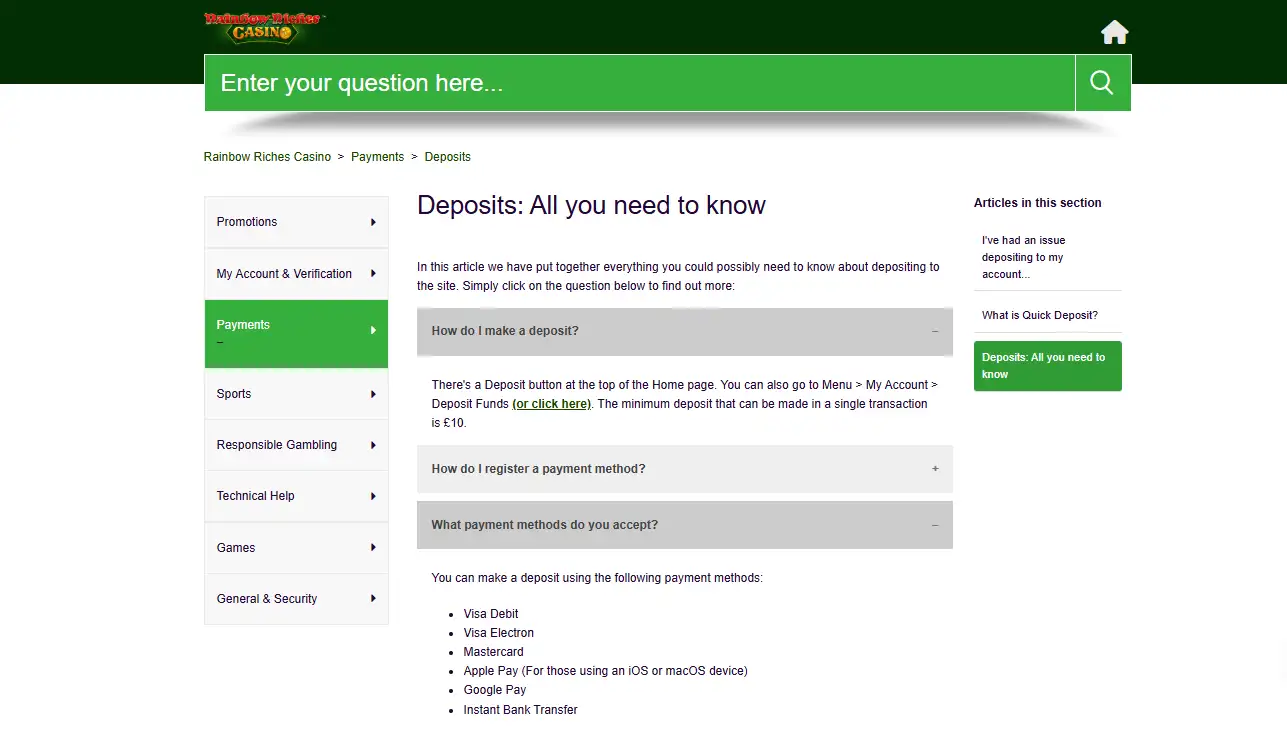
Debit cards are a familiar option. UK casinos commonly accept Visa and Mastercard debit cards, though the cashier determines which card products and transactions are supported. The distinction matters: a familiar card-network name does not mean that a credit card becomes an acceptable gambling payment. The method must be an eligible debit product.
E-wallets may also appear. PayPal, Skrill and Neteller are among the names associated with casino payments, but their availability and promotional terms are operator-specific. A specialist review has described PayPal as valued for speed and convenience while noting that its use may affect bonus eligibility; that is a point to verify against the casino’s current terms, not a standing rule for every site. Skrill and Neteller may likewise carry promotion exclusions. Any wallet route must comply with the restriction on credit-card funds being used for gambling.
Bank transfer and open banking options can be presented as alternatives to cards and wallets. A specialist review has described these services as capable of supporting instant deposits and fast withdrawals at many sites. That does not make the timing universal: the cashier and the provider determine what is available for a particular account. Bank transfer can also suit people who prefer to move money directly from a bank account rather than hold a separate wallet balance.
Prepaid vouchers have a narrower role. Paysafecard is a voucher used for deposits only, so it should not be mistaken for a complete route for both putting money in and receiving a payout. This difference is easy to miss when payment logos sit together in a cashier.
Apple Pay is another possible deposit option at some UKGC-licensed casinos. Its presence is not universal, and a casino may offer it only under particular account or device conditions. The cashier remains the practical place to check.
Commonly accepted Visa and Mastercard debit products, subject to the casino’s cashier terms.
Options like PayPal, Skrill, and Neteller, though availability and bonus eligibility vary by operator.
Direct transfers or open banking services that may support instant deposits and fast withdrawals.
Deposit-only options such as Paysafecard, which cannot be used for payouts.
These methods do not form a fixed hierarchy. One casino may offer cards and bank transfer, another may add e-wallets or Apple Pay, while a voucher may be deposit-only. Before choosing, the relevant questions are whether the method is currently listed, whether it is eligible for the intended transaction, and whether its terms fit the account. A payment menu is a small map of the operator’s arrangements, not a promise that every route works for every player.
Checking Card Acceptance Before a Deposit
A Visa or Mastercard logo is not a promise that every card carrying that name will work. It identifies a payment network, not the precise card product or the terms under which a particular transaction can be made. A specialist review may list either network among a casino’s payment options, but that description cannot establish what the site currently permits for a UK account.
The distinction matters because card acceptance is not a single yes-or-no fact. A cashier may display a network while the available option is limited to eligible debit cards. Credit-card payments for gambling are not permitted at UK-licensed casinos, so a familiar logo cannot be read as evidence that a credit card will be accepted. The name on the card is only part of the picture.
The cashier is the practical place to check. Payment pages can change, and a summary elsewhere may reflect an earlier version of the site or describe the network broadly. Before making a deposit, the current cashier should show which card options are available to the account and identify any relevant eligibility conditions. If the information is unclear, the logo alone does not settle the question.


Card products can differ even when they share a network mark. A debit card and a credit card are not interchangeable merely because both display Visa or Mastercard. Nor does a payment option appearing on a general information page prove that a particular card transaction will be approved. The useful detail is the actual choice presented in the cashier, not the breadth of a brand name in a list.
There is also a difference between a payment method being advertised and being available to a particular customer at the point of payment. The account’s location, the card product and the operator’s current arrangements all matter to the check. A website’s payment page may describe accepted methods in general terms; the cashier shows what is offered in the live transaction flow. Neither should be mistaken for permission to use a credit card for gambling.
The wording around card acceptance deserves care. “Visa accepted” may be shorthand for a supported card network, not a statement that all Visa products qualify. The same caution applies to Mastercard. Where a page does not distinguish debit from credit, the ambiguity should not be resolved by assuming the broader interpretation. At a UK-licensed casino, credit-card gambling remains outside the permitted options.
A failed attempt is not a reliable way to discover the rules. It may leave the account holder uncertain whether the issue was card eligibility, the current cashier options or another transaction condition. Checking first is more straightforward: confirm that the account is at a UK-licensed site, inspect the cashier’s current card choices, and make sure the stated option matches the card product. The licence number can also be checked on the Gambling Commission’s public register before depositing.
- Inspect the current cashier for available card options
- Confirm the site holds a UKGC licence
- Match the card product to the stated eligible option
- Assume a Visa or Mastercard logo guarantees credit card acceptance
- Rely on general information pages over the live cashier
- Attempt a transaction to test if a credit card works
This is less a question of whether a casino “takes Visa” than of what the cashier actually accepts for a UK customer today. A network logo is a signpost, not a contract.
How to Compare Casino Payment Costs
“Best” has little meaning when the price of a transaction is hidden in several places. A casino cashier may show no charge at the point of deposit, while a payment provider, bank or card issuer applies its own cost. Currency conversion and payment-network fees can add another layer. The useful comparison is therefore not a label such as “free”, but the total cost of the same transaction through each eligible route.
A specialist payment review identifies five possible components: charges from the casino, the payment provider, a bank or issuer, currency conversion and the payment network. Not every route attracts every charge, and a fee shown by one party does not establish that the others charge nothing. The checkout screen is one part of the evidence, not the whole bill.
The first check is the casino’s own terms for deposits and withdrawals. A cashier may state that a method has no casino-side fee, or disclose a charge for a particular transaction. That tells only what the operator applies. Provider terms may separately set charges for moving money, holding an account or converting currencies; bank or issuer terms may also matter. The precise combination depends on the route and transaction.

Then comes currency. If the casino account and payment account use different currencies, the conversion rate can carry a spread: the difference between the rate applied and a reference rate. A specialist payment review warns that this spread can outweigh a visible flat fee. A small, clearly stated charge can look more expensive than a route with no line-item fee, even when the latter converts at a less favourable rate. The displayed deposit amount alone cannot settle the comparison.
GBP support is worth checking before the first transaction. If the casino account is denominated in pounds and the payment source also handles pounds, conversion may be avoided; if not, the relevant rate and who applies it need to be clear. A conversion can occur at the casino, provider, bank or network level, so the amount shown by one party may not be the final amount leaving the account.
Network costs belong in the same calculation, even when they are not presented as a casino fee. Their presence and treatment depend on the payment route. Where a payment uses a provider or intermediary, its terms should be read alongside the casino cashier and the bank’s own schedule. A route that appears free on one screen is not necessarily cost-free overall.
For a fair comparison, use the same deposit amount and the same account currency, then record the amount requested, any casino charge, any provider or bank fee, the conversion rate and the final amount charged. If the route has no fee, that is useful—but it does not make it automatically cheaper than one with a stated fee. The rate may be doing the charging quietly.
Comparing Payment Costs
Check the cashier and terms for any direct charges applied by the operator for the deposit or withdrawal.
Review the terms of the payment provider, bank, or card issuer for movement or account fees.
Compare the applied exchange rate against a reference rate to find the hidden cost of conversion.
Combine the casino fee, provider cost, and conversion spread to determine the final cost of the transaction.
The result is specific to the transaction, not a permanent ranking of payment methods. A specialist payment review makes the same practical point: there is no universal lowest-cost route, because casino charges, provider fees, exchange spread and network costs can change the outcome for the amount being sent. Terms may also differ between payment products and accounts, so comparisons need to use the actual route rather than a method’s name in isolation.
A simple ledger prevents the most obvious mistake: comparing one route’s visible fee with another route’s total cost. Include the amount that reaches the casino and the amount taken from the funding account. If those figures differ because of conversion, the gap is part of the price, even if no one calls it a fee. Cheapness, like most financial virtues, is often a matter of where the bill is placed.
Deposits, Withdrawals and the Route Back
A deposit and a withdrawal are separate stages, even when they use the same payment route. An electronic payment may reach a casino account quickly; that does not mean money leaving the account will travel at the same pace. A specialist review describes card deposits as potentially instant while withdrawals can take several business days. The comparison is useful, but it is not a timetable for every operator or transaction.
The delay can begin before a payment provider receives anything. A casino has its own withdrawal approval process, and the time spent there forms part of the overall wait. The operator may need to complete KYC, particularly when an account is making its first withdrawal. A specialist review notes that first payouts can take longer while this verification is completed. Once approved, the transfer still has to pass through the relevant payment route.

Not one clock.
There is also a reason casinos may not send a payout wherever a customer happens to request it. UK anti-money laundering rules generally point funds back to the original payment source, while returning money to that source is also a common anti-fraud control. This is often described as a closed-loop approach: money goes out by the route, or to the account, used to put it in.
That can make the payment path less flexible than the cashier menu appears. A method shown for deposits does not, by that fact alone, establish how a withdrawal will be handled. The casino may return funds to the original source where the route supports it, or ask for another eligible destination and further checks. An alternative route can require additional verification rather than simply transferring the task to a different provider.
Account ownership matters in this process. Using payment details and an account that belong to the same customer helps avoid basic discrepancies that could complicate a transaction. A mismatch may prompt questions about who funded the gambling account or who should receive the balance. It is an unglamorous detail, but financial controls are built around details.
The credit-card wording in searches for UK casinos can obscure this distinction. UK-licensed casinos cannot accept credit-card payments for gambling, so a credit card is not a legitimate deposit route to plan around. A debit card or another eligible method may be considered instead, but the payout path still depends on the operator’s controls and the payment source. A fast deposit does not turn a prohibited credit-card deposit into an acceptable one, nor does it promise a fast withdrawal.
Attention UK anti-money laundering rules generally require funds to be returned to the original payment source (closed-loop approach).
The cashier’s list and the withdrawal policy answer different questions. The first shows which routes may be available for a transaction; the second explains how funds can return, what checks may intervene and whether the original source must be used. Before depositing, the relevant withdrawal terms should be read alongside the payment options, with attention to source ownership and any verification requirements. If the route back is unclear, speed at the point of deposit offers little reassurance.
That is the less visible half of a casino payment: not the click that sends money in, but the checks and controls that govern its way out.
Credit Cards and Casinos Outside GamStop
The phrase “outside GamStop” describes a casino’s relationship to a self-exclusion scheme; it does not create an exception to the UK’s credit-card gambling restriction. Nor does the label, by itself, establish where a casino is licensed or whether it may lawfully serve customers in Britain. Those are separate questions, despite the way they are often bundled together in advertising.
The distinction matters because remote gambling licensees offering services to people in Great Britain must hold a UK Gambling Commission licence, wherever the company is based. A site operating from abroad does not avoid that requirement simply by being accessible online. Online gambling is legal in the UK only through a licensed and regulated site.

The credit-card rule is equally clear. The regulator prohibited credit-card payments for gambling on 14 April 2020, and the restriction remains in force. It applies to remote gambling licensees serving the British market. A casino cannot make credit-card gambling permissible by describing itself as independent of GamStop, by operating under a foreign licence, or by placing a payment option on a cashier page. A label is not a waiver.
That leaves a gap between the wording of some promotions and what can be established about a particular site. Claims about non-GamStop casinos accepting credit cards may refer to operators outside the UK regulatory system, or may be out of date; the label alone confirms neither the operator’s status nor its actual payment practices. A named list would suggest a level of verification that the phrase cannot supply.
There is also a difference between a site not appearing in a self-exclusion scheme and a site being authorised to take British customers. Offshore casinos operate outside the UKGC system and do not hold a UKGC licence. Their accessibility to a person in Britain is not the same as permission to offer gambling here. The legal framework places the licensing obligation on the operator, not on a descriptive tag attached to its website.
For someone seeking a credit-card casino outside GamStop, the practical point is therefore not to treat “not on GamStop” as a payment category. It says nothing that overrides the UK restriction. Any claim of credit-card acceptance aimed at British players should be read with particular care: it does not establish lawful UK operation, and it does not verify that a transaction would be accepted or handled as advertised.
Being “outside GamStop” does not exempt a casino from the UK credit-card gambling restriction nor does it establish the legality of the site’s operation in Britain.
The two questions remain distinct: whether a casino is licensed to serve the British market, and whether it participates in GamStop. Neither changes the credit-card rule. No exception follows.
The Credit Card Casino Search and Its Practical Alternative
The phrase “credit card casino” suggests a straightforward payment choice: select a card at the cashier and fund play. In the UK, that route is closed at casinos licensed to serve the market. The regulator’s prohibition on credit-card payments for gambling took effect on 14 April 2020 and remains in force. A site’s wording, branding or payment logo cannot make a credit card an eligible gambling deposit method.
That leaves a distinction between the name on a card and the money behind it. A credit card is not interchangeable with a debit card, even when both carry a familiar network logo. UK casinos commonly accept debit cards, including Visa and Mastercard, but the cashier determines what is currently available for a particular account and transaction. The label alone settles nothing.

Practical planning therefore begins with an eligible payment route, not a hunt for a way around the restriction. A debit card, bank transfer or another method offered by the casino may be suitable, subject to its own terms. The relevant details are straightforward: whether the method is available for deposits and withdrawals, what the casino and payment provider charge, and whether the account is set up in pounds sterling. These points can differ between operators and methods; a payment logo is not a promise of identical service.
There is also a quieter piece of housekeeping. Using one account in the player’s own name consistently for deposits and withdrawals often makes the payment trail cleaner. Different names or accounts can create avoidable questions about ownership. This is not a shortcut around checks; it is simply a less untidy arrangement.
The boundary matters because the search for a credit-card-funded casino can lead to pages that present payment language loosely. For a UK-licensed casino, the decisive point is not whether “card” appears on a list. Credit-card payments for gambling are prohibited. Eligible alternatives are the practical answer.

No workaround.
Online Slots Without Credit Card Payments
Online slots do not sit outside the UK’s credit-card gambling restriction. A slot is still a form of gambling, so a UK-licensed casino cannot take a credit-card payment to fund play. The regulator’s ban took effect on 14 April 2020 and remains in force. Searching for a way to play slots by credit card does not change the rules governing the payment.
The distinction is easy to blur because the game itself is presented as a sequence of small, separate actions: choose a stake, start a spin, wait for the result. The payment restriction applies before that sequence begins. A credit card cannot be used to put gambling funds into the account, and a slot title or casino cashier does not create an exception.
British online slots also have rules about how play unfolds. Autoplay is banned, so a player cannot set the game to run repeated spins automatically. Each spin must last at least 2.5 seconds. These requirements make the player’s involvement in each round part of the format, rather than an optional setting tucked away in the menu.

That is a different kind of boundary from the payment ban. One concerns how money reaches the gambling account; the other governs the pace and control of the slot session. Neither turns a credit-card-funded session into an acceptable one. Nor does the ban mean that online slots themselves are prohibited: real-money gambling is legal in the UK at sites holding the relevant UK Gambling Commission licence, for adults aged 18 and over.
A slot screen can make gambling look like a private exchange between a person and a machine. In practice, the rules reach both the account and the design of the game: how it is funded, whether spins can run unattended, and how quickly each round can conclude. A small pause, imposed by regulation.
Why must withdrawals return to the deposit method?
Returning funds to the original payment source is a common anti-fraud and anti-money-laundering control. Using a different route may require extra verification.
What is the fastest withdrawal method for UK casinos?
PayPal, open banking services and debit cards linked to fast payout systems are generally among the quickest options. The casino’s approval process and your verification status also affect how quickly you receive funds.
Why can a fast payout casino still delay my withdrawal?
A casino must approve the withdrawal, and payouts may take longer while verification is completed, particularly for a first withdrawal. Bank transfer cut-off times, weekends and currency conversion can also affect delivery.
Do UK casino withdrawals require verification?
Yes, verification may be needed, especially before a first withdrawal. Payouts can take longer while those checks are completed.
Are fast casino withdrawals guaranteed?
No. Withdrawal speed depends on the casino’s approval process and whether your account is fully verified; the payment method can also affect delivery time.
Which payment methods are accepted in Great Britain?
UK casinos commonly accept debit cards, bank transfers and e-wallets such as PayPal, Skrill and Neteller. Some also offer open banking, Apple Pay, Paysafecard, Payz or Jeton; available methods vary by site, and credit cards cannot be used for gambling.
Are Visa and Mastercard deposits definitely debit cards?
No. Visa and Mastercard are card brands, and their logos do not confirm which card products a particular cashier accepts. Check the casino cashier for current UK availability and eligible card types.
Prepared by the Rainbow Riches Casino 3 editorial staff.