Cardano ADA Casino Comparison: UK Licensing Explained
 Available in GB
The UK licensing boundary helps explain why claims about ADA casinos, payments, and payouts cannot be confirmed as features of licensed British operators.

Table of Contents
- Cardano Online Casinos and the UK Licensing Divide
- What a Cardano Casino Comparison Can—and Cannot—Establish
- Cardano Casino Sites: The Evidence Gap
- Crypto Casinos Accepting ADA: What Is Actually Verified
- Why There Is No Verified ‘Top’ Cardano Casino List
- UK Casinos Accepting Cardano: A Claim the Evidence Cannot Confirm
- No-KYC Cardano Casinos: No Verified Basis for the Claim
- Cardano Deposits and Withdrawals: No Verified Payout Times
- Playing Casino Games with ADA: What Can Be Confirmed
- best
Cardano Online Casinos and the UK Licensing Divide
A casino that accepts Cardano (ADA) would be accepting cryptocurrency. That distinction matters in Britain because UK-licensed operators are prohibited from taking cryptocurrency as a payment method. A site cannot combine a UK Gambling Commission licence with an ADA deposit option and still present that payment route as an ordinary feature of a licensed British casino.
The boundary is regulatory, not a judgement about Cardano’s technology. The Commission regulates commercial gambling in Great Britain, including remote casino services offered to people there. Its remit does not depend on where an operator keeps its servers or other key equipment. A business based abroad can therefore still require a British operating licence when it offers remote gambling to consumers in Great Britain.
The UK Gambling Commission is Great Britain’s sole regulator for commercial gambling. It grants operating licences to businesses and personal licences to individuals who perform relevant roles. The arrangement places responsibility on the operator, rather than making the location of a website or payment system the deciding factor. A casino’s branding, currency display or technical infrastructure cannot, by itself, move its British-facing gambling outside that framework.
For online casino play to be legal in the UK, the operator must hold the relevant UK Gambling Commission licence. In practice, this makes the phrase “Cardano casino” ambiguous. It might describe a casino that accepts ADA somewhere in the world, a site accessible from a British address, or a licensed operator offering a particular payment option. Those descriptions are not interchangeable. The last one conflicts with the rule against cryptocurrency acceptance by UK-licensed operators.
That is why a Cardano online casino UK label cannot, on its own, establish that a site belongs to the regulated British market. A page may be visible in Britain and may describe ADA deposits, but visibility is not a UKGC licence. Nor does a general claim that an operator is regulated abroad amount to a British operating licence. The relevant question is whether the business holds permission to serve the market under the UK framework.

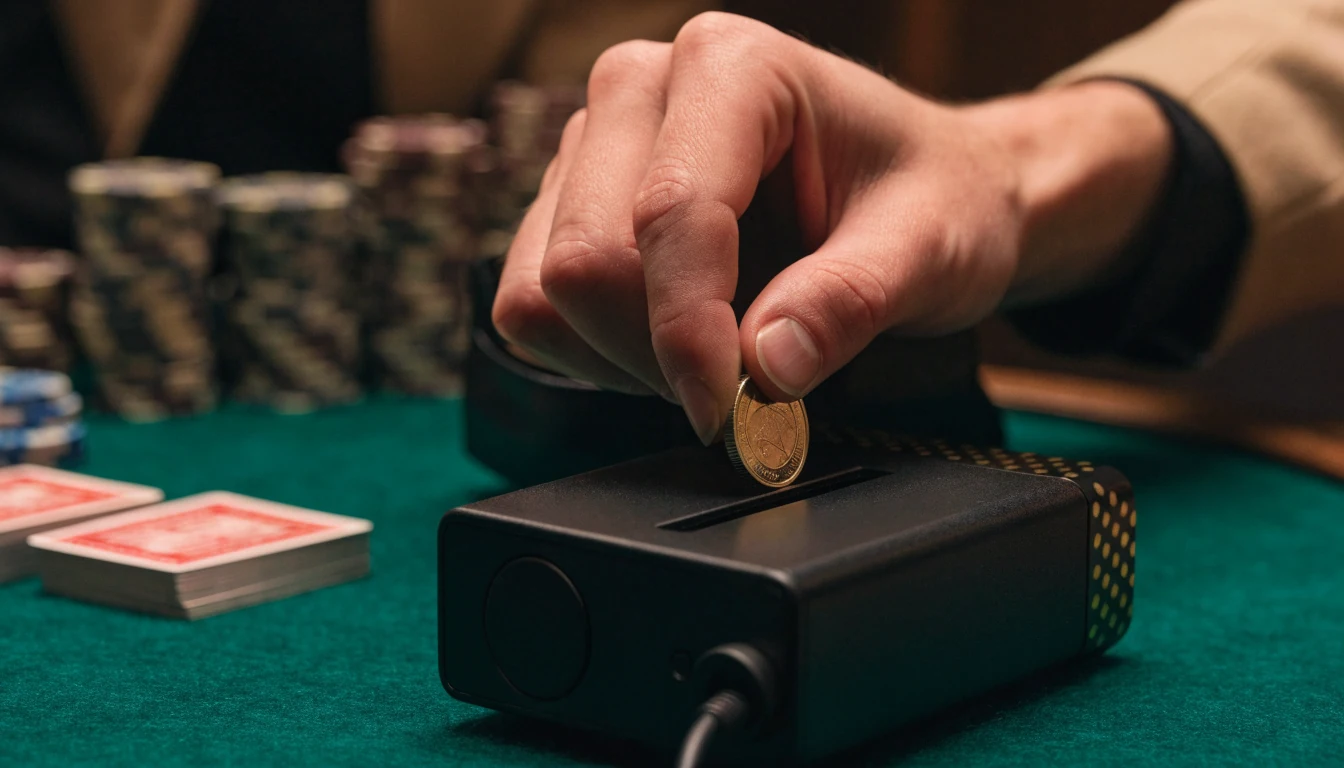
The distinction has consequences beyond payment. A UKGC-licensed casino sits within a system of regulatory obligations and complaints arrangements. An offshore casino operates outside that system. A person gambling at an offshore site is not thereby breaking the law, but does not have the UKGC regulatory safety net, UKGC dispute resolution or GamStop integration there. Accessibility is not equivalent to oversight. The internet has never been especially good at making that distinction visible.
The Commission’s role is also not limited to a single payment decision. Its licensing framework governs the operator’s commercial activity in Great Britain. The payment method is one part of that activity, but cryptocurrency acceptance is barred for licensed operators. A claim that a casino is “UK-licensed” and takes ADA should therefore be treated as a contradiction to resolve, not as a particularly attractive combination of features.
There is a further geographical nuance. The Gambling Act 2005 governs gambling in England, Wales and Scotland, while Northern Ireland has a different legal framework. The Commission’s stated remote-gambling remit concerns consumers in Great Britain. “UK casino” is common shorthand, but the legal boundary is not simply a single rule applied identically across every part of the United Kingdom. That makes careful use of the term important; it does not create an exception allowing a UKGC licensee in Great Britain to accept Cardano.
For a comparison of Cardano casinos, then, the first dividing line is not which site has the best-looking payment page. It is whether the claim concerns a UK-licensed casino or an offshore operation outside the Commission’s system. A site may be described as accepting ADA, but that description cannot make it a UKGC-licensed payment option. And where an offshore casino is involved, British regulatory protections do not follow the player through the screen.
The register is the practical reference point for a business’s operating licence. Checking an operator’s licence details against the UK Gambling Commission’s public register is more meaningful than relying on a badge, a payment logo or the word “regulated” in promotional copy. The distinction is plain, even when the labels are not.
Regulatory Risk
UK-licensed operators are prohibited from accepting cryptocurrency. A site claiming to be both UKGC-licensed and ADA-compatible presents a regulatory contradiction.
What a Cardano Casino Comparison Can—and Cannot—Establish
A comparison involving Cardano has to separate two questions that are easily folded into one: what rules govern gambling in the United Kingdom, and what can actually be established about casinos that accept ADA. The first has a clear answer. The second cannot be settled by applying general rules about gambling or cryptocurrency to a particular coin.
In Great Britain, commercial remote gambling offered to local customers falls under the UK Gambling Commission’s licensing system. The legal status of an operator is therefore not determined by the payment method a site advertises, nor by the fact that a cryptocurrency exists. A comparison can explain that regulatory boundary, but it cannot turn it into evidence that a particular Cardano casino operates, accepts ADA or serves UK customers.
That distinction matters because a familiar casino feature can look like proof of a wider arrangement. It is not. The existence of ADA says nothing by itself about an operator’s licence, its terms, or the route available if a dispute arises. Nor does a general account of UK gambling law establish a special legal category for Cardano. The currency may be the subject of a search or a marketing claim; the regulatory question remains about the operator and the service it offers.
Offshore gambling needs similar care in description. The UK does not criminalise individuals simply for gambling with an offshore operator. That does not make an offshore casino part of the UK system. Such an operator sits outside the UKGC regulatory safety net: players do not have UKGC dispute resolution or the protections and routes attached to a locally licensed service. Offshore status is a boundary, not a substitute licence.


There is a social history in that distinction. Gambling regulation is built around the place where a service is offered and the responsibilities imposed on the business, rather than around the novelty of the thing used to pay. A digital asset can cross borders with ease; accountability does not travel so neatly. The comparison is most useful when it keeps those two matters apart instead of treating crypto acceptance as a badge of legitimacy.
Tax is another general issue, not a Cardano-specific selling point. Gambling winnings in the UK are described as outside income tax and capital gains tax, regardless of whether they are won in pounds or another currency. Published accounts also disagree over a related point: one position treats winnings as untaxed regardless of currency, while another says a gain arising when Bitcoin Cash winnings are converted into pounds may be subject to capital gains tax. That disagreement should not be silently converted into a definitive claim about ADA. It concerns the distinction between gambling winnings and a later change in an asset’s value, not proof of any casino’s payment arrangements.
A sound comparison can therefore establish the limits of the UK framework, distinguish licensed gambling from offshore activity and treat tax claims cautiously. It cannot infer that ADA is accepted because other cryptocurrencies are discussed in casino coverage, or transfer facts about one coin to another. The useful standard is plain: a general rule is not evidence of a particular payment feature.
- Distinguish between licensed gambling and offshore activity
- Treat tax claims with caution
- Verify specific payment features via evidence
- Infer ADA acceptance from general crypto language
- Transfer facts from one coin to another
- Use general rules as evidence of specific features
No shortcut around evidence.
Cardano Casino Sites: The Evidence Gap
A casino described as “Cardano” or “ADA-enabled” makes a specific promise: that the cryptocurrency can be used at that site for gambling. The label alone does not establish that promise. At present, there is no confirmed named casino site that can be identified as accepting ADA.
That distinction matters because cryptocurrency language is often broad. A site may discuss digital assets, display a crypto symbol or describe itself as a crypto casino without establishing that Cardano is among its usable payment methods. Bitcoin, Bitcoin Cash and ADA are separate assets; a statement about one does not demonstrate support for another. The same care applies to pages that group several coins together. A general reference to crypto is not confirmation of ADA acceptance.
For people looking for a Cardano gambling site, the useful question is not whether the word “Cardano” appears in a description. It is whether the operator clearly identifies ADA as an available method and explains how that method works at the site. Without that concrete connection, “Cardano casino” remains a category label, not a dependable description of a particular venue.
The same problem arises with claims about Cardano casino slots. The phrase can suggest that a particular collection of games is available to play using ADA, but the two claims are separate: one concerns the games on offer, the other concerns how a player can fund gambling. A game’s presence at an online casino would not, by itself, show that Cardano payments are supported.
A named operator, a page about cryptocurrency and a working Cardano payment route are not interchangeable pieces of information. Descriptions can also become stale as operators change their payment arrangements, so a site name copied from an old directory would not settle the matter.

The wording can make an uncertain claim look settled. “Cardano casino” sounds like a recognised type of venue, while “casino accepting ADA” sounds like a checked feature. Neither expression should be treated as proof on its own. A reliable description would need to connect a named operator to an actual ADA payment option, rather than infer acceptance from general crypto language.
For now, Cardano casino sites are better understood as a search category than as a confirmed group of named venues. No particular site can be presented as a verified place to gamble with ADA, and no specific ADA casino slots can be identified. The distinction is plain, if less satisfying than a list: a label is not a payment method.
Crypto Casinos Accepting ADA: What Is Actually Verified
The phrase “crypto casino” is broad; it does not, by itself, identify which digital assets a site accepts. A casino may use crypto language in its branding or describe itself as crypto-friendly without that wording establishing that Cardano’s ADA is available as a payment option. The distinction is small in a slogan and decisive at a cashier.
A claim that a casino accepts ADA needs to mean something concrete: the asset is named as an available method, and the site’s payment terms explain how it can be used. General references to cryptocurrency do not settle that question. Nor does support for one coin establish support for another. Bitcoin Cash, for instance, is a separate asset; observations about its use at casinos cannot be transferred to Cardano by placing both under the same broad label.
Support for one digital asset, such as Bitcoin Cash, does not establish support for Cardano (ADA), as they are separate assets.
This is where lists of crypto casinos can blur categories. A list may group operators by their supposed openness to digital currency, while leaving the actual payment options unstated. That can make a broad description look like a specific promise. For someone comparing ADA casinos, the difference is between a site that accepts cryptocurrency in some form and one that explicitly offers ADA. Those are not interchangeable claims.
The same care applies to language about deposits and withdrawals. A mention of Cardano in promotional copy would not, on its own, establish that ADA can be used in both directions, or clarify the conditions attached to either transaction. Payment details need to identify the asset and the function it serves. Without that precision, “accepting Cardano” remains a label rather than a dependable description of how a casino works.
There is a quiet habit in online commerce of letting categories do the work of evidence. “Crypto” sounds specific because it names a technological family; in practice, it can conceal the very distinction that matters. ADA is not a synonym for digital currency generally, any more than a broad payment heading tells a customer which methods sit beneath it.
For a sound comparison, the wording should therefore be read narrowly. A reference to crypto is not proof of ADA support; a reference to ADA should be tied to an explicit payment option and its stated terms. Anything broader risks turning an appealing category into an assumption. Not the same thing.

Why There Is No Verified ‘Top’ Cardano Casino List
A ranking is more than a collection of names. Calling one Cardano casino “top” implies that it has been identified as accepting ADA and compared with other qualifying sites on some consistent basis. Without that foundation, a numbered list would give an impression of testing and distinction that the label cannot support.
A meaningful comparison would need to establish what each operator actually offers: whether ADA can be used for gambling, which terms govern that payment, and whether the same conditions apply to customers in the UK. It would also need a fair basis for weighing those details. A site’s general reputation, a broad claim that it accepts cryptocurrency, or the presence of other digital coins does not establish Cardano support. Nor does it show that one ADA option is better than another.
That distinction matters because rankings travel well beyond their original context. A list can be copied, shortened or treated as a recommendation, while qualifications disappear. The word “top” then lends authority to a claim that may not hold for a particular customer or may have changed since publication. A polished table cannot repair that problem. It can only make the unsupported comparison look more settled.
For UK players, there is a further boundary: offshore casinos sit outside the UKGC regulatory safety net. Playing at an offshore casino is not itself a criminal offence for an individual, but there is no UKGC dispute resolution or GamStop integration. Those consequences are separate from whether an operator accepts ADA, and they cannot be turned into a quality score that makes the underlying acceptance claim reliable.

A responsible ranking therefore needs more than a plausible brand name and a crypto payment badge. It needs identifiable candidates, current terms and comparable information about the feature being ranked. Without those, the honest editorial choice is not to fill a list with guesses or to transfer claims about other cryptocurrencies to Cardano. No ranking is preferable to a fabricated one.
That is less satisfying than a table of winners. It is also more useful: a ranking should reduce uncertainty, not disguise it.
UK Casinos Accepting Cardano: A Claim the Evidence Cannot Confirm
The phrase “UK casino accepting Cardano” combines two ideas that do not fit together under the UK licensing rules. Operators licensed to serve customers in Great Britain are not permitted to accept cryptocurrency. ADA is a cryptocurrency, so a UKGC-licensed casino cannot offer it as a gambling payment method.
That is a regulatory boundary, not a judgement about Cardano’s technology or its usefulness for transferring value. The distinction matters because a website may be accessible from the UK, use British-facing language or display prices in pounds without being a UK-licensed casino. Location and appearance do not establish the licence behind a gambling service.
Accordingly, no casino can be identified here as both UK-licensed and accepting ADA. Nor does the general presence of cryptocurrency at offshore casinos establish that any particular operator takes Cardano. A claim of acceptance needs to be tied to the specific currency and operator; one cannot be inferred from another.

Offshore casinos sit outside the UKGC regulatory system. Gambling by an individual at an offshore casino is not itself criminalised in the UK, but that does not make the operator locally licensed or bring the player within the UKGC regulatory safety net. Offshore players do not have UKGC dispute resolution or GamStop integration. The distinction is practical as well as legal: access to a website is not the same as access to the protections attached to a UK licence.
A specialist review may describe a casino as serving UK players or accepting crypto, but neither description on its own demonstrates UKGC authorisation or ADA support. Those are separate claims. A broad label such as “crypto casino” cannot establish which tokens are accepted, and a UK-facing label cannot establish that the site is licensed to offer gambling in Great Britain.
For licensed operators, the rule is clear: cryptocurrency is not an acceptable deposit method. For offshore operators, a claim that ADA is accepted would require operator-specific confirmation; it cannot be treated as a UK-licensed payment option. The wording may sound simple. The status is not.
This difference also changes what “UK” means in a casino listing. It might refer only to the intended audience or the countries from which a site can be opened. It does not convert an offshore service into a locally licensed one, and it does not create a UKGC complaints route where none exists. The phrase “UK casinos accepting Cardano” therefore cannot be read as a verified category of UK-licensed gambling services. It describes a claim that must be tested against both the operator’s licence and its stated payment methods.
Regulatory Reality
- UKGC-licensed casinos cannot accept ADA
- Offshore casinos lack UKGC regulatory safety nets
- Access to a website is not equivalent to UK licensing
- “UK casino accepting Cardano” is a contradiction under current rules
No-KYC Cardano Casinos: No Verified Basis for the Claim
A casino described as “no-KYC” is making a claim about identity checks, not merely about how an account is opened. An email-and-password registration, where offered, would not by itself establish that a player can deposit, gamble and withdraw without later being asked to provide documents. Those are separate stages, and a label on a website does not settle what checks apply to each.
That distinction matters in Britain. Operators serving customers in England, Scotland and Wales must hold a Gambling Commission licence, and licensed operators must verify a customer’s age before allowing a deposit. A promise that no identity checks will ever be required sits uneasily with that obligation. Age verification is not the same as every possible customer check, but it rules out treating “no checks” as a reliable description of licensed British gambling.
Reports about Bitcoin Cash casinos cannot fill in the picture for Cardano. A practice described for one cryptocurrency, or for particular offshore operators, does not establish that an ADA casino follows the same registration, verification or withdrawal procedures. Nor does the presence of a cryptocurrency payment option determine when an operator may request identification.
Offshore casinos stand outside the UKGC regulatory system. Playing at one is not a criminal offence for the individual, but it comes without the UKGC regulatory safety net: there is no UKGC dispute resolution or approved alternative dispute resolution route, and no GamStop integration. A relaxed registration process, if an operator advertises one, does not replace those protections.

The wording also leaves practical questions unresolved. A site might permit account creation with few details yet reserve the right to check identity before releasing funds or investigating an account. Without clear, binding terms, “no-KYC” can describe little more than the first screen of registration. That is a thin promise.
For Cardano, the label should therefore be treated as an operator claim, not as a dependable description of the whole customer relationship. The relevant terms would need to explain when identification can be requested and what happens if it is not supplied. For a UK-licensed casino, the licence number can be checked on the Gambling Commission’s public register; an offshore site does not acquire UKGC oversight by accepting British customers.
Cardano Deposits and Withdrawals: No Verified Payout Times
A Cardano payment has two distinct stages in a casino setting: moving ADA to an account, then receiving a withdrawal back to a wallet.
Bitcoin Cash figures do not fill that gap. A specialist review of BCH casinos described deposits as receiving one on-chain confirmation, with that confirmation taking ten minutes, and reported quick cashouts at two named operators. Those are observations about Bitcoin Cash and particular services, not a benchmark for Cardano. Networks differ; casino procedures differ too. The resemblance between two crypto payment options is not evidence of matching performance.
Why Bitcoin Cash data is not a benchmark for ADA
Networks differ and casino procedures vary; therefore, observed transaction times or confirmation speeds for Bitcoin Cash cannot be used to predict Cardano payment performance.
“Fast payout” is a phrase that makes an appealing promise while leaving out the part that matters: what starts the clock, and what can stop it. A blockchain transfer and a casino’s approval of a withdrawal are separate events. A short network interval, even if documented for a particular asset, would not by itself establish how quickly an operator releases funds.
The same distinction applies to requests to play slots using Cardano. A deposit route, if offered by a particular casino, would not establish that every game accepts ADA directly or that a withdrawal returns in the same form. Payment terms need to identify the asset, the processing stages and any operator review. Without those particulars, “Cardano casino payouts” describes a hoped-for convenience, not a measurable service.
There is also a practical difference between a displayed estimate and a dependable payment record. A stated processing window is an operator’s term; an observed transaction is evidence of one instance, not a standing guarantee. Neither should be confused with an ADA-wide rule. Cardano payment timing belongs to the actual network transaction and the casino’s own handling of it, not to a number borrowed from another cryptocurrency.
No shortcut by analogy.
Playing Casino Games with ADA: What Can Be Confirmed
A casino’s games and its accepted currency are separate questions. A site might describe itself as crypto-friendly, but that label alone does not establish that Cardano can be used there, or that any particular game is available to play with ADA. Nor does a list of games, by itself, show which payment methods an operator supports.

That distinction matters because “playing with Cardano” can mean more than one thing. It might refer to depositing ADA before play, keeping a balance in ADA while using the site, or receiving winnings in the same currency. These are different arrangements. None can be inferred from a general reference to cryptocurrency, and none confirms access to a particular game.
The British legal definition offers a useful, if narrower, way to think about the word “casino”: it concerns an arrangement that gives people an opportunity to take part in casino games. It does not identify those games, connect them to a cryptocurrency, or certify that an operator makes them available to UK customers. A game catalogue and a payment option are not interchangeable evidence.
So claims about Cardano-compatible tables, slots or other casino play need to be checked at the level of the specific operator and the specific arrangement. Without that detail, naming games would turn a category into a promise. It would also blur the difference between games offered on a site and games that can actually be played using ADA.
For UK readers, there is an additional boundary: online gambling is legal only through an operator holding a UK Gambling Commission licence. A game’s presence on a website does not change that rule, and a cryptocurrency reference does not establish that the operator is licensed.
The careful answer is therefore limited. Cardano casino play cannot be confirmed as a general feature, and no particular game can be identified as playable with ADA. The distinction is plain. A game is not a payment method.
best
When considering Cardano ADA casinos in the UK, check the payment details that are available before choosing where to play. This list offers a concise reference point for the operators covered on this page.
Payout speed: 1-3 business days Revery Play lists a payout speed of 1–3 business days.
Payout speed: 1-3 business days Chanze lists a payout speed of 1–3 business days.
Payout speed: 1-3 business days Amunbet lists a payout speed of 1–3 business days.
Payout speed: 1-3 business days SpinFormula lists a payout speed of 1–3 business days.
Payout speed: 1-3 business days NightLuck lists a payout speed of 1–3 business days.
Payout speed: 1-3 business days Zombillion lists a payout speed of 1–3 business days.
Payout speed: 1-3 business days BeOnBet lists a payout speed of 1–3 business days.
Payout speed: 1-3 business days EvoSpin lists a payout speed of 1–3 business days.
Payout speed: 1-3 business days Jetsetspins lists a payout speed of 1–3 business days.
Payout speed: 1-3 business days NightWin lists a payout speed of 1–3 business days.
“Best” is a word that sounds like a verdict but often conceals a set of choices. For a casino, those choices might concern payment methods, game selection, bonuses or the rules governing complaints. For an ADA casino in Britain, those distinctions cannot be turned into a reliable recommendation: the existence of a Cardano payment option does not establish that a site is suitable, lawful for the British market or protected by British gambling safeguards.
The more useful test is not whether a site advertises itself as the best place to play with ADA, but what kind of service it is offering and under whose rules. In Great Britain, a business selling remote gambling to customers must hold a UK Gambling Commission licence. The Commission regulates commercial gambling there; a licence from an offshore authority is not a substitute. A site outside the UK system may be accessible, but that does not bring it inside the system.
Offshore casino players do not have access to UKGC dispute resolution, approved alternative dispute resolution services, or GamStop integration.
That distinction changes the meaning of “best”. A payment method may be attractive on its own terms and still sit within a service that has no UKGC regulatory safety net. Offshore casino players cannot use UKGC dispute resolution or an approved alternative dispute resolution service, and they do not receive GamStop integration. They are not breaking the law merely by gambling offshore, but the absence of player liability is not the same thing as the presence of protection. A quiet distinction, with practical consequences.
For licensed operators, the rules reach beyond the licence itself. Before a customer can deposit, the operator must verify age. New customers must be prompted to set a financial limit before their first deposit, and account-level controls must remain accessible. Licensed casinos must provide responsible gambling tools, including self-exclusion, and an internal complaints route with access to approved alternative dispute resolution. Operators also contribute to the Research, Education and Treatment levy.
Those obligations are not decorative extras beside the payment screen. They are part of what makes a licensed service accountable. A Cardano-branded payment claim cannot be used to infer that these protections apply. Nor should a reassuring design, a long list of games or a generous-sounding offer be treated as evidence of regulatory standing.

Bonuses create another familiar distortion. Offers are often presented as though the size of the headline reward were a measure of value; the conditions decide what the offer actually means. For UKGC-licensed casinos, wagering requirements on bonuses are capped at 10x under the rule that took effect on 19 December 2025. That is a specific rule for licensed operators, not a reason to assume the same terms apply at an offshore casino. A bonus displayed beside an ADA logo does not establish either the applicable rules or the practical value of the offer.
There is a broader social point in the British approach. Gambling is not treated simply as a private exchange between a customer and a website. The state makes the operator responsible for checking age, providing controls and answering complaints because the consequences of gambling are not confined to the moment a bet is placed. Licensing gives those expectations an institution to answer to. A cryptocurrency label does not dissolve that arrangement.

Accordingly, a “best ADA casino” verdict would require more than a payment claim. It would need to establish that the operator can lawfully serve British customers, what safeguards and complaint routes apply, and whether the advertised ADA service is genuinely available on the stated terms. Without those foundations, ranking sites would turn uncertainty into endorsement. The label would do more work than the evidence.
The sensible standard is less glamorous: distinguish a claim about a coin from a claim about a casino. A site may mention Cardano, yet that alone says nothing about its licence, its consumer protections or whether its bonuses are worth accepting. In Britain, the operator’s regulatory status determines whether the UKGC framework applies. That is not a flourish for a comparison table. It is the comparison’s starting point.
Can I legally deposit Bitcoin Cash at UK casinos?
No UK Gambling Commission-licensed casino accepts Bitcoin Cash. Individuals are not criminalised for gambling at offshore casinos, but those sites are outside the UKGC’s regulatory protections.
What happens to identity verification at a Bitcoin Cash casino operating outside UK licensing?
Offshore BCH casinos commonly use wallet-based deposits and minimal identity checks. Many let players create an account with only an email address and password, though this does not guarantee that further checks will never be requested.
Are Bitcoin Cash casinos safe for UK players?
They do not provide the UKGC regulatory safety net, UKGC dispute resolution or GamStop integration. A site’s offshore licence does not give it UKGC oversight.
Are Bitcoin Cash casino winnings taxable in the UK?
Gambling winnings are not subject to UK income tax or capital gains tax, regardless of whether you win in pounds or cryptocurrency. Converting BCH winnings back to pounds can have separate tax implications.
Is a casino accepting Bitcoin Cash automatically unlicensed for British players?
A casino accepting BCH cannot be a UKGC-licensed operator accepting that payment method, because UK-licensed operators are prohibited from taking cryptocurrency. Check the operator’s details on the Commission’s public register rather than relying on a licence badge or promotional claim.
Does any Gambling Commission-licensed casino currently accept Bitcoin Cash deposits?
No. No UKGC-licensed casino currently accepts Bitcoin Cash as a direct payment method.
Do I need to verify my identity to play at a BCH casino?
Often, offshore BCH casinos require only an email address and password to create an account, with minimal traditional KYC checks. They may still request identity checks later.
Can I legally gamble with Bitcoin Cash in the UK?
Individuals are not criminalised for gambling at offshore casinos, but those casinos are outside the UKGC system and its protections. UKGC-licensed operators cannot accept cryptocurrency, including BCH.
Prepared by the Rainbow Riches Casino 3 editorial staff.