£1 Minimum Deposit Casinos in the UK: How It Works
 Available in GB
A £1 minimum is a general funding rule; the cashier shows which payment routes accept that amount and the terms that apply.

Table of Contents
- How a £1 Deposit Works in Practice
- The Gap Between a £1 Minimum and a Low-Deposit Casino
- What Makes a Casino a Better Fit for a £1 Deposit
- Online Play, Real-Money Stakes and the £1 Balance
- Slots on a Small Bankroll
- Bonuses, Free Spins and the Conditions Behind Them
- PayPal and Other Payment Routes for Small Deposits
- Pay by SMS: A Small Deposit with a Narrow Route
- The 1016 Search and New £1 Casinos
- Small Deposits, Spending Limits and Withdrawal Friction
How a £1 Deposit Works in Practice
A £1 minimum is a cashier rule, not a promise that every part of a casino account will work at that amount. At a site that genuinely accepts it, the figure means a deposit of one pound can be submitted as the smallest permitted funding transaction. It does not mean that every route shown in the cashier will accept that sum, or that the deposit unlocks every feature attached to the account.
The distinction is small in wording and large in practice. A casino may advertise a £1 minimum while setting separate conditions for particular payment methods. The cashier is where those conditions become concrete: it shows the available routes, the amount each route will accept and any relevant terms before a transaction is confirmed. The general minimum is therefore a starting point, not a universal setting applied identically to every button.
There is also a difference between being able to register and being able to deposit. An account may be created before any money is added; the £1 figure concerns funding it. For real-money gambling in the UK, the operator must hold the appropriate Gambling Commission licence, and customers must be at least 18. The deposit facility is part of a regulated account, not a separate loophole around the rules.
When looking for a UK casino with a £1 minimum deposit, check the deposit terms before signing up, as they can vary. This list gives the available payout-speed information for each operator.
Payout speed: 1-3 business days Revery Play has a stated payout speed of 1–3 business days.
Payout speed: 1-3 business days Chanze has a stated payout speed of 1–3 business days.
Payout speed: 1-3 business days Amunbet has a stated payout speed of 1–3 business days.
Payout speed: 1-3 business days SpinFormula has a stated payout speed of 1–3 business days.
Payout speed: 1-3 business days NightLuck has a stated payout speed of 1–3 business days.
Payout speed: 1-3 business days Zombillion has a stated payout speed of 1–3 business days.
Payout speed: 1-3 business days BeOnBet has a stated payout speed of 1–3 business days.
Payout speed: 1-3 business days EvoSpin has a stated payout speed of 1–3 business days.
Payout speed: 1-3 business days Jetsetspins has a stated payout speed of 1–3 business days.
Payout speed: 1-3 business days NightWin has a stated payout speed of 1–3 business days.
A genuine minimum should be read literally: can the account be funded with £1 through the route selected? If the cashier insists on a larger amount, that route does not support a £1 deposit, even if the casino’s general advertising uses the smaller figure. A difference between an advertised minimum and the available transaction is not a subtle technicality. It changes what the customer can actually do.
Nor does a successful £1 payment settle what happens afterwards. The funds may appear in the account balance, but that does not establish that every promotion is available or that the same amount can later be withdrawn. Those are separate conditions, governed by the promotion rules and the operator’s cash-out terms. The deposit amount answers one narrow question: what is the least that can be paid in at that point, using that method?
This is why the phrase “£1 minimum deposit casino” can describe several rather different arrangements. The cashier might accept a pound through one route but require more through another. It might accept the payment while excluding that amount from a welcome offer. It might allow the deposit but set a higher threshold for withdrawing funds. A small entry price is not a summary of the whole account.
A specialist casino review reported verifying six UK Gambling Commission-licensed casinos with genuine £1 minimum deposits. That is a snapshot of a reviewed set, not a permanent count of every operator in the market. Cashier settings can change, and the relevant test remains the live deposit screen and the operator’s terms. The neatness of the number should not be mistaken for a fixed category.
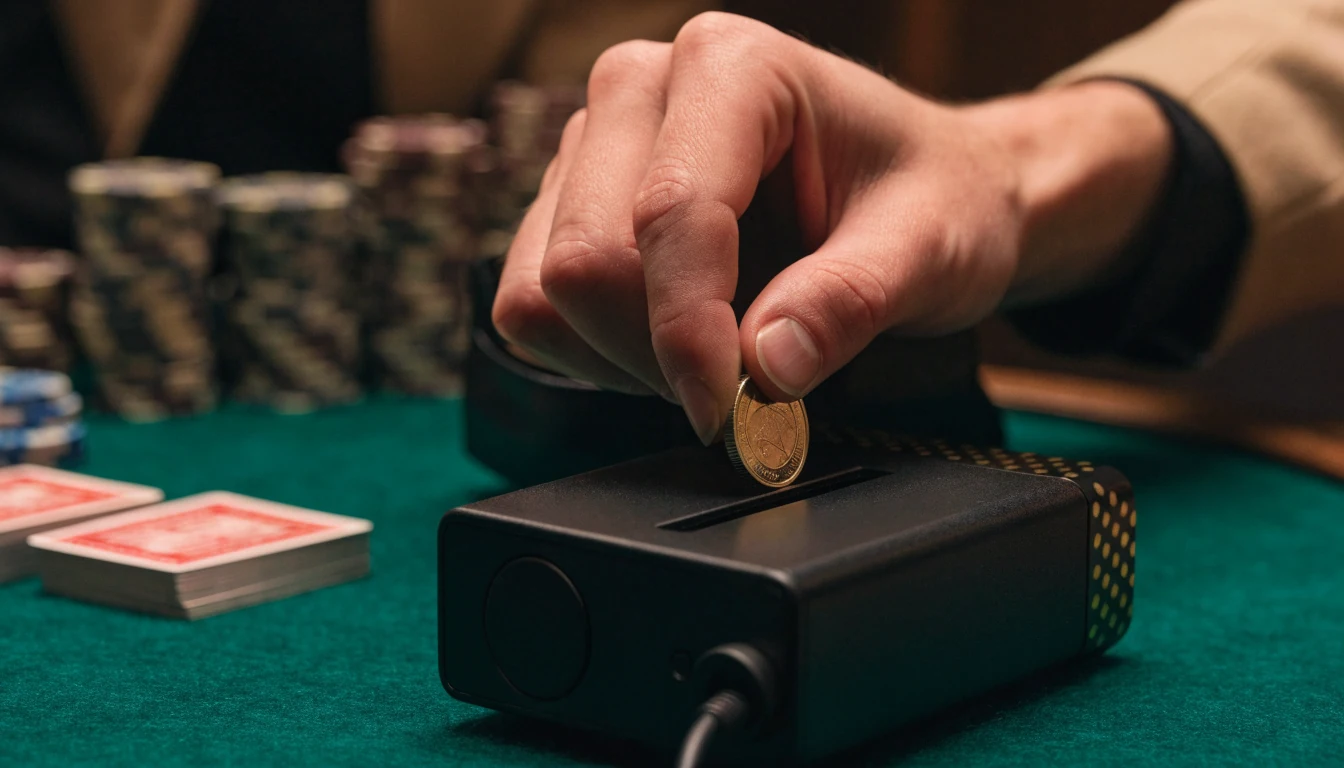

The same caution applies to the idea that “minimum” means “available everywhere”. Payment routes are separate services, and operators can apply different thresholds to them. A £1 figure beside one method does not transfer automatically to another. Even within a single account, the displayed minimum may depend on the selected route and the conditions attached to it. The cashier is less a doorway with one lock than a row of doors with different keys.
The transaction itself is also not the same thing as a guaranteed outcome. A payment can be declined or fail to complete; until it is accepted and credited, it has not become spendable casino balance. The account’s displayed balance, rather than the amount typed into a payment screen, is the practical confirmation that funding has gone through. A small deposit still follows the ordinary sequence of selecting a method, entering an amount, confirming the payment and waiting for the account to reflect it.
In a market where many services are designed around larger transactions, the £1 tier is an unusually narrow setting. It can make the first act of funding possible with very little money, but it cannot erase the distinctions between cashier eligibility, payment compatibility, promotional qualification and withdrawal rules. Each is a separate piece of the arrangement.
The plain reading is the safest one: £1 is the lowest amount the relevant cashier route accepts, not a guarantee of what the rest of the account permits. Small threshold. Separate terms.
Attention: A £1 minimum deposit is a cashier rule for funding an account; it does not guarantee that all account features, promotions, or withdrawal options are available at that amount.
The Gap Between a £1 Minimum and a Low-Deposit Casino
A £1 cashier minimum is the bottom edge of the market, not a synonym for every low-deposit casino. It describes a specific threshold: an account may accept a pound, but that does not make the same amount a general standard across UK sites or payment routes. A broader idea of “low deposit” can include a higher opening amount.
A specialist review of UK payment thresholds places direct banking in a different bracket: £10 is the stated typical minimum, with some operators setting it at £5 and others at £20. Those figures make the label “low” relative. A £5 entry point may look modest beside a £20 requirement, yet it is still not a £1 deposit.
The distinction also reflects how a cashier is assembled. A casino can set one minimum for one route and another for a different route; a small figure on a page does not, by itself, establish that every listed method will accept it. The £1 tier is described in specialist reviews as rare, and associated with particular payment options such as Boku or Payforit mobile billing. It is a narrow doorway, rather than a general feature of low-deposit play.
For someone comparing minimum-deposit casinos, the useful question is therefore not simply whether the advertised amount sounds small. It is which threshold applies to the intended payment route. Direct banking has its own reported range, while the £1 level sits apart as an exceptional tier.
“Low deposit” is elastic language. The cashier minimum is not.

What Makes a Casino a Better Fit for a £1 Deposit
A small cashier minimum is only one part of whether a casino suits a £1 deposit. The useful comparison is less glamorous than a ranked list: does the cashier actually accept that amount, does the chosen payment route allow it, and is the operator properly licensed for the British market? A site can look suitable on a headline figure while one of those details changes the practical answer.
The first distinction is between the casino’s stated minimum and the minimum attached to a particular payment method. At many UK operators, the cashier minimum is the same across available methods. Some, however, set a higher threshold for direct banking than for debit cards or e-wallets. That difference matters at the lowest end: a casino may accept a pound through one route without accepting it through every route shown in its cashier.
The payment method is therefore part of the comparison, not a footnote. Visa and Mastercard debit cards are widely accepted and can support small deposits. Some e-wallets also allow transactions at this level, but availability depends on the operator and the account. A familiar logo does not settle the question. The cashier’s own limits are the relevant terms, and they should be checked before a deposit is attempted.
A genuine minimum should also be clear in the cashier rather than inferred from promotional wording. “From £1” may refer to a particular payment route, while other routes carry a higher minimum. The important detail is not merely whether the amount appears somewhere on the site, but whether it applies to the intended method and to the account being opened. A low figure that cannot be used with the selected payment option is a technicality dressed as a choice.
- Check the minimum for the specific payment route intended
- Verify the operator holds a UK Gambling Commission licence
- Confirm the minimum is explicit in the live cashier
- Assume a general £1 minimum applies to every payment method
- Rely on promotional wording instead of cashier terms
- Mistake a low entry point for a guarantee of safety
Legitimacy is a separate test. Online casinos serving players in Great Britain must hold the relevant operating licence from the UK Gambling Commission. A low deposit threshold does not make an operator safer, more reputable or more suitable by itself; the licence is the basic legal condition for a casino serving the market. The operator’s identity and licence status should be consistent across the site and the regulator’s register. A polished cashier is not a substitute for that check.
There is a social reason the distinction matters. The small deposit is often presented as a measure of welcome: a modest entry point, apparently open to anyone. Regulation asks a less sentimental question. Who is responsible for the account, what rules govern the operator, and what protections apply when money is accepted? The pound may be small; the obligations attached to taking it are not.
A better fit also makes its terms legible before money moves. The cashier should show the minimums for the available methods, while the account information should explain which route can be used for deposits and withdrawals. A site that makes the initial payment easy but obscures the terms governing the account has not made the experience simpler. It has merely moved the complication elsewhere.
Newness is not a quality test either. A recently launched casino may have a low advertised entry point, but its age says little about whether the cashier accepts the intended amount or whether the operator is licensed. The same applies to labels such as “trusted” and “safe”: they are conclusions, not evidence. Clear payment terms and a verifiable UKGC licence offer firmer ground than confident wording.


The comparison can remain modest. Some UK casinos do accept deposits of £1, but that does not establish that every route at those casinos will accept the same amount. The payment method may have a higher threshold, and the operator may apply different cashier limits to direct banking, cards and e-wallets. The most useful choice is therefore not necessarily the site with the smallest number in its advertising. It is the site where the actual cashier terms match the intended payment route and the operator’s status can be verified.
Before a first deposit, the account process should also offer the required financial-limit setting. That is part of the UK framework for remote gambling, not a decorative feature of a responsible-play page. A small initial amount can make spending appear inconsequential, but the interface should still treat the decision as a financial one.
For a £1 deposit, the practical standard is plain: a licensed operator, an explicit cashier minimum for the chosen method, and payment terms that remain clear beyond the first transaction. No mystery required.
Online Play, Real-Money Stakes and the £1 Balance
A £1 balance changes character once it leaves the cashier and becomes money in play. Online access makes that transition almost frictionless: a casino account can be opened on a phone or computer, and a game can be started without the rituals associated with a physical venue. But the smallness of the balance does not make the activity symbolic. Each stake is still real money, and each result changes what remains available.
A £1 balance is a finite amount exposed to the pace of the game; it is a measure of access to play, not a measure of how long the session will last.
That distinction matters. A minimum deposit describes what can enter an account, not how long it will last once play begins. On screen, a pound can look like a neat, self-contained allowance. In practice, it is a finite balance exposed to the pace and stakes of the chosen game. The interface may make the next round easy to start; it cannot make the balance last.
Many online slots accept stakes between £0.10 and £0.20 per spin. At those levels, a £1 balance covers five spins at the higher stake or ten at the lower one, assuming no wins or other changes to the balance. A small run of play, then. A winning spin can extend it, but a sequence of losing spins can use it up just as quickly. Neither outcome is promised by the size of the initial deposit.
The arithmetic is plain; the experience can feel less so. A player may see a modest stake as a way to make a pound last, while the game presents each spin as a separate event rather than part of a dwindling total. That is one of the peculiarities of screen-based gambling: repetition is made tidy. The money, meanwhile, remains untidy. It can disappear in increments too small to attract attention until the balance is gone.
Online casinos offer many kinds of play, but not all use the same rhythm. A slot spin resolves quickly, while other games involve decisions or turns that shape the pace. A £1 balance therefore has no fixed duration even before the stake size is considered. The game, its rules and the choices made within it all affect how quickly the money is committed. An account balance is not a measure of time.

Mobile access sharpens this difference. A small screen can put real-money play within reach during an ordinary pause, with no physical journey to mark the beginning or end of a session. That is an access feature, not a financial advantage. The convenience of returning to a game does not enlarge the balance, and a screen that displays a pound clearly cannot make it stretch further.
There is a long cultural history behind the separation of gambling from place. Casinos once made their boundaries visible: a building, a room, a table, a journey home. Online play brings the activity into domestic and public spaces without carrying those boundaries along. Britain has responded not by treating the internet as a lawless annex, but by requiring operators serving its market to hold a Gambling Commission licence. Real-money online casino play is legal for adults aged 18 and over at properly licensed sites.
That framework matters more than the size of a deposit. A pound is not a special legal category, and a low balance does not turn gambling into something other than gambling. The account still belongs to an adult player, the games still involve stakes, and the operator remains subject to the rules governing licensed remote gambling. The legal structure is less visible than the game screen. It is not less important.
The rules also shape how slot play unfolds. Online slots in Britain cannot offer autoplay, so a player must initiate each spin rather than set a sequence running unattended. Each spin must last at least 2.5 seconds. These requirements interrupt the fantasy of a machine that can play itself while attention wanders. They do not guarantee that a small balance will last, but they do make each round a distinct action.
UK Slot Stake Limits
For online slots, the maximum stake per game cycle is £5 for customers aged 25 and over, and £2 for those aged 18 to 24.
Stake limits apply as well. For online slots, the maximum stake per game cycle is £5 for customers aged 25 and over, and £2 for those aged 18 to 24. Those ceilings sit far above the modest stakes often associated with a £1 balance, so they do not make a pound large. Their purpose is different: to constrain the upper end of slot staking. A small starting amount can still be spent quickly at much lower stakes.
This is where the phrase “real money” earns its weight. A virtual balance may be rendered as a number, but it refers to funds that could otherwise remain in a bank account or be used elsewhere. A pound spent on a spin is not merely a point deducted from a game. It is money committed to an uncertain result. The digital interface can soften that fact, especially when the stakes are small, but it cannot alter it.
A low balance can also change the way players interpret a win. A return may seem to replenish the original pound, creating the impression that play has reset. Yet a return is not the same as a fresh budget. The balance at any moment reflects earlier stakes and outcomes; it does not reveal what has already been spent or establish that further play is affordable. Looking only at the number currently shown can obscure the history that produced it.


Nor does one pound create a dependable test of whether a game is favourable. A brief session is too small to tell a meaningful story about a game’s longer-term behaviour. A win during a short visit is still a win; a loss is still a loss. Neither establishes what would happen in another session. The desire to extract a verdict from a tiny sample is understandable, but chance does not organise itself into a demonstration on demand.
Online and mobile play also blur the boundary between watching and participating. A game may be visible on a phone while other activities continue around it, yet a spin still places a stake. The fact that a session can be brief does not make the decision weightless. With a £1 balance, the small scale can encourage casualness: the amount looks easy to dismiss, while repeated actions can turn it into a fully spent balance.
A restrained approach does not need grand language. Before the first deposit, the operator must prompt a new customer to set a financial limit and provide account-level controls for managing limits. That requirement places a pause before the first act of funding, rather than leaving every decision to the moment a game is already open. A limit is a boundary, not a forecast of winnings or a promise that play will remain enjoyable.
The useful distinction is between access and endurance. A UK casino may permit a £1 minimum deposit, and its games may be available online or on mobile, but neither fact says how long play will continue. The answer depends on the stakes and the outcomes, with no guarantee that the balance will return to its starting point. A small deposit buys access to play, not a small share of certainty.
Small Balance Reality
A £1 deposit buys access to play, but the duration of the session depends entirely on stakes and outcomes.
For a player interested in online casino play with a £1 minimum deposit in the UK, the central question after funding is no longer whether a pound can reach the account. It is what that pound is asked to do once it is there. On a slot accepting modest stakes, it may provide a handful of rounds; on another game, the pace and structure will differ. In every case, the money remains exposed to chance.
A pound is a small balance. Not a small consequence.
Slots on a Small Bankroll
A £1 balance looks different once it becomes a sequence of slot spins. Many slots accept stakes from £0.10 to £0.20 per spin, so the same pound can fund ten spins at the lower stake or five at the higher one, assuming no winnings are returned. That is a short session measured in turns, not time.
The distinction matters because a slot’s minimum stake is not a promise that a small balance will last. Each spin uses part of the available money; a result may return some of it, but there is no fixed pattern in which wins arrive. A run without a return can leave the balance empty before the player has spent long on the game. A run with a return may extend play, but it cannot be treated as a reliable continuation.
This is the peculiar arithmetic of a small-deposit casino: the entry amount can be modest while the game still proceeds one paid decision at a time. At £0.10 per spin, the balance allows more attempts than at £0.20, but neither stake changes the uncertainty of the result. The lower figure buys more turns, not better odds.

A small balance also leaves little room for variation. If a slot offers different stake settings, moving above the lowest available amount reduces the number of spins the pound can support. The displayed stake therefore deserves more attention than a game’s visual theme or sound. On a limited bankroll, the cost of each turn is the immediate fact; the spectacle is decoration.
There is no universal £1 slot setting. The stated stake range describes what many slots accept, not every title or every casino configuration. A game may have a higher minimum, and availability can depend on the platform. A £1 deposit that reaches an account does not establish that every slot can be played with it. The useful distinction is between the amount deposited and the stake a chosen game permits.
Small-stake play can make a pound feel less like a bankroll than a test of how quickly a balance changes. That does not make the format inherently unsuitable; it means expectations need to match the arithmetic. Ten possible spins at £0.10 are not ten guaranteed rounds of entertainment, and five at £0.20 are not a promise of a longer session. They are simply the number of full-stake attempts the opening balance can cover if nothing comes back.
The smallest stake is the most forgiving in quantity, not in outcome. A pound remains a pound.
Bonuses, Free Spins and the Conditions Behind Them
A £1 cashier minimum and a £1 qualifying deposit are different promises. The first describes what can be paid into an account; the second determines whether a promotion is triggered. A casino may accept the pound without attaching a welcome offer to it. A specialist review of welcome promotions puts their qualifying deposits at £5 to £10, so a £1 payment can fund play while falling short of the stated entry condition.
Qualifying Deposits
A casino may accept a £1 deposit for funding, but welcome promotions often require a higher qualifying amount, typically between £5 and £10.
That distinction matters when an offer is described as a bonus for a minimum-deposit casino. The headline may suggest that a small payment opens the promotion, while the terms specify a higher qualifying amount. The deposit itself is not necessarily rejected; it simply does not earn the advertised bonus. Some operators also exclude the lowest deposit bracket from welcome promotions, as noted in specialist reviews. The cashier and the offer rules are separate pieces of the arrangement.
A “no deposit bonus” is different again: it describes an offer that does not require a qualifying deposit. It should not be confused with a welcome bonus that requires a small deposit, nor assumed to accompany every £1 minimum. The label says nothing by itself about eligibility, withdrawal conditions or whether an offer is available to a particular customer. Those details belong to the promotion’s terms.
Wagering conditions change the meaning of bonus money. A bonus balance is not simply cash ready to withdraw: the terms may require qualifying play before related funds or winnings can be cashed out. Older promotional material and specialist reviews have reported wagering requirements in the 30x–65x range for bonus value. That range should not be read as a current allowance for UK-licensed offers. Since 19 January 2026, gambling incentives at licensed operators cannot impose wagering above 10x on bonus funds. The date matters.


Free spins have their own distinction. A specialist review describes £1-deposit spin packages in a range of 10 to 100 spins, but the number offered does not reveal what any winnings will be worth or how they can be withdrawn. Winnings may carry a separate wagering condition calculated against the total won from the spins. Specialist reviews have reported conditions of 30x–65x on those winnings; for a current UK-licensed promotion, the legal ceiling applying since 19 January 2026 still matters. A large spin count is not a measure of withdrawable value.
The terms should therefore be read as a chain: qualifying deposit, bonus or spins awarded, wagering applied, and rules for releasing any resulting balance. The first link can fail at £1 even when the cashier accepts that amount. The rest can make an offer less generous than its headline suggests. Small print, doing its usual work.
PayPal and Other Payment Routes for Small Deposits
PayPal is often considered alongside cards when looking for a casino that accepts a £1 deposit, but the payment logo alone cannot settle the question. A casino may offer PayPal while applying a higher cashier minimum to that route, or may accept a small deposit by card but not through an e-wallet. The amount has to be checked against the method selected, not inferred from the casino’s general minimum.
At a given UK operator, the cashier minimum is generally shared across payment methods. Some casinos make an exception for direct banking, setting its threshold above the one for cards or e-wallets. That difference matters when the intended deposit is small: a payment option can be available without being available at the same amount.
Funding Restriction
Credit cards cannot be used for gambling deposits in the UK, including when routed through a money service business.
For UK gambling accounts, permissible routes include debit cards, bank accounts and e-wallets funded by debit. Credit cards cannot be used for gambling deposits, including when routed through a money service business; wallets that permit credit-card funds to be used for gambling are also not acceptable. The payment route is therefore more than a matter of preference. It is part of the boundary the regulated market draws around how gambling is funded.
There is also the arithmetic of charges. A specialist review reported flat transaction fees of £1 to £3 from some payment providers. That is not a universal charge, and it should not be attributed to PayPal without checking the particular transaction terms. But where such a fee applies, it can equal or exceed a £1 deposit. A small cashier minimum does not make a small payment economical.
PayPal compatibility, the casino’s minimum for that route, and any provider charge are separate details. A clear cashier should show the accepted methods and the amount required before a payment is confirmed. The neatness of a payment button can conceal a less neat calculation.


Pay by SMS: A Small Deposit with a Narrow Route
Mobile billing is one of the routes associated with the £1 minimum deposit at UK casinos, but that does not make it a standard option across the market. A specialist review describes the lowest deposit tier as rare and links it to particular services, including Boku and Payforit. The distinction matters: the cashier minimum belongs to the operator and the payment route together, not to SMS billing in general.
Pay by SMS can sound like a simple way to fund an account, yet the label alone says little about whether a £1 payment will be accepted. The relevant option must appear in the casino’s cashier, and its displayed minimum is the one that applies. A site may offer mobile billing while setting a higher minimum, or may not offer that route at all. The lowest tier is a narrow doorway, not a promise attached to every phone.

There is also a difference between a payment being processed through mobile billing and a casino accepting that payment at the smallest possible amount. Both conditions have to hold. Boku or Payforit being associated with £1 deposits does not establish that every operator using either service accepts a £1 transaction.
This is why the phrase “pay by SMS” cannot settle the question by itself. The cashier’s current terms determine whether the route and amount match. A small minimum, where available, is a feature of a specific payment arrangement—not a general property of mobile casinos.
The 1016 Search and New £1 Casinos
The number “1016” can appear alongside searches for a £1 minimum deposit and newly opened casinos, but it does not establish a special UK gambling rule or a separate category of casino. The meaningful point is narrower: a genuine £1 cashier minimum exists, but it is uncommon among UK-licensed sites.

A specialist review recorded six UK Gambling Commission-licensed casinos as accepting a genuine £1 minimum deposit. That is a snapshot from one review, not a permanent count or a live register of every operator. Cashier terms can change, and a site described as new may not have been checked against the same conditions. The label alone says little about whether its minimum is truly £1.
“New” also carries a certain commercial optimism. A recently launched casino may advertise a small starting deposit, while the cashier applies a different threshold to a particular payment route. The advertised figure and the amount accepted at checkout are not necessarily the same thing. A genuine minimum means the smallest deposit the cashier will process under the stated conditions, not merely a headline attached to a promotion.
The practical distinction is between a fresh brand and a verified £1 deposit option. The first is a matter of timing; the second is a specific cashier condition. Neither the unusual number nor the word “new” makes that condition more likely. With so few confirmed examples in a specialist review, the £1 tier remains an exception rather than a routine feature of the British market.
A small number, not a new rule.
Small Deposits, Spending Limits and Withdrawal Friction
Can players claim a bonus with a small deposit?
Yes, but a £1 deposit usually will not qualify for a welcome offer, which typically requires £5 to £10. Check the promotion terms, as some casinos exclude their lowest deposit tier.
Can I take out winnings from a £1 deposit?
You can withdraw only if you meet the casino’s withdrawal conditions. Some casinos set a minimum withdrawal above £1, so a £1 deposit does not guarantee that you can cash out £1.
What is the maximum wagering requirement in Great Britain?
Since 19 January 2026, gambling incentives in Great Britain cannot require more than 10x wagering of bonus funds.
How should players choose a low-deposit casino in the UK?
Check the minimum shown in the cashier for your chosen payment method, then review withdrawal thresholds, transaction fees and promotion terms. Make sure the operator holds a UK Gambling Commission licence and that you are at least 18.
Prepared by the Rainbow Riches Casino 3 editorial staff.