European Roulette at UK Online Casinos: How It Works
 Available in GB
The guide explains how the 37-pocket European wheel shapes wagers, house edge, online play and the differences between roulette formats.
Table of Contents
- The European Wheel, and the Price of Its Single Zero
- What “Best” Means Under a UK Licence
- Inside Bets, Outside Bets and the Arithmetic of Risk
- A Wheel on Screen: RNG, Speed and the Casino Floor
- Single Zero, Table Layout and La Partage
- Free Spins, Real Stakes and the Small Print
- Reading the Roulette Table Without a System
- Roulette-Themed Slots Are a Different Game
- Live Roulette: A Dealer, a Physical Ball and a Slower Table
- European, American and French Roulette: The Extra Pockets Matter
The European Wheel, and the Price of Its Single Zero
European roulette is organised around a small asymmetry. The wheel has 37 pockets: the numbers from 1 to 36, plus one zero. That green pocket is not a decorative pause between red and black. It is the feature that gives the game its mathematical edge over the player, and it changes the character of every wager made against the numbered field.
The arrangement is easy to mistake for a neat catalogue of equal possibilities. Each pocket is a distinct place where the ball can come to rest, and the numbered pockets are divided into familiar groups: red and black, odd and even, high and low. Yet those groups do not exhaust the wheel. Zero sits outside them. It is neither red nor black, neither odd nor even, neither high nor low. The categories look comprehensive until the wheel turns; then the exception appears.
That exception is the price built into the game. The house edge on European roulette is 2.70%. In plain terms, it describes the casino’s theoretical advantage over repeated play, not a prediction of what will happen in any particular session. A player can win, lose or leave level over a short stretch. The percentage becomes meaningful only across a great many wagers, where the wheel’s structure exerts its quiet pressure.
The calculation rests on the relationship between the wheel’s possible outcomes and the returns attached to bets. The zero creates an outcome that is not covered by the ordinary colour and parity divisions, while the conventional payouts do not fully compensate for that extra possibility. The result is an expected advantage for the house. This is not a trick hidden in the software or a dealer’s discretion; it is embedded in the rules before the ball is released.
That distinction matters because roulette is often described through its visible rituals: the croupier’s call, the spinning wheel, the ball circling and slowing. The theatre is real, but it does not alter the arithmetic. Whether the wheel is in a casino room or represented on a screen, European roulette remains defined by the same single-zero structure when it follows the standard rules. The drama belongs to the moment; the edge belongs to the design.

The word “European” can make the game sound like a broad cultural inheritance, but here it identifies a particular wheel configuration. Its defining feature is not a national style of play or a special manner of placing chips. It is the presence of one zero among the numbered pockets. That single pocket sets the baseline against which the game’s fairness is measured. A change in the wheel can change the edge, which is why pocket count is more than a matter of appearance.
The 2.70% figure is sometimes treated as though it were a fee deducted from each stake. It is not. No fixed amount vanishes from every spin. Rather, the edge describes the long-run balance produced by the game’s odds and payout rules. In the short term, outcomes can depart sharply from that expectation. A run of wins does not cancel the zero, and a run of losses does not mean the wheel has become due to produce a particular result. Each spin remains chance, not a conversation with the previous one.

There is an old human habit at work here: turning randomness into a story. A sequence of colours invites a theory; a quiet spell invites impatience; the green pocket can feel like an interruption to a pattern that was never promised. The wheel offers motion and suspense, while its mathematics remains stubbornly indifferent to both. It has no memory to consult and no sense of fairness to restore.
For an online casino offering European roulette, the essential question at this level is therefore not whether the game looks polished or moves convincingly. It is whether the wheel represented is the familiar 37-pocket version and whether its rules preserve the standard structure. The single zero is the hinge. Remove or alter it and the arithmetic changes; leave it in place and the defining house edge remains.
The number is modest enough to be overlooked, yet decisive enough to shape the game. Thirty-six numbered pockets invite classification; the remaining pocket unsettles it. That is the compact bargain of European roulette: a field that seems orderly, with one exception that belongs to the house. A small green interruption.
What “Best” Means Under a UK Licence
When choosing an online casino for European roulette in the UK in 2026, payout timing is one practical detail to consider. The verdicts below summarise the payout information available for each operator.
Payout speed: 1-3 business days Revery Play lists a payout speed of 1–3 business days.
Payout speed: 1-3 business days Chanze lists a payout speed of 1–3 business days.
Payout speed: 1-3 business days Amunbet lists a payout speed of 1–3 business days.
Payout speed: 1-3 business days SpinFormula lists a payout speed of 1–3 business days.
Payout speed: 1-3 business days NightLuck lists a payout speed of 1–3 business days.
Payout speed: 1-3 business days Zombillion lists a payout speed of 1–3 business days.
Payout speed: 1-3 business days BeOnBet lists a payout speed of 1–3 business days.
Payout speed: 1-3 business days EvoSpin lists a payout speed of 1–3 business days.
Payout speed: 1-3 business days Jetsetspins lists a payout speed of 1–3 business days.
Payout speed: 1-3 business days NightWin lists a payout speed of 1–3 business days.
“Best” is a slippery word at a roulette table. It can mean a clear rules page, a game whose return information is easy to find, or an operator that makes it possible to pause before play becomes a habit. None of those qualities changes the result of a spin. They do change the terms on which the game is offered.
For British players, the first distinction is legal, not decorative. The UK Gambling Commission is the sole regulator of online casino activity in Great Britain. An operator selling remote gambling to customers there must hold the relevant UKGC licence, wherever the business itself is based. A site outside that system is not simply a different kind of licensed option: without a valid UKGC licence, it cannot legally offer real-money live roulette to British residents. The licence is the threshold, not a badge to be weighed against a generous-looking welcome offer.
Legal Requirement
Without a valid UKGC licence, an operator cannot legally offer real-money live roulette to British residents.
That threshold matters because a licence attaches obligations to the business. It also gives a player a route beyond the operator’s own promises. The UKGC public register can be used to verify that an operator holds a current licence before any deposit is made. A logo on a page is a claim; the register is where that claim can be checked.
The game information deserves similar scrutiny. RTP, or return to player, should be accessible for the roulette game being offered, rather than buried behind vague claims about fairness. RTP is a theoretical measure across repeated play, not a forecast of what a particular session will return. Its usefulness lies in making the stated game terms visible and comparable, not in offering reassurance about the next ball. European roulette rules can be read alongside that information, but a rules page and a licence answer different questions: one describes the game, the other establishes the operator’s regulatory standing.

The protections around play are less glamorous than a spinning wheel, and more revealing about the society that permits it. UKGC-licensed live casino operators must offer deposit limits, loss limits, session time reminders, reality checks, cool-off periods and GamStop self-exclusion. These are not decorative settings. They put friction into an activity designed to move from one decision to the next, and give players ways to interrupt that rhythm.
There are protections before the first wager as well. Operators must verify a customer’s age before allowing funds to be deposited into a gambling account. New customers must be prompted to set a financial limit before their first deposit, and account-level controls must remain accessible. UKGC-licensed casinos cannot accept credit cards for gambling, including where a credit-card payment is routed through a money service business; a wallet that allows credit-card funds to be used for gambling cannot be used as a workaround. The principle is plain enough: gambling should not be financed through borrowed credit.
Accountability matters after a disagreement, too. UKGC licensees must provide an internal complaints process and access to an approved Alternative Dispute Resolution service. That does not mean every complaint will end as a player hopes. It means there is a defined process, rather than a dispute left entirely to the company whose decision is being challenged. Licensed operators are also required to contribute to the Research, Education and Treatment levy, placing some industry responsibility beyond the individual account.
Choosing a Licensed Operator
- Verify the current licence on the UKGC public register
- Confirm that RTP and game rules are plainly available
- Locate deposit limits, loss limits, and session time reminders
- Check for a clearly stated internal complaints process and ADR access
A considered choice therefore involves more than a familiar name or a prominent roulette graphic. It begins with a verifiable UKGC licence, then looks at whether RTP and rules are plainly available, whether limits and time controls can be found without a hunt, and whether the complaints route is stated clearly. The point is not to turn a casino into a public service. It is to see what the law requires of a business that profits from chance.
No ranking can replace those checks. The word “best” may suggest a single winner, but the useful standard is less theatrical: a legal operator, transparent game information and protections that can actually be used. The wheel remains indifferent. The institution around it should not be.
Inside Bets, Outside Bets and the Arithmetic of Risk
A roulette wager is a small declaration about where the ball might stop. The layout gives that declaration a place: a number, a boundary between numbers, a row, or a broad outside field. Each position carries a different payout, but a larger return is not evidence that an outcome has become more likely. It is the table’s way of pricing a less frequent result.
A straight-up bet sits on one number. If it wins, the payout is 35:1 on both European and American roulette. The stake is returned as well as the stated winnings, so the distinction between payout and total money received matters when comparing bets. A number chosen for a birthday or a private superstition has no special status in the arithmetic. The wheel is indifferent to biography.


Inside bets allow a wager to cover neighbouring numbers rather than just one. A split is placed across the line between two adjacent numbers and pays 17:1 if either wins. A street covers a horizontal row of three numbers and pays 11:1. These positions widen the set of winning results while reducing the payout relative to a straight-up bet. The trade is visible on the felt: more numbers under the wager, less returned for a winning call.
Outside bets occupy broader fields. Red or black, even or odd, and high or low each pay 1:1. They are often described as the calmer choices because they cover many outcomes and produce a modest return. That appearance is not the same as protection from loss. A wager can win repeatedly and still lose when the result falls outside its selected field; repeated success does not alter what the next spin can produce.
The contrast between these categories is useful when learning how to play European roulette. The betting grid is a menu of different exposures, not a ladder from cautious to clever. A single-number selection concentrates the wager on one result; a split or street spreads it across a small cluster; an outside bet covers a larger set. None changes the nature of chance, and none makes the payout a measure of skill.
The figures printed for winning bets describe the return attached to a result, not the likelihood of making money over a session. That distinction can disappear in the pleasing neatness of a 1:1 return or the drama of 35:1. The first looks steady; the second looks consequential. Both are simply terms of the wager. The table’s visual organisation may make one choice feel more sensible than another, but the underlying arithmetic does not reward confidence.
A wager on one number paying 35:1.
Wagers like splits (17:1) or streets (11:1) that cover neighbouring numbers.
Broad fields such as red/black, even/odd, or high/low paying 1:1.
For anyone choosing to play European roulette online in the UK, the practical first step is to identify what the selected position covers and what its payout means. Free-play versions can make that distinction easier to inspect without risking money, though the same layout still presents choices rather than a forecast. A VIP label, if attached to a table, does not change the meaning of a straight-up bet, split, street or outside wager.
The grid is legible. The outcome is not.
A Wheel on Screen: RNG, Speed and the Casino Floor
European roulette online can arrive in two quite different forms. One presents a wheel-based game; the other simulates the spin through a random number generator, or RNG. The distinction is not merely visual. It changes the pace of play and, often, the amount needed to place a bet.
In RNG roulette, software selects the result of each spin. The wheel and ball are represented on screen, but the outcome is generated rather than produced by a physical wheel. That makes the format suited to rapid repetition: there is no need to wait for a ball to travel around a rim and settle into a pocket. A spin can conclude, the result appear, and the next round begin quickly.
The minimum stake can also be lower than at a wheel-based table. RNG roulette may be available with minimum stakes as low as 10p. That small entry point has an obvious appeal: the game can be approached in modest increments, without the ceremony or cost that may accompany a more elaborate table experience. Speed and low stakes, however, are separate features. A quick game can still involve larger bets, and a small minimum does not require a player to keep the pace.


There is a social history tucked into that difference. The casino wheel belongs to a room, even when the room is viewed through a screen; its movement gives chance a visible body. RNG play turns that spectacle into a sequence of digital results. The older image persists because it is compelling, but the machinery of the game need not reproduce it in order to simulate a spin.
For someone comparing online casinos with European roulette, the key question is therefore how the game is delivered. A wheel-based version offers the sight of a wheel in motion. RNG roulette offers a simulated equivalent, with quicker rounds and lower minimum stakes often available. Neither label, by itself, tells the whole story of a particular game, but it does describe the basic difference between watching a wheel and receiving a result generated by software.
That difference affects the rhythm. At a slower table, the interval between decisions is part of the experience. With RNG, those intervals shrink; there is less pause between one result and the next. The convenience is plain, though convenience is not the same as advantage. Faster play can mean more decisions in a given stretch of time, so the lower entry stake should not be mistaken for a natural brake on spending.
A European roulette wheel on screen can thus mean either a physical wheel presented online or a software simulation of one. The familiar image survives in both, but only one depends on a wheel turning. For the digital version, speed is not an incidental flourish. It is part of the format.
RNG vs Wheel
RNG roulette uses software to generate results for faster play and lower minimum stakes, whereas wheel-based versions offer the visual experience of a physical wheel in motion.
Single Zero, Table Layout and La Partage
On a European roulette table, the zero sits apart from the numbered grid. The layout places numbers in rows, with other betting areas around them; the green zero has its own marked space rather than belonging to either colour or side of the table. That separation matters. The wheel has one green pocket, but the betting layout gives the zero a presence beyond its place among the pockets: it is also a possible result that does not fit the ordinary red-or-black, odd-or-even divisions.
Those broad divisions are called outside bets because their marked areas lie beyond the numbered grid. Inside bets are placed on the grid itself, where a selection may cover one or more numbers. The names describe geography, not a different kind of chance. A bet is settled by the ball’s landing place, and a green zero can interrupt a wager whose chosen group otherwise seems to divide the numbered results neatly.
This is the small contradiction built into the table. Red and black appear as equal fields; odd and even do too. Yet the zero belongs to neither. It is not a red number, a black number, odd or even. When it appears, those outside bets lose under the standard rule. The visual symmetry of the layout therefore has a carefully placed exception. The table looks orderly; the pocket that breaks the order is plainly marked.
La Partage changes what happens to an even-money bet when that exception arrives. Rather than losing the whole stake, the player receives half of it back. The other half is lost. It does not turn zero into a winning result, nor does it apply to every kind of wager: the rule concerns even-money bets. Its value is in limiting the damage of the zero on those particular choices.

The effect can be expressed in the house edge. On even-money bets where La Partage applies, the edge falls to 1.35%, rather than the European game’s standard 2.70%. The wheel has not changed, and the single green pocket remains in play. The difference lies in settlement: the rule shares part of the cost when zero interrupts an even-money selection.
That distinction is easy to miss when a table is reduced to its coloured blocks and numbered squares. The wheel determines what can happen; the layout shows where a bet is placed; the table rules determine what the result costs. La Partage belongs to that last layer. It softens one consequence of zero without removing the pocket or making the game predictable.
It is a modest concession, not an escape hatch. The single zero still has its place on the wheel, and the ordinary layout still separates it from the numbered betting areas. La Partage simply prevents an even-money wager from being treated as an all-or-nothing loss when that green pocket appears. A small distinction, with a measurable price.
Free Spins, Real Stakes and the Small Print
A free European roulette table and real-money roulette can look almost identical on screen. The difference is what is at stake: demo play uses simulated funds, so a balance won there cannot be treated as withdrawable cash. It can show how a table works, but it does not reproduce the conditions of playing with bonus funds or a cash balance.
Attention Demo play uses simulated funds and does not reproduce the conditions of playing with bonus funds or a real cash balance.
That distinction matters when a casino advertises a bonus. The headline amount is only one part of the arrangement; the terms say which games count towards wagering requirements, and by how much. A roulette wager may contribute only a fraction of its value. If roulette is excluded, or carries a low game weighting, playing it may do little to meet the requirement even while the displayed balance changes.
For UK operators, roulette wagers are commonly counted at 10% to 20% of bonus wagering requirements. That range is not a universal rule. A specialist review reports a sharper difference between formats: live roulette may count at 10% or 20%, while RNG roulette can count at 100%. Such rates are operator-specific, and the current terms attached to a particular bonus matter more than a general comparison. The same game can therefore have different practical value under different promotions.
The timing of play matters too. A specialist review describes a UK change taking effect in January 2026 that caps bonus wagering requirements at 10x for licensed operators. That ceiling does not make every bonus alike: qualifying games, game weighting and other conditions still shape how much play is required before bonus funds can be converted or withdrawn. A cap is a limit, not a promise of easy clearance.
Free play has its own modest use. A demo can familiarise someone with the interface without putting money at risk, but it cannot test how a real-money session feels when losses affect a personal balance. Nor does a demo balance tell anything about the restrictions attached to a bonus. The resemblance is visual; the stakes are not.

Before accepting an offer, the useful details are the wagering requirement, the games that qualify, and the contribution rate assigned to roulette. Terms may also set conditions on when bonus funds expire or can be withdrawn; those details need to be read in the offer itself, rather than assumed from the banner. With roulette, the key question is not merely whether it is allowed, but how much each wager counts.
Small print, large consequence.
Reading the Roulette Table Without a System
A European roulette table is arranged to show where each wager belongs, not to suggest what the ball might do next. Its numbered grid places the possible numbers in rows and columns, with spaces around it for bets covering broader groups. On screen, the same basic map lets a player place a chip on a number, across a boundary, or in an area marked for a wider selection. The felt is an index, not a forecast.
That layout can make patterns look persuasive. A row of numbers is visible; a run of red results can be remembered; a sequence can be given a name. But the table records outcomes rather than explaining them. The previous spin does not leave an instruction for the next one, and the arrangement of chips cannot make a number more likely to appear. A roulette strategy may organise decisions, but it cannot read intention into chance.
The Martingale is attractive because its rule is easy to hold in the mind: after each loss, double the next bet. In a short losing run, a later win can appear to recover earlier losses and leave a small gain. That neat arithmetic is the system’s sales pitch. Its weakness is that every step of the progression asks for a larger stake, while a losing streak can steadily damage a player’s bankroll. A sequence that looks manageable at the start can become difficult to sustain.
Simple, until it isn’t.
The Martingale System
This strategy involves doubling the next bet after every loss to recover previous stakes. However, a losing streak can quickly damage a bankroll as each subsequent stake must be larger.
The European roulette casino table layout is therefore useful for understanding placement, not for discovering a hidden route through the results. Chips can be positioned in ways that cover a number or a group; no arrangement turns a past sequence into evidence about the next spin. Systems can shape how someone stakes money and when they stop, but those are choices about conduct, not tools for altering the odds.
There is a social comfort in systems: they give uncertainty a procedure, and procedure can resemble control. The table’s grid helps that resemblance along, offering clean lines and named positions in a game governed by chance. Yet a tidy layout does not make a tidy outcome. No betting method can predict the final result. The wheel does not keep a ledger, and it owes no correction to a run of losses.
Roulette-Themed Slots Are a Different Game
A roulette theme can borrow the wheel’s name without borrowing the wheel itself. A roulette-themed slot is a slot game, not a European roulette table. The distinction is easy to miss in a catalogue, where familiar words can sit beside images that suggest the green cloth, numbered pockets and ball. But appearance and vocabulary do not establish how a game works.
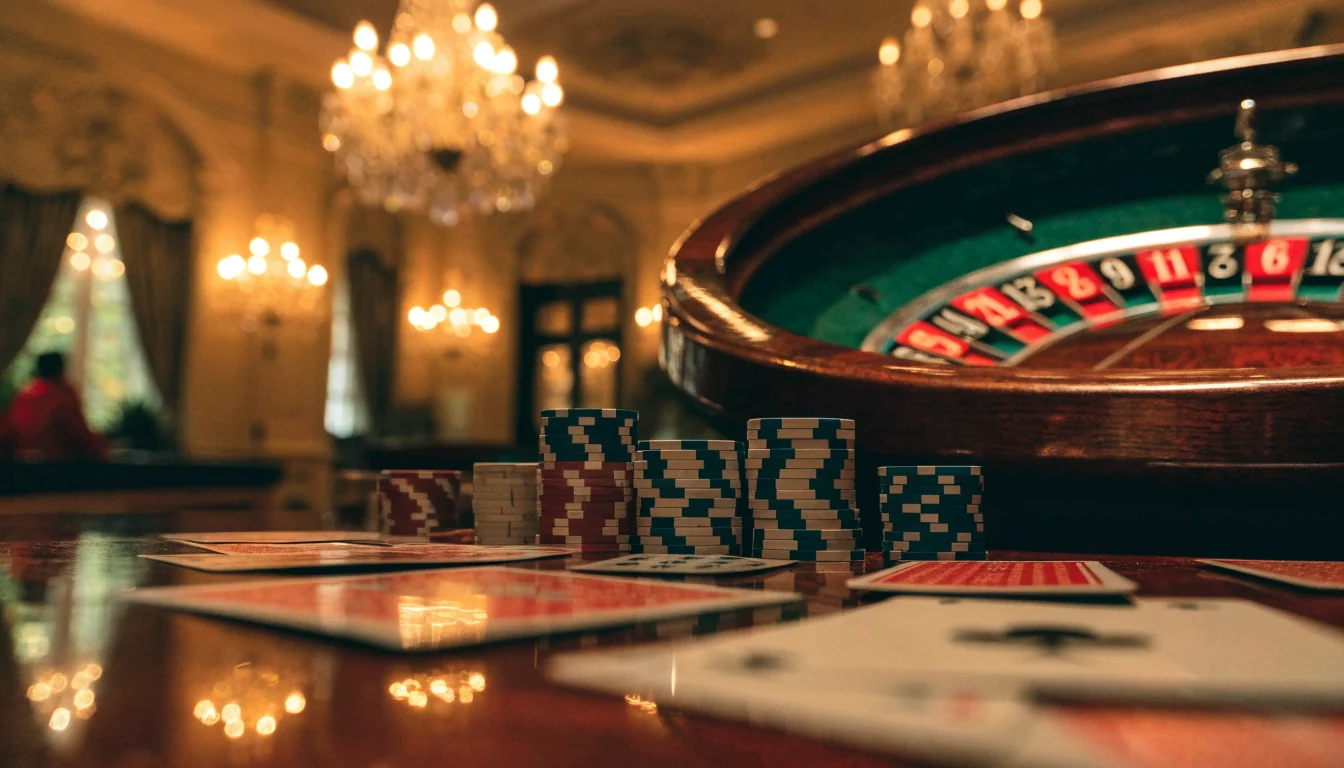
That matters because “European roulette” describes a particular table game. Its odds belong to the rules of that game, not to every product that places roulette in its title. A slot carrying a European roulette label does not, on that basis alone, have the same wheel, betting choices or chances of winning. Nor does adding a word such as “gold” or “platinum” tell anything reliable about its rules. Those are labels, not explanations.
The same caution applies to searches for a three-dimensional European roulette slot. A visual style may suggest depth or a familiar setting, but the description does not prove that a physical or simulated roulette wheel determines the result. The word “roulette” may be the theme; the product remains a slot. The name is not the rulebook.
European roulette odds, therefore, cannot simply be carried across to a slot with a related title. Odds depend on the game’s actual structure and rules. A table-game description may give a clear account of its wheel and wagers; a slot’s title cannot substitute for its own information. Similar language does not mean identical mathematics.
This is more than a matter of tidy classification. Roulette is an old arrangement of chance, made legible through a wheel, numbered spaces and bets that correspond to them. A slot can use that visual vocabulary while belonging to a different form of gambling. The borrowed imagery may make the product recognisable, but recognition is not evidence of shared mechanics.
For that reason, a roulette-themed slot should be assessed as a slot, rather than treated as a shortcut to European roulette. The title alone cannot establish whether it uses a wheel, how its outcomes are generated, or what its odds are. Those details have to come from the game’s own description and information. Without them, assumptions based on a roulette name remain just that: assumptions.
The distinction is narrow, but useful. A roulette-themed slot may evoke the table; it does not thereby become one.
Game Distinctions
- A roulette-themed slot is a slot game, not a European roulette table.
- Odds for roulette tables do not apply to themed slots.
- Product titles like “gold” or “platinum” do not explain the game’s actual rules.
- A slot’s mechanics are determined by its own description, not its theme.
Live Roulette: A Dealer, a Physical Ball and a Slower Table
In a live European roulette casino, the wheel is not an animation generated by a random number generator. A camera carries a studio table into the room on screen: a human dealer sets the game in motion, and a physical ball travels around the wheel before settling into a pocket. The result arrives with the small theatre of an object in motion. The machine can imitate the outcome; it cannot quite imitate the pause.
That distinction shapes the pace. A standard live table is reported at 80–100 spins an hour, while speed roulette can exceed 150, according to a specialist review. Neither figure is a promise about every table: a dealer’s rhythm, the time allowed for bets and the format itself all affect how quickly another round begins. But the contrast is plain enough. The live table leaves room for ceremony; speed roulette treats ceremony as something to trim.
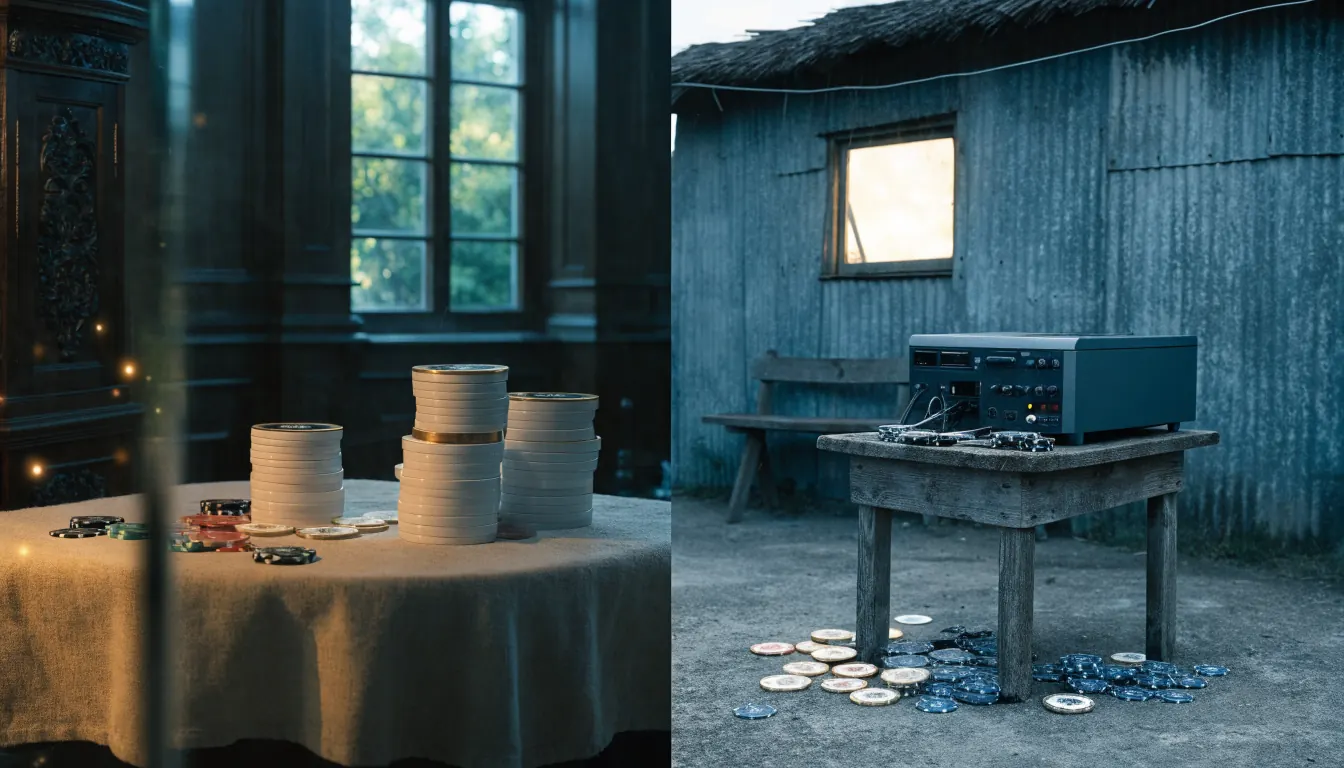
Minimum stakes can differ too. UK live roulette tables may start at 10p, whereas auto-roulette and speed formats sometimes begin at 5p, according to a specialist review. Those are entry points, not guarantees that every table will offer them. A streamed studio table is a particular product, and its minimum can change with the table selected.
The appeal of live play is not simply that a person appears on screen. The dealer gives the round a visible sequence: bets close, the ball is released, the wheel turns, and the result becomes public. That transparency is visual rather than mathematical; it does not change the odds or make the next pocket more knowable. It does make the game feel less like a sequence of button presses.
There is a social form here, even when the room is digital. A studio table borrows the manners of a casino floor—an attendant, a wheel, a shared moment of waiting—then compresses them into a stream. The format is slower than many automated alternatives, though not necessarily slow in any absolute sense. A live European roulette online casino can therefore offer two different attractions at once: the physical ritual of the ball and the convenience of watching it from a screen.

The human touch has a timetable.
European, American and French Roulette: The Extra Pockets Matter
Roulette variants can look familiar while giving the house different odds. The important difference is not the colour of the felt or the style of the wheel, but the pockets and the rules attached to them.
European roulette has 37 pockets: numbers 1 to 36 and one zero. Its house edge is 2.70%. In American roulette, the same numbered range sits alongside both a single zero and a double zero, making 38 pockets. That additional green pocket changes the arithmetic: the house edge rises to 5.26%.
The comparison is stark. A bet on a numbered pocket has more possible places to miss when the double zero is added, while the usual payout does not rise to compensate. The wheel has acquired one extra route to the house’s advantage. Small alteration, measurable consequence.
For anyone choosing an online European roulette casino game, the label matters because it identifies the wheel’s basic structure. A table marked American roulette is not simply a cosmetic variation on the European game. Its extra pocket changes the underlying odds, even when the layout and familiar betting choices make the two versions appear close.
French roulette occupies a different position. Its lower house edge among standard variants comes from the rules known as La Partage and En Prison, rather than from a claim that every French table has a different pocket count. Those rules affect what happens to certain bets when the ball lands on zero. The exact treatment depends on the table’s stated rules, so the variant name alone is not a substitute for reading them.
That distinction separates a change to the wheel from a change to the rules. European and American roulette differ in pocket count; French roulette’s advantage is associated with La Partage and En Prison. In European roulette vs American roulette, the extra pocket is the central difference. In French roulette, the relevant question is how the zero rules operate.
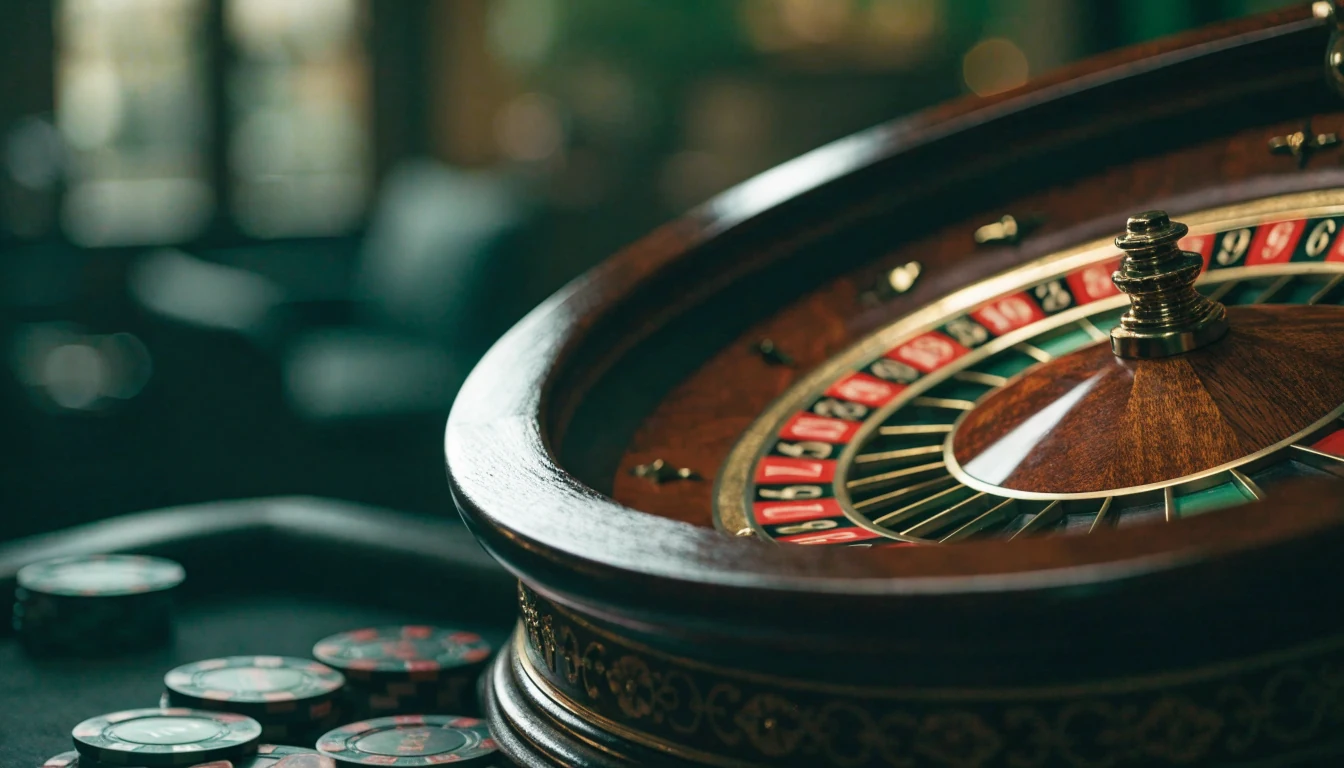
A wheel’s appearance can suggest continuity. Its odds may say otherwise.
How does roulette actually work?
A ball lands in one of the wheel’s pockets, and bets are settled according to the result. European roulette has 37 pockets—numbers 1 to 36 and one zero—and each spin is a matter of chance.
How does the 10x wagering cap affect roulette bonuses?
Since January 2026, wagering requirements for bonuses at UK-licensed operators cannot exceed 10 times the bonus amount. Roulette may contribute only part of that requirement: live roulette often counts at 10% to 20%, while RNG roulette may count at 100%, depending on the operator.
Should I play American or European roulette if I’m in the UK?
European roulette has the lower house edge: 2.70%, compared with 5.26% for American roulette. Its wheel has one zero, while the standard American wheel has both a zero and a double zero.
What is the difference between European and American roulette wheels?
A European wheel has 37 pockets: numbers 1 to 36 and one zero. A standard American wheel has 38, adding a double zero; some UK online tables also offer an American variant with a third green pocket marked 000.
Published by the Rainbow Riches Casino 3 team.