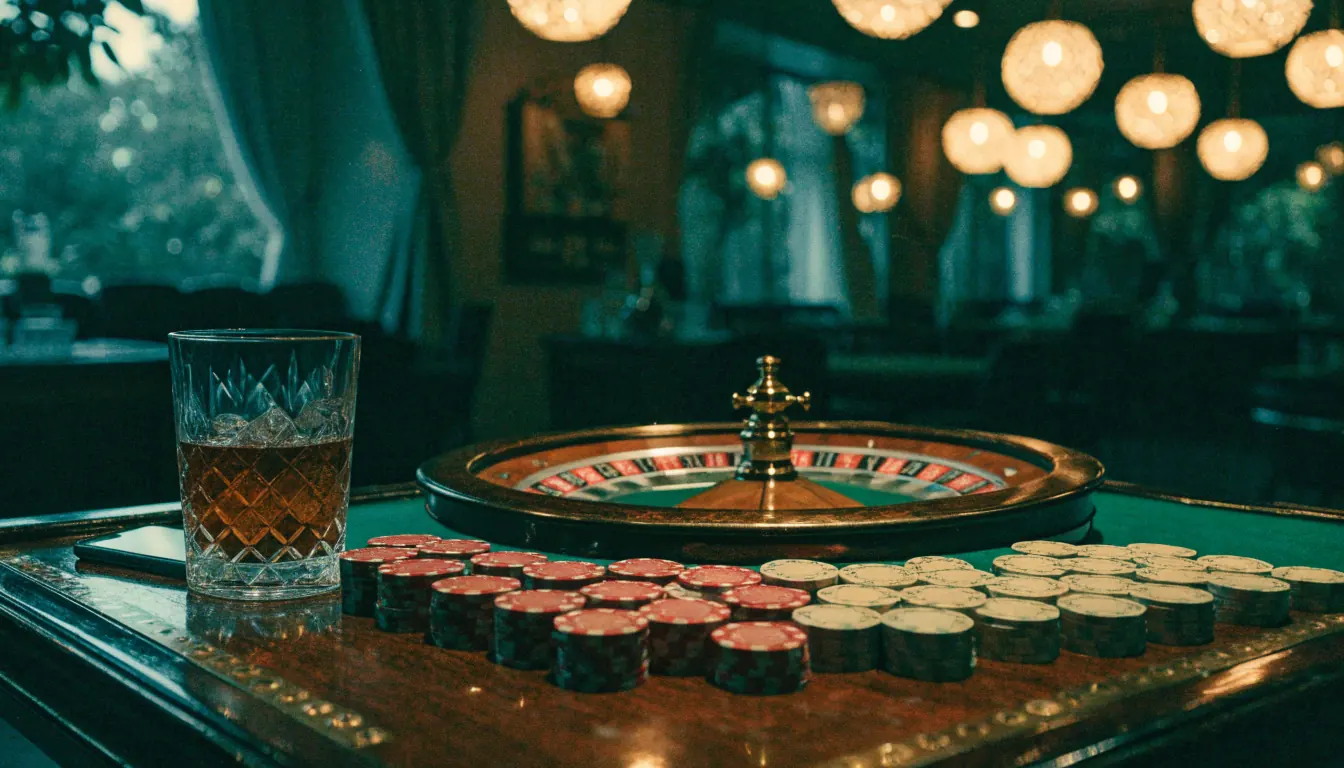
Monopoly Live Casino UK: How the Live Format Works
 Available in GB
Explore how the live studio and betting interface work, what free play can show, and what to consider when choosing a UK casino site.

Table of Contents
- Monopoly Live in the UK: The Live-Dealer Format
- Playing Online: Pace, Connection and Table Limits
- Choosing a UK Live-Casino Site: Licence and Bonus Terms
- Playing for Free: What a Demo Can—and Cannot—Show
- The Human Dealer and the Casino Game-Show Format
- Trackers, Statistics and the Limits of Strategy
- What a Casino Site Must Provide for Live Play
- Roulette Variants, Odds and Practical Tips
- A Free-Play Review Without Real-Money Claims
Monopoly Live in the UK: The Live-Dealer Format
The name Monopoly Live sits at the meeting point of two familiar ideas: a recognisable game identity and the live-casino format. The second part describes how the play is presented. A live-dealer game is streamed from a studio, where a human dealer conducts play in real time. Players make their bets through an on-screen interface. The screen is therefore not simply showing a game that runs on its own; it connects a studio event with decisions made remotely.
That distinction matters. In a conventional digital casino game, the play is generated by software and displayed on screen. In a live-dealer format, the visible action comes from a human-run studio, while the online interface gives players a way to take part. The result belongs to neither the old image of a crowded room around a table nor the self-contained world of a computer-generated game. It is a hybrid: a real-time broadcast with a digital means of participation.
The camera gives the remote player a view of what is taking place, but the interface serves a different purpose. It is where bets are placed. These roles should not be confused. Watching the dealer is part of the presentation; using the interface is how a player expresses a choice within the game. The studio supplies the visible event, while the online system links that event to people watching elsewhere.
When choosing a UK casino for Monopoly Live, payout timing is one practical detail to check. This list gives a quick reference to the payout speed stated for each operator.
Payout speed: 1-3 business days Revery Play lists a payout speed of 1–3 business days.
Payout speed: 1-3 business days Chanze lists a payout speed of 1–3 business days.
Payout speed: 1-3 business days Amunbet lists a payout speed of 1–3 business days.
Payout speed: 1-3 business days SpinFormula lists a payout speed of 1–3 business days.
Payout speed: 1-3 business days NightLuck lists a payout speed of 1–3 business days.
Payout speed: 1-3 business days Zombillion lists a payout speed of 1–3 business days.
Payout speed: 1-3 business days BeOnBet lists a payout speed of 1–3 business days.
Payout speed: 1-3 business days EvoSpin lists a payout speed of 1–3 business days.
Payout speed: 1-3 business days Jetsetspins lists a payout speed of 1–3 business days.
Payout speed: 1-3 business days NightWin lists a payout speed of 1–3 business days.
There is something quietly revealing in this arrangement. Casinos have long brought strangers together under a shared set of rules, though not necessarily into conversation or companionship. The live stream preserves the central figure of the dealer and the performance of play, then carries them beyond the room. The audience is dispersed, but the action remains organised around a human presence. Technology has moved the table; it has not removed the person standing behind it.
For a game carrying Monopoly in its name, that structure may be part of the appeal: a familiar cultural label appears in a setting that presents play as a live event. But the label alone does not explain how the online format works, nor should it be taken as a guide to the particular game’s mechanics. The live-dealer element is the part that can be described generally: a human dealer appears in a studio feed, and players use an interface to place bets while the action unfolds.

That arrangement also changes what “being at the table” means. In a physical casino, presence is literal: people occupy the same room, see the same table and share its immediate surroundings. Online, participation is mediated. The dealer is in the studio; the player is elsewhere, looking at a screen and interacting through controls. The live image makes the event visible, but it does not turn the remote player into someone physically present in the studio.
The interface is not a minor detail bolted onto the broadcast. It is the point where the viewer becomes a participant. Without it, the stream would be a show to watch. With it, the player can make betting choices as the live game proceeds. That division between seeing and acting is a defining feature of the format: the dealer handles the studio play, while the player’s decisions are entered online.
The word “live” can carry a great deal of suggestion. It may evoke immediacy, company, or the sense that something is happening in common. In this context, its practical meaning is more precise: gameplay is streamed in real time from a studio and involves a human dealer. It does not mean that every participant shares a room, or that the experience is identical to sitting at a casino table. A broadcast can be live without erasing distance.

This is why the format is best understood as a particular way of organising casino play, rather than as a simple visual style. A studio, a dealer, a stream and an on-screen betting interface each have a role. Together they form the bridge between a physical performance and remote participation. The game remains an online activity, but its visible centre is a human-run event rather than a wholly computer-generated display.
The format is neither merely a screen nor quite a room.
Playing Online: Pace, Connection and Table Limits
The first adjustment in a live game is temporal. A digital casino game can move from one result to the next with little pause; a live table has to accommodate events unfolding in real time. The pace is slower, not because the screen has become less responsive, but because the game is being conducted rather than generated as a sequence of instant outcomes. A dealer and the table’s betting process set the rhythm.
That difference matters when Monopoly Live is played online. The title may be familiar, but the experience belongs to the live-casino format: decisions take place within a running table session, whose tempo is not identical to that of a standard digital game. The screen does not make the human process disappear. It carries it into the home.
A slower rhythm can feel more involving, or simply less suited to someone expecting rapid repetition. It leaves more time between decisions, but that interval is part of the format rather than a promise of extra control over the result. Waiting does not improve the odds; nor does a quick succession of sessions turn chance into a pattern. The distinction is ordinary, and easy to forget when every pause is filled by a moving image.

Connection is the other practical condition. Live play depends on a stable internet connection because the game reaches the player as a real-time stream. If that connection falters, the experience can become interrupted or difficult to follow. This is unlike a wholly digital game, where the result is produced within the software rather than relayed from a live table. A screen may be bright and the interface polished; neither can repair an unreliable connection.
The difference is not merely technical. A live game asks the connection to carry an event as it happens, and the player’s sense of timing depends on receiving that event coherently. A pause caused by buffering can make the table feel disjointed. It can also encourage a mistaken impression that the game itself has changed when the problem lies with the stream. The sensible expectation is modest: stable access supports continuity, but no connection can make a live game faster than its own format allows.

Table limits add a financial distinction. Live games have higher minimum bets than digital versions, so the same small stake that may be possible in a computer-generated game may not be available at a live table. This is a feature of the format’s practical terms, not a measure of skill or seriousness. The studio experience carries a different entry point, and the difference can matter before a session begins.
There is no single minimum that can safely be assumed across every live table. The relevant limit is the one displayed for the specific game at the time of play. Treating “live casino” as one uniform price category would be like treating every public room as having the same door charge: a neat idea, but not a dependable guide. The table’s stated terms determine what is possible.
That makes pacing and limits connected in an unromantic way. A slower game can mean fewer decisions in a stretch of time, but a higher minimum stake can make each decision more consequential to a player’s balance. Neither point means a live table is better or worse than a digital one. They describe different conditions, and conditions shape the experience more reliably than atmosphere does.
- Set a budget before play
- Maintain boundaries during slow sessions
- Use budgets to limit losses
- Extend play to recover losses
- Pursue a run of wins past limits
- Use the table’s tempo to ignore limits
A budget set before play gives those conditions a boundary. It should remain a boundary if the session moves slowly, if a connection interruption breaks concentration, or if results disappoint. Extending play to recover losses or to pursue a run of wins turns the table’s tempo into an excuse for ignoring the limit. The format provides no special safeguard against that impulse.
The phrase “Monopoly Live online” can suggest that the game is simply a familiar title transferred to a screen. In practice, the live setting brings its own pace, technical dependence and minimum stake. Those are not decorative details around the game; they are part of what playing it online means. Entertainment, not gambling advice.
Choosing a UK Live-Casino Site: Licence and Bonus Terms
A live-casino lobby can make every table look like part of one seamless service. The more important distinction sits behind the screen: whether the operator is authorised to offer gambling to people in Great Britain. A site offering real-money live-dealer games to British customers must hold the relevant UK Gambling Commission licence. The licence is not a decorative seal or a general mark of quality; it is the legal basis for serving this market.
That check matters more than a polished studio or a prominent welcome banner. The Gambling Commission’s public register allows an operator’s status to be checked against its name. A familiar brand, professional-looking website or busy live lobby cannot substitute for a current operating licence. For a UK player, a casino without the required licence is not an alternative version of the same regulated service.

The distinction is institutional as well as practical. Britain has chosen to place remote gambling under a domestic licensing system, including when an operator is based elsewhere. That makes responsibility visible: the company selling the service into the market must answer to the regulator. A licence does not remove the risks of gambling, but it establishes which rules apply to the operator.
What a welcome offer actually covers
The word “bonus” tends to suggest a flexible pot of money. In practice, an offer has its own terms, and those terms decide which games count, how much they count towards wagering requirements and whether other restrictions apply. For someone looking for a Monopoly Live bonus, the first question is not how large the headline looks, but whether the offer can be used at a live table at all.
A specialist review of UK welcome offers describes free spins on slots as a common form of promotion and notes that such spins cannot be used at live tables. That is a source-specific observation, not a guarantee about every offer or a permanent description of the market. Individual terms must settle the matter. A promotion that is useful for slots may have no practical value for live-dealer play.
Even when a live game is eligible, its contribution may be limited. The terms might assign live games a small weighting towards wagering requirements; one stated example is 10%. In that case, a qualifying stake does not count in full towards the requirement. The headline offer and the contribution made by a particular game are separate things. The small print is doing actual work.
Terms can also set a maximum bet while an offer is active. That condition belongs beside wagering requirements and game weighting, not beneath them as an afterthought. If a promotion changes how a player can stake or which games count, it changes the experience of using the offer. A bonus is not simply extra balance.
Checking Bonus Terms
- Confirm the operator holds a UK Gambling Commission licence
- Read the full bonus terms and conditions
- Establish if live tables are eligible for the offer
- Note the game weighting for wagering requirements
- Check for any maximum-bet restrictions
A sensible comparison
Comparing sites need not become a contest over slogans. The useful checks are plain: confirm the operator’s UK Gambling Commission licence, read the full bonus terms, establish whether live tables are eligible, and note the stated weighting and any maximum-bet restriction. If the terms are unclear about live play, the promotion should not be treated as available for it.
The same care applies to claims about Monopoly Live rules. Game rules explain how play works; bonus terms explain whether play contributes to an offer. Confusing the two can make a promotion seem more generous than it is. Neither a game’s presence in the lobby nor its name in advertising proves that it qualifies under a particular welcome offer.
A budget belongs in the decision before play begins, rather than being reconstructed after a session. Promotional credit does not change the underlying uncertainty of gambling, and wagering conditions can require continued play before an offer is released. The distinction between a bonus balance and withdrawable funds should therefore be read in the operator’s terms, not inferred from a large number on a banner.
The best Monopoly Live casino in the UK is not established by the loudest offer or the grandest studio. A current licence and intelligible terms are more useful starting points than promotional theatre. In Britain, legality has a regulator attached. The offer still has fine print.
This material is for entertainment purposes only and is not gambling advice.

Playing for Free: What a Demo Can—and Cannot—Show
A free demo can make a casino game easier to inspect, but the word “live” needs care. In a live game, events are streamed from a real setting; a computer-generated version instead creates outcomes through software. The screen may look polished in either case. Appearance alone does not establish what is happening behind it.
Roulette makes the difference tangible. In live roulette, a dealer spins a physical wheel; computerised roulette uses a Random Number Generator. A demo of the latter can show its interface and how its controls respond, but it is not a window onto a wheel being spun in a studio. It is a simulation presented on a screen. The distinction is not cosmetic: the source of the game’s events differs.
That distinction matters when looking for a Monopoly Live demo in the UK. A free-play option, if offered, should be understood as a way to explore the version made available in that mode—not proof that the same experience is being streamed from a live studio. Nor does the name of a game, or an animated presentation, establish whether a human dealer is involved. The label and the actual format are separate questions.
A demo may help with the simple business of learning where controls are and how the displayed interface behaves. It can offer a low-pressure way to look around without risking money. But it cannot reproduce the significance of staking real funds, and it cannot promise that a real-money session will feel identical. Even where the on-screen presentation is familiar, the conditions are not the same: free play has no real financial consequence attached to its outcomes.
Attention: A free-play result does not produce a cash payout, and success in a demo is not evidence of future real-money results.
That is the boundary worth keeping in view. A free-play result does not produce a cash payout, and a run of favourable-looking outcomes does not become evidence of future success. Demo play is for entertainment and familiarisation, not gambling advice. A screen can imitate the shape of a casino session; it cannot turn imaginary stakes into real winnings.
Reading the label, not the atmosphere
The phrase “play Monopoly Live for free” can describe different things depending on the mode available. It may refer to a computer-generated demo, or to a free-play presentation of the game. The important point is not to infer a live stream merely from a familiar title or visual style. The game’s mode should be clear from its own description.
The same applies when the game is accessed through a casino app or a mobile browser. A smaller screen does not make a demo more or less live. The device is simply the means of viewing and interacting with the interface; it does not reveal how outcomes are produced. A mobile version may resemble a desktop version, but that resemblance alone says nothing about whether it is a studio stream or software-generated play.

A useful demo review, then, is modest in its claims. It can describe what is visible: the layout, the controls and the general experience of navigating the game. It should not treat a free session as evidence of likely returns, or present simulated outcomes as a preview of what real-money play will deliver. Those are different claims, and the demo cannot support them.
There is a social habit behind the appeal of demos, too. People often want to know the shape of an unfamiliar pastime before they commit attention—or money—to it. Casinos have long turned that uncertainty into a threshold, offering a glimpse of the table before the stakes begin. Online, that threshold is a button. Convenient, perhaps; conclusive, no.
For Monopoly Live, a free demo can therefore be useful in a limited sense: it may show how the available version is presented and let someone become familiar with its interface. It cannot establish that the game is live-dealer play, guarantee that a real-money mode will match the demo in every respect, or produce real payouts. Free means free of financial stakes, not a rehearsal with a promised ending.

Once real money enters the picture, the character of the activity changes. A demo has no real balance to lose and no real winnings to collect. Any decision to move from free play to a paid session should be separate from whatever happened on the demo screen; a favourable sequence there is not a reason to raise stakes, and an unfavourable one is not a loss that needs recovering. A set budget belongs to real play, not to the imagined arithmetic of a demo.
The sober reading is the useful one. Free play can introduce a screen, not foretell an outcome.
The Human Dealer and the Casino Game-Show Format
The word “game-show” suggests a performance: a host, an audience and a result revealed in public. Live casino borrows some of that atmosphere, but its centre is not a stage trick. It is a person dealing a game in real time, with players watching through a screen and making their choices through an interface. The social element is present, though it does not turn a casino game into a television contest.
Live blackjack offers a clear example. A human dealer handles physical cards from a standard deck while the game is streamed as it happens. The player can see the dealer and, in games with chat, communicate with the dealer or other players. That visible sequence matters. A card is dealt, a decision follows, and the hand develops in a shared space rather than being reduced to a result appearing on a screen.
There is a small but meaningful difference between seeing a person and merely seeing an animation. The dealer’s presence gives the game a social rhythm: formal enough to keep the play moving, informal enough for brief exchanges where chat is available. Other players may be visible as participants in the same table, although conversation is not the point of the game and need not define the experience. It is a public room with rules, not a gathering of friends.

That distinction helps place the Monopoly Live casino game-show idea in context without assuming that every title bearing the label works in the same way. The name alone cannot establish whether a particular game uses a human host, includes chat, or follows the structure of live blackjack. Those details belong to the game itself. “Game-show” can describe a style of presentation, but it is not proof of a specific format.
The human dealer is also a reminder of how much casino play depends on convention. In blackjack, players aim to beat the dealer with a hand totalling 21 without going over. The dealer is both a visible person and the representative of the house’s procedure: dealing, applying the rules and bringing each hand to its conclusion. The spectacle is modest. The rules do the work.
A casino game can therefore feel theatrical without being a show in the ordinary sense. The camera makes the table visible; the dealer gives it a human focal point; chat, when offered, allows a limited exchange. None of this alters the underlying wager or makes outcomes more controllable. A sociable setting can soften the solitude of playing online, but it does not remove chance or the house edge.

This is the useful lens for considering how a live game works: not as a promise of entertainment borrowed from television, but as a real-time encounter organised around a table and its rules. A human face changes the texture. It does not change the mathematics.
This content is for entertainment purposes only, not gambling advice.
Trackers, Statistics and the Limits of Strategy
A record of past results can look more persuasive than it is. A tracker gathers outcomes and arranges them into a visible history; it does not change how a later result is produced. In roulette, a run of repeated colours or numbers may invite a story about what is “due”. The story is human. The record itself offers no reliable forecast.
That distinction matters when statistics are brought into discussions of Monopoly Live strategy. Figures from roulette describe roulette, not another game simply because both appear in a live-casino setting. A history of play can help explain what has already happened, but it cannot establish what must happen next. Looking for a Monopoly Live tracker may lead to charts or recent-result displays; their presence should not be mistaken for a method of prediction.
Past results recorded by trackers describe what has already happened but cannot establish what must happen next or reverse the house edge.
Roulette statistics can, however, describe the cost built into different kinds of bet. A straight-up bet has a house edge of 2.9%, while other bets have a 2.7% house edge. These figures express the casino’s mathematical advantage over repeated play, not a promise about the result of any single spin. A bet with a lower house edge is not a winning system; it is still a bet made in a game where the house retains an advantage.
There is a quiet social history in the appetite for trackers. People have long kept records in the hope that order might be found inside chance: columns, marks and patterns make uncertainty easier to look at. Casinos, meanwhile, make those records easy to collect and display. But a tidy screen can lend yesterday’s events an authority they do not possess. Statistics are good at describing a sample; they are not a private message from the next spin.
The same caution applies to searches for a game’s history. Rules and formats belong to a particular game, while roulette’s house-edge figures belong to roulette. Treating one as evidence about the other confuses categories rather than uncovering a hidden link. Past results remain past results.
A tracker is a ledger, not a lever. It may help organise a session’s record, but it cannot make outcomes predictable or reverse the house edge. A sensible approach is to set a budget before play and keep to it, rather than raising stakes to recover losses or extend a run of wins. This is entertainment, not gambling advice. The numbers can clarify the structure of a wager. They cannot make chance obedient.

What a Casino Site Must Provide for Live Play
A casino site offering a live-dealer game has to connect two things that are easy to confuse: permission to provide gambling in the UK, and the service that makes a game live. One is a legal condition; the other is the format itself. Neither is a decorative label.
For real-money play, the operator must hold a current UK Gambling Commission licence. The rule applies to remote operators serving the British market, wherever the business is based. A studio stream does not turn an unlicensed service into a lawful one, just as a licence alone does not make a computer-generated game a live table. The two requirements sit side by side.
The live element comes from a studio, where a human dealer conducts the game in real time. That activity is streamed to the player, while bets are entered through an on-screen interface. The screen therefore serves as both window and betting surface: the dealer acts in the physical setting, and the player’s choices reach the game digitally. It is a hybrid service, not simply a video placed over a conventional game.
That distinction matters when a site presents a game such as Monopoly Live. The title alone does not establish what a particular site is providing. The relevant question is whether the service is being offered as a live-dealer game through a real-time studio stream, with betting handled on screen, and under the operator’s UKGC licence. A game name can be familiar; the machinery behind it still matters.
There is something quietly revealing in this arrangement. Gambling regulation concerns the operator’s right to serve the market, while the live format depends on a visible human performance being carried across a network. The dealer is present, but not in the same room; the bet is immediate, but made through software. A casino site has to hold both ends together.
Live Play Essentials
- Operators must hold a current UK Gambling Commission licence for real-money play
- Live games are streamed in real time from a studio with a human dealer
- Interaction occurs through a digital on-screen betting interface
- Legal operation and actual live studio service are the two primary requirements
That is the basic provision: lawful operation and an actual live studio service. A page that merely borrows the language of live play does not describe the same arrangement. The distinction is plain enough. The details are not.
This is entertainment content, not gambling advice.
Roulette Variants, Odds and Practical Tips
A roulette wheel’s layout is not decoration: it changes the chance attached to a bet. European Roulette has one green pocket, marked zero. American Roulette adds a second, double zero, so the ball has another pocket in which a bet on a numbered space can lose.
The difference is small in appearance and plain in arithmetic. The stated chance of winning is one in 37 on the European wheel and one in 38 on the American wheel. The extra pocket does not make the game more elaborate; it makes the odds less favourable. A tidy piece of design, from the house’s point of view.
This distinction matters when comparing tables on casino sites, including pages that group roulette alongside branded live games such as Monopoly Live. A shared lobby does not make different games interchangeable. Roulette is decided by a physical wheel in live dealer play, while a game-show title follows its own format and rules. The name of a casino page is no substitute for identifying what is actually being played.
Practical preparation is less dramatic than a betting system. Table rules and the paytable should be checked before play, especially when a site presents several roulette variants together. The wheel type is a useful first check: a table with a double zero has different odds from one with only a single zero. The posted rules then explain how that particular table handles bets and payouts.
Statistics can describe what has happened, but they do not turn a wheel into a forecast. A run of one colour or number does not make the next result due. Treating a history panel as a promise is a familiar human habit: patterns are comforting, even when they cannot improve the odds.

A sensible session also starts with a fixed budget and ends when that budget is reached. Chasing losses—or trying to extend a win—can turn a leisure activity into an argument with chance. No system settles that argument.
Roulette tips are best kept modest: identify the variant, read its table rules and paytable, and set a limit before play. This is general entertainment information, not gambling advice.
A Free-Play Review Without Real-Money Claims
A review of Monopoly Live in free play has a narrow but useful purpose: it can describe what the on-screen experience looks like without pretending to measure what real-money play would produce. Where a free-play option is available, it may show how a live table is presented and how bets are entered through the interface. Live dealer games themselves involve a human dealer and a real-time studio stream; the screen is the point at which that broadcast meets the player’s choices.
That is enough to judge whether the presentation is clear. It is not evidence of a likely return, a reliable pattern or a future result. Free credits do not become withdrawable winnings, and outcomes in a free session do not forecast outcomes when money is at stake. A review that treats a run of play as proof of value has crossed from description into theatre.
The distinction matters because a free session removes the financial consequence that changes the meaning of a decision. It may help explain where controls appear and how a round unfolds, but it cannot reproduce the pressure of staking personal funds. Nor does it establish that a real-money version will be available on every site or under identical conditions.
A careful Monopoly Live casino review should therefore keep its claims modest: describe the visible interface, note that the dealing is live, and make clear what free play cannot establish. Any later real-money play remains gambling, not a continuation of a harmless trial; a budget should be set beforehand and kept. This page is for entertainment purposes only, not gambling advice.
Useful orientation. Nothing more.
What are the different types of roulette you can play with a live dealer?
Live roulette can include European, American and French versions. American Roulette has both 0 and 00, European Roulette has a single 0, and French Roulette gives an even-money bet a half-loss when the ball lands on 0.
How do you play live roulette?
Place your bets through the on-screen interface while a live dealer spins a physical wheel. You win when the ball lands on a number you selected.
How can you win live dealer roulette?
You win a roulette bet when the ball lands on a number you selected. American Roulette has odds of 1 in 38, compared with 1 in 37 for European Roulette.
How do you choose a live dealer casino?
Choose a casino that holds a UK Gambling Commission licence, and make sure you have a stable internet connection for the live stream. Check the table minimums too, as live games can have higher starting bets.
Prepared by the Rainbow Riches Casino 3 editorial staff.