Live Dream Catcher Casino UK: A Practical Guide
 Available in GB
A live dealer stream brings a physical table to the screen, but a game listing alone does not establish its rules or how it is offered.

Table of Contents
- A Live Table, Seen Through a Screen
- Dream Catcher in the UK: The Ground Rules
- Choosing a Live Casino Without a Ranking
- Playing a Live Game: Pace and Stakes
- The Wheel, and the Limits of Comparison
- What a Live Casino Site Can—and Cannot—Tell You
- Demo Play and the Evidence Gap
- A Review Built on What Can Be Checked
- Before Joining a Live Table
- Bonuses, Live Tables and the Small Print
A Live Table, Seen Through a Screen
A live casino table is not simply a digital game with a more elaborate picture. Its central feature is a real-time stream from a studio, where a human dealer conducts the game while players follow the action on their screens. The camera carries the table into the online casino; an on-screen interface carries players’ bets back into the game. Two kinds of activity meet there: physical dealing in the studio and digital participation at home.
That distinction matters when the name Dream Catcher appears beside the word “live”. The phrase points towards a live-dealer format, but the label alone does not establish how a particular table looks, what its rules are, or which operator offers it. A Dream Catcher online casino listing may name a game; it does not, by itself, explain the mechanics behind the stream. The general meaning of live play is clearer than any particular product description.
In a digital-only game, software generates the action on screen. In live dealer play, a camera shows events taking place at a physical table, with a person dealing or otherwise managing the game. The stream is sent to players in real time, and their choices are entered through controls on the screen. That interface is not a decorative overlay: it is the means by which a remote player submits a bet while watching the studio feed.
When looking for a UK casino offering live Dream Catcher in 2026, payout timing is one practical detail to check. This list gives a concise reference point for the operators with a stated payout speed.
Payout speed: 1-3 business days Revery Play has a stated payout speed of 1–3 business days.
Payout speed: 1-3 business days Chanze lists payouts as taking 1–3 business days.
Payout speed: 1-3 business days Amunbet’s stated payout speed is 1–3 business days.
Payout speed: 1-3 business days SpinFormula lists a payout speed of 1–3 business days.
Payout speed: 1-3 business days NightLuck has a stated payout speed of 1–3 business days.
Payout speed: 1-3 business days Zombillion lists payouts as taking 1–3 business days.
Payout speed: 1-3 business days BeOnBet’s stated payout speed is 1–3 business days.
Payout speed: 1-3 business days EvoSpin lists a payout speed of 1–3 business days.
Payout speed: 1-3 business days Jetsetspins has a stated payout speed of 1–3 business days.
Payout speed: 1-3 business days NightWin lists payouts as taking 1–3 business days.
The result is a curious division of labour. The dealer handles the visible, physical part of the game; software transmits the picture and records the selections made through the interface. The player is present in neither the studio nor, in the ordinary sense, a shared room. Yet the game is not a sequence of images prepared in advance. It unfolds in front of the camera, and the screen becomes a small window onto that unfolding event.
A window, not a doorway.
This is why searches for a live Dream Catcher online casino can mean more than one thing. Someone may be trying to find a table bearing that name, or may simply want to understand what “live” promises in an online setting. The first question concerns availability and the particular product; the second concerns the format. They should not be confused. A live-dealer label describes a mode of play, not proof that every online casino carries the same game or presents it in the same way.
The phrase “online casino Dream Catcher” can also make the game sound like a self-contained digital object, as though it were downloaded and played alone. Live play is more social in its arrangement, though not necessarily in the old-fashioned sense of a crowded room. The dealer is visible, and the interface places a player’s actions alongside a streamed event. Whether the atmosphere feels sociable depends on the presentation and the people using it; the basic format does not require claims about chat, interaction or studio style.
What it does require is a functioning connection between the studio and the screen. Live games proceed more slowly than digital versions, and they require a stable internet connection. Their minimum bets are higher than those of digital games. These practical differences are part of the format, even when a game’s title is the thing that first catches attention. A stream has to arrive; a dealer has to complete the visible action; the interface has to register a bet. The tempo is shaped by that sequence rather than by software producing an instant result.


The screen therefore does not erase the table. It mediates it. A camera frames the physical setting, while buttons and menus translate remote participation into choices the game can accept. The arrangement is neither a conventional casino visit nor a purely automated game. It occupies the space between them, borrowing the visible ritual of a table and the convenience of a device without turning one into the other.
For anyone looking to play Dream Catcher online, that is the useful starting point: “live” describes real-time studio gameplay with a human dealer and bets placed through an on-screen interface. It does not, on its own, settle questions about the named game’s rules or its availability at a particular online casino. Those details belong to the specific table, not to the definition of live dealer play. The distinction is modest, but important. A label is not a rulebook.
Dream Catcher in the UK: The Ground Rules
A search for a live Dream Catcher table in Britain has two separate questions tucked inside it. One is about the game: whether an online casino offers a table under that name. The other is about the operator: whether it is legally entitled to provide online gambling to people in the UK. The second question sets the boundary for the first. A familiar game name does not, by itself, establish that the site offering it is authorised to serve this market.
In the UK, live dealer casinos are legal when the operator holds a licence from the UK Gambling Commission. That is the essential condition, not a badge of polish or a distinction between one kind of casino and another. A live table may be presented as a separate attraction, but it remains part of an online gambling service. The legal responsibility belongs to the operator providing that service.
This makes the phrase “Dream Catcher casino UK” less straightforward than it first appears. It can suggest a casino devoted to one game, a particular live table, or simply an operator where the game might be available. Those are not interchangeable claims. The name alone cannot confirm that a table is currently offered, nor can it identify the company responsible for the site. A game title is not a licence.

The UK Gambling Commission regulates remote gambling operators serving the British market. An operator’s location does not remove the requirement: companies selling remote gambling to British customers must hold the relevant Commission licence. The rule concerns the business offering the gambling, rather than the studio, table or game title in isolation. That distinction matters whenever a branded live game is encountered on a site whose corporate identity is less prominent than its entertainment.
There is a quiet social idea behind this arrangement. Gambling is permitted, but permission is attached to a regulated operator, not granted indiscriminately to every online service that can display a table. The state draws a line between a legal commercial activity and an unregulated offer, then makes the operator responsible for standing on the proper side of it. The screen can make a casino feel placeless. The licence gives it a jurisdiction.
The Gambling Act 2005 provides the broader legal framework for gambling in England, Wales and Scotland; it does not apply to Northern Ireland. For the UK online market, the practical point remains that a casino serving UK players legally must be appropriately licensed. “Online casino” is not a legal status in itself. Nor does a live-dealer label create an exception to the rules that apply to remote gambling.
For anyone looking specifically for a live Dream Catcher casino, the useful distinction is therefore between an offer and its authority. A site may describe a Dream Catcher table, but that description does not establish that the operator holds a UK Gambling Commission licence. Conversely, a licensed operator is not thereby confirmed to carry every game bearing a particular name. These are separate checks, and collapsing them produces a confident answer where only two different questions exist.
The licence condition is not a promise about the table’s quality, its availability at a particular moment or the details of its rules. It says something narrower and more consequential: the operator is within the regulatory system required to offer online gambling legally in this market. For a live casino, that is the threshold fact. Everything else belongs to a different kind of assessment.
Legal Requirement
Legal live dealer gambling in the UK requires a UK Gambling Commission licence; a game name or polished page is not proof of legality.
This is why searches for Dream Catcher live casinos in the UK can lead to a misleadingly simple impression. A list of pages, adverts or game descriptions may look like evidence that a product is broadly available and properly authorised. Neither follows automatically. A page can describe a game without proving the operator’s status; a licence can establish an operator’s status without proving that a named table is present. The distinction is not pedantry. It is the difference between identifying what is being offered and identifying who is legally offering it.
The regulatory boundary is plain even when commercial presentation is not: legal live dealer gambling in the UK requires a UK Gambling Commission licence. The game name may be the reason for looking, but it is not the measure of legality. That belongs to the operator. A small distinction, with large consequences.
Choosing a Live Casino Without a Ranking
A search for the best live Dream Catcher casino in the UK sounds as though it ought to end with a winner. But a ranking can make unlike things look comparable: one operator may be easy to verify as licensed, another may have a smoother stream, and a third may simply describe its tables more confidently. Those are different qualities, not points in a single contest.
The sensible starting point is the operator, not the game’s name. A live dealer casino serving the UK is legal only if it holds a UK Gambling Commission licence. That condition sets a boundary for comparison; it is not a badge for a particular style of service. The licence tells something important about the operator’s status, but it does not, by itself, establish that a particular table is available, that its stream will suit every connection, or that its terms will match those of another casino.

That distinction matters because a familiar game title can travel across different sites and still sit within different operating arrangements. A comparison of live Dream Catcher options should therefore begin with the casino’s identity and licensing position, rather than assume that the table name settles the question. A polished page is not a substitute for a verifiable operator.
Then there is the less glamorous matter of the connection. Live play depends on video arriving continuously, and a stable internet connection is necessary for the stream to remain usable. This is not an ornamental technical detail. A table that appears attractive in a description may be a poor fit if the picture repeatedly stalls or falls behind. The practical test is whether the connection available at the intended time and place can support streamed play without interruption.
The word “stable” is more useful here than “fast” as a sales adjective. A connection can seem quick when loading ordinary pages and still behave unevenly during a continuous stream. Network conditions can change with location, time and competing use; no casino can make those conditions disappear by calling its interface smooth. Comparisons based on broad promises are consequently weaker than attention to how the stream actually behaves in the circumstances where it will be used.
A fair comparison also separates the table from the surrounding casino. The operator’s UK licence concerns the legal status of the business. The connection concerns whether live video can be followed. Neither establishes that one experience is universally superior. Different people may value different things, but those preferences only become useful after the basic conditions are met. Otherwise, a ranking risks rewarding presentation over substance.
- Verify the operator’s UK Gambling Commission licence
- Test the stability of your internet connection
- Assess the operator’s identity and licensing position
- Rely on rankings based on vague praise
- Assume a polished page replaces a verifiable operator
- Trust broad promises about stream smoothness
This is why lists of “best” casinos can be oddly unhelpful. A numbered order gives the impression of a settled verdict, even when the underlying criteria are personal or uneven. If the same set of options is judged by licence status and stream reliability, the comparison has a clear foundation. If the order instead rests on vague praise, the appearance of precision does most of the work.
There is also a difference between comparing operators and predicting a session. A reliable connection cannot promise that every moment will be uninterrupted, just as a licence cannot promise that every product detail will suit every player. These checks narrow the field of reasonable choices; they do not remove uncertainty. Online gambling remains gambling, not a service whose outcomes can be made predictable by selecting a well-presented site.
The broader language around a “best” Dream Catcher casino can obscure that modest but useful purpose. It invites a single answer where the more honest result is a set of practical questions: is the operator licensed for the UK market, can the live stream be followed reliably, and are the conditions of use clear? The first is a legal threshold; the second is a technical requirement; the third belongs to careful consideration before play. None needs to be inflated into a guarantee.
A choice made on those grounds may be less dramatic than a podium of winners. It is also more legible. The UK’s licensing system makes operator status a necessary dividing line, while the dependence on streaming makes connection quality an everyday constraint. Beyond those points, preference enters—and preference should not be dressed up as an objective league table.
Live casino play is entertainment, not gambling advice. A budget set before play helps keep that distinction practical, rather than merely rhetorical. The most useful comparison is not the one that declares a champion, but the one that makes clear what can actually be assessed.
Playing a Live Game: Pace and Stakes
The pace of a live casino game is set by events taking place at the table, not by a button that can hurry the action along. Compared with digital versions, live games move more slowly. There is time between decisions and outcomes; the sequence has a human rhythm, with pauses that belong to the process rather than to a player’s screen. That difference can be part of the appeal, but it also changes how long a session feels and how quickly money is put at risk.
A Dream Catcher game in a live casino should be approached with that general feature of live play in mind, rather than with assumptions borrowed from a fast digital game. The specific pace and rules of any named table depend on its own presentation, but the broad distinction remains: a live game is not designed to resolve one round immediately after another at software speed. Waiting is part of the experience. It is not a technical fault merely because it feels less brisk.
That slower rhythm can make it easier to notice each stage of a round, yet it does not make gambling safer or more predictable. A pause gives time to think, but it can also encourage a player to stay at the table longer. The clock is quiet; the spending is not. A budget set before play provides a boundary that the movement of the game itself cannot supply. It should remain a limit, not a figure to revise after losses or a run of wins.
Attention A budget set before play should remain a limit, not a figure to revise after losses or a run of wins.
Stakes are another practical difference. Live games have higher minimum bets than digital versions, so the amount needed to take part may be less flexible. A small stake on a screen can look inviting, but the minimum at a live table may not match it. This matters especially when a session consists of repeated rounds: the minimum is not just a threshold for joining, but a condition that shapes the cost of remaining in play.
The minimum is not a measure of likely success. It says what a table permits, not what a player can expect to win. Nor does a slower pace reduce the uncertainty of outcomes. These are separate features: the table sets a floor for stakes, while each round remains uncertain. Treating either as reassurance is an expensive misunderstanding.
Connection quality also has a direct effect on the experience. Live play relies on a stable internet connection because the game is being followed as it unfolds. A weak or interrupted connection can make it harder to keep track of the action and to place decisions at the intended moment. The screen may be showing a table, but the session still depends on a reliable link between that table and the player’s device. Streaming is not magic.
Before starting a live Dream Catcher casino game, the practical questions are therefore modest but consequential: can the connection support uninterrupted play, is the table’s minimum within the pre-set budget, and is the slower pace suitable for the time available? Those checks do not improve the odds or reveal what the next round will bring. They simply make the conditions of play clearer.

Live play asks for patience, a workable connection and room in the budget for the table’s minimum. If any of those is absent, the screen can wait.
The Wheel, and the Limits of Comparison
A wheel can make two games look like cousins when their rules are not. In live roulette, a dealer spins a physical wheel and a ball settles into a numbered pocket. Computerised roulette replaces that visible mechanism with a Random Number Generator. The distinction is not merely theatrical: one presents a physical event on camera; the other produces an outcome through software.
That difference matters because the word “live” describes how a game is presented, not a universal set of rules. A wheel in a studio may invite comparisons with roulette, but resemblance is not a rulebook.
Roulette itself has different layouts. European Roulette has a single green pocket, marked 0. American Roulette has two: 0 and 00. That extra pocket changes the chance attached to a straight number selection. The stated odds of winning are 1 in 37 on the European layout and 1 in 38 on the American one.
The difference appears small when described in a sentence. On the table, it is a permanent feature of the game: one more place for the ball to land, and one more outcome that is not a player’s chosen number. Casinos have long made rules legible through the arrangement of objects—colours, numbers, pockets. A layout is not decoration. It carries the mathematics.
Odds Difference
European Roulette odds are 1 in 37, while American Roulette odds are 1 in 38 due to the addition of a 00 pocket.
In live roulette, the physical wheel gives those arrangements a visible form. The dealer spins; the ball travels; the pocket determines the result. In computerised roulette, the corresponding result comes from a Random Number Generator rather than a filmed wheel. A screen may make both formats look similarly immediate, but the route to the outcome is different.
This is why the phrase “casino wheel” cannot do much explanatory work by itself. It says that a wheel is part of the image, not whether the game follows roulette’s numbered pockets, uses roulette’s odds, or shares its rules. Dream Catcher may be searched for as a live wheel game, but its name alone cannot make roulette comparisons accurate.
There is a useful boundary here. European and American roulette offer concrete, familiar examples of how wheel design affects the stated odds. They can help explain roulette; they cannot be borrowed as a description of another game merely because a wheel appears in the title or on screen. Similar shape. Different claims.

What a Live Casino Site Can—and Cannot—Tell You
A site’s own pages can describe what it offers, but description and confirmation are not the same thing. For a live Dream Catcher table, the name on a page would indicate what the operator says is available; it would not, by itself, establish that the table is accessible to every account or remains available at the moment of play. Availability is a detail that belongs to the live service, not to the phrase used to present it.
The firmer test is regulatory. Live dealer casinos may operate legally in the UK when they hold a licence from the UK Gambling Commission. A site serving UK players therefore needs the relevant UK licence; a polished interface, familiar game name or confident claim cannot replace that condition. It is a narrow distinction, but an important one: appearance is part of a website, while licensing is a condition of lawful operation.
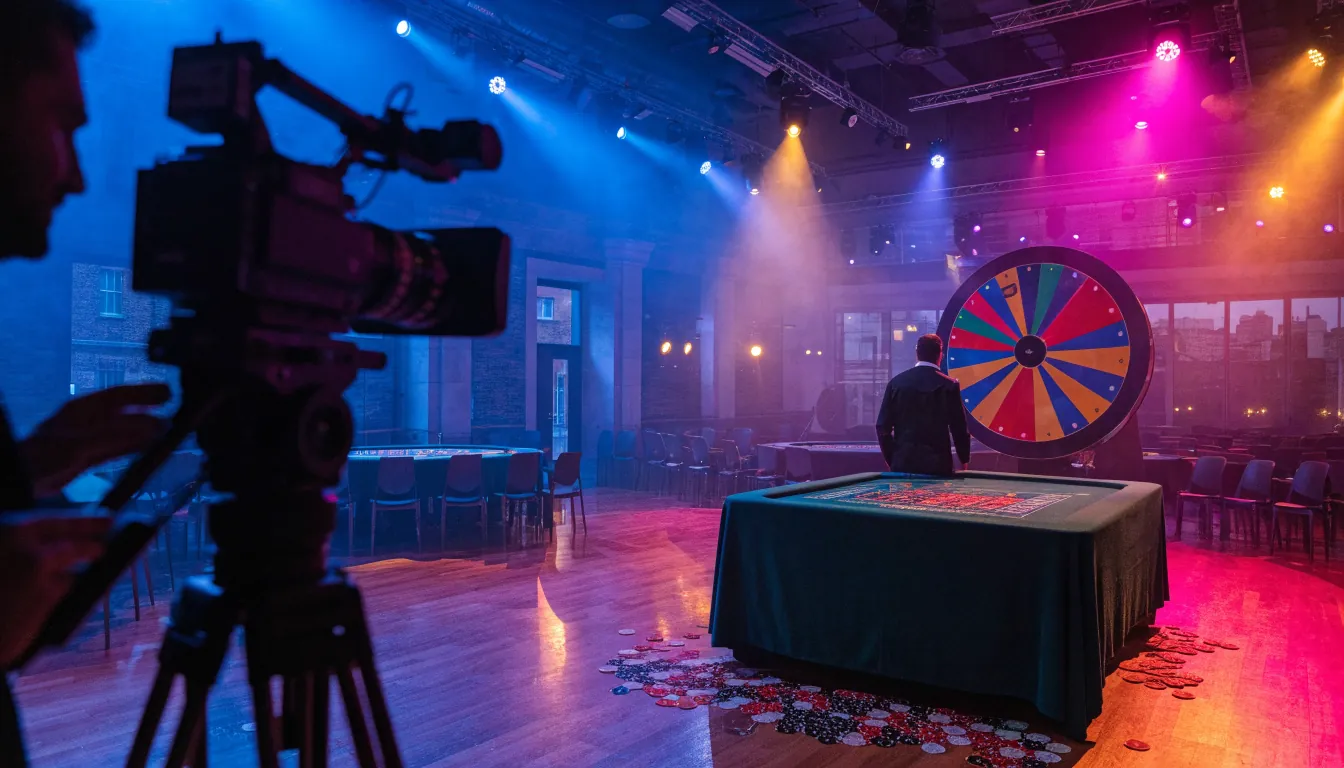
A site can also reveal something practical through the way it presents its live tables. Streamed play depends on a stable internet connection. If the connection falters, the moving picture and the timing of an online session may become difficult to follow. That is not a special feature of Dream Catcher; it is a condition of live dealer play generally. A site may explain its technical requirements, but the basic dependence on a steady connection remains even when the interface is neatly arranged.
What a site cannot establish through attractive wording is a guarantee of uninterrupted streaming or a permanent table listing. Nor does a game title alone settle whether a particular live table is currently offered. Those details should be treated as claims about the service, not as facts inherent in the game’s name.
This makes site assessment less theatrical than much casino copy suggests. The useful questions are plain: does the operator hold the required UK licence, and can the streamed format be used with a stable connection? Beyond those points, a page may inform, advertise or simply decorate. It is not a substitute for evidence.
This material is for entertainment purposes only, not gambling advice.
Demo Play and the Evidence Gap
A demo can make a game feel less like a purchase and more like a rehearsal. It offers a way to look at the structure before money enters the picture: where choices appear, how a round unfolds, and whether the pace makes sense. That appeal is easy to understand. A casino game is also a small piece of theatre, and a rehearsal removes the price of a ticket.
Dream Catcher Demo Limitations
A demo may not recreate the live studio experience, as it might use a simplified interface or a different format than the real-time stream.
But a Dream Catcher demo should not be treated as a settled feature. Its availability, format and terms cannot be assumed from the name of the game or from the presence of a live casino section on a site. A page labelled “demo” may refer to a separate digital version, a promotional preview or something else entirely; the label alone does not explain what is being offered.
That distinction matters particularly for a live dealer game. Live play is a real-time stream from a studio, where a human dealer conducts the game and players place bets through an on-screen interface. It is not simply a video attached to a game that runs independently on the player’s device. The stream is part of the event.
A demo, if offered, may not recreate that event. It might display a simplified interface or use a different format, and there is no sound basis for assuming that a practice version reproduces the live studio experience. The difference is more than technical: a recorded or simulated presentation cannot, by itself, establish how a real-time table behaves.
The sensible distinction is therefore between trying a game in some form and watching a live dealer conduct it. One may familiarise someone with a screen; the other involves streamed gameplay and bets entered while it is happening. Neither label should be allowed to do the work of a clear explanation.

There is a small cultural history in the word “demo”. It borrows the language of software, where a sample invites people to test before buying. A live casino complicates that bargain: the central attraction is not only the rules on a screen, but a human presence transmitted in real time. A preview may show the frame without the occasion.
A name is not a format.
A Review Built on What Can Be Checked
A Dream Catcher review has to begin with a distinction that marketing language often blurs: the difference between what live dealer play is in general and what is known about a particular table. A live game streams play from a studio, where a human dealer conducts the action; bets are entered through an on-screen interface. That describes the format, not the identity, rules or quality of any named game.
The same restraint applies to a review of Dream Catcher as a live casino experience. The name alone cannot establish how its table operates, what its presentation looks like, or whether a particular casino currently offers it. Nor can general knowledge about live games fill those gaps. A careful account should not turn the familiar features of the format into purported details about one product.
There are, however, points that belong in any honest description of live dealer play. Compared with digital versions, live games move more slowly. They also have higher minimum bets, and streamed play depends on a stable internet connection. These are practical characteristics of the format, not a verdict on Dream Catcher. They say something about the conditions under which live play takes place; they do not prove that a specific table will suit every player.
Before Joining a Table
- Confirm the operator holds a UK Gambling Commission licence
- Ensure a stable internet connection for uninterrupted streaming
- Verify the table’s minimum bet fits within the pre-set budget
- Review the specific rules and paytable for the table
That distinction may sound small, but it is the difference between a review and a polished guess. In a digital game, the screen can make the software seem like the whole event. Live play puts a dealer and a studio in view, while the betting interface remains the player’s route into the game. The human presence changes the texture of the experience, though it does not by itself establish fairness, entertainment value or a particular set of rules.
A responsible Dream Catcher live casino review therefore has limits. It can explain the live format and its general demands. It should not state product-specific features as fact unless those features have been checked. Absence of detail is not a licence to improvise.
That is the less glamorous work of reviewing: separating an observable format from a product claim, and leaving unsupported claims unmade. The boundary is useful. It keeps the review legible, and prevents a confident tone from doing the work of evidence.

Before Joining a Live Table
A live table asks for a different kind of attention from a digital game. Its pace is slower: each round unfolds through the dealer’s actions rather than moving at the speed of a computerised version. That can make the experience feel more measured, but it also means there is less room to treat play as a quick interruption.
A stable internet connection is part of the practical setup. Live play depends on a continuous stream, so an unreliable connection can interrupt the view of a round or make it harder to follow what is happening. The table may still be there when the picture returns; the moment, rather less so.
Before play begins, the table’s rules and paytable deserve a look. The name of a game does not, by itself, explain how every version works. A Dream Catcher table should not be assumed to follow rules inferred from another live game, or from a digital game with a similar label. What matters is the information shown for that particular table.

The slower pace also gives the decision to stake money more time to register. A budget set before joining can keep that decision bounded; it should not expand in response to a losing round or a tempting win. Live play remains gambling, not a way to recover money already spent.
These are modest preparations, but they address the conditions that shape participation: an uninterrupted stream, enough time to follow the table, and a clear limit on spending. The spectacle is optional. The limit is not.
Bonuses, Live Tables and the Small Print
A welcome offer can look relevant to a live Dream Catcher table while being designed for a different corner of the casino. One specialist review of UK offers describes many welcome promotions as free spins for slot games, which cannot be used at live tables. That is a report about the offers reviewed, not a guarantee about every promotion or a promise that a particular casino has the game.

The distinction matters before an offer is accepted. A bonus may come with wagering requirements: conditions specifying how bonus funds, or winnings from them, must be played through before withdrawal. The terms can also set different contributions for different game categories. Live games may count for only a small share of those requirements; 10% weighting is one cited example, not a standard that applies everywhere.
A low contribution can make a bonus slower to clear than its headline suggests. If a game is excluded, or contributes little, play at the live table may do little to meet the requirement. The arithmetic belongs in the terms, not in the promotional banner.
Before opting in, the relevant details include which games qualify, how each category is weighted, the wagering requirement and any maximum bet while the bonus is active. These conditions can change the practical value of an offer more than its advertised size. A promotion that cannot be used on the intended table is decoration.
No offer should be treated as a reason to increase a stake or continue beyond a set budget. Promotional wording is not a substitute for the rules attached to it. This information is for entertainment purposes only, not gambling advice.
How do you play live roulette?
Place your bets using the on-screen interface, then watch a dealer spin a physical wheel in a live stream. You win if the ball lands on a number you selected.
How do you choose a live dealer casino?
Choose an operator that holds a UK Gambling Commission licence, which is required to offer online gambling to customers in the UK.
Why does the dealer always win in blackjack?
The dealer does not always win: players can beat the dealer by finishing with a hand closer to 21 without going over. Blackjack still has a house edge, so the casino has a long-term advantage.
Published by the Rainbow Riches Casino 3 team.